

Costa Rica compresses an unusual range of ecosystems—cloud forest, rainforest, dry forest, two coastlines, active volcanoes—into a country the size of Switzerland. Getting between them takes longer than a map suggests; roads are slow and winding, which makes routing decisions critical. Two weeks is the right amount of time for independent travel; one week forces cuts that hollow out the experience.
The 14-Day Routing: San José to Arenal to Monteverde to Manuel Antonio
The circular route below finishes back at San José and assumes a rental car or pre-booked shuttle transfers. Budget three hours for each transfer between regions—Google Maps consistently underestimates by 45 minutes.
San José (1 night)
Arrive, don't linger. This is a transit hub with no special appeal for nature travellers. If you land early, visit the Mercado Central for lunch—a casado (rice, beans, protein, salad, coffee) costs around €5 and is the standard midday meal across the country. The Jade Museum and National Museum of Costa Rica occupy two hours if you have a full afternoon; otherwise, use the time to pick up a rental car or confirm your first shuttle transfer.
Stay near the airport (Terminal 1 or Terminal 2 area) or in central San José (Barrio Escalante for restaurants). Accommodation runs €50–90 for mid-range chains.
La Fortuna and Arenal Volcano (3 nights)
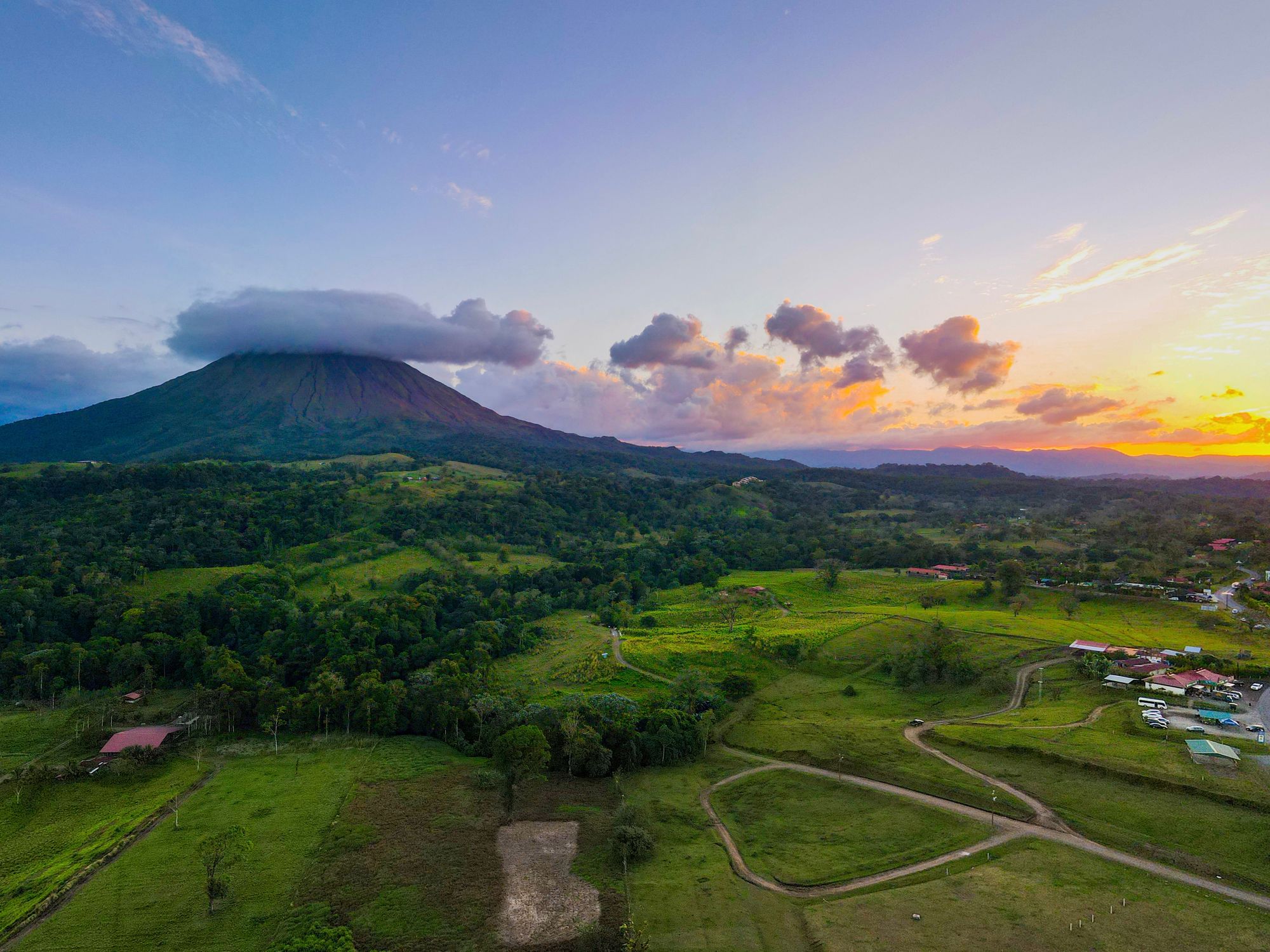
The volcano last erupted significantly in 2010 and is currently active but not visually erupting. The cone is frequently cloud-covered. Expecting a smoking mountain is the first mistake visitors make—most days you see forest, not geology.
The actual draw is the thermal hot springs and the surrounding rainforest. Tabacón resort charges €60 for a day pass (lunch included, multiple pools at different temperatures); Baldi charges €25 for admission only. If budget is tight, free natural hot springs exist where the river meets a small bridge on the road toward Baldi—no infrastructure, just wade in.
Activity priorities:
Arenal Hanging Bridges (€22) spans 3km of suspension bridges through primary and secondary rainforest. You'll likely spot sloths, toucans, howler monkeys, and poison dart frogs. Go at dawn for maximum wildlife activity. The tour takes three hours.
Catarata La Fortuna is a 70m waterfall five kilometres from town, accessed by descending and climbing 500 steps. The pool below is excellent for swimming and the hike is straightforward. Entry is €18.
Lake Arenal kayaking (€40–60 with a guide, 90 minutes to half-day) offers a different angle on the volcano and is worth the time. Sloths and birds are common along the shoreline.
Getting to Monteverde from Arenal:
The jeep-boat-jeep route across Lake Arenal (€25, three hours total, book through your accommodation) is faster and far more scenic than the overland route (four+ hours of slow driving). You cannot take a rental car across the lake, so this is the only car option if you're self-driving—you'll abandon the rental in La Fortuna, take the boat, and pick up a fresh car in Monteverde. Check the shuttle services: Interbus and Gray Line run this route and include the transitions.
Monteverde Cloud Forest (2 nights)
Monteverde sits at 1,440 metres and experiences nearly daily cloud cover. The vegetation—gnarled trees, thick moss, dense ferns—is entirely different from the lowland rainforest, making it worth the slow drive from Arenal.
Reserva Biológica Bosque Nuboso Monteverde (€25 entry) is the main reserve. The Children's Eternal Rainforest, adjacent and cheaper, offers equivalent habitat and fewer crowds. Both have well-marked trails (two to four kilometres, easy to moderate).
The hanging bridges here are higher and more dramatic than Arenal's; one spans 90 metres across a canopy gap. The effect is less theme-park and more genuinely exposed.
Quetzal watching: The resplendent quetzal—a large, iridescent green and red bird with a trailing tail—lives in Monteverde cloud forests. A dawn guided walk (€25–35, book the night before) gives the best chance of a sighting. Sightings are not guaranteed, but February–April is peak season.
The Hummingbird Gallery sits behind the main reserve entrance. Dozens of feeders attract 14+ hummingbird species. Entry is free and the experience is extraordinary—birds hover at arm's length. Most itineraries skip this; don't.
Accommodation in Monteverde ranges from €60–150 for mid-range options. The town is small and walkable.
Manuel Antonio National Park (3 nights)
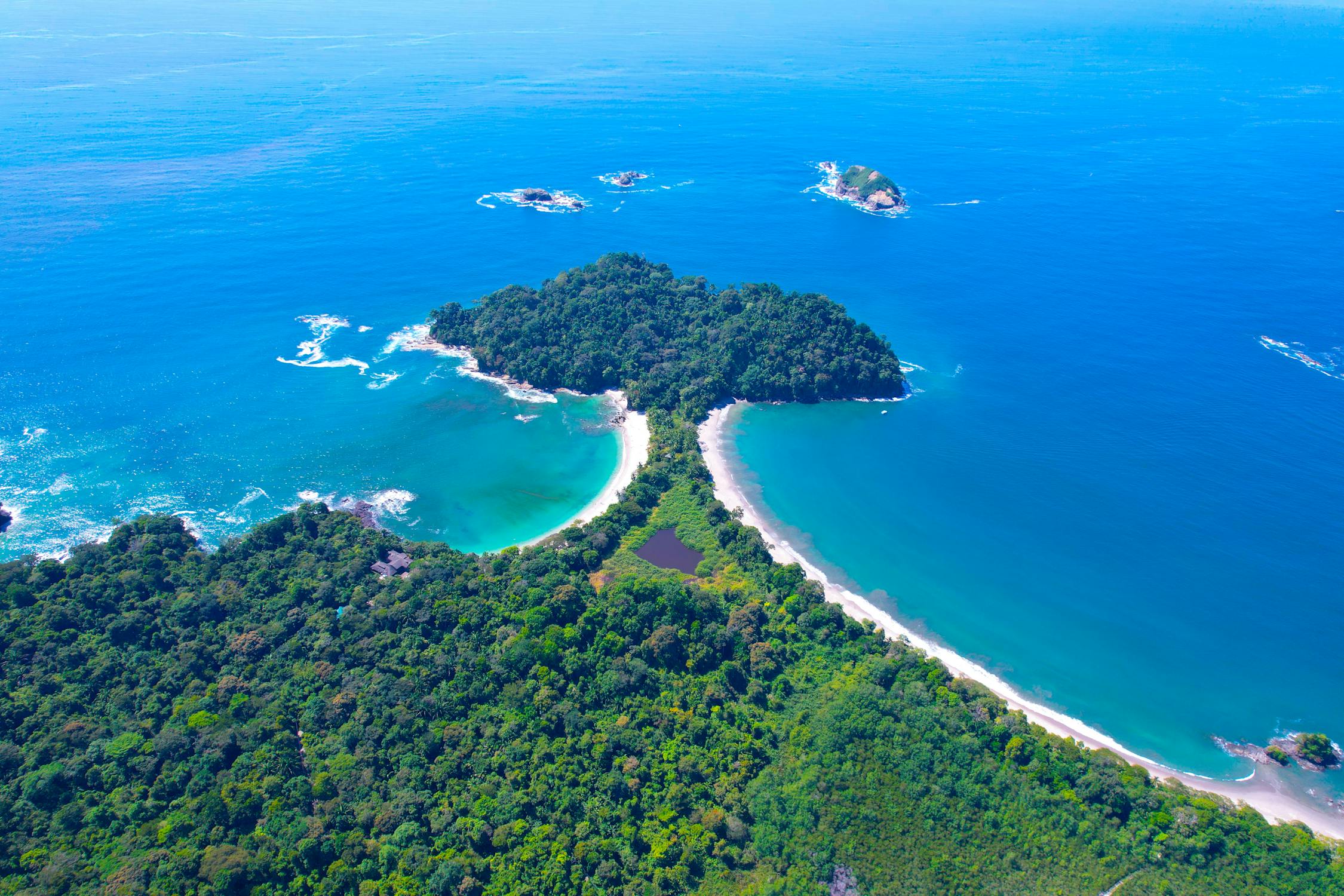
Manuel Antonio is the most-visited park in Costa Rica, which means two things: the trails are excellent and the entry is capped. Book in advance at sinacweb.go.cr at least one week ahead; the park limits entry to 800 people daily during dry season and 600 during rainy season. Arrival at 7:00 AM (gates open at 7:00) gives you the quietest three hours on the trails.
The park is small—trails max out at three kilometres—but packed with wildlife. Spider monkeys, white-faced capuchins, sloths, and coatis are common. The beaches inside the park are the main draws; the public beach outside the park (Manuel Antonio main beach) is busier with vendors and less rewarding.
Entry is €22. Guides (€30–50) increase wildlife sighting odds, though most animals are visible from the main trails. Spend a full day here.
Stay in Quepos, ten minutes from the park entrance, rather than on the hill above it. Quepos is cheaper (€70–120 for mid-range hotels with jungle views) and has better restaurant variety. The town is a working fishing port, not a resort, which changes the atmosphere in a positive way.
Tortuguero: Optional Two-Night Detour
Tortuguero is accessible only by boat or small aircraft—there is no road. The main draw is the canal system: a network of waterways through primary rainforest explored by canoe or motorised boat. Sea turtle nesting happens June–October (green turtles) and March–May (leatherback turtles); night walks to see egg-laying are the secondary activity.
Reach Tortuguero from Moín (near Limón) by boat—three hours, €15–25, departing 10:30 AM daily. Fly from San José on Sansa for €60–90 one-way (30 minutes). The boat return journey is better for scenery; the flight is faster if time is tight.
If Tortuguero doesn't appeal, use the two nights for a second coastal location, extend Monteverde, or skip and spend more time in Manuel Antonio.
San José Departure (Last Night)
The drive from Manuel Antonio to San José takes three hours via the Jacó–San José highway (well-maintained). Overnight near the airport (Terminal 1 or Terminal 2 area, €50–80) to avoid an early morning transfer for international flights.
National Parks: Ranked Honestly
Corcovado: The most biodiverse park in Costa Rica, on the Osa Peninsula. Remote, requires guides, accessed by boat from Puerto Jiménez or a rough road. Two-night minimum stay. Best for travellers with extended schedules and serious wildlife interest. Skip if your time is limited.
Tortuguero: Unique canal ecosystem and sea turtle nesting. Genuinely worth the effort to reach. Include if you have 14+ days and can afford the extra transport cost.
Manuel Antonio: Most accessible, best infrastructure, excellent beach-wildlife combination. Tourist-heavy but the quality of sightings and ease of access justify the crowds.
Arenal: Geothermal springs and forest. The volcano cone is the main draw for first-time visitors; wildlife density is lower than rainforests elsewhere.
Monteverde: Cloud forest and birdwatching. Best for seeing a genuinely different ecosystem. Less crowded than Manuel Antonio despite being well-developed.
Practical Logistics: Transport, Money, Timing
Rental cars: A 4WD is essential for any road outside the main Pan-American Highway. Budget €40–70 daily including third-party insurance. Rental agencies operate at both San José terminals. Manual transmission is cheaper (€35–50); automatic adds €15–20 daily. Insurance is mandatory; the agency's offered coverage typically costs €12–18 daily and is worth the cost to avoid liability disputes.
Shuttle buses: Door-to-door services (Interbus, Gray Line) run scheduled routes between all major destinations (€20–40 per leg, three to five hours). Book online or through your hotel. These are reliable but inflexible—you leave on their schedule and stop where they stop.
Currency and cards: The Costa Rican Colón (CRC) trades around €1 = 550 CRC. USD is accepted almost everywhere; tourist-facing businesses quote prices in dollars. Visa and Mastercard work at hotels and larger restaurants; rural and smaller towns run cash-only. ATMs are common in towns.
Visa: EU and North American citizens receive 90-day tourist entry on arrival; no visa required.
Dry season (December–April): No rain, clear skies, easy road access, crowded national parks, highest accommodation prices. Best for photography and birdwatching.
Rainy season (May–November): Afternoon rain most days—usually two to four hours of downpour, then clearing. Parks are quieter, accommodation runs 20–30% cheaper, and wildlife activity increases due to food availability in fruiting seasons. Roads are passable but slower. This is the better value season if weather doesn't deter you.
Safety and Petty Crime
Petty theft (pickpocketing, rental car break-ins) happens in San José's central district and busy tourist beaches, particularly around Manuel Antonio main beach and Jacó. Lock valuables in your hotel safe, avoid walking alone after dark in San José, and don't leave bags visible in parked rental cars. Violent crime is not a significant risk for tourists outside of known gang areas (which exist but are not on tourist routes). The country is statistically safer than most of mainland Central America.
Costa Rica rewards travellers who accept slowness. Roads take longer than Google Maps suggests, wildlife sightings require patience—and aren't guaranteed—and the country doesn't compress neatly into a week. Two weeks with a rental car and loose structure—Arenal, Monteverde, a coast, one more nature area—gives you enough time to stop when something's interesting and change plans when it isn't. This flexibility is rare in Central American destinations and worth protecting.