

Egypt is one of the most historically overwhelming destinations on earth. Karnak Temple, the Valley of the Kings, the Step Pyramid of Djoser, Abu Simbel — the monuments are not just famous, they are extraordinary. Visiting requires managing heat, persistent hawkers near tourist sites, and logistics that don't always work cleanly. The trade-off is worth it.
Cairo and the Giza Plateau
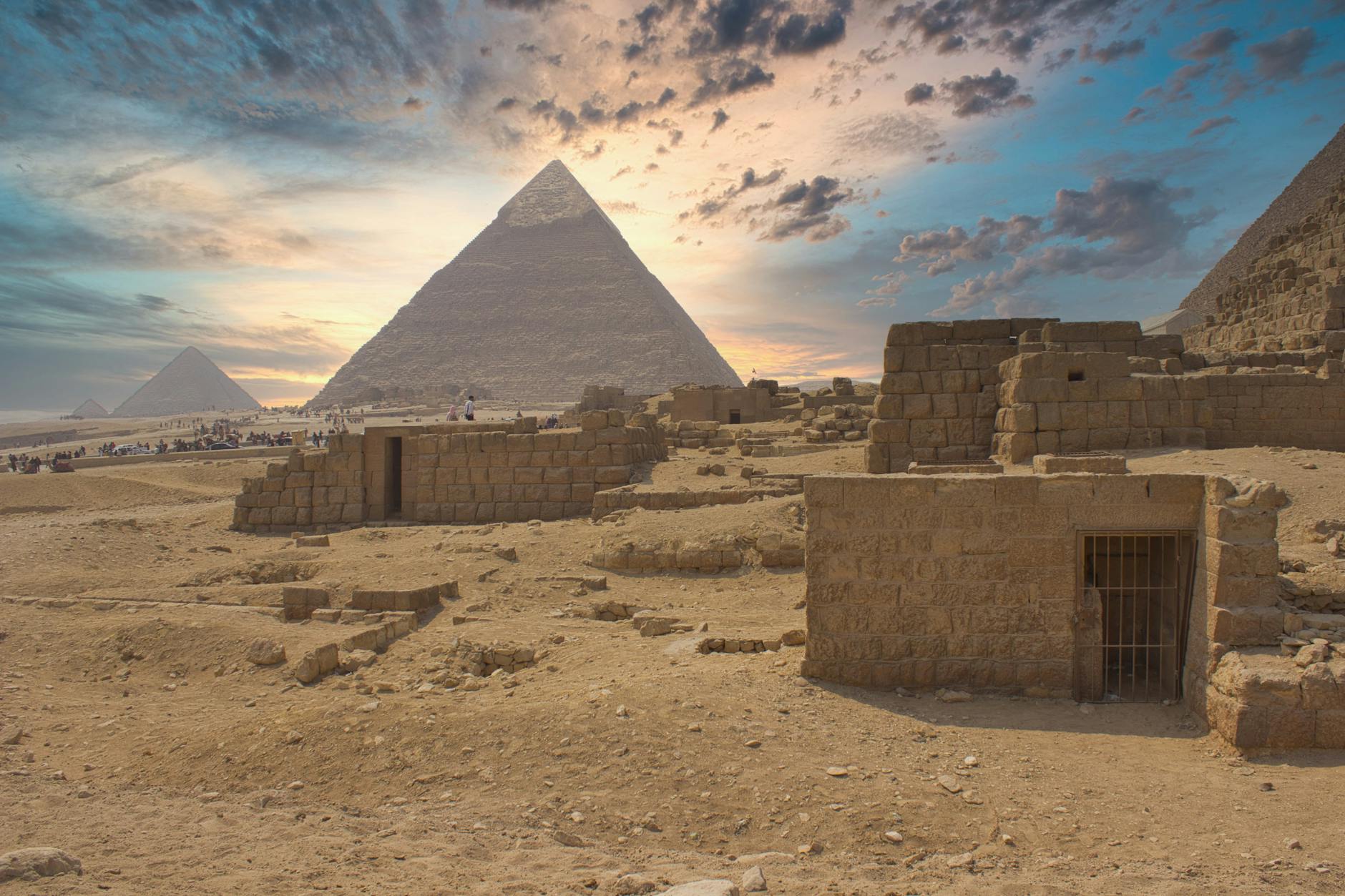
The Great Pyramid of Khufu is the only surviving wonder of the ancient world, and visiting it requires strategy more than spontaneity. No time is truly crowd-free — the plateau receives 10,000–15,000 visitors daily even in winter — but 8am opening (October–April) delivers 30 minutes of relative calm before tour coaches arrive en masse. The site spans 23 square kilometres; resist camel rides offered aggressively at the entrance. Prices are not fixed, negotiation is exhausting, and the animals stand in full sun waiting for customers.
Walk between the three main pyramids instead. The Pyramid of Menkaure (smallest of the three) is often overlooked and gives genuine solitude. The distance between Khufu and Menkaure is roughly 1km across open plateau; bring water and sun protection.
Entering Khufu's interior costs an additional €15–20 and involves a steep 45° crawl up a narrow passage to the King's Chamber — a bare, stripped granite room with no decoration. The interior is genuinely claustrophobic: the passage is barely shoulder-width and the air is thick. Skip if enclosed spaces cause panic; go if you're comfortable with physical constraint and want the specific experience of standing inside the world's oldest large structure.
The Sphinx is visible from the plateau at no extra cost. The enclosure that allows close approach requires a separate ticket and adds nothing meaningful to what you already see from above; don't buy it.
Step Pyramid and Saqqara
Saqqara, 30km south of Giza, holds the Step Pyramid of Djoser (2650 BCE), Egypt's oldest pyramid and architecturally distinct from later smooth-sided versions. The complex is sprawling and receives a fraction of Giza's crowds. The Pyramid of Unas contains the earliest surviving Pyramid Texts — hieroglyphic spells carved inside the burial chamber — an unsettling and specific historical encounter most visitors never have. A half-day here (morning from Cairo) yields more genuine archaeological atmosphere than a full day at Giza. Hire a driver or join a group tour; local minibuses are unreliable for tourists unfamiliar with Cairo's transport.
Museums
The Egyptian Museum in Tahrir Square holds 120,000 artefacts including Tutankhamun's death mask. It is crowded, poorly lit, and cases are often locked without clear labelling. The National Museum of Egyptian Civilization (NMEC) in Fustat, fully opened in 2021, is better organised, less congested, and now houses the royal mummies moved from the Egyptian Museum in a 2021 ceremony. NMEC is the better choice unless you have a specific reason to see the museum's original layout.
Islamic and Coptic Cairo
The medieval Fatimid city (Islamic Cairo) is more architecturally rewarding than central Cairo's 19th-century European layout. Khan el-Khalili bazaar is chaotic and touristy but functional if you need textiles, spices, or souvenirs; haggling is expected and persistent. Al-Azhar Mosque (founded 970 CE) remains an active teaching centre and the city's religious heart. Remove shoes, cover shoulders and knees; women may be asked to wear a headscarf at the entrance.
Coptic Cairo is compact and historically significant. The Hanging Church (Al-Muallaqa) is built above a Roman fortress and contains wooden screens (jube) from the 11th century. Ben Ezra Synagogue is adjacent. Both are active religious spaces; visit outside prayer times.
Cairo Accommodation and Food
Guesthouses in Islamic Cairo cost €20–45/night; mid-range hotels €50–90/night. Zamalek (island in the Nile) and Heliopolis (northeast of centre) are quieter and have good mid-range options.
Local restaurants in neighbourhood alleyways serve koshari (pasta-lentil-rice dish with tomato sauce), ful medames (fava bean stew), and grilled chicken for €3–8. Tourist restaurants in Khan el-Khalili and near the Sphinx charge €10–20 for the same food. Bottled water costs €0.50–1; tap water is generally safe in central Cairo but carry bottled water to temples and deserts.
Luxor: The World's Greatest Open-Air Museum
Luxor sits 670km south of Cairo and contains more intact temples than any other single location on earth. Plan for 2–3 nights minimum. Distances are manageable: East Bank (modern city) covers the major temples; West Bank (mortuary temples and tombs) is accessible by ferry or car.
East Bank: Karnak and Luxor Temple
Karnak Temple Complex is the largest religious building ever constructed. Thirty pharaohs expanded it over 2,000 years. The Great Hypostyle Hall contains 134 columns in 16 rows — a space so vast that cathedral ceilings seem intimate by comparison. The Sanctuary in the centre held the sacred barque (boat) of Amun-Ra. Most visitors spend 2.5–3 hours here and leave overwhelmed but satisfied. Arrive 8am in winter; avoid 10am–4pm when heat and crowds compound.
The Avenue of Sphinxes, 2.7km long, once connected Karnak to Luxor Temple. Excavation is ongoing; roughly half the route is now walkable (though blocked sections redirect you via roads). Walking the avenue in evening light, when tourist traffic drops, is one of Egypt's underrated experiences.
Luxor Temple sits in the modern city centre and is easily overlooked in itineraries focused on Karnak. It is smaller but architecturally coherent — a single pharaoh's (Amenhotep III) vision completed by Ramesses II. The Abu el-Haggag Mosque occupies a raised platform within the temple courtyard, built in the 13th century when the temple was buried under sand. The juxtaposition of medieval Islamic architecture sitting on a 14th-century BCE pylon is architecturally remarkable. Walk from Karnak along the Corniche (river promenade) in evening when the temple is floodlit and the Nile is cool.
West Bank: Mortuary Temples and Tombs
West Bank is accessed by ferry (€1 from the dock south of Luxor Temple, 5 minutes) or car. Ferries leave frequently 6am–6pm; negotiating with a driver costs €20–30 for a half-day.
Valley of the Kings contains 65 known tombs cut into the mountain over 500 years (16th–11th centuries BCE). Entry includes access to three tombs (you choose which from a list at the gate); Tutankhamun's tomb costs an additional €15. Mummies are not on display in most tombs; Tutankhamun's mummy remains in KV62. A single visit to one tomb gives the full experience; visiting three is repetitive but adds context through different decoration styles and preservation levels.
Recommended tombs: KV9 (Ramesses VI) is the most complete and best-decorated, with intact ceiling paintings of the Duat (Egyptian underworld). KV6 (Ramesses IX) contains the longest inscriptions and best-preserved religious texts. KV62 (Tutankhamun) is small, historically charged, and the only tomb still containing human remains — the mummy is visible. Arrive at 8am; finish before 11am when the valley fills.
Hatshepsut's Temple (Deir el-Bahri) is cut into the mountain in three colonnaded terraces. It is one of the few Egyptian structures designed with architectural ambition rather than pure monumentality. The reliefs inside document Hatshepsut's expedition to Punt (Somalia/Eritrea coast) in the 15th century BCE. The reliefs are carved in raised relief (unusual for Egypt) and show plants, animals, and boats. Allow 1.5 hours.
Medinet Habu is the mortuary temple of Ramesses III, comparable in scale to Karnak's outer precincts and almost always empty of tourists — a genuine rarity in Luxor. The colour reliefs on the inner walls are the best-preserved in Egypt; the pigment is vivid enough to assume it's modern until you read the cartouches. If time allows, prioritise Medinet Habu over a second Valley of the Kings tomb.
Colossi of Memnon are two 18m seated statues at the road entrance to West Bank, all that remains of Amenhotep III's mortuary temple. They're free to view from the road; no entry fee or ticket required.
Stay on the East Bank (easier access to restaurants and transport) unless you prefer solitude. West Bank has small guesthouses (€20–35/night) within walking distance of the ferry; staying there means a 7am ferry crossing and earlier temple starts, which is genuinely valuable.
Aswan: Smaller, Slower, More Atmospheric
Aswan is 240km south of Luxor and feels like a different Egypt — slower, less touristy, with Nubian cultural influence. Stay 1–2 nights.
Philae Temple is built on Agilkia Island after being relocated block-by-block when the Aswan High Dam flooded its original location in the 1970s. It's the best-preserved Ptolemaic temple in Egypt, dedicated to Isis. A motorboat to the island (included in the €16 entry) takes 10 minutes. The temple itself is smaller than Karnak but coherent and largely intact. Visit in late afternoon when light hits the island at angle; the water reflects and the island glows.
Nubian Village (west bank, opposite the city) is traditional mud-brick architecture and Nubian family life. Hire a felucca (traditional Nile sailboat) for the crossing — €10–15/hour, negotiate before boarding. The sail back down the Nile is the quietest moment in a typically loud Egypt trip. Eat at village restaurants: ful medames, grilled fish, fresh mango juice. No fixed prices; expect €3–5 for a meal.
High Dam is a 3.6km structure that created Lake Nasser (one of the world's largest artificial lakes). A visit adds context for understanding Abu Simbel's relocation story. It's not visually striking but historically significant. An hour suffices.
Abu Simbel is 280km south and arguably the single most extraordinary monument in Egypt. Ramesses II carved two temples into a mountainside in the 13th century BCE; when the Aswan Dam was built, UNESCO relocated them block-by-block to higher ground — a feat of 1960s engineering that took five years. The twin colossi (20m high) face the Nile. Twice yearly (February 22 and October 22), the sun aligns with the inner sanctum and illuminates the statues of the gods inside — this alignment was calculated when the temples were moved to maintain it.
Reach Abu Simbel by flying from Aswan (EgyptAir operates this route, €70–100 return, 45 minutes flight time) or joining an overland convoy (mandatory 4am departure, 5-hour drive). Flying is more comfortable and recommended unless you specifically want the desert-drive experience. Most travellers who visit Aswan consider Abu Simbel the highlight of their Egypt trip. Plan a half-day minimum; allow a full day if you're photographing.
Accommodation: The Cataract Hotel (legendary 1899 grand hotel overlooking the Nile and the city) is the splurge option at €200–300/night; budget guesthouses near the souq cost €20–40/night and are functional.
Nile Cruises: Who They Suit
A standard Nile cruise runs 4 nights from Luxor to Aswan (or reverse), stopping at temples along the way. All-inclusive pricing ranges from €300–500/person (budget cruises with shared cabins) to €700–1,200 (mid-range with private cabins and better food).
Cruises suit: travellers who want logistics managed, prefer group travel, have mobility constraints, or are time-limited. The cruise carries you between sites with guide commentary; you don't arrange transfers or negotiate entry tickets.
Skip a cruise if: you want to explore at your own pace, photograph in golden light, or skip sites that don't interest you. Cruise schedules are rigid — off the boat 7am, back 11am, afternoon "rest time" (enforced quiet hours). You miss early morning (6–7am) and late afternoon (4–6pm) light, which are the best times for both photography and managing heat. Independent travel in Luxor and Aswan lets you visit temples at 8am when crowds are minimal and light is controlled.
Group cruises also create a tourism bubble — you're with the same 50 people for five days, eating the same meals, visiting the same temples on the same schedule as dozens of other cruise groups.
Heat, Timing, and When to Visit
Best time: October–April. Daytime temperatures range 20–28°C; evenings cool to 12–15°C. Humidity is low. This is peak tourist season, so sites are crowded, but the conditions make outdoor sightseeing feasible.
November–February is optimal: coolest air, lowest humidity, least rainfall.
May–September is brutal. Temperatures in Luxor and Aswan reach 42–46°C by midday. Temples are still accessible but daytime tourism requires early starts (7–10am) and afternoon siestas. Accommodation is cheaper and sites are quieter, but the heat is a genuine hazard — heatstroke is a real risk if you're not acclimated or careful with water and shade.
Ramadan (exact dates shift yearly; check before booking) affects restaurant hours, transport schedules, and atmosphere. Many restaurants close during daylight hours; those catering to tourists stay open. Respect for local practice means not eating or drinking in public during fasting hours. Tourism doesn't stop, but timing feels off. If possible, avoid Ramadan.
Safety, Harassment, and Practical Logistics

Is Egypt safe? Egypt is generally safe for tourists at major sites, which have visible police presence and cater to international visitors. The 2011 revolution and subsequent instability disrupted tourism significantly. The security situation has stabilized since the mid-2010s and tourism has recovered. Use normal precautions: registered taxis or Uber (operates in Cairo, Luxor, Aswan) rather than hailing cabs on the street; agree on prices with non-metered taxis before entering; avoid walking alone late at night; carry copies of your passport and keep originals in a hotel safe.
Harassment is persistent, especially at Giza and in bazaars. Unsolicited guide offers, requests for money ("baksheesh"), and sales pitches are constant. "La shukran" (no thank you) repeated calmly and consistently without engagement usually works. Don't respond to opening gambit questions ("where are you from?") near commercial areas — answering invites a sales conversation. If harassment escalates, move to an area with other tourists or ask a uniformed guard for help.
Guides: hire licensed guides through your hotel or book ahead via online platforms. Walking independently (without a guide) through temples is entirely feasible if you have guidebook information or a good map. You'll miss some small details (hieroglyph interpretations, architectural tricks) but gain the freedom to linger and photograph without schedule pressure.
Transport between cities: EgyptAir and budget airlines (Nile Air, Lite Fly) connect Cairo, Luxor, and Aswan. Flights cost €40–80 one-way and save 10–12 hours of train or coach travel. Book online; bring your passport. Trains exist but are slow (12+ hours Cairo-Luxor), though they're an authentic experience and cheaper (€15–40 depending on class). Coaches are faster (8–10 hours) and cheaper but offer less comfort.
Visas: most nationalities receive a 30-day tourist visa on arrival at Cairo Airport (€25) or can pre-arrange through the Egyptian consulate. Check current requirements before travel; visas have changed several times in recent years.
Practical Itinerary
Days 1–2 (Cairo): Giza plateau (morning), Saqqara (afternoon), Egyptian Museum or NMEC (evening). Stay east-central Cairo or Zamalek.
Days 3–4 (Luxor): Arrive mid-morning. East Bank afternoon (Karnak and/or Luxor Temple). West Bank full day (Valley of the Kings, Hatshepsut, Medinet Habu, or Colossi). Stay East Bank for convenience.
Days 5–6 (Aswan): Arrive morning. Philae Temple afternoon. Nubian Village morning (next day). Optional Abu Simbel half-day if flying, full day if driving. Stay Aswan city centre.
Alternative (with Nile Cruise): Cairo (1 night) → Luxor (board cruise) → Aswan (4 nights on cruise, 1 night after). Saves logistics but sacrifices flexibility.
Egypt demands more preparation than most destinations — arrive without a plan and you'll waste time problem-solving. But the monuments are so extraordinary that logistical friction recedes to background noise. Karnak at 7am before the first bus arrives, painted walls in a Valley of the Kings tomb with no one else inside, a felucca on the Nile at sunset — these are experiences without equivalent elsewhere. Egypt is difficult and worth every bit of the difficulty.