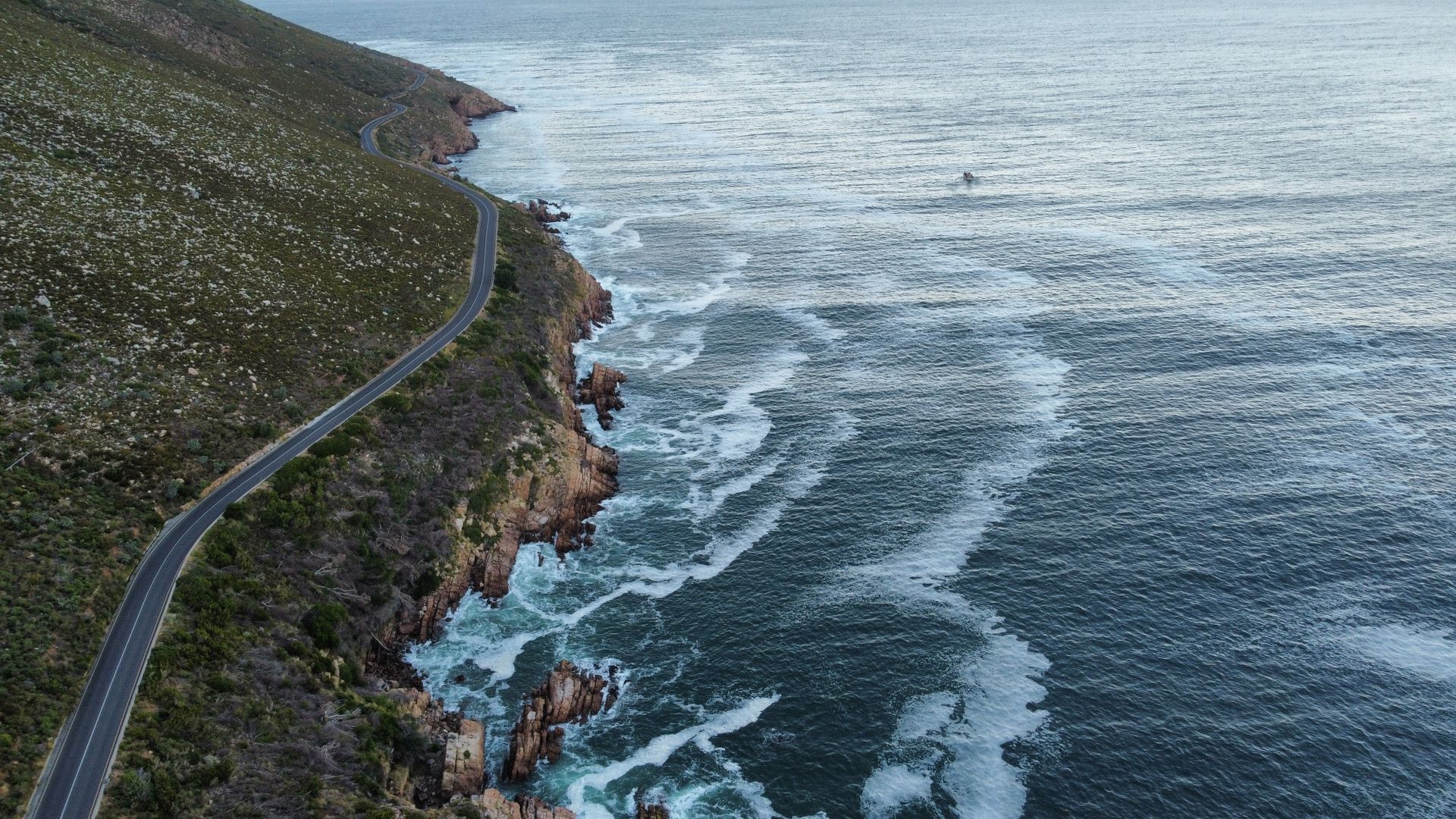

The Garden Route stretches roughly 300km along South Africa's southern coast, from Mossel Bay in the west to the Storms River in the east. The name comes from the year-round green of the indigenous Afrotemperate forest and the botanical diversity of the fynbos biome — hundreds of plant species found nowhere else on Earth. Most visitors drive it in 5–7 days as part of a larger Cape Town circuit. The road itself (mostly the N2 highway with detours on the R102) is well-maintained and the distances between towns are manageable. Car rental from Cape Town runs ZAR 500–900 (€25–45) per day for a basic automatic.
George and Knysna: The Main Stops
George, 430km east of Cape Town (4 hours), is the regional airport and a convenient first stop rather than a destination. The town itself is functional; the nearby Wilderness beach and the Outeniqua Nature Reserve to the north are more interesting. The Outeniqua Pass, a 15km mountain road climbing 800m through native forest, is one of the best drives in the region.
Knysna is the most talked-about town on the route and lives up to it. The Knysna Lagoon is sheltered by two sandstone headlands (The Heads) and covers 17km². The oyster farms here produce some of South Africa's best oysters, available fresh at the Knysna Waterfront for ZAR 10–18 each. The Featherbed Nature Reserve on the western head is accessible only by ferry (ZAR 750 including guided walk) and has the best coastal views in the area. The Knysna Elephant Park, northwest of town, houses a small herd of rescue elephants and offers guided walks; controversial by some conservation standards but run with welfare as the stated priority.
Plettenberg Bay and Bloukrans
Plettenberg Bay, 35km east of Knysna, has the Garden Route's best beaches — Central Beach and Robberg Beach — and is the base for offshore whale and dolphin watching. The southern right whale calving season runs July through November, with sightings most reliable in August–September. Boat trips operate from the harbour; ZAR 700–1,000 for 90 minutes. Robberg Nature Reserve, a 4km peninsula that takes 3 hours to walk around, has a colony of several hundred Cape fur seals and is one of the few places in South Africa where you can walk within 5 metres of marine wildlife without paying for a boat.
The Bloukrans Bridge, 18km east of Plettenberg Bay, hosts the world's highest commercial bungee jump at 216m above the river gorge. The bridge walk (across the arch) is also available for non-jumpers. The jump costs ZAR 1,950 (€97); the bridge walk ZAR 200. Whether it constitutes a worthwhile travel experience depends entirely on your perspective on structured adrenaline.
Tsitsikamma National Park
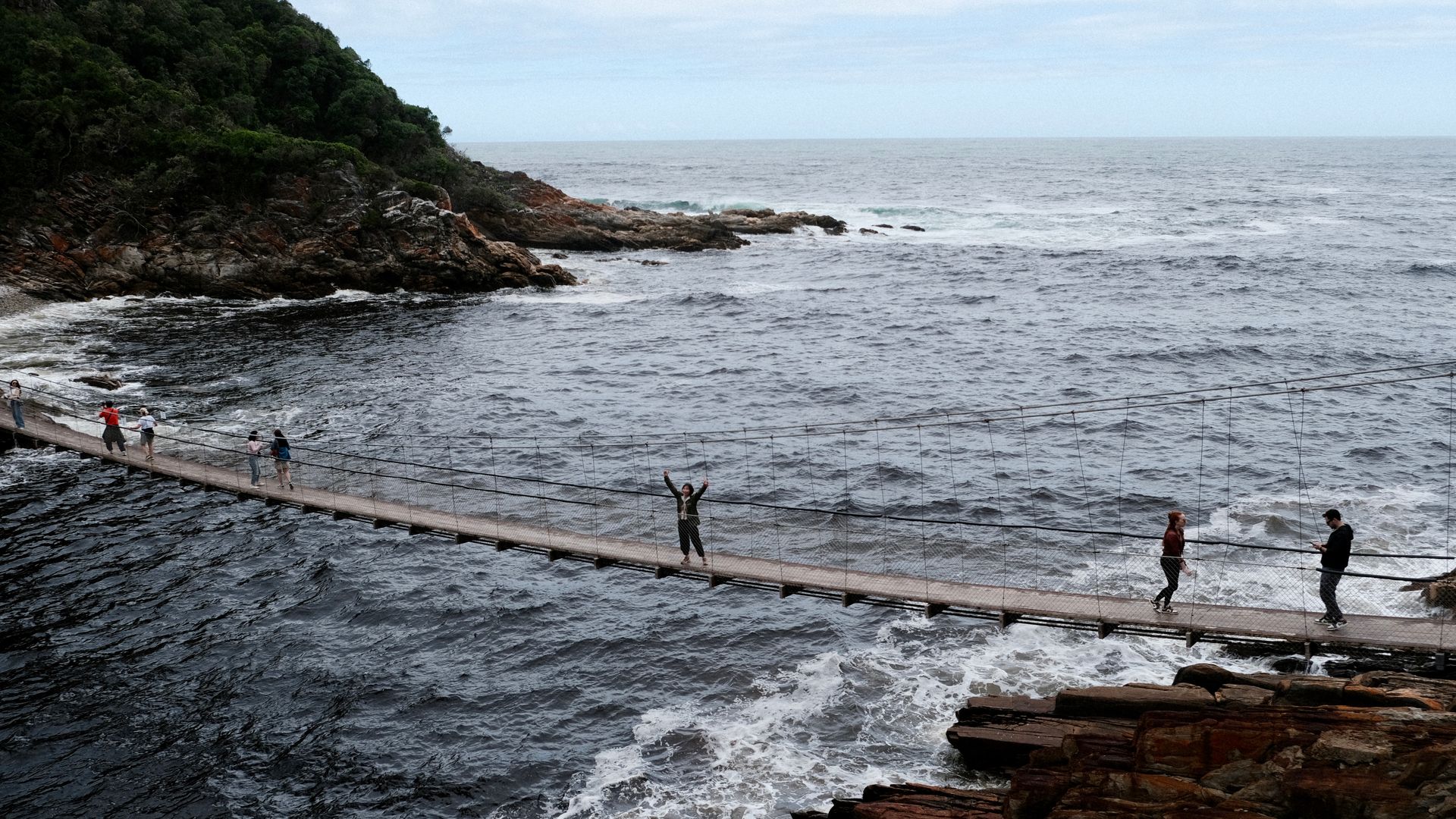
Tsitsikamma begins at Storms River and extends 68km along the coast. The main draw is the Storms River Mouth — a dramatic gorge where the river meets the sea through narrow walls of yellowwood forest, accessible via a 1km suspension bridge trail from the park entrance (ZAR 232 entry). The Otter Trail, a five-day coastal hike between Storms River and Natures Valley, is one of South Africa's most-walked trails; it requires permits booked months ahead through SANParks.
The park has its own accommodation (chalets from ZAR 800/€40 per night, book at sanparks.org) directly at the river mouth, which is the most atmospheric overnight stop on the route. Staying here means watching the river light change through the forest from the restaurant deck.
When to Drive the Garden Route
The Garden Route receives rain year-round but has no dominant dry season — rainfall is spread across months more evenly than most South African regions. October through April has the warmest temperatures (18–26°C); May through September is cooler (12–20°C) but still pleasant and the whale season peak falls in this period. July and August are the coolest months and the time when Plettenberg Bay is the best place to be for whale watching. School holidays (June–July, September–October, December–January) bring domestic South African tourists in significant numbers; booking accommodation further ahead during these periods is advisable.
Safety and Practical Notes
The Garden Route towns are straightforward for tourists by South African standards. The key precautions are the same as elsewhere in South Africa: keep car doors locked when driving, don't leave valuables visible in a parked car, and be aware of your surroundings after dark in town centres. George and Mossel Bay have higher crime rates than the smaller coastal towns; Wilderness, Knysna, and Storms River are quieter. The N2 highway is well-lit between towns; driving at night is fine, though animals occasionally cross rural sections after dark.
Accommodation ranges from backpacker hostels (ZAR 250–450/€12–22 per person in a dorm) to boutique guesthouses (ZAR 1,500–3,000/€75–150 per night). The best-value option for a week's driving is a mix of park accommodation at Tsitsikamma and guesthouses or Airbnb in Knysna and Plettenberg Bay. Self-catering options are plentiful and South African supermarkets (Woolworths Food, Pick n Pay) are well-stocked — cooking some meals in is a sensible cost control on a week-long drive.
