

New Zealand's South Island demands more time than the map suggests. The fjords, glaciers, and mountain ranges are genuine — among Earth's most dramatic landscapes — but distances are deceptive. Winding roads through mountain passes rarely exceed 100km/h, many secondary routes are gravel, and the circuit from Christchurch through the Mackenzie Basin, Mount Cook, Wanaka, Queenstown, and Milford Sound requires a minimum of 14 days to be worth undertaking at all. Rush it in 10 days and you'll spend half the time driving.
How many days for the South Island circuit?
Fourteen days minimum for a meaningful self-drive loop covering the main destinations. Ten days is possible but means skipping either Mount Cook or Wanaka, and driving at an exhausting pace. Twenty days is ideal — it allows rest days, bad-weather flexibility, and spontaneous detours.
The standard itinerary traces Christchurch → Lake Tekapo → Mount Cook → Wanaka → Queenstown → Milford Sound → back to Christchurch or Queenstown. Each segment requires slower travel than highway speeds suggest.
Christchurch: 2 nights
Christchurch experienced catastrophic earthquakes in February 2011 and ongoing aftershocks through 2012. The central city was severely damaged; rebuilding continues 13 years later. This is relevant because much of what made the city architecturally interesting is gone, but also because what remains and what has been rebuilt is worth understanding.
The Christchurch Botanic Gardens (free, 21 hectares, 30 minutes by foot or bus from central city) are intact and genuinely excellent — native podocarp forest, avenues of oaks and planes, the Avon River. No crowds compared to northern hemisphere equivalents. The Canterbury Museum (free) covers natural history and early European settlement thoroughly.
The Cardboard Cathedral is the unexpected piece. The original Anglican cathedral was destroyed in 2011. A temporary replacement — designed by Japanese architect Shigeru Ban, built from cardboard tubes — was erected in 2013 and became so popular it was made permanent. It is architecturally clever and worth seeing, though the building itself (rather than its story) is modest in scale.
Spend day one exploring the gardens and museum, a morning drive to Mount Cook region the day after departure.
Lake Tekapo: 1 night (3 hours from Christchurch via State Highway 79 and 8)
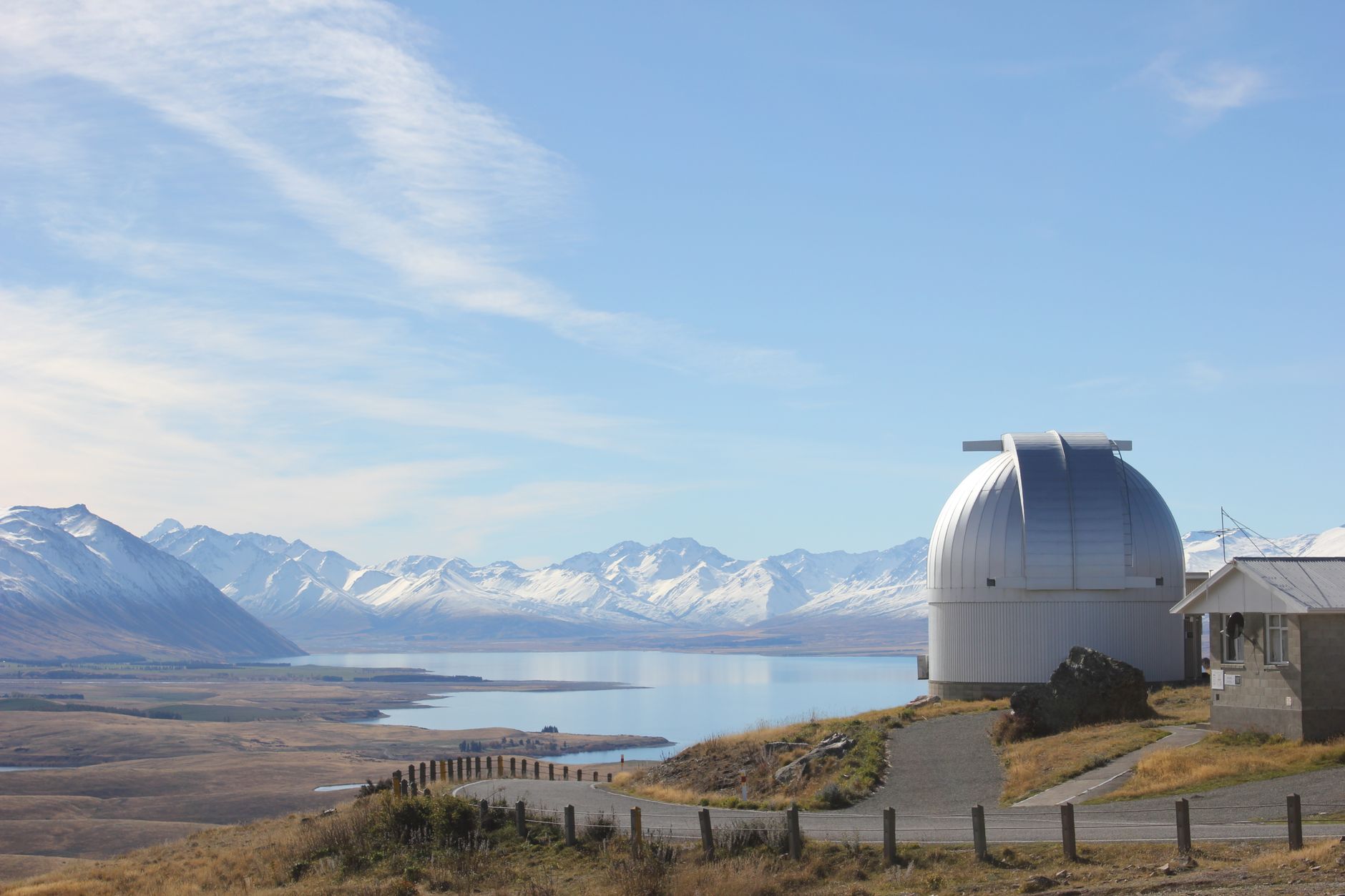
The lake is vivid turquoise — glacial flour suspended in the water. Stop at the lookout 2km before town to see the full extent. The colour is not filtered or enhanced; it is genuinely that colour from October through March. In winter (June–August) it is less vibrant and sometimes ices over.
The Church of the Good Shepherd (1935, small stone church on the eastern lakeshore) is the photograph everyone takes. It is tiny, architecturally simple, and surrounded by tourists, but the framing of the lake and Southern Alps beyond is legitimate.
Mount John Summit (901m, 5km south of town by car then a 20-minute walk) offers dark-sky stargazing at the Earth and Sky Observatory (€55, 2-hour guided tour, book ahead). The observatory is in New Zealand's only official International Dark Sky Reserve. December–February is summer (16 hours of daylight), so night sky observation is compromised — clouds of tourists arrive after sunset and the Milky Way is visible for only 3–4 hours. Go in winter or shoulder months (October, March, May, August) if stargazing is a priority. The Mackenzie Basin at dusk in any month is worth an hour's stop even without the observatory.
Lake Tekapo is a 30-minute stop or a full night. Most itineraries stay one night; it is enough.
Aoraki / Mount Cook National Park: 2 nights (1.5 hours from Tekapo via State Highway 8)
Aoraki / Mount Cook is New Zealand's highest peak at 3,724m. The national park is centred on the Hermitage Hotel, a historic lodge at the end of State Highway 80. There is no other accommodation or services within the park; the Hermitage or local backpackers are the only options. The Hermitage is expensive (€200–400 per night depending on season and room standard), but book it 3+ months ahead for December–February travel. The location — surrounded by the Southern Alps, glaciers visible from the rooms — justifies one night.
Hooker Valley Track is the essential walk here. It is 10km return, 3 hours, mostly flat, finishing at a terminal lake with Mount Cook filling the northern view and icebergs calving into the water. No scrambling, minimal elevation gain, and the scale of the landscape is monumental. Start by 8am to avoid crowds. The track is free and open year-round, but snow can close it June–August.
Tasman Glacier is longer than any glacier in the Alps or Rockies. It is accessed by a rough 4WD track (€45 for a shuttle drive from the Hermitage, book the day before). The terminal lake has calved icebergs large enough to kayak between (guided tours €120 for 2 hours, booked through the Hermitage). This is worth doing if weather is stable and you have a second day. If one day only, Hooker Valley is sufficient.
Stay two nights — one full day for Hooker Valley walk in the morning, second day for weather contingency or Tasman day trip, return journey the following morning.
Wanaka: 2 nights (4 hours from Mount Cook via Lindis Pass)
The drive from Mount Cook to Wanaka crosses the Lindis Pass (971m), a winding 2-hour section of State Highway 8 through tussock-covered hills. The pass itself is unremarkable, but the surrounding high country is empty and dramatic.
Wanaka is a small town (population 7,000) on a glacial lake, surrounded by Mount Aspiring National Park. It is less tourist-focused than Queenstown, 90 minutes north.
Roy's Peak Track is a 16km loop with 1,200m elevation gain, taking 5–6 hours. It is the most photographed viewpoint on the South Island — a 360° panorama including Lake Wanaka, the Southern Alps, and Mount Aspiring. The walk is steep, exposed, and exhausting. Start before 7am to summit before crowds and afternoon wind. Do this walk only if you are comfortable with sustained uphill hiking; there is no shame in skipping it.
Diamond Lake is a 30-minute drive east, then a 2-hour loop walk (500m gain) with similar views if Roy's Peak is beyond fitness level. Less crowded and genuinely rewarding.
Puzzling World (€18 entry) is a roadside attraction 5km west of Wanaka featuring optical illusions, tilted buildings, and a maze. It sounds gimmicky; the execution is clever and worth 2–3 hours if weather is poor.
Wanaka is also the entry point for jet-boating on the Matukituki River and mountaineering guiding on Mount Aspiring, but these are specialist pursuits. For a standard itinerary, one full day (for Roy's Peak or Diamond Lake) and one rest/weather day is enough.
Queenstown: 3 nights (1 hour from Wanaka via State Highway 6)
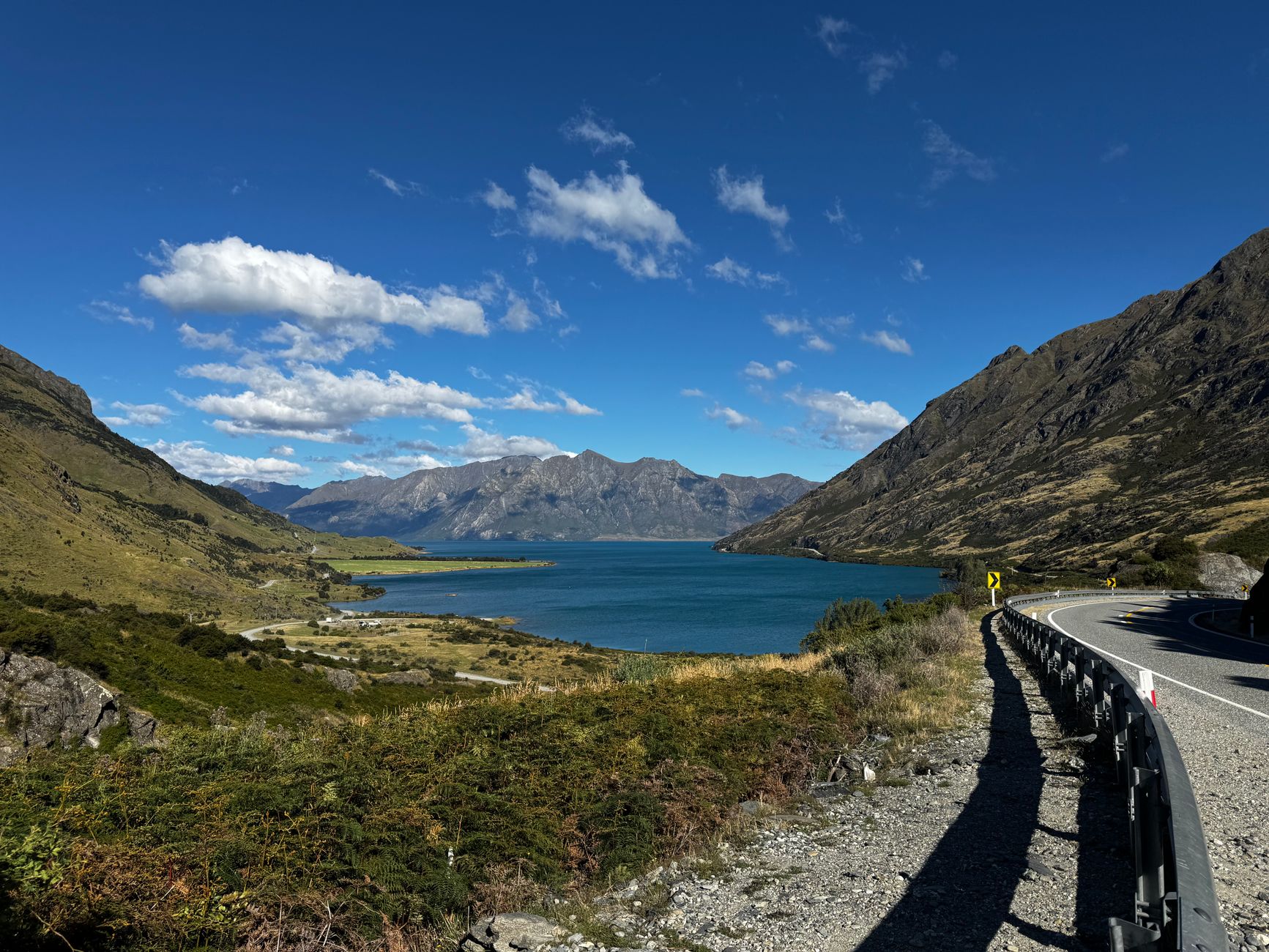
Queenstown is the adventure tourism capital of New Zealand. It is commercialised, expensive, and relentlessly focused on adrenaline. It is also very well organised, and the mountain and lake scenery surrounding it is extraordinary.
Activity ranking for Queenstown
Most activities are tourist-produced but competently run. Skip the ones that feel like a bucket-list checkbox; commit to two or three that genuinely interest you.
Skyline gondola (€40, 10 minutes) goes to Bob's Peak (441m above town), offering views of Lake Wakatipu and the Remarkables range. There is a luge and paragliding option at the summit. It is accessible and worthwhile, and serves as a solid orientation to the geography.
Kawarau Bridge Bungee Jump (€185, 43m drop) is the original commercial bungee jump (1988) and happens in a dramatic river gorge. If you are considering bungee, this is the only one to do. Book one day ahead. About 400 people per day do this, so expect 2–3 hours of queuing on busy days.
Skydiving (€250–350, 15–20 minutes airtime depending on altitude) is straightforward and accomplished. Operators (NZone, Paradise Skydiving) are reliable. The views are genuinely extraordinary — the Remarkables, Wakatipu Lake, and surrounding mountains are visible from 4,500m. Weather dependent; book one day ahead. Expect crowds on clear days.
Shotover Jet Boating (€155, 1 hour) is a high-speed boat through the Shotover River gorge, 10 minutes from town. It is loud and wet and genuinely thrilling. Less physical than rafting.
Dart River Jet Boating (€175, 2.5 hours) combines jet boating with bush walking in a wider, slower context. It is closer to an experience than a thrill ride. Better if adrenaline sports feel repetitive.
White-water Rafting (€120–150, 2–3 hours depending on grade) on the Shotover River (Grade III–V rapids) is harder work than jet boating. Most operators are reliable. This is worth doing if you have any rafting experience; otherwise, it is relentless and takes significant fitness.
Arrowtown (20 minutes by car east of Queenstown) is a gold-rush-era village with 19th-century cottages, a main street of antique shops and restaurants, and autumn foliage (March–April) that is famous throughout New Zealand. Half a day is enough; most people spend 2 hours here.
Glenorchy (45 minutes north on State Highway 6 along Lake Wakatipu) is a small settlement and the gateway to fiordland walks (Rees-Dart Track, a five-day tramping route). The drive is the main event — following the lake shore with the Remarkables rising sheer on the eastern side. Stop at a car park halfway and walk for 30 minutes. This is the most dramatic drive on the island. Glenorchy itself is a single street of houses; there is no reason to stop in town.
What to actually do in Queenstown
Choose two activities that genuinely appeal to you, and ignore everything else. Most visitors arrive with a mental list of five, complete three by day two, and feel exhausted and slightly unfulfilled by day three. The town is small; three nights is excessive if you are doing four activities per day.
Suggestion: Skyline gondola on the first afternoon (acclimatisation), Kawarau bungee jump on day two (book ahead), and a half-day to Arrowtown or Glenorchy on day three. That leaves a full day unscheduled for spontaneous detours or rest.
The Queenstown Gardens (lakeshore park, free, 30 minutes walk from the city centre) are peaceful and well-maintained — a good antidote to the tourism machinery.
Milford Sound / Piopiotahi: 2 days
Milford Sound is the most visited natural attraction in New Zealand — approximately 500,000 visitors per year. It is worth visiting, but managing expectations around crowds is essential.
Logistically: is a day trip or overnight trip better?
A day trip from Queenstown is 9 hours of driving (4.5 hours each way) plus 2 hours on the boat, leaving 1 hour for logistics and food. This is exhausting and means seeing the fiord in less favourable light. It is feasible if time is extremely limited, but it is not recommended.
Better logistics: drive to Te Anau (2 hours from Queenstown) the afternoon before, stay overnight, then drive to Milford Sound (2 hours from Te Anau) and take a morning or early-afternoon cruise. This allows a full evening in Te Anau and morning driving in daylight.
An overnight boat cruise (€250–350, sleeping berths included, 24 hours total) gives you the fiord at dusk and dawn, when the tour boats have departed and the landscape has silence and mist. This is the superior experience if available. These cruises operate on limited capacity and book out 3+ months ahead in summer. Book immediately if this appeals to you.
The drive to Milford Sound
The 119km from Te Anau to Milford Sound takes 2.5–3 hours and is part of the journey, not a chore. The Eglinton Valley is forested and narrows as you climb. The Homer Tunnel (1.2km, single-lane, unlit, carved through solid mountain in the 1950s) is a 20-minute queue at busy times. The tunnel itself is unnerving — single lane, hairpin turn inside, no lighting except headlights. It is safe and happens dozens of times per day, but the sense of driving through a mountain is tangible.
After exiting the tunnel, the road descends rapidly through a hairpin section with 10 switchbacks in 5km. The views suddenly expand, and Milford Sound appears 600m below. This descent is the most dramatic road section on the island.
What you see on the cruise
Milford Sound is a 15km fjord with granite walls rising 1,200–1,600m from sea level. Waterfalls are continuous, and their volume increases significantly after rain. The rain, therefore, is not something to avoid — it means fuller waterfalls. Cloudy days are better visually than clear days.
You will see Fiordland penguins (small, shy, usually at a distance), seals resting on rocks, and dolphins in the deeper channels. The noise level on the larger tour boats (400+ passengers) is high. If you book an overnight cruise, the experience of silence and solitude after the day boats depart is the entire point.
Tour boats operate on consistent schedules: departures between 7am and 11am, 2–3 hour cruises, return by early afternoon. Book boats (Realjourney, Real Journeys, Southern Discoveries) directly or through your accommodation. Prices are fixed across operators: €85–100 for standard day cruises, €20–30 premium for smaller-boat operators with fewer passengers. The smaller boats are worth the surcharge if you are sensitive to crowds.
Return to Christchurch: 1 night
The drive from Milford Sound back to Queenstown is 5.5 hours. From Queenstown to Christchurch is a further 5.5 hours of driving or a 1-hour flight (€80–120, book same-day or the day before).
The flight is worth considering if you have spent 14+ days driving. It saves a full day and departs from Queenstown multiple times daily.
New Zealand driving: what you must know
Left-hand driving takes 30 minutes to normalise and requires active concentration for the first 2 hours. The disorientation happens at roundabouts and when making left turns (you are now turning into the opposite lane than instinct suggests). After 30 minutes, muscle memory takes over. Rent a car for at least two days before starting the main journey if possible.
One-lane bridges appear frequently throughout the South Island. Many secondary roads have single-lane bridges. Oncoming cars are indicated by electronic signs or physical markings. Yield to the car closer to the bridge. There is no speed limit to crossing the bridge; approach at normal speed. These crossings feel dramatic the first time and become routine after five or six.
Gravel roads are common on secondary routes (Catlins, Milford Sound approaches, Mount Cook access). A standard 2WD rental car is acceptable on most. An AWD vehicle (€5–10 extra per day) is recommended if you plan drives beyond the main highway circuit. Book AWD vehicles in advance; they sell out in peak season.
Speed limits are 100km/h on open roads and 50km/h in towns. Average driving pace on mountain roads is 60–70km/h due to winding sections. The cruise control temptation on straightaways is real, but speed enforcement is consistent and fines are steep (€200+).
Rental cars: book 8–10 weeks ahead for December–February travel. Major companies (Avis, Hertz, Budget) are reliable and have broad support networks. Smaller local companies (Go Rentals, Omega) are 20–30% cheaper but have fewer office locations. Pick up from a major city (Christchurch, Queenstown, Dunedin) not small towns. Insurance is not included; comprehensive cover is €15–20 per day and is worthwhile for self-drive.
Fuel: service stations are frequent on the main circuit but sparse on secondary roads. Fill the tank when you see one if exploring beyond State Highway 6. Fuel costs €1.40–1.60 per litre.
Parking: most towns have unlimited free parking on streets or in car parks. Campgrounds charge €5–15 per night. Parking at trail heads and tourist sites is free.
Best time to visit the South Island
December–February (summer): 16–17 hours of daylight, warm (18–25°C in the north, 12–18°C in the south), all roads and walks accessible. Mount Cook and Milford Sound are typically clear. Christmas and early January are most crowded. This is also most expensive — accommodation rates increase 30–50%. This is the only season most people think of visiting.
October–November (spring): Slightly cooler than summer, fewer tourists, rhododendrons blooming at Christchurch Botanic Gardens. Roads and walks are accessible. Weather is less stable than summer. This is arguably the best time to visit if you can travel outside northern hemisphere holidays.
March (autumn): Still warm (18–22°C in the north, 12–16°C in the south), fewer crowds than December–February, excellent light for photography. Weather is similar to November. Accommodation prices drop 20–30%.
June–August (winter): Cold (0–12°C), snow on the mountains, ski season operating at Coronet Peak and The Remarkables near Queenstown. Milford Sound road is open but can close 1–2 days per week with heavy snow. Landscapes are dramatic and less crowded. This is for experienced drivers and hikers only.
Who should attempt this road trip
New Zealand's South Island is the rare destination where the landscape is consistently as good as photographs suggest. The fjords, glaciers, and mountain ranges do not require special weather or luck to be extraordinary.
This trip requires 14 days minimum, a valid driving license from your home country, and comfort with left-hand driving on winding mountain roads. Budget $4,000–6,000 per person (accommodation, fuel, rental car, activities). Come in December–February for guaranteed weather or October–March to avoid crowds. Stop when something looks worth stopping for — the best moments on a South Island road trip are the unplanned ones: a kea landing on your car, the Homer Tunnel opening onto the full Milford Sound view, or a rain-fed waterfall cascading off granite cliffs.
