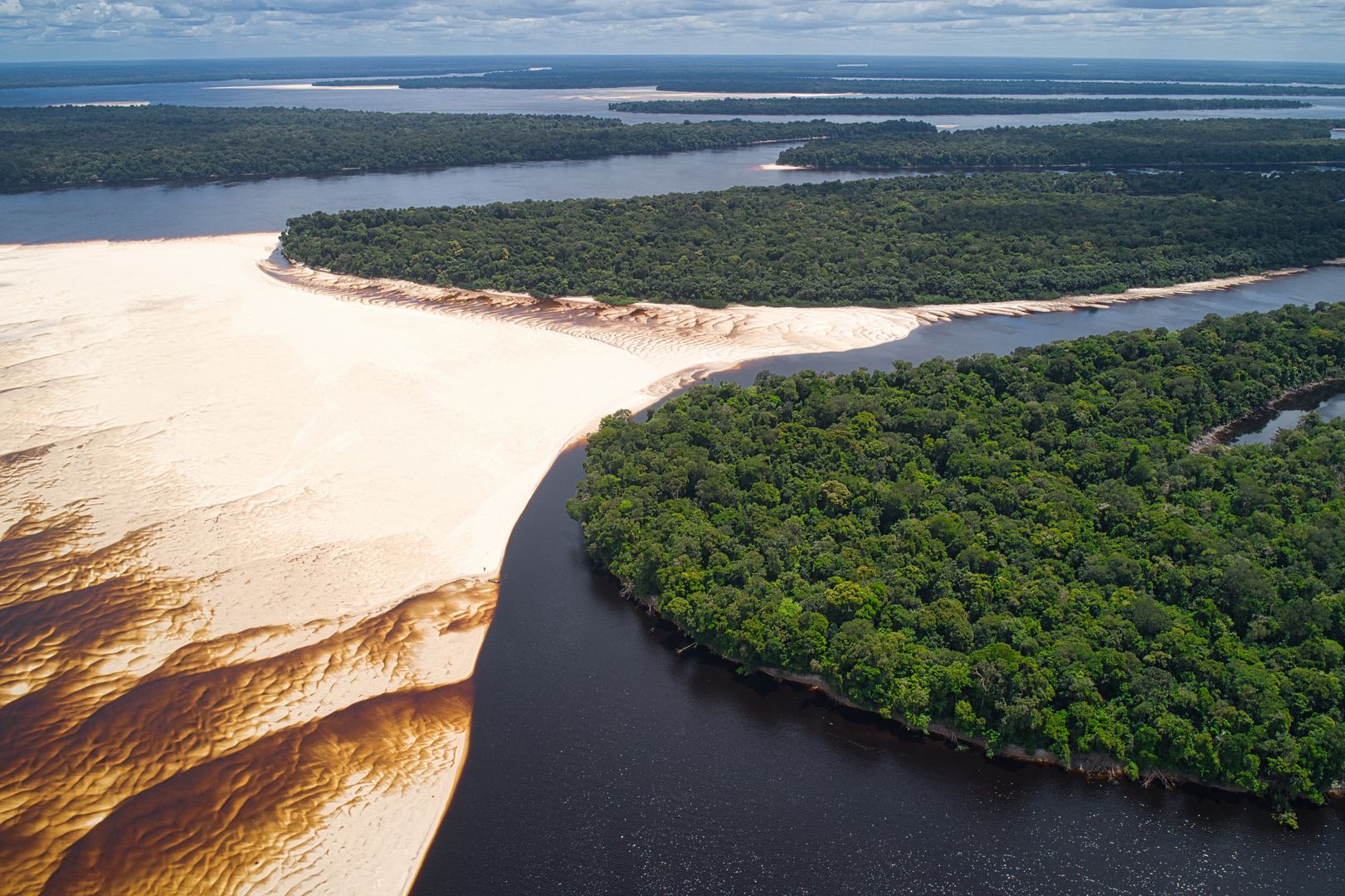

The Amazon Basin covers 5.5 million square kilometres — roughly the area of the continental United States. The Brazilian portion accounts for about 60% of that. When people say "the Amazon," they usually mean a section of it, which is worth being precise about. Most tourist visits go to the area around Manaus, the largest Amazonian city, or to the Peruvian Amazon around Iquitos and Puerto Maldonado. The Brazilian Amazon is the more developed option logistically; the Peruvian side generally has better wildlife density in accessible lodges. Both are genuinely wild, which is both the point and the constraint — proper jungle starts beyond the agricultural frontier, and reaching it takes time and planning.
Manaus: The Gateway City
Manaus has 2.2 million people and sits at the confluence of the Negro and Solimões rivers, 1,500km from the Atlantic. It is an industrial and commercial city that happens to be surrounded by rainforest — the Teatro Amazonas opera house (built at the peak of the rubber boom in 1896, a belle-époque anachronism dropped in the jungle) and the Mercado Municipal Adolpho Lisboa (a 19th-century iron market hall modelled on Les Halles in Paris) are the two architectural signatures of that era. Both are worth a half-day.
The Meeting of the Waters, where the dark Rio Negro meets the sand-coloured Solimões to form the Amazon proper, is visible from boats 10km downstream of Manaus. The two rivers run parallel for about 6km without mixing due to differences in temperature, density, and flow speed — the boundary between them is sharp enough to photograph clearly. Boat tours depart from the Manaus harbour for around R$60–80 (€11–14).
Manaus itself has a functioning city infrastructure and the standard urban safety considerations of a large Brazilian city. Most visitors spend one to two nights here before heading to jungle accommodation.
Jungle Lodges: What the Experience Is Really Like
The Amazon jungle experience depends significantly on where you stay. Day trips from Manaus into nearby secondary forest will show you trees, some birds, and tourist infrastructure. A three-night stay at a lodge in primary forest 3–4 hours from the city will show you considerably more. A week at a remote lodge will show you things that cannot be planned for — that is the honest description of how Amazon wildlife encounters work.
Most animals in primary rainforest are heard rather than seen. Pink river dolphins (botos) are an exception — reliably present at lodges on river tributaries and habituated enough to approach in boats. Caimans are visible on most night boat rides. Sloths, monkeys, and river otters are frequently seen but not guaranteed. Jaguars are present in the region and rarely encountered. The bird diversity is extraordinary but requires either knowledge or a guide who has it — the Amazon holds roughly 1,300 bird species.
Lodge prices range from R$500–900 (€90–165) per person per night at mid-range operations to R$1,500–3,000 (€275–550) at premium lodges. The difference is partly accommodation quality and partly the depth of primary forest and quality of guiding. Booking directly with lodges or through a Manaus-based agency is straightforward; the most frequently mentioned lodges for quality of guiding are Anavilhanas Jungle Lodge, Uakari Lodge (in the Mamirauá Reserve, 4 hours from Tefé), and Amazon Eco Luxury Hotel.
The Wet Season vs Dry Season Tradeoff
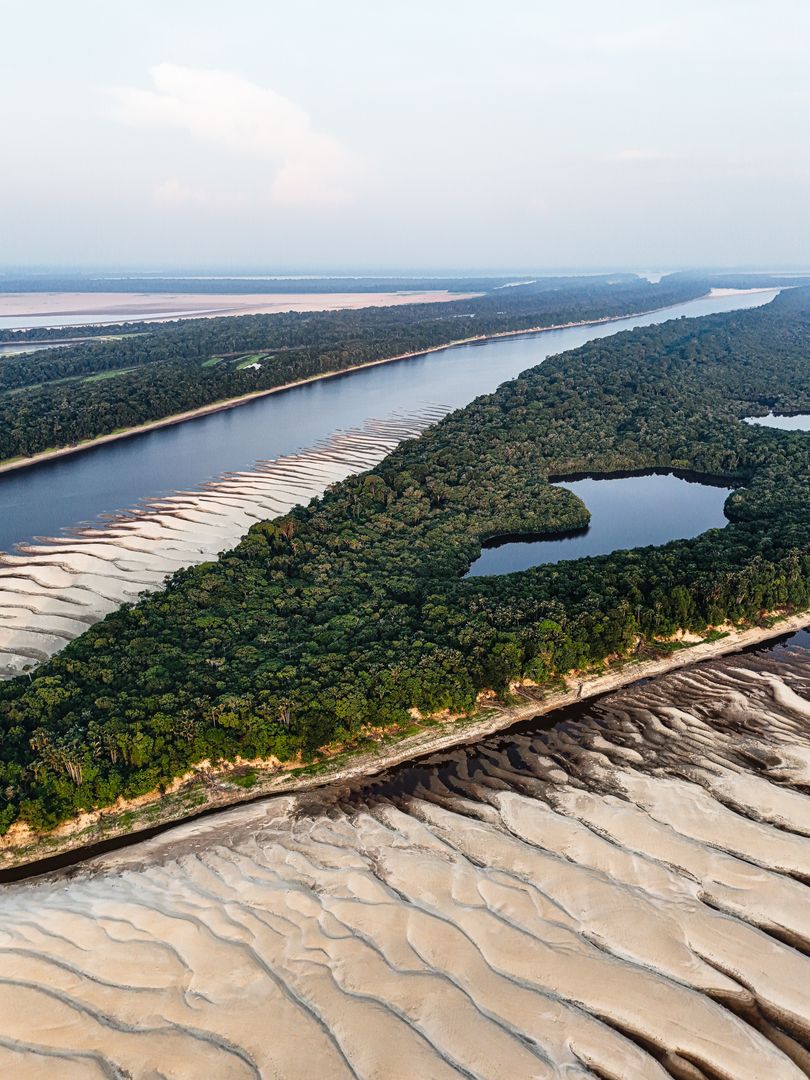
The Amazon has two distinct seasons that create very different experiences — understanding which you're visiting is essential. The dry season (June–November) has navigable trails, more visible ground animals, beaches on exposed sandbars, and lower river levels that concentrate fish and the wildlife that depends on them. This is the better season for seeing wildlife.
The wet season (December–May, peaking February–April) floods the forest floor to depths of 3–10 metres over hundreds of kilometres. The result is an entirely different ecosystem: the igapó (flooded forest) allows canoe navigation through the treetops, and the flooded areas become feeding grounds for river dolphins and seasonal fish aggregations including the pirarucu (one of the world's largest freshwater fish). Bird nesting activity peaks in the wet season. Mosquitoes are more numerous but not prohibitively so with adequate repellent. The wet season is the Amazon experience that fewer visitors have, and for a specific type of traveller it is the better one.
Getting to Manaus
Manaus Eduardo Gomes International Airport has direct flights from São Paulo (4 hours, R$350–600), Rio de Janeiro (4h30), and Bogotá (3h30). Some European carriers operate seasonal direct flights from Lisbon. The airport is 14km from the city centre; taxis cost R$60–80 (€11–14).
River travel from Belém (at the mouth of the Amazon) to Manaus takes 4–5 days by boat — hammock class costs around R$250 (€46) including meals. This is a genuine slow-travel experience through flooded forest and river towns, not a tourist cruise. The boats run on schedule, more or less, and the hammock deck is how most Brazilians travel this route.
Practical Notes
Yellow fever vaccination is strongly recommended for travel to the Amazon and required for entry to some adjacent countries. Malaria is present in the Brazilian Amazon; prophylaxis is advised and should be discussed with a travel health clinic 4–6 weeks before departure. Mosquito protection (long sleeves, DEET repellent) is standard for dawn and dusk hours. The risk level is real but not unusually high relative to other tropical destinations — the Amazon has been receiving foreign visitors for 150 years and the logistics are well understood.
Brazilian Portuguese is the only reliable language in Manaus and most lodges. English-speaking guides are available but should be specified when booking. Tipping guides (R$50–100/day) is customary and important for the economics of the guiding profession.
