7 articles
26 May 2026
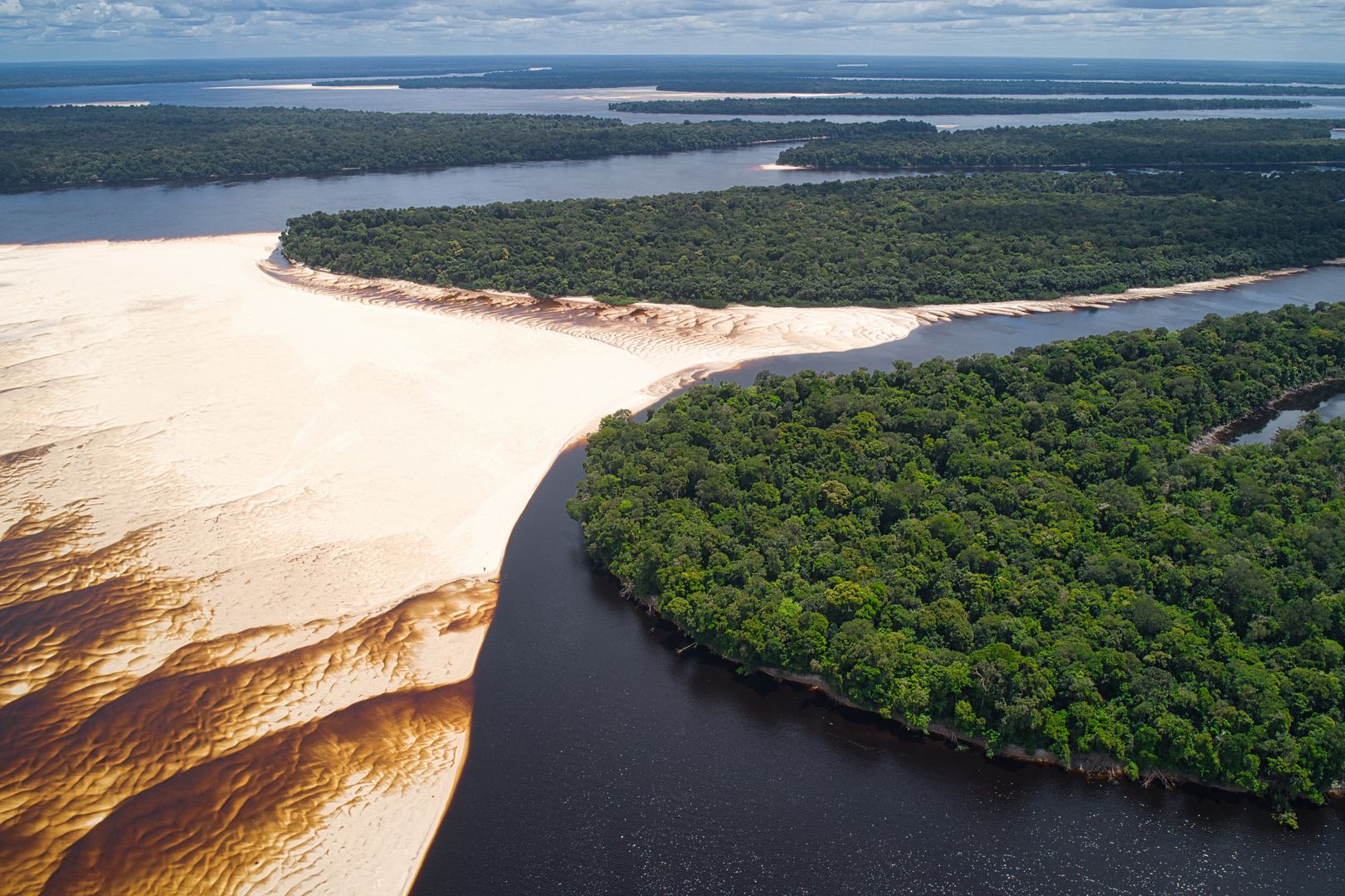
brazilAmazon Rainforest Travel Guide: Manaus, Jungle Lodges, and What to Actually Expect
Most Amazon visits are based in or near Manaus, a city of 2 million in the middle of the Brazilian rainforest. The jungle starts 90 minutes from the city. What you see depends almost entirely on how deep you go and for how long.
Henrik Vinter

16 April 2026
colombiaCartagena, Colombia: Walled City, Caribbean Coast, and What to Skip
Cartagena's walled city is one of the best-preserved Spanish colonial centres in the Americas. The surrounding Caribbean coast is the most straightforward beach region in Colombia to visit independently.
Henrik Vinter

5 February 2026
brazilRio de Janeiro Beyond the Postcard: A Practical First-Timer's Guide
Rio de Janeiro is one of the most beautifully situated cities on earth — granite peaks rising 700m from the Atlantic, Atlantic Forest in the city limits, beaches that curve around the bay like a postcard that happens to be real. It is also a city with stark inequality and street crime concentrated in specific patterns. Both facts exist at the same time. The second one, understood precisely, makes the first one accessible.
Henrik Vinter

3 February 2026
chilePatagonia Without a Tour: How to Do It Independently
Patagonia is large, remote, and weather-dependent—three facts that separate casual planning from actual success. Two main hubs draw independent travellers: Puerto Natales, the gateway to Torres del Paine in Chilean Patagonia, and El Chaltén, Argentina's self-proclaimed trekking capital. Both are accessible by budget airlines from Santiago and Buenos Aires; both have free and paid trekking options; and neither requires a packaged tour if you book accommodation early enough. The standard circuit takes 10–14 days and costs €600–900 (excluding flights) if you camp and self-cater.
Henrik Vinter

1 February 2026
colombiaMedellín, Colombia: What the City Is Actually Like Now
Medellín was the world's most dangerous city in 1991—approximately 6,300 homicides in a city of 1.6 million people. Today it has transformed significantly: the Metro cable car system connects hillside comunas directly to the city centre; the Escaleras Eléctricas (electric escalators) cover 400 vertical metres in San Javier; a metropolitan university system and tech sector investment have created jobs; and tourism arrivals have grown steadily to around 3 million annually. The city is genuinely interesting to visit. It is also not comparable to a European capital for personal safety. The risks are specific, manageable, and worth understanding clearly.
Henrik Vinter

31 January 2026
argentinaBuenos Aires: What to Know Before Your First Visit
The economic dislocation that defines Argentina's current reality also makes Buenos Aires extraordinarily cheap for foreign visitors. The informal exchange rate — the "blue dollar" — trades at roughly double the official bank rate. Tourists accessing this rate through legal channels (cash exchanges at cuevas, or transfers via Wise) find restaurant meals that cost €25 in Lisbon at €8 here, hotels that would command €150 in Madrid available for €50, and steak restaurants charging €12 for meals that cost €50 in London. This shapes everything: what you stay in, where you eat, how long you can afford to remain. It is not the reason to visit Buenos Aires, but it changes the equation entirely.
Henrik Vinter

22 January 2026
peruMachu Picchu: The Logistics Most Guides Get Wrong
Most travel articles about Machu Picchu misidentify which altitude will affect you. The ruins sit at 2,430 metres above sea level — a moderate elevation that rarely causes problems. Cusco, where almost every visitor spends two to three days before heading to the site, sits at 3,400 metres. That 970-metre difference matters. The standard itinerary actually works in your favour: you acclimatise in Cusco, then descend to Machu Picchu, gaining relief rather than facing additional altitude stress. Plan your trip around Cusco's elevation, not the ruins'.
Henrik Vinter