

Sydney to Cairns spans 2,800 kilometres along Australia's most visited coastline, yet most independent travellers underestimate the distances and overload their itinerary. Three weeks gives you Sydney, Byron Bay, Brisbane, the Whitsundays, and Cairns with breathing room. Two weeks forces difficult cuts. The east coast is expensive — budget €55–75 daily in hostels with self-catering, €100–140 for mid-range travel — and distances between stops run 2–6 hours by bus or flight. Plan for slowness rather than coverage.
How long does Sydney to Cairns take by transport?
A direct flight takes 3 hours; overland travel takes 26–30 hours of actual transit time by bus, split across multiple legs. The realistic question is how long the journey should take, not how quickly you can complete it.
Greyhound and similar operators offer coastal bus routes (Sydney–Brisbane 14–16 hours, Brisbane–Cairns 18–20 hours), but sitting in a coach for 24+ hours straight is counterproductive. The alternative is flying between hubs (Sydney–Brisbane €60–100, Brisbane–Cairns €80–150 with advance booking) and using ground transport for regional exploration. A campervan rental (€80–130/day through Jucy, Apollo, or Mighty) solves both transport and accommodation if you're comfortable driving long distances yourself.
The Greyhound Hop-On Hop-Off pass (€250–300 Sydney–Cairns) works if you want unlimited stops without rebooking each leg, though daily schedules can be rigid. Internal flights give you back time but cost more upfront.
Sydney: 4–5 nights
Sydney's core attractions cluster within 20–30 minutes of the city centre. The Bondi to Coogee coastal walk (6km, two hours) is one of the world's finest urban coastal walks — dramatic cliff faces, ocean pools, and sand beaches in sequence, entirely free. Catch a bus from the city (20 minutes, €5 return) to Bondi, walk south to Coogee, and return by bus. This single walk justifies a Sydney day on its own.
The Manly Ferry (€10 return from Circular Quay) frames the Opera House and Harbour Bridge as you travel — better value than any paid harbour cruise. From Manly Wharf, walk north along the beach to Shelly Beach (three kilometres), a marine reserve with reliable snorkelling (tropical fish, sea turtles in warmer months).
The Blue Mountains, 90 minutes west by train (€8 return), offer the Three Sisters rock formation, Katoomba township's cafes and galleries, and the Scenic Railway — the world's steepest passenger railway at 52 degrees gradient. A day trip works; an overnight stay in Katoomba lets you explore the surrounding walks (Wentworth Falls walk, 10km, exceptional). Skip Taronga Zoo (€42 entry, ordinary animal viewing). The Australian Museum (€15) has better natural history collections.
Sydney accommodation costs significantly: hostels €25–40/night, budget hotels €80–120/night, mid-range €150–220/night. Book accommodation in the Inner West (Newtown, Marrickville) for better value than the city centre, 15–20 minutes by train.
Byron Bay: 3–4 nights
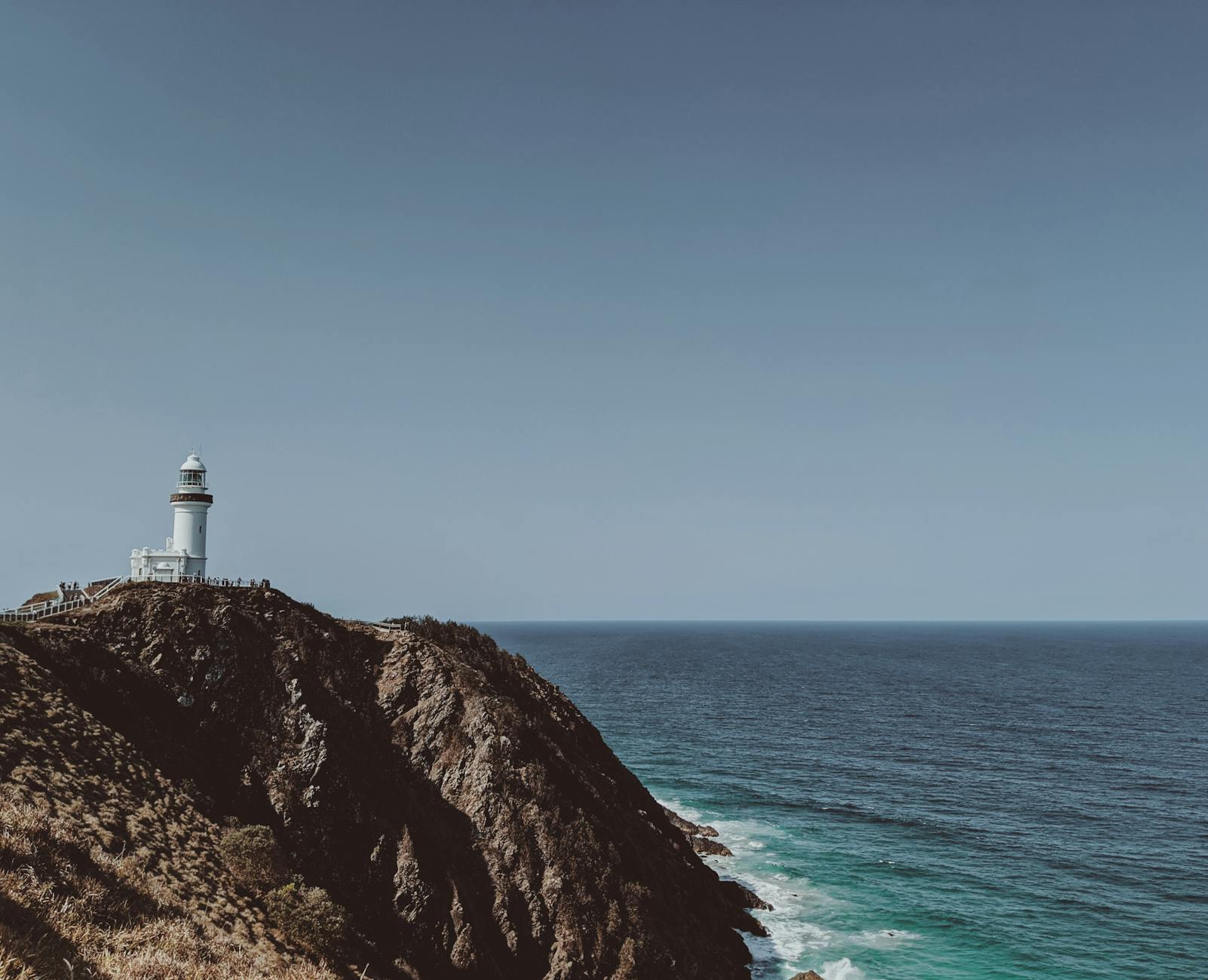
Byron Bay, 12 hours south of Sydney by bus (€35–50 with NSW TrainLink) or one hour by flight (€60–100 from Sydney), is the easternmost town of the Australian mainland. The Cape Byron Lighthouse walk (3.6km return, free) loops around the headland with consistent ocean views and koalas visible in the trees if you're patient.
The town itself is expensive and tourist-oriented, but the beaches are reliable. Main Beach has consistent waves suitable for beginners; Wategos Beach (north of the cape) suits intermediate surfers. Surf lessons run €60 for two hours through multiple schools directly on the beach. The counterculture village of Nimbin lies 30km inland — accessible by day-tour bus (€25) if that scene interests you; otherwise it's a distraction from the actual reason to be here (the coast and rainforest hinterland).
Stay in Brunswick Heads (10km north, cheaper than Byron by €10–15/night) if you want accommodation savings, or in Bangalow (15km west, quiet inland village) for a slower pace. The GoGet shuttle (€15–20) connects these towns to Byron Bay.
Brisbane: 2–3 nights
Two hours north of Byron, Brisbane justifies two or three nights for the South Bank Parklands alone. The 17-hectare riverfront park is free, with free beach pools, free entry to the Gallery of Modern Art (GOMA — the most comprehensive Australian modern art collection in the country) and the Queensland Museum. Spend a half-day here and you've found Australia's best free cultural institution.
Lone Pine Koala Sanctuary, Australia's largest koala sanctuary, costs €30 entry; holding a koala adds €20. This is the reliable option if you want a close encounter with koalas (they're difficult to see in the wild without guided walks through private reserves). The sanctuary also holds wombats, Tasmanian devils, and reptiles — genuine animal interaction rather than zoo viewing.
New Farm neighbourhood, 5km northeast, has independent cafes, a weekend farmers market (Saturday mornings), and Fortitude Valley for evening venues. Transport around Brisbane is cheap: a single bus ticket costs €3.50; a day pass costs €9.50.
Noosa: 2 nights
Two hours north of Brisbane, Noosa National Park offers 15km of free coastal walking tracks starting five minutes from the town centre. The main loop (Coastal Track) winds through eucalypt forest with reliable koala sightings and ocean views. Dolphins appear in Laguna Bay seasonally (especially July–October). The park entrance is free; car parking costs €11.50/day if you're driving, or catch a local bus from the town centre.
Hastings Street runs along the beach and is densely packed with expensive cafes and restaurants — useful for a meal but not representative of Noosa. Lake Weyba, 10km inland, offers a quieter half-day: freshwater swimming, walking tracks, and fewer tourists. Renting a kayak costs €40–60/day.
The Whitsundays: 3–4 nights

Seventy-four islands sit within the Great Barrier Reef Marine Park, accessible from Airlie Beach on the Queensland coast (five hours north of Brisbane by bus, or fly direct). The main experiences are Whitehaven Beach and reef snorkelling.
Whitehaven Beach, on Whitsunday Island, is consistently rated among the world's best beaches — 7km of pure silica sand (98% purity) that doesn't retain heat even in direct sun. Day trips from Airlie Beach run €100–120 all-inclusive (ferry, snorkelling gear, and reef time). The viewpoint at Hill Inlet, looking down at the swirling water pattern of sand and tidal movement, is the signature photograph.
Sailing trips aboard crewed yachts (2–3 nights, €350–500 all-inclusive) include snorkelling and island stops, with 6–12 passengers per boat. The fleet varies significantly: some boats cater to the party demographic, others to quiet nature travellers. Book ahead (at least six weeks for July–September peak season) and specify your preference. Airlie Beach itself is a concrete tourist strip — arrive for tours only, don't spend days here.
The Great Barrier Reef: honest context
The reef has experienced severe coral bleaching events (2016, 2017, 2020, 2022), with approximately 50% of overall coral coverage declining since 1995. The outer reef (60–90 minute boat journey from Cairns or the Whitsundays) retains substantially better health than inner reef areas close to shore. Book operators that specify outer-reef destinations — Sunlover, Passions of Paradise, and Silver Sonic from Cairns are reliable choices.
Despite degradation, the reef remains exceptional. Sea turtles, reef sharks, Maori wrasse, parrotfish, and hard coral formations survive in deeper areas. Visibility on a clear day reaches 15 metres. You will not see what 1980s photographs show, but knowing that expectation, a snorkelling day trip (€120–180) is still genuinely extraordinary. Certified divers access deeper sections with significantly more marine life and formations; consider diving rather than snorkelling if you're qualified.
The reef is worth visiting specifically because of its current state, not in spite of it. It's a fragile environment you should see and understand rather than ignore.
Cairns: 3–4 nights
Cairns is the working hub for reef access, not a destination for beach tourism. The beaches are poor (muddy, stinger-prone in summer). Book a snorkelling or diving day trip to the outer reef instead (€120–180 for snorkelling, €200–280 for certified diving).
The Daintree Rainforest, two hours north, is the oldest tropical rainforest on Earth — 135 million years old, predating the Amazon. Cape Tribulation, where the rainforest meets the beach, is genuinely unusual landscape. Self-drive if confident (4WD recommended in wet season; standard vehicles manage in dry season). Day tours run €100–130 and include interpretation. The Curtain Fig Tree — an ancient strangler fig wrapped around a host tree — is free and extraordinary; it's a 90-minute detour inland but worth it if you're self-driving.
The Atherton Tablelands, one hour inland, contain waterfalls, crater lakes, and quiet villages. A half-day loop through Yungaburra, Millaa Millaa, and Malanda covers the main sights (€40–60 with a tour operator, or self-drive if you have a car).
Budget reality
Daily costs vary by travel style:
- Budget (hostel + self-catering): €55–75 per day
- Mid-range (private room + mix of restaurants and self-catering): €100–140 per day
- Comfort (hotel + restaurants): €180+
The east coast is comparable in cost to Scandinavia, not Southeast Asia. Accommodation prices are highest in Sydney (€100–200+ for mid-range private rooms) and lower in regional towns (€60–100). Flights between hubs are cheap with advance booking but quickly erase savings if you book last-minute. Camping in a campervan or caravan park (€20–40/night) is the classic budget approach.
Transport between major cities (bus or flight) adds €150–200 to your total journey cost across the full route. Food is expensive; a simple lunch costs €15–20, and groceries aren't substantially cheaper than restaurants.
When to visit: seasonal considerations
May to September (winter/dry season): Best overall weather, but peak tourist season. Prices rise 15–30% for accommodation and tours. Stinger suits are unnecessary; water temperature drops to 20–22°C. Book reef tours and Whitsunday sailing six weeks ahead.
November to March (summer/wet season): Hot, humid, and stinger-prone (dangerous jellies in coastal waters requiring stinger suits for ocean swimming). Fewer tourists, lower prices. Reef tours operate daily. The Daintree becomes inaccessible after heavy rain.
October and April (shoulder months): Pleasant temperatures, moderate crowds, good prices. Water temperature 23–26°C. These are the actual ideal months; peak season reputation is partly marketing.
The Great Barrier Reef is accessible year-round, though visibility peaks May–September. The reef itself doesn't close; water temperature and stinger presence are personal preference factors, not barriers.
Working holiday visa for longer stays
Australia's Working Holiday Visa (subclass 417, 462) allows citizens of eligible countries (most of Europe, plus others) to work and travel for 12 months. Age limits apply (typically under 31–35, depending on nationality). Securing sponsorship for a regional work requirement (fruit-picking, hospitality) extends the visa to two years. This is a long-stay play; three weeks doesn't require it. Apply online (€510 AUD) if you plan to stay beyond a tourist visa.
The practical route
Start in Sydney (4 nights), coastal-walk south to Byron Bay (3 nights), drive or bus to Brisbane (2 nights), pause in Noosa (2 nights), fly to the Whitsundays (4 nights including a sailing trip), then fly to Cairns (3 nights with a reef day trip and Daintree exploration). This path respects distances and avoids the rushed feeling of five-hour drives between stops. Total: 21 nights, sustainable pace, all major highlights covered.
The east coast works best as a slow trip — spending enough time in each place to understand it rather than photographing and moving on. Three weeks is genuinely the minimum for the Sydney–Cairns route to feel unhurried. The Whitsundays alone justify the journey if beaches matter to you. The reef, compromised as it is, remains worth snorkelling. Australia rewards travellers who accept that big distances mean choosing between doing more and experiencing more.