

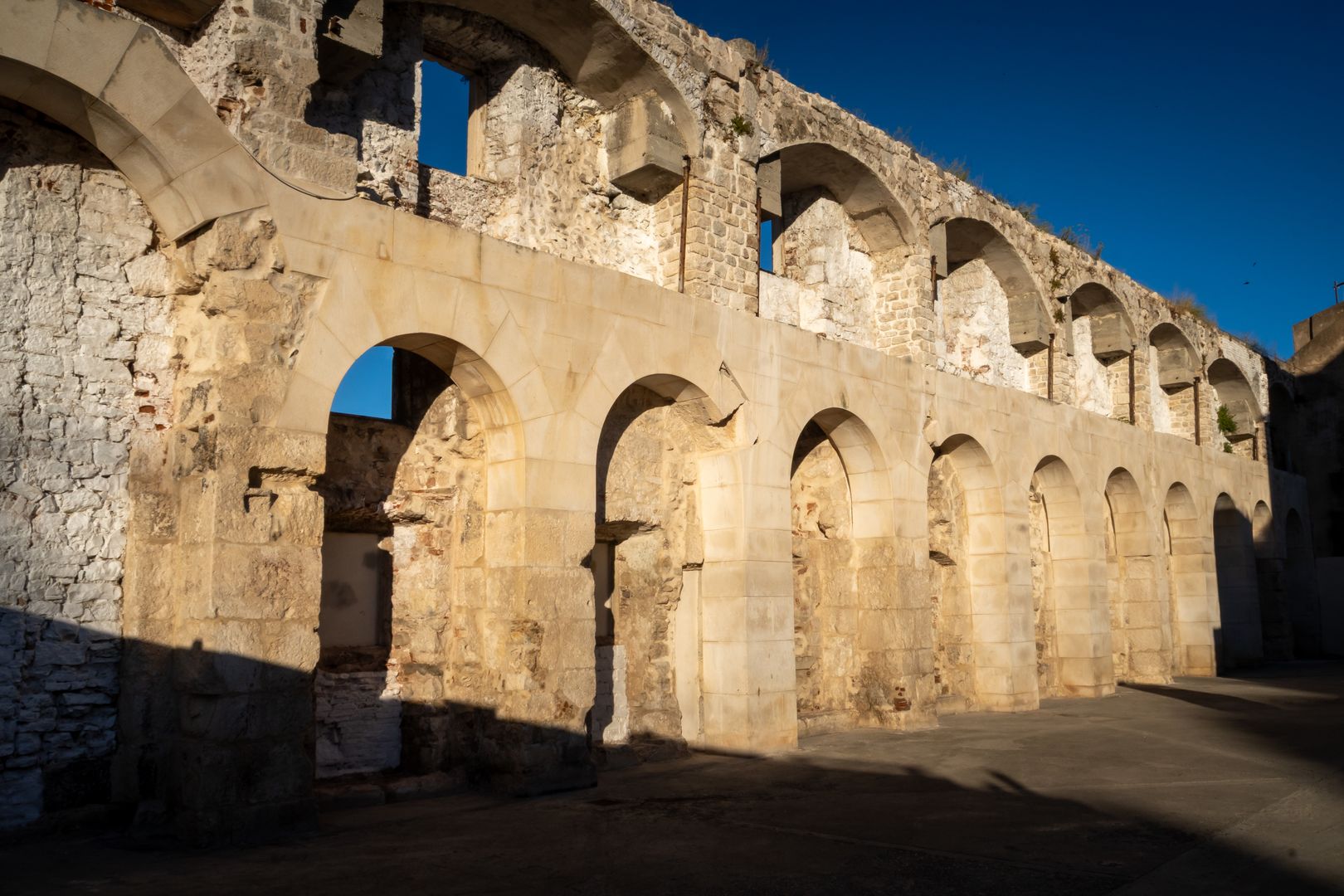
Diocletian's Palace was built around 305 AD as a fortified retirement complex for the Roman emperor. It covers about 3 hectares and was designed to hold 9,000 people. Today the palace walls contain a living neighbourhood of roughly 3,000 residents, along with the majority of Split's tourist restaurants, the cathedral that was converted from Diocletian's mausoleum in the 7th century, and the basement halls where the emperor's apartments once sat. The basement is the most instructive part of the visit — a complete Roman floor plan preserved because people built on top of it rather than demolishing it.
What to See in the Old Town
Peristyle Square is the central public space of the palace and still functions as one — cafés set tables outside, street musicians perform in the evening, and the Cathedral of Saint Domnius (the converted mausoleum) opens onto it. Entry to the cathedral is €7; the bell tower climb adds another €7 and gives views over the terracotta rooftops to the sea. The basement halls under the palace (Diocletian's Cellars) cost €12 to enter and take about 45 minutes to walk through. Both are worth doing.
The palace has four gates. The Golden Gate on the north side leads to a large bronze statue of Bishop Gregory of Nin, a 10th-century Croatian bishop, with a big toe polished bright from visitors rubbing it for luck. The Iron Gate on the west side opens to the Narodni Trg (People's Square), the main civic square of medieval Split — smaller than the Peristyle but with better café options. The market (Pazar) outside the eastern Silver Gate sells produce, local cheese, and lavender products every morning.
Beaches Around Split
Split itself is not primarily a beach destination — the city beaches are urban, fine for a swim but not the main reason to come. Bačvice, the closest beach to the old town at 700m, is a shallow sandy cove and the place to watch Picigin — a five-person ball-passing game played in ankle-deep water, specific to Split, taken seriously by locals regardless of how it looks.
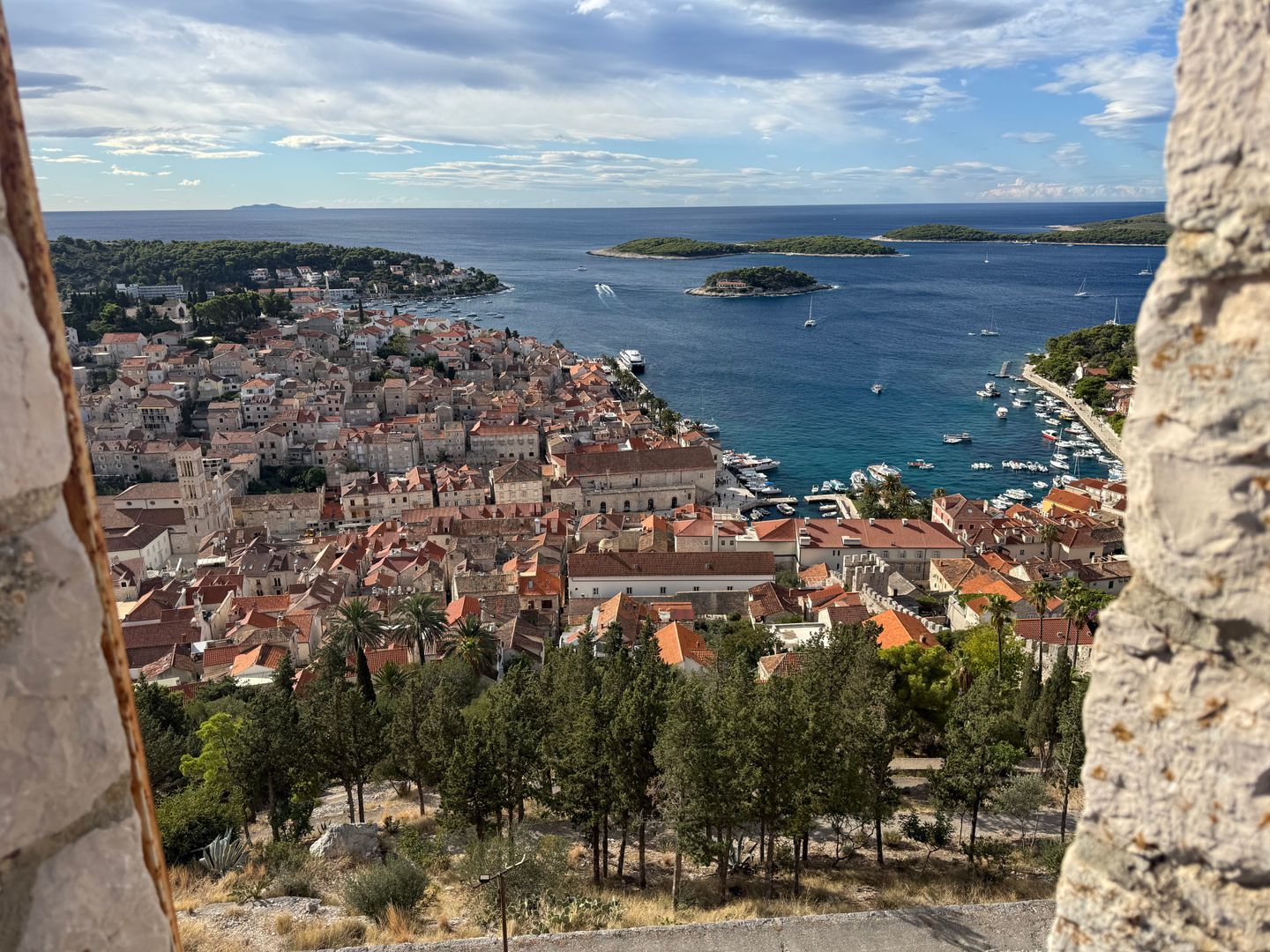
The better beaches are a short drive or ferry away. Omiš, 25km south, has good shingle beaches at the mouth of the Cetina River canyon and is less crowded than the Split city beaches. Brač island, 50 minutes by ferry, has Zlatni Rat — a white shingle beach that changes shape with the currents and is one of the more photographed coastlines in Croatia. Hvar, 1 hour by catamaran, has the best combination of beaches and nightlife in the region.
Day Trips From Split
Krka National Park (90 minutes by bus, €15 entry) contains a series of cascading waterfalls and is more accessible than Plitvice — easier to get to from Split, and shorter overall. Swimming was banned in the main cascade area in 2019; the secondary swimming area near Roški Slap is still permitted.
Trogir, 27km west of Split and served by local bus 37 (30 minutes, €2.50), is a small fortified town on an island connected by bridges. UNESCO-listed like Split, but quieter and less developed — good for a half-day. The cathedral and the Kamerlengo fortress are the two main sites.
Mostar in Bosnia and Herzegovina is 2h30 by bus (several daily, €12–15 one way) and makes a long but manageable day trip. The Stari Most (Old Bridge) is the central sight; the surrounding bazaar and the street leading up to the mosque are worth an hour each. The drive through the Dalmatian interior and then the Neretva Valley is itself worth the journey.
When to Visit Split
May, June, and September are the best months. June in particular is close to ideal — sea temperature around 22°C, long daylight hours, not yet the peak July–August crowd levels. September sees the crowds thin from mid-month while retaining summer temperatures and warm sea (25°C through October).
July and August are the busiest months, particularly the first two weeks of August when Central European school holidays overlap. Accommodation prices peak, the old town is genuinely crowded in the evenings, and ferry queues for the islands lengthen considerably. If these are your months, book accommodation 8–10 weeks ahead and use the morning hours for sightseeing before the day-trippers arrive from the cruise ships.
October through April is quiet — Split is a year-round city, not a seasonal resort, and most restaurants and hotels remain open. March and April have good weather for walking; sea temperature is 14–16°C in April, not comfortable for swimming.
Getting to Split
Split Airport is 25km west of the city. Bus 37 connects the airport to the city bus terminal near the ferry port (30 minutes, €7); taxis cost €30–40. Direct flights operate from most European capitals; budget carriers including Ryanair, Wizz Air, and easyJet serve Split from April through October. Winter services are reduced significantly.
The ferry port is adjacent to the old town and connects to Hvar (1 hour catamaran, €12), Brač (50 minutes, €7.50), Vis (2h15, €12), and Ancona in Italy (overnight, 9–10 hours, €35–90 depending on accommodation class). Jadrolinija is the main operator; book online in summer to guarantee the departure you want.
Costs and Accommodation
Split is significantly cheaper than Dubrovnik but has moved upmarket in recent years. A mid-range hotel or apartment in the old town runs €90–160 per night in July–August, €60–100 in shoulder season. Eating inside the palace walls is expensive by Croatian standards (€15–25 for a main course); one block outside, prices are 20–30% lower for equivalent food. The fish market near the port sells fresh catch every morning and is excellent for orientation — the prices are posted publicly.
A daily budget covering accommodation, two restaurant meals, one museum, and a ferry day trip runs €80–120 per person in shoulder season. In peak summer, add 30–40% for accommodation and €10–15 for ferry queuing time converted to taxi cost if you want to guarantee specific departures.


