

Cappadocia sits in central Anatolia at around 1,000 metres elevation, and the landscape looks the way it does because ancient volcanic eruptions deposited thick layers of ash that compressed into soft rock over millions of years, then eroded unevenly. The result — tall stone columns called fairy chimneys, valley walls carved into cave dwellings, underground cities dug to 85 metres depth — is genuine geological oddity rather than something constructed for visitors. People have been living in these caves since at least the Bronze Age, and several thousand residents still do. The tourism infrastructure now built around it is considerable, but the landscape itself holds.
Getting to Cappadocia
Cappadocia has two airports: Kayseri (ASR) and Nevşehir (NAV). Kayseri is 75km from Göreme, the main tourist hub, and has more flights, including regular connections to Istanbul on Turkish Airlines and Pegasus. Nevşehir is 40km from Göreme but has fewer routes. Both airports have shuttle services to Göreme (€8–12) that meet incoming flights. The journey from Kayseri takes around 75 minutes by shuttle.
From Istanbul by road, Cappadocia is 700km — roughly a 9-hour drive or an overnight bus (several operators, around 10–11 hours, €20–35). The overnight bus is a practical option if you want to save a day: depart Istanbul evening, arrive Göreme morning. Flights from Istanbul take 1h20 and cost €30–90 return if booked two to three weeks ahead.
Where to Stay: Göreme vs Ürgüp vs Uçhisar
Göreme is the most central and backpacker-friendly option — compact, walkable, with the best concentration of budget and mid-range accommodation and the closest access to the Open Air Museum. Ürgüp is larger and more upscale, popular with couples and honeymooners, with a wider selection of boutique cave hotels. Uçhisar sits on a high rock with panoramic views and is quieter than both; good for people who want to be in the landscape rather than surrounded by tour infrastructure.
Cave hotels — rooms carved into volcanic rock — are the characteristic accommodation here and range from basic hostels to expensive suites with jacuzzis. Mid-range cave rooms run €80–150 per night in shoulder season. The appeal is real: rock maintains a stable temperature year-round, so cave rooms are cool in summer and warm in winter. Booking 4–6 weeks ahead in April–May and September–October is necessary; these are the peak balloon flight seasons and accommodation fills early.
Hot Air Balloon Flights: What to Know
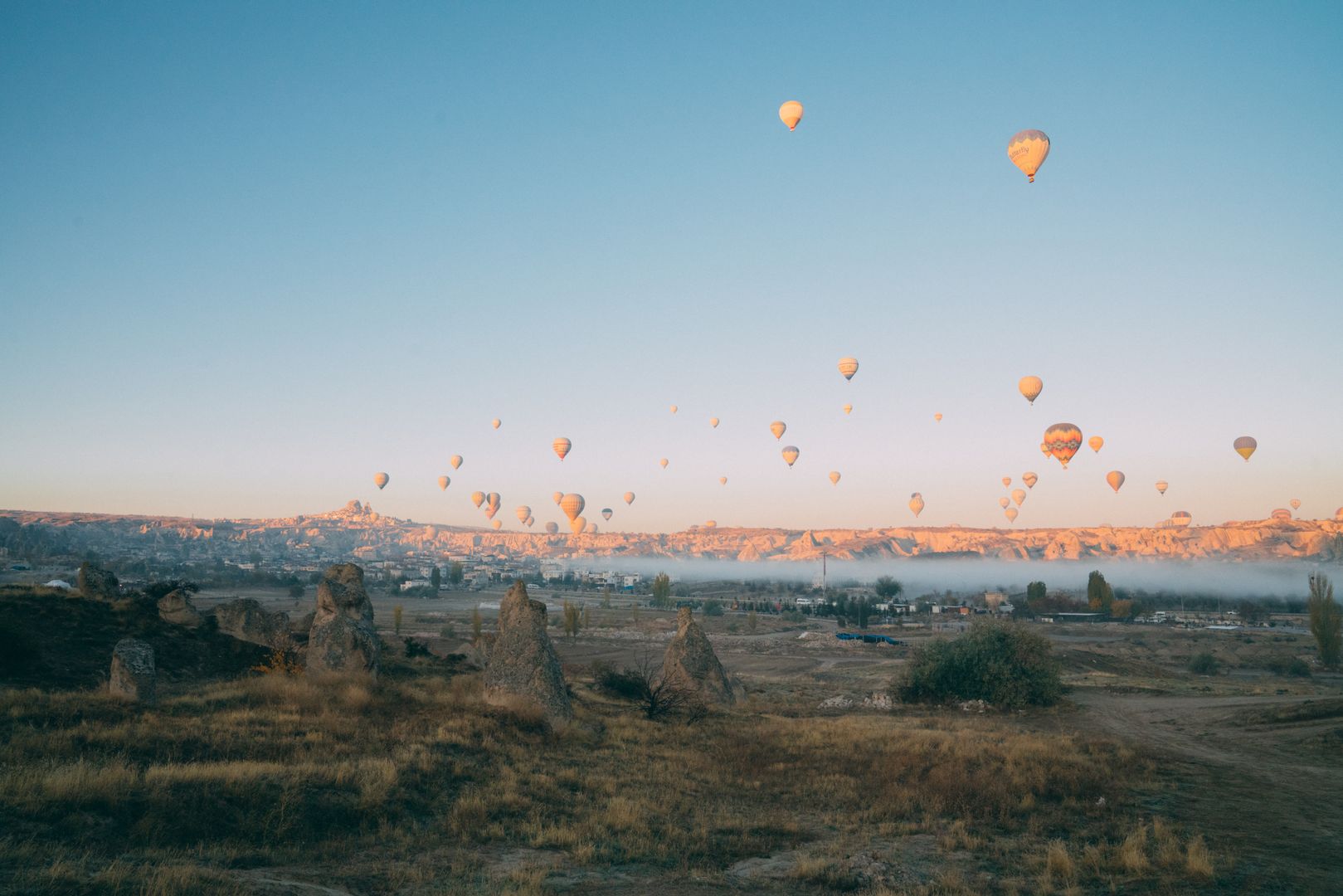
Cappadocia is one of the most popular hot air balloon destinations in the world, and the flights are popular for good reason — floating over the fairy chimneys at dawn, when the light is low and the valleys are still quiet, produces views that photographs don't fully communicate. Flights launch at sunrise and last 45–75 minutes depending on the operator and package. Standard prices run €150–250 per person; premium operators charge €300–400 for smaller baskets and longer flights.
Book directly with operators or through your hotel at least 2–3 weeks ahead in spring and autumn. Kapadokya Balloons and Royal Balloon are two of the longest-established operators with good safety records. Flights are weather-dependent and can be cancelled on short notice; reputable operators offer full refunds or rescheduling when this happens. Wind conditions mean April, May, September, and October have the highest flight completion rates — summer is windy and cancellations are more frequent.
What to See Beyond the Balloons
The Göreme Open Air Museum (entry €15) contains Byzantine rock-cut churches with 11th-century frescoes in various states of preservation. The Dark Church (Karanlık Kilise) has the best-preserved paintings and charges an additional €8 entry; it's worth it. The museum is Cappadocia's most-visited site and is crowded between 10am and 3pm — go early or late.
The Rose Valley and Red Valley trail between Çavuşin and Göreme takes 3–4 hours and covers some of the most accessible canyon scenery without requiring a guide. The Ihlara Valley, 90 minutes' drive southwest, is a 14km gorge with 80-odd rock churches cut into the cliff walls and a river running through the bottom — less visited than Göreme and noticeably different in character. Derinkuyu Underground City, 30km south, descends to the 8th level at 85 metres and held 20,000 people during Byzantine persecution; entry is €15 and the visit takes about an hour. The tunnels are cramped.
When to Visit Cappadocia
April–May and September–October are the best months. Temperatures in April run 8–18°C — comfortable for hiking, good for photography with clear skies. May is warmer (15–24°C) and the landscape is green from spring rains. September and October have stable weather and arguably the best light for balloons.
July and August are hot (30–36°C), and the plateau heat is dry and intense — hiking midday is unpleasant. Winter (December–March) brings snow, which makes the landscape look extraordinary, but balloon flight cancellations are frequent and some smaller hotels close. January temperatures drop to -5°C at night.
Practical Logistics

Renting a car or scooter gives the most flexibility for reaching the outer valleys and villages. Scooter rental in Göreme runs €20–30 per day; cars start at €35–50. Many sites are drivable within 30 minutes of Göreme. For people who don't want to drive, organised tours from Göreme cover the main sights in a day for €40–70 per person. The tours are efficient if not particularly atmospheric.
Three days is the minimum to do Cappadocia properly — one day for the valley hikes and Open Air Museum, one day for Ihlara and Derinkuyu, and one morning for the balloon (weather permitting). Four or five days allows for a slower pace and the ability to absorb the less-visited valleys north of Avanos. Most visitors try to do it in two days and leave feeling they rushed it.
Budget Expectations
Cappadocia is moderate to expensive by Turkish standards but reasonable by European ones. Excluding accommodation, a daily budget covering food, entry fees to two sites, and transport runs €40–70. The balloon flight is the biggest single expense — treat it as a once-off cost rather than a daily figure. Local restaurants in Göreme serve good food at €8–15 for a full meal; the tourist-facing places on the main strip charge double. Pottery is the main souvenir; Avanos, 10km north, has working studios where you can watch the process and buy direct.
