

Cuba has been described as frozen in time, which is partly true and mostly misleading. The American cars from the 1950s are real — hundreds of them, maintained through decades of improvisation — but the country is changing faster now than it has in 60 years. Private restaurants (paladares) expanded, then multiplied. Internet access arrived slowly and is now widely used. Casas particulares have largely replaced state hotels as the accommodation of choice for independent travellers. What has not changed is the logistical friction: cash is essential, internet is slower than most travellers expect, and the gap between what the infrastructure can reliably deliver and what it occasionally promises remains wide.
Money and the Cash Economy
Cuba operates a cash economy for tourists. Credit cards from US-affiliated banks are widely rejected, and Mastercard and Visa have been inconsistent since 2023 due to sanction-related processing changes. The safest approach is to bring enough cash for your entire trip — euros, Canadian dollars, and British pounds are exchanged easily; US dollars attract a 10% penalty at exchange bureaus. Change money at official cadecas or bank branches rather than informally.
The dual currency system (CUC and CUP) was officially unified in 2021, with the Cuban peso (CUP) now the single currency. In practice, tourist-facing businesses increasingly quote in US dollars or euros. Expect restaurant meals in Havana to run $10–25 per person at tourist establishments; local peso restaurants charge the equivalent of $1–3. The difference in food quality is often minimal.
Havana: What to See and Where to Be
Havana Vieja (Old Havana) is a UNESCO World Heritage Site containing the highest concentration of colonial Spanish architecture in the Americas — 900 buildings of historical importance within a few square kilometres. The Plaza de la Catedral, Plaza Vieja, and the Malecon seafront are the central areas. The Malecon at sunset, when Habaneros gather on the seawall to talk, drink, and fish, is the most honest urban social scene in the city.
Centro Habana, directly west of the Old Town, is the working-class residential district. The Callejon de Hamel — a mural-covered alley hosting Afro-Cuban rumba performances on Sunday mornings — and the restored Capitolio building are worth time. Vedado, the early 20th-century neighbourhood further west, has the Hotel Nacional, the Cementerio de Colon (one of the finest 19th-century cemeteries in Latin America), and what remains of Havana's jazz and live music scene.
Trinidad and Vinales

Cuba's most visited destinations outside Havana are Trinidad and Vinales, and both are genuinely worth the journey. Trinidad, on the south coast, is a colonial town of 75,000 where the streets are cobblestoned with smooth river stones and the architecture has changed little since the sugar boom of the 18th and 19th centuries. The nearby Playa Ancon has the best sand beach within easy reach of the town. Getting to Trinidad from Havana by bus (Viazul, 6 hours, $25) is straightforward.
Vinales, 3 hours west of Havana by bus, sits in a valley flanked by mogotes — steep-sided limestone formations that give the landscape a texture unlike anything else in Cuba or the Caribbean. The valley floor is farmed tobacco, and the curing houses are accessible on foot or horseback. The town is small and easy to explore without a guide, though farmers at roadside stands offer informal tobacco field tours that are among the better unscripted experiences the country offers.
Internet Access and Communication
Cuba's internet is state-controlled and slower than most travellers are used to. Wi-Fi is available at many casas particulares and tourist hotels, but speeds are typically 1–5 Mbps and connectivity drops. ETECSA, the state telecom, sells data SIM cards at airports and offices. Download maps offline before arriving — Maps.me works well without connectivity. WhatsApp works when connected; social media platforms are accessible but slow. Plan communications around connectivity as a variable rather than a constant.
When to Visit Cuba
November through April is the dry season: temperatures 23–27°C, low humidity, minimal rain. December and January are the most popular months, particularly with European visitors escaping winter. The wet season (May–October) brings tropical rains, higher humidity, and hurricane risk from August onward. The worst months for hurricanes are September and October. June and July are hot and wet but workable — prices are lower and the main sites are less crowded.
Getting There and Around
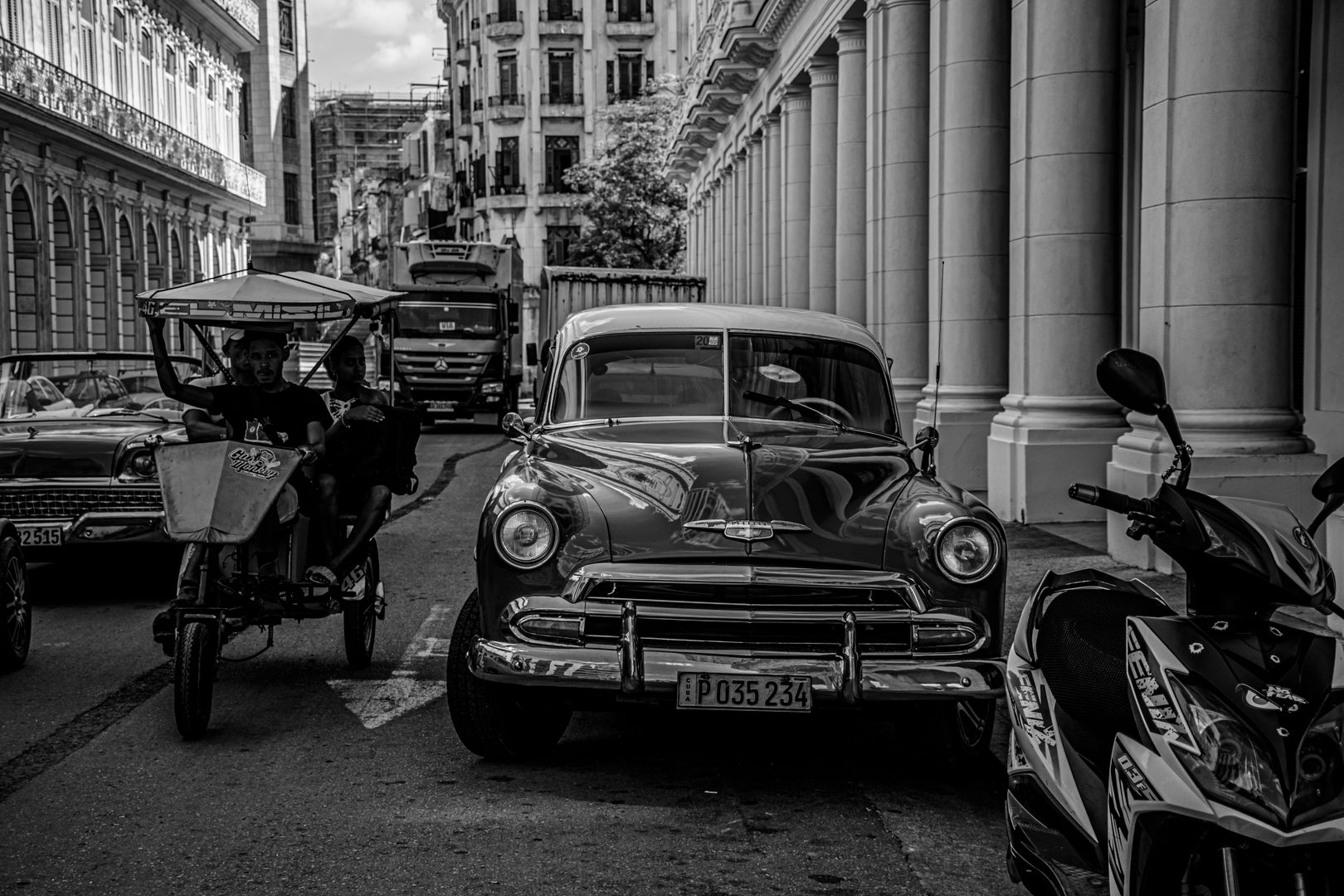
Havana's José Marti International Airport receives direct flights from London (9 hours), Madrid (10 hours), Toronto (3h30), and Mexico City (3 hours). Within Cuba, Viazul buses are the most reliable intercity transport for tourists — fixed schedules, air-conditioned, and bookable online. Taxis colectivos (shared taxis in old American cars) run fixed routes between cities at roughly double the bus price but faster.
Accommodation
Casas particulares — private homes licensed to take paying guests — are the best accommodation option. A private room with breakfast runs $25–60 per night depending on location and quality; state hotels charge international prices for below-international standards. In Trinidad and Vinales, the density of casas is high enough to arrive and find a room without pre-booking outside peak season. Booking direct via casas' own contact details or through Cuban accommodation aggregator sites avoids platform commission that eats into what goes to hosts.