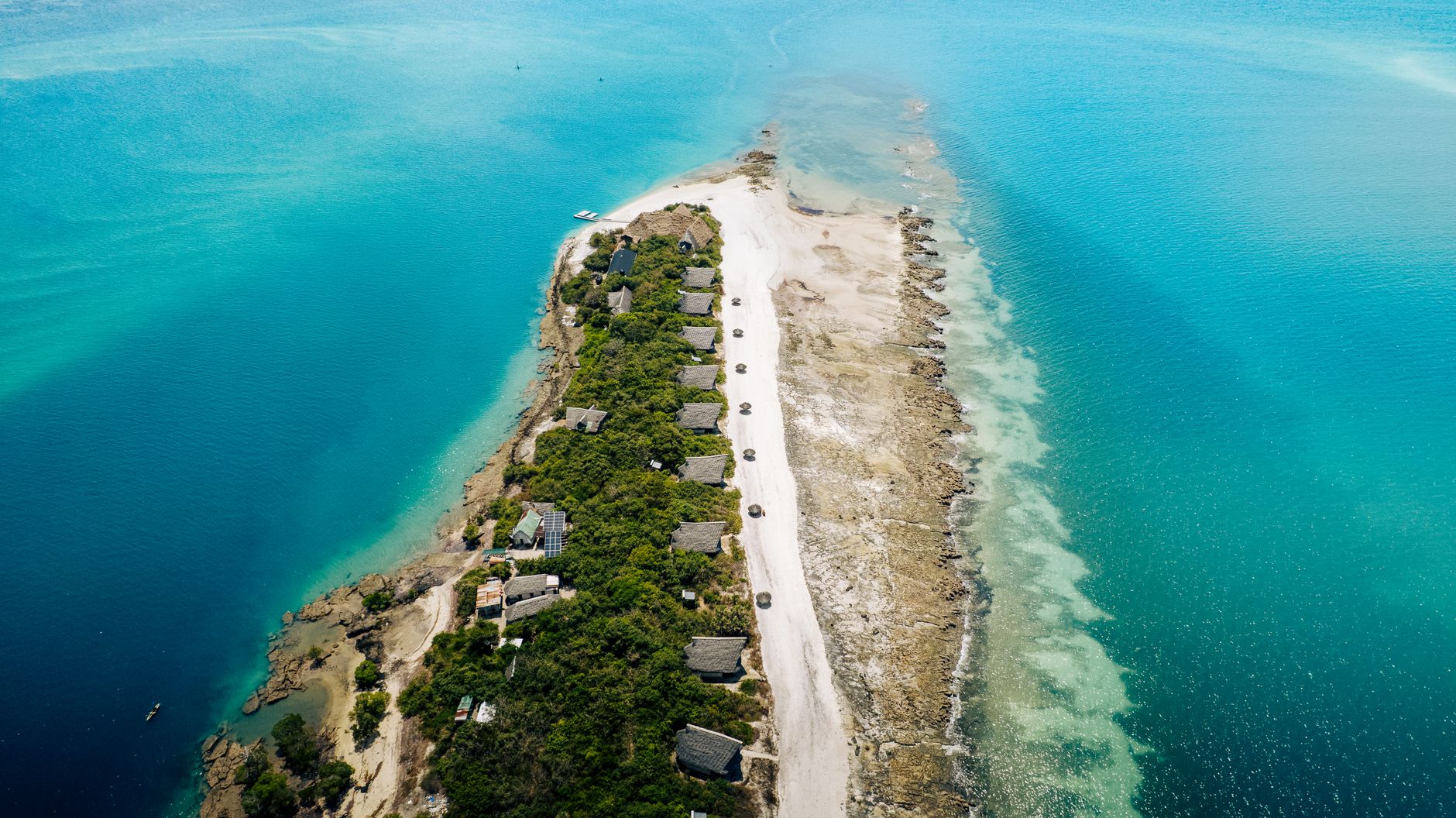

Mnemba Island sits about 3km off the northeast coast of Zanzibar — a flat coral atoll barely a kilometre across, ringed by some of the most intact reef in the western Indian Ocean. The island itself is private. The marine area around it is what draws divers and snorkellers from across East Africa and well beyond.
What Mnemba Actually Is
The confusion about Mnemba starts with how it's described. The island is leased by &Beyond, one of the established high-end safari operators. Their camp occupies the entire landmass — a handful of banda suites at rates that start around $1,500 per person per night, all-inclusive. If you're not staying there, you don't set foot on the beach.
The Mnemba Conservation Area is a different matter. It extends roughly 3km in every direction from the island and protects a network of coral reef that anyone can access with a permit. That permit — currently $20 USD per person — is included in almost every legitimate dive or snorkel trip booked from Zanzibar. You come by dhow or motorboat from Matemwe or Nungwi on the main island, anchor at the reef edge, and enter the water from the boat.
This is the practical reality that most descriptions skip: Mnemba is not a destination you visit in any conventional sense. It's a dive site. The island is the backdrop.
The Marine Life
The reef around Mnemba is in noticeably better condition than most Indian Ocean sites that receive visitor pressure. The conservation area has been enforced with reasonable seriousness since the 1990s, and the currents here keep water oxygenated and clear. Visibility typically runs 20–30 metres on calm days.
Spinner dolphins are the headline. Large resident pods — sometimes 50 or more animals — spend mornings in the sheltered water between Mnemba and the Zanzibar coast. Most day trips leave early specifically to intercept them. The encounters are not guaranteed, but the hit rate is high enough that visitors spending two or three days in the area will almost always see them.
Sea turtles are consistent throughout the year. Both hawksbill and green turtles nest on the island's beaches and are regularly seen during dives and snorkel trips — the Aquarium site on the southern side of the atoll is particularly reliable. Reef sharks patrol the deeper channels on the north face. Whale sharks pass through between October and February, with November and December being peak months.
The coral itself — hard and soft varieties across multiple reef systems — is dense and largely intact. Reasonable fish populations, including napoleon wrasse, barracuda, and large grouper on the deeper sections. For macro divers, the rubble zones hold nudibranchs, ghost pipefish, and the occasional frogfish.
Getting There from Zanzibar

The main departure points for day trips are Matemwe village — the closest point on the main island, roughly 40 minutes from Stone Town by taxi — and Nungwi in the north. Most hotels along the northeast coast run their own excursions; you can also book through dive operators in Stone Town or at the larger beach resorts.
A standard snorkel day trip includes dhow transfer, equipment, a guide, and usually lunch on the water. Prices vary between $50 and $120 USD per person depending on the operator, group size, and what's included. The $20 conservation fee is charged separately by some operators and bundled by others — confirm before booking. Dive trips run $80–150 for two dives, equipment included.
The crossing takes 20–40 minutes each way. In calm conditions this is a straightforward boat ride. During the southeast monsoon (April–June), the northeast coast picks up significant swell and Mnemba trips sometimes get cancelled or rerouted. Check conditions with operators in Matemwe rather than relying on Stone Town forecasts, which can be misleading for the open-water crossing.
If you're staying at one of the small guesthouses or dive camps in Matemwe, some have their own boats and resident dive instructors, which reduces logistics and often the price.
The Dive Sites
Aquarium — The primary site for snorkellers and beginner divers, with dense coral garden between 3 and 12 metres. Turtle sightings are frequent here. Suitable for all ability levels.
Big Wall — A coral wall on the north face of the atoll dropping to around 30 metres, with reliable current and regular sightings of reef sharks, eagle rays, and napoleon wrasse. Better suited to intermediate and experienced divers.
Dolphin's Corner — The main spinner dolphin gathering point in calmer water on the western side of the atoll. Early morning gives the best chance of extended encounters.
Kichwani — A channel site between patch reefs where currents concentrate pelagic fish. Experienced divers only. Whale shark sightings here in season.
East Reef — A drift dive along the east side of the atoll for stronger current days. Good coral coverage, less visited than the south sites.
Most dive operators running Mnemba trips are PADI-affiliated. Equipment rental quality is adequate but variable — experienced divers bringing their own mask, fins, and computer will be better served.
Staying on the Island
&Beyond Mnemba Island generates a consistent stream of glossy coverage, which creates expectations in both directions. The property itself: around 10 banda suites, open-sided with ocean views on all sides, no air conditioning (ceiling fans, sea breeze), limited Wi-Fi, and a coral sand path between buildings. The operation is well-run, the food is genuinely good, and the service is attentive without being overworked.
The real argument for staying: reef access at dawn, before day trippers arrive. Night diving. Turtle activity on the beach outside your suite. Departures for whale sharks, dolphin encounters, or deep-water fishing on your schedule rather than a shared tour's. Stays typically run 3–4 nights; many guests combine it with stone town or a safari elsewhere in Tanzania.
What staying doesn't give you: flexibility to explore Zanzibar. Stone Town, Jozani Forest, the south coast beaches, the spice farms — none of these are practical day trips when you need a boat to reach shore. For guests whose priority is the water and not the island, that's an acceptable trade. For those wanting to see Zanzibar broadly, it makes more sense to base in Matemwe or Nungwi and take Mnemba day trips.
Rates are bookable directly through &Beyond and vary significantly by season. High season (July–October, December–January) is when prices peak and when marine life is most reliably active.
When to Go

June to October — the dry northeast monsoon season, kaskazi. Calmest seas on the northeast coast, best underwater visibility, most consistent dolphin encounters, and peak turtle activity. This is the most popular window and when &Beyond operates at full capacity.
November to March — the second viable window. Drier conditions return after the short rains of November. Whale shark season runs from roughly October through February, with November and December seeing the highest concentration. Water temperatures sit around 26–28°C.
April to June — the long rains, and the southeast monsoon (kusi) builds swell on the northeast coast. Day trips to Mnemba are possible in good weather windows but less reliable. Some smaller operators close during this period. Not recommended for planning around Mnemba specifically.
Water temperature stays between 24–28°C year-round. A 3mm wetsuit is optional but comfortable on multiple dives or extended snorkel sessions.
Practical Information
Mnemba Conservation Area fee: $20 USD per person per visit, payable at the Matemwe marine park office or included in reputable tour packages. Confirm it's bundled before booking.
Day-tripper access rules: Landing on Mnemba Island is not permitted for day visitors under any circumstances. Boat anchors at the reef; all activity is in the water or on the boat.
From Stone Town: approximately 1.5 hours by road to Matemwe. A private taxi for the day costs around $50–60 USD return. Shared dala-dala transport runs on the main east-coast road but requires a walk from the junction.
Matemwe village: worth an evening regardless of your diving plans. The village has a working fishing community, fresh catch at the local stalls, a few guesthouses at non-resort prices, and a quieter atmosphere than the hotel strips further north. If you're paying resort prices elsewhere, it's still a useful contrast.
Equipment: All major Zanzibar dive operators carry rental gear. Bring your own mask if you're particular about fit — rental masks vary significantly in quality, and a good seal matters more in Mnemba's sometimes-current conditions.
FAQ
Can you visit Mnemba Island without staying at the &Beyond resort? You can access the marine area around the island for snorkelling and diving, and boats come within metres of the beach. You cannot land on the island or use its facilities unless you're a paying &Beyond guest.
What does a Mnemba day trip cost? Snorkel trips typically run $50–120 USD per person inclusive of the conservation fee, guide, and equipment. Scuba dive trips cost $80–150 for two dives. Prices vary by operator and season; book direct with a Matemwe-based operator for the best rates.
When are spinner dolphin sightings most reliable? Morning departures between 7am and 11am give the best chance. July through October produces the most consistent encounters, though pods are resident year-round. Calm conditions matter more than time of year.
Are whale sharks a reliable sighting at Mnemba? They pass through the area between roughly October and February. November and December have the highest frequency of encounters, but sightings are never guaranteed. Operators with regular water presence will know current conditions.
Is Mnemba suitable for beginner divers? The Aquarium site is appropriate for open water divers and works well for snorkellers. Sites like Big Wall and Kichwani require intermediate-to-advanced certification and experience with current diving. Most operators assess conditions before site selection.
Is the &Beyond camp worth the price? If dawn reef access, complete privacy, and turtle nesting outside your door justify $1,500+ per person per night to you, the answer is yes — the property delivers what it promises. If your priority is exploring more of Zanzibar, staying in Matemwe and day-tripping to Mnemba gives you equivalent water access for a fraction of the cost.

