
Nashville sits in the Cumberland River Valley in central Tennessee, roughly equidistant from Atlanta and St. Louis. It has been a centre of the American recording industry since the 1940s — more recording studios per square kilometre than Los Angeles at certain points in the 1950s–70s — and the specific sound that emerged here (Nashville Sound, outlaw country, contemporary country pop) has generated more commercial music revenue than any other regional genre in American history. The city has also diversified significantly into healthcare (Vanderbilt University Medical Center), finance, and higher education, which has driven a property boom that makes it one of the fastest-growing cities in the Southeast.
Getting There
Nashville International Airport (BNA) is 8 miles from downtown with a WeGo bus connection (bus 18, $2, 35–45 minutes). Uber/Lyft from the airport runs $20–30 to downtown. Direct flights from most major US cities; from New York around $150–250 one-way; from London about $700–900 return nonstop (British Airways). The Amtrak network does not serve Nashville directly. Driving from Atlanta is 4 hours; from Memphis is 3.5 hours.
Lower Broadway
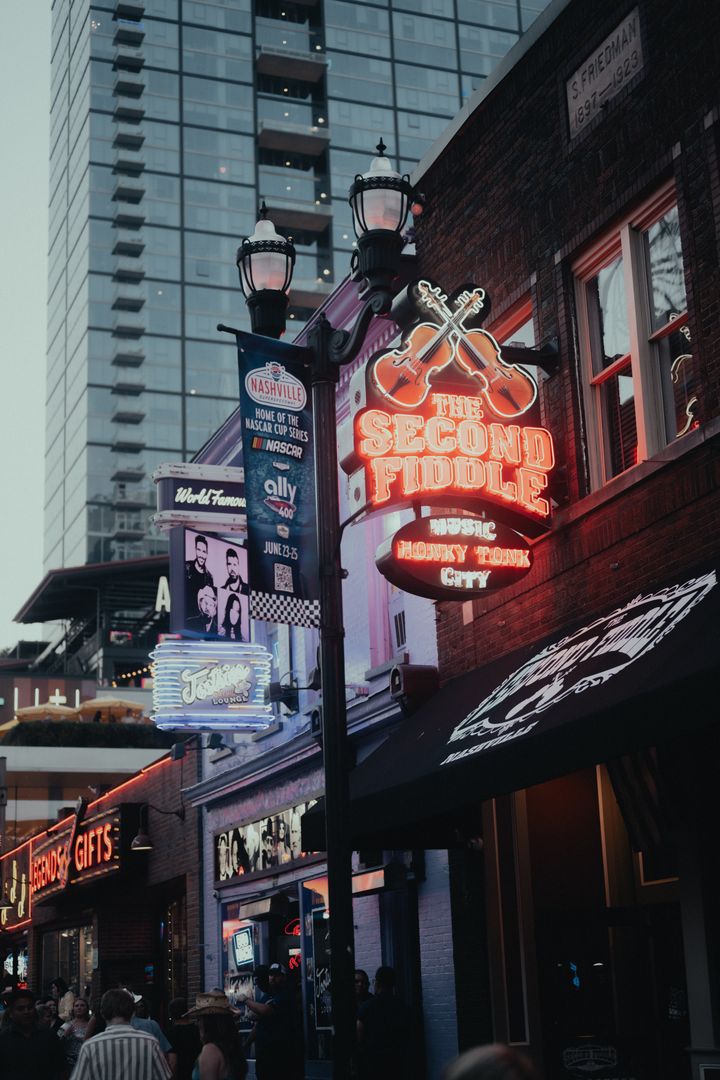
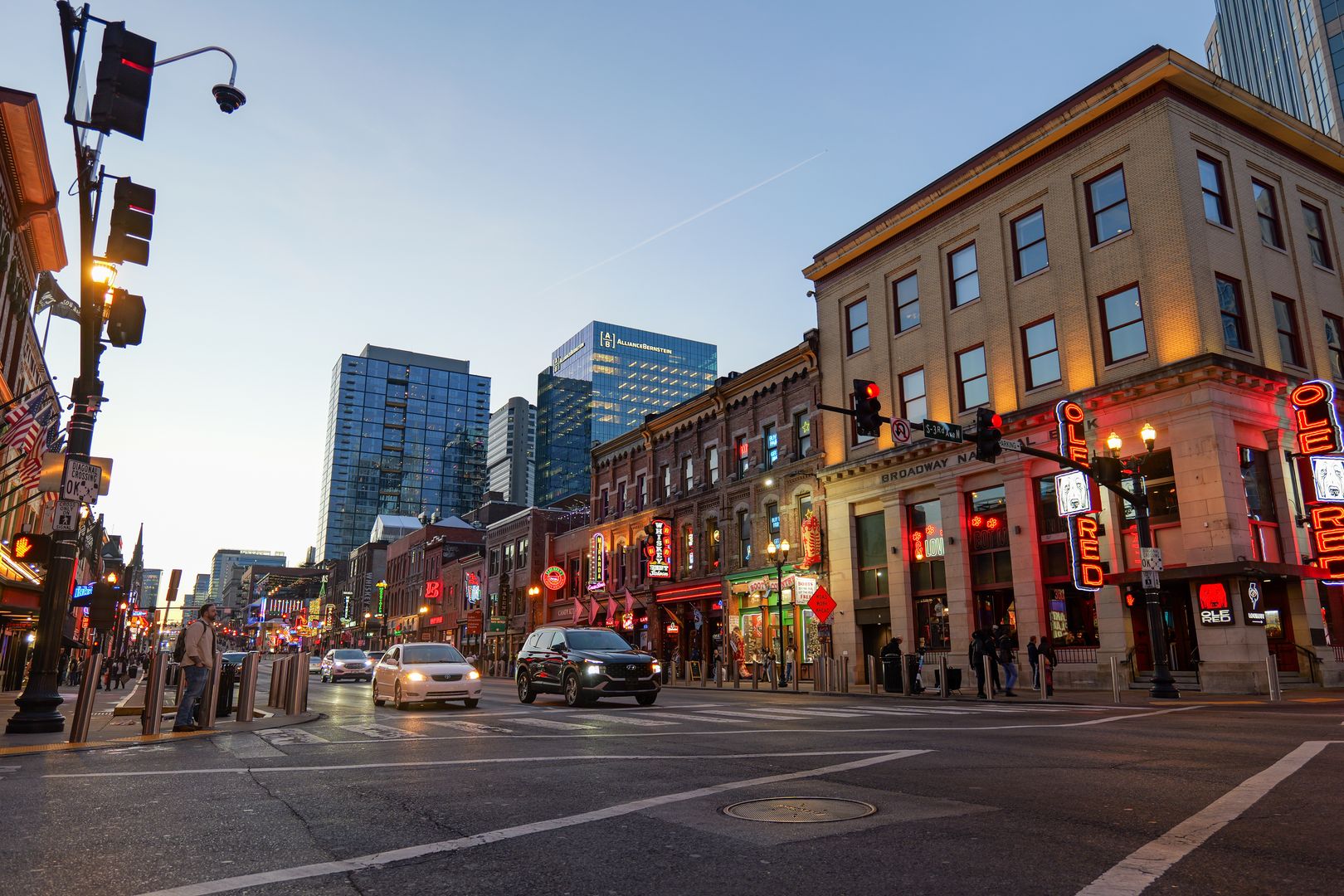
Lower Broadway (the 4-block strip between 1st and 5th Avenue South, near the river) is Nashville's entertainment core — a row of multi-story honky-tonk bars with live country and rock music on multiple stages simultaneously, from opening time (typically 10:00–11:00) until 3:00am. The big names are Tootsie's Orchid Lounge (has been operating since 1960, with musicians who played the Grand Ole Opry across the alley), Robert's Western World (red meat traditionalists, the hottest tickets for old-school country), and Honky Tonk Central (three floors, tourists). Cover charges are rare; tips to the band are expected (one bill per set, minimum).
The atmosphere on a Friday evening, with live music audible from four venues simultaneously and the neon visible from the Cumberland River bridge, is genuinely impressive. On a Saturday afternoon in summer it is also very crowded with bachelorette groups on pedal taverns — plan accordingly by going on weeknights or at lunchtime.
Country Music Hall of Fame and Museum

The Country Music Hall of Fame ($28) is a genuine museum — not a souvenir shop with exhibits — covering the full history of American country music from its roots in mountain folk and Blues through rockabilly, outlaw country, and contemporary pop country. The permanent collection includes Elvis Presley's solid gold Cadillac, Hank Williams' suits, Johnny Cash's guitar, and detailed documentation of the Nashville recording industry. Audio stations throughout the building let you hear the music being discussed. Allow 2.5–3 hours. The $28 includes the RCA Studio B historic recording studio tour (reservations required, runs on the hour).
RCA Studio B
RCA Studio B (available as a standalone tour, $20, or bundled with Country Music Hall of Fame) is where Elvis Presley recorded 200 songs, Dolly Parton cut her earliest records, Roy Orbison recorded "Oh, Pretty Woman," and roughly 35,000 other recordings were made between 1957 and 1977. The studio is preserved in working condition; the tour explains the technical innovations (echo chambers, the "Nashville Sound") that made it one of the most commercially successful recording facilities in history. The Steinway piano still plays; the original baffles and isolation booths are intact.
The Gulch and 12 South
The Gulch is a former rail yard turned mixed-use neighbourhood with the highest concentration of restaurants and bars immediately south of downtown — good for food before or after Broadway. 12 South (12th Avenue South neighbourhood) is where the more relaxed, local Nashville exists: coffee shops (Frothy Monkey is the de facto neighbourhood institution), boutiques, Imogene + Willie denim, and one of the best burger spots in the city (Pharmacy Burger Parlor). The Instagram wall of wings mural at the corner of 12th and Linwood is unavoidable.
East Nashville and the Music Scene
East Nashville (across the river via the Woodland Street Bridge) is where Nashville's working musicians live and where the independent music scene operates — small venues like the 5 Spot and the American Legion Post 82 host residencies and touring acts for $5–15 covers. The neighbourhood's restaurant scene (Butchertown Hall, The Pharmacy on Gallatin) is the best in the city outside the Gulch. The Ryman Auditorium — the "Mother Church of Country Music," where the Grand Ole Opry ran from 1943 to 1974 — is worth a daytime tour ($22) even if seeing a show there is not on the itinerary.
Hot Chicken
Nashville hot chicken is a specific preparation: bone-in fried chicken coated in a cayenne-heavy paste calibrated by heat level (mild/medium/hot/extra hot), served on white bread with pickles. Prince's Hot Chicken Shack (Charlotte Pike location) invented the dish in the 1940s; the "extra hot" is not performative — it produces physical discomfort for most people. Hattie B's (multiple locations, more consistent hours) is the most accessible option; Bolton's Spicy Chicken & Fish on Main Street in East Nashville is where Nashville people go. Budget $10–18 for a half chicken plate.
Practical Notes
Best months: April–May and September–October (mild, outdoor concerts, manageable crowds). June–August is hot and humid (35°C+) but the concert season is most active. Parking downtown is expensive ($15–25/day); staying in a hotel within walking distance of Broadway eliminates car dependency for the main attractions. Tipping culture is strong and ubiquitous (18–22% at restaurants, $1–2 per drink at bars).
FAQ
How many days do you need in Nashville?
Two full days: one for Broadway, Country Music Hall of Fame, and RCA Studio B; one for East Nashville, the Gulch, and a Ryman tour. Three days if adding a day trip to Jack Daniel's Distillery (1.5 hours south in Lynchburg) or the Johnny Cash Museum.
Is Nashville only for country music fans?
No. The food scene, the music history (rockabilly, American roots music broadly), the architecture of the Grand Ole Opry building and Ryman, and the city's energy are interesting independent of country music preference. The Broadway scene in particular appeals to anyone who enjoys live music at any volume.