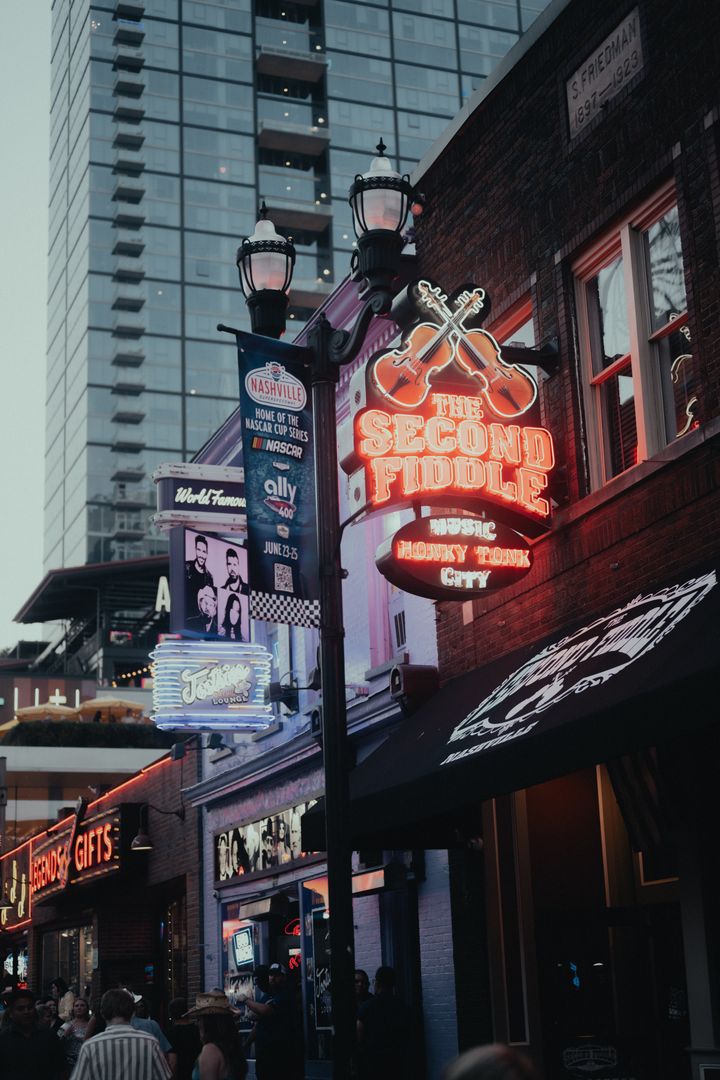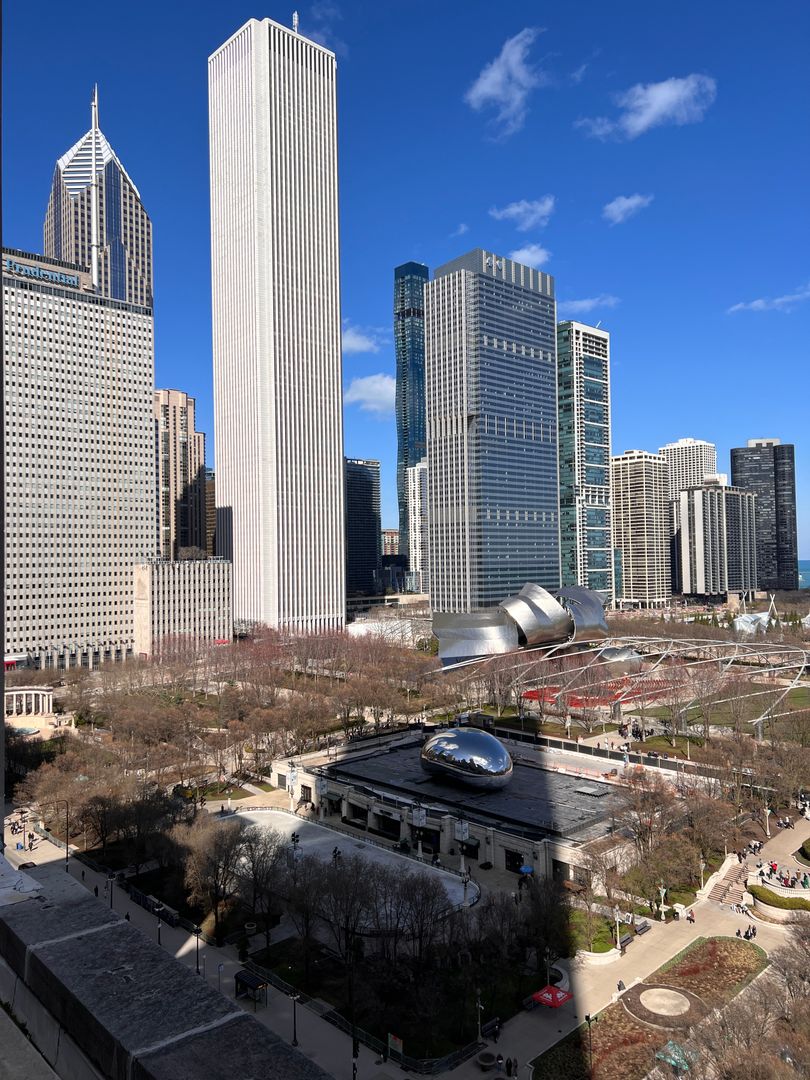

Chicago occupies the southwestern shore of Lake Michigan — a freshwater body so large that, standing on the beach at Chicago, you cannot see the far shore. The city grew from a trading post at the Chicago River mouth in the 1830s to one of the world's most important railroad and commodity exchange hubs by the 1880s. The 1871 fire burned most of it down; the reconstruction produced the first generation of steel-frame tall buildings and the Chicago School of architecture that defined the 20th century skyscraper. The city's architectural legacy is the most concentrated in the world outside Manhattan, and considerably more accessible to understand: the scale is more human, the buildings more varied, and the river architecture tour is the best single thing to do in the city.
Getting There
Chicago O'Hare (ORD) is one of the busiest international airports in the world, with direct connections from most European and Asian hubs. Chicago Midway (MDW) serves domestic and budget international routes. The Blue Line CTA train from O'Hare to downtown (the Loop) takes 45 minutes and costs $5 — one of the most practical airport-to-centre transit connections in North America. From New York, Amtrak's Lake Shore Limited (19 hours) is scenic; flights are 2 hours from JFK and typically $150–350 one-way.
Within Chicago, the elevated rail (the L) covers all major tourist areas and runs 24 hours. A day pass is $10; unlimited 3-day is $20. Taxi and Uber/Lyft are more expensive but cover the gaps.
Architecture River Cruise
The Chicago Architecture Foundation Center River Cruise (CAF, $52–60 per person) is the best 90 minutes in the city — a boat tour along the Chicago River with expert narration on the buildings lining both banks: the Wrigley Building, the Tribune Tower, the Merchandise Mart, Marina City (the circular concrete towers), the Aqua Tower, and the IBM Building by Mies van der Rohe. The density of architectural movements visible from the river — Beaux-Arts, Gothic Revival, International Style, postmodern, contemporary — in a 3km stretch has no equivalent anywhere. Book in advance May–September; the 10:00 tour leaves before crowds peak.
Millennium Park and Cloud Gate
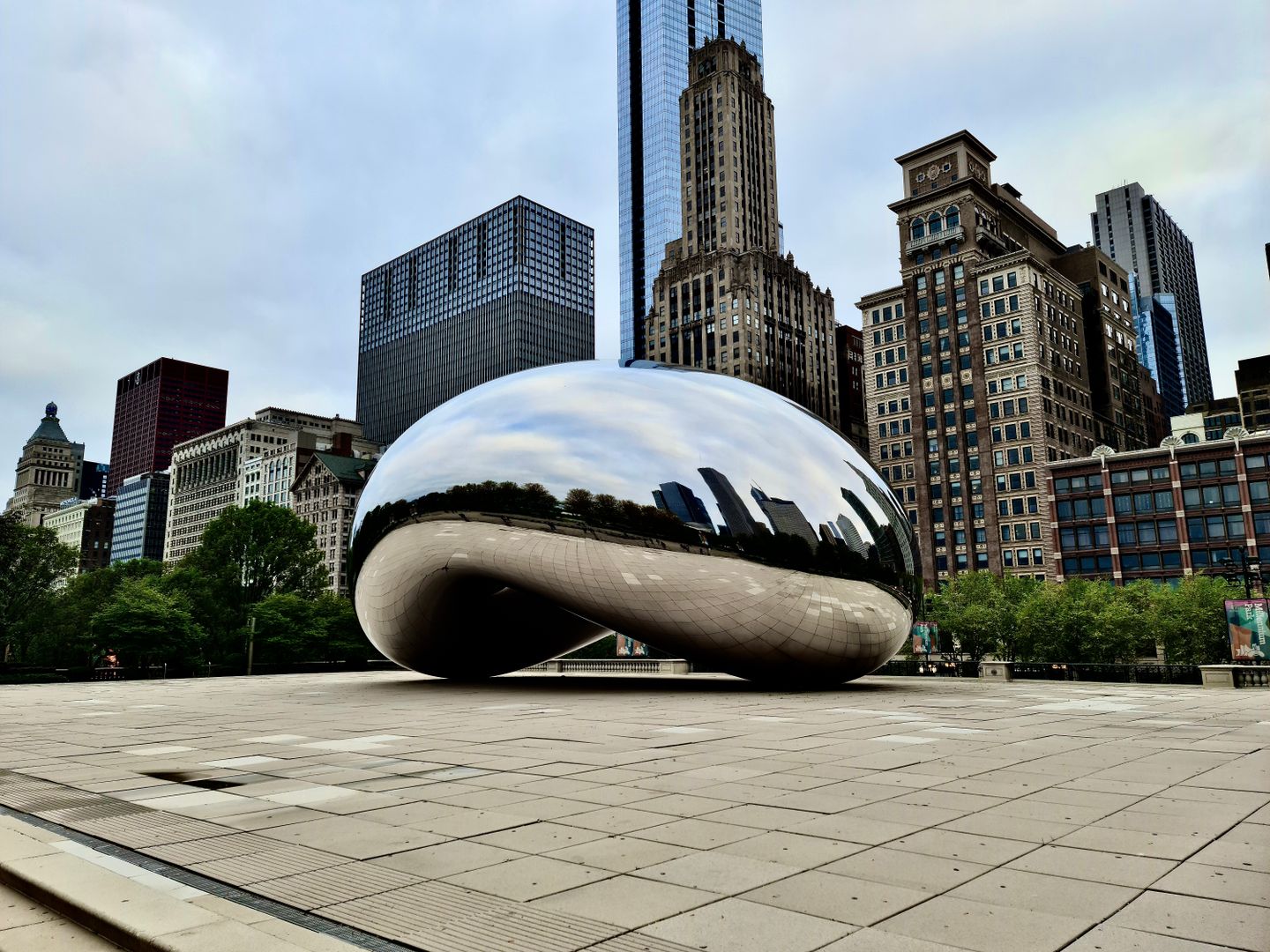
Millennium Park (free) is the centrepiece of downtown Chicago — a 24-hectare urban park built over a railroad yard, opened in 2004. Cloud Gate (the Bean) is Anish Kapoor's 110-tonne polished steel ellipse that reflects the skyline in its curved surface: visitors walk underneath and see themselves distorted against the city. It is one of the most successful pieces of public art in any city and produces exactly the response it is designed to produce. The adjacent Jay Pritzker Pavilion (a Frank Gehry-designed concert bandshell with a steel trellis over the lawn) is a free outdoor concert venue in summer (July–August).
The Art Institute of Chicago (adjacent to Millennium Park, $35) contains one of the ten best art collections in the world: Seurat's Sunday on La Grande Jatte, Grant Wood's American Gothic, Nighthawks by Edward Hopper, and an encyclopaedic European collection from the medieval period onward. Allow 3–4 hours minimum. The Impressionist and Post-Impressionist galleries (Level 2, Rice Building) are particularly strong.
The Loop and Chicago Blues
The Loop — Chicago's central business district, named for the elevated rail loop that encircles it — contains Sullivan's Carson Pirie Scott Building (1899, intricate cast-iron ornament at street level), the Chicago Cultural Center (free, Tiffany glass domes in the two main rooms), and the Rookery Building (1888, Frank Lloyd Wright remodelled the interior atrium in 1905 — open for daytime visits). Walking the Loop with a map from the Architecture Foundation takes 90 minutes.
Chicago's Blues tradition is concentrated on the South Side historically, but venues remain active citywide. Buddy Guy's Legends (700 S Wabash, no cover most nights) is the most accessible; Kingston Mines (Lincoln Park, cover around $15) has two stages and live music nightly until 4am. The Chicago Blues Festival in Grant Park (June, free) is one of the world's largest free music festivals.
Neighborhoods
Wicker Park and Bucktown (northwest of downtown): independent restaurants, vintage shops, live music venues. Logan Square (further northwest): the most interesting food scene currently, with restaurants that have won national attention. Pilsen (south): a Mexican-American neighbourhood with murals, taquerías, and the National Museum of Mexican Art (free). Hyde Park (south): the University of Chicago campus, the Museum of Science and Industry ($22 — the best science museum in the Midwest), and Frank Lloyd Wright's Robie House.
Food
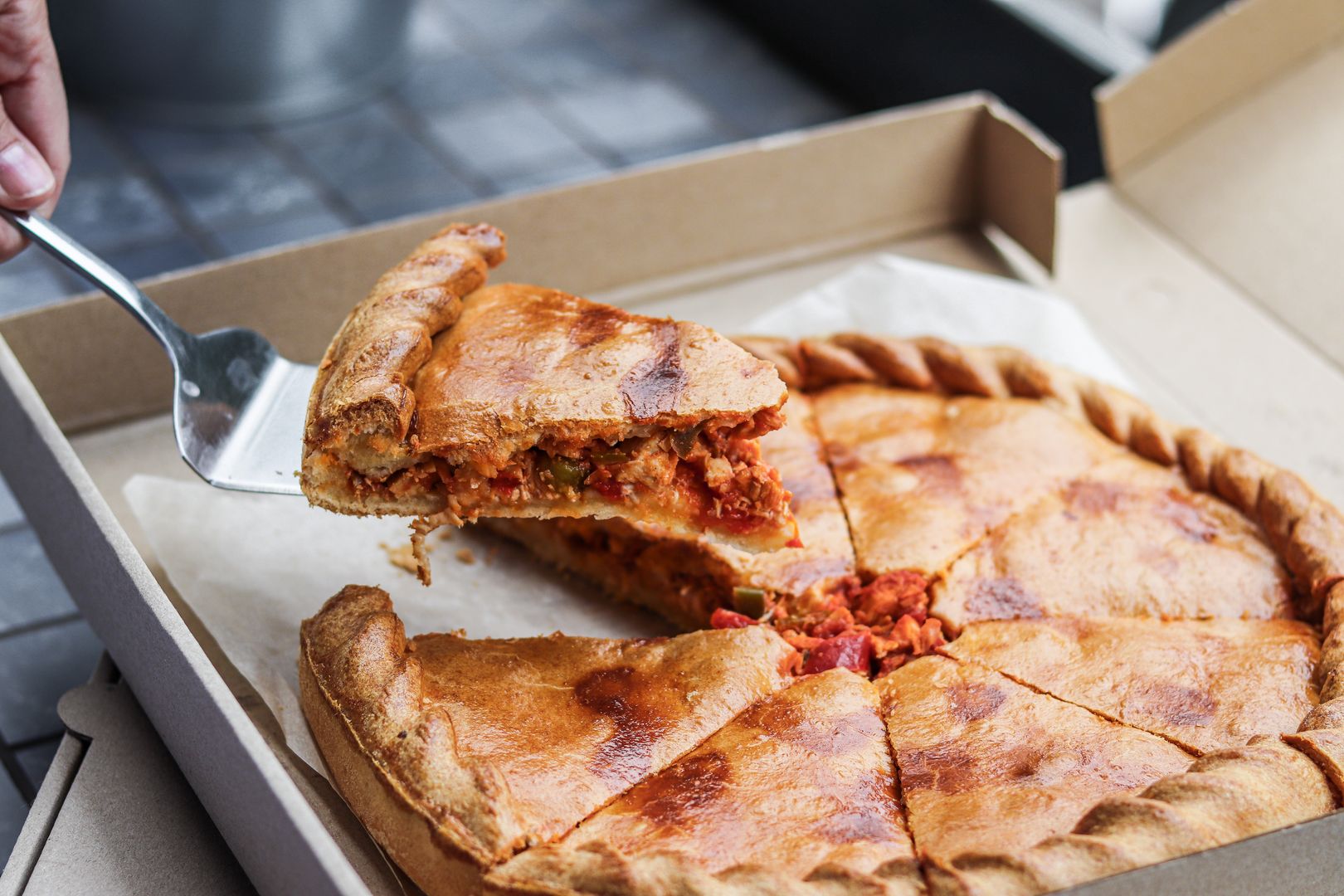
Deep dish pizza at Lou Malnati's (multiple locations) or Pequod's (Lincoln Park — the caramelised crust version) is the local obligation. Chicago also has the best Italian beef sandwich in the world (at Al's Beef on Taylor Street, $10–12) and a strong and underrated steakhouse tradition. The Fulton Market District has the most concentrated density of serious restaurants; Logan Square is where the more interesting and less expensive cooking is happening.
Practical Notes
Best months: May–June and September–October (mild, less crowded than summer). July–August is hot and humid but has the most outdoor events. November–March is cold (often well below freezing, wind off the lake is severe) — dress accordingly. Chicago is safe for tourists in all the neighbourhoods mentioned above; the South Side violence that appears in news coverage is geographically distant from the tourist areas and should not affect a normal visit. Accommodation in the Loop or River North is expensive ($200–400/night); Wicker Park and Logan Square are $130–200 with better character.
FAQ
How many days do you need in Chicago?
Three days: architecture tour, Millennium Park + Art Institute, one neighbourhood exploration (Logan Square or Pilsen), Blues evening. Four to five days for more museum depth and neighbourhood variety.
Is Chicago worth visiting in winter?
Yes if you are prepared for cold weather — hotel prices drop significantly, the museums are uncrowded, and the city functions normally. The lakefront is less accessible, but the architecture, food, and Blues scene are year-round.