

Independent Patagonia: Torres del Paine and El Chaltén Without Tours
Patagonia is large, remote, and weather-dependent—three facts that separate casual planning from actual success. Two main hubs draw independent travellers: Puerto Natales, the gateway to Torres del Paine in Chilean Patagonia, and El Chaltén, Argentina's self-proclaimed trekking capital. Both are accessible by budget airlines from Santiago and Buenos Aires; both have free and paid trekking options; and neither requires a packaged tour if you book accommodation early enough. The standard circuit takes 10–14 days and costs €600–900 (excluding flights) if you camp and self-cater.
How to Get to Patagonia: Flights and Ground Transport
The two main entry points are Punta Arenas (for Torres del Paine) and El Calafate (for El Chaltén and Los Glaciares National Park).
From Santiago to Punta Arenas: LATAM and Sky Airline operate daily flights (3 hours, €80–150 return, book 4–6 weeks ahead for December–February). Arrive in Punta Arenas and catch a direct bus to Puerto Natales (120km, 3 hours, €12, departures 8am and 2pm via Bus Sur or Turismo Zaahj).
From Buenos Aires to El Calafate: LATAM, Aerolíneas Argentinas, and Flybondi run this route (3 hours, €80–150 return). Flights are cheaper if booked 8+ weeks in advance.
Connecting both sides: Bus Sur runs a direct service from El Calafate to Puerto Natales (5 hours, €25, departures 7am). This is the standard Patagonia loop. Book the bus 2–3 weeks ahead in December and January; it fills rapidly. Alternatively, fly from El Calafate to Punta Arenas (45 minutes, €60–100) if bus seats are unavailable, though this is more expensive than the ground route.
Return flights: book from El Calafate to Buenos Aires or Santiago 4–6 weeks ahead if visiting December–February. November and March are less congested; prices drop 20–30%.
Torres del Paine: The W Circuit Without a Tour
Torres del Paine National Park spans 242,000 hectares and is a UNESCO Biosphere Reserve. The main attractions—the three granite Towers, Los Cuernos (the Horns), Grey Glacier, and Valle del Francés—are all accessible via the W Circuit, a five-day hiking route that requires no guide.
Park logistics and booking
Park entry is €35 per person and must be pre-booked via torresd paine.cl at least one month in advance (they enforce daily visitor caps). Entry is valid for 10 days and allows multiple visits to the park during that window.
Transport into the park: a CONAF-authorised catamaran departs Puerto Natales at 8:15am (€28 one-way) and reaches Paine Grande Lodge in 2 hours. The return service departs at 3:30pm. Book tickets at the Puerto Natales dock or via the lodge websites (Fantasticosur and Vertice Patagonia operate the ferry; book the catamaran separately from accommodation). The ferry runs year-round but cancels 2–3 days per year during extreme wind.
An alternative: Laguna Azul entrance (accessed by vehicle 30km from Puerto Natales) allows walking access to the W Circuit without the ferry, but it adds 2–3 hours of road walking. Use this only if the ferry is cancelled and you have time to spare.
Refugios versus camping: the booking timeline
The W Circuit has eight refugios (mountain huts) and five free or paid campsites. Refugio beds cost €60–90 per night and include heating and meals (breakfast and dinner, €20–30 extra if you don't pre-book). Campsites cost €15–25 per night and provide no facilities beyond flat ground and water access.
Booking windows: Book refugios 6+ months ahead (May–June) for December–January travel. For November and February, book 3 months ahead (August, November respectively). After that window, availability is extremely limited. Use vertice-patagonia.com and fantasticosur.com directly; they manage most of the lodging. Prices vary little between operators; the difference is in how far in advance they release slots.
If you cannot secure refugio beds, camping is reliable (free campsites accept walk-ups; paid campsites rarely fill). However, expect 5am wake-ups due to midnight daylight and tent condensation in the wind.
The 5-day W Circuit route and daily breakdown
Day 1: Ferry arrives Paine Grande Lodge at 10:30am. Trek to Campamento Valle del Francés (11km, 6 hours, 400m elevation gain). The trail enters the valley at afternoon light, which is excellent for photography. Campsite is free; refugio beds available if pre-booked.
Day 2: Day hike from Valle del Francés to the base of the Towers (8km, 5 hours, 300m gain). Return to camp. This is a payoff day—you're hiking for views, not distance. The vista of the granite spires against the southern beech forest is why people plan this trip. Continue to Campamento Los Cuernos if your schedule permits (difficult as a 16km day after the Towers hike).
Day 3: Trek to Campamento Los Cuernos (10km, 5 hours, descent of 400m to the valley floor, then 300m climb). The route drops into a river gorge and climbs steeply on the opposite side. Refugio beds and campsites available.
Day 4: Trek to Campamento Base Torres (20km, 7–8 hours, 600m elevation gain). This is the longest day and the crux of the circuit. The trail rises steadily through nothingness (moorland with no obvious landmarks) until you suddenly round a ridge and the Towers appear at full height. The campsite is at 400m elevation in an exposed location; wind is common. Refugio beds (Hotel Las Torres) available 2km before the base camp.
Day 5: Return to Paine Grande Lodge via morning ferry (the standard exit). If you've pre-booked accommodation at Hotel Las Torres (€90–110/night, meals extra), you can stay the night and take the next morning's ferry (ferry time slot reserved). Otherwise, hike back down to the ferry dock (20km, 5–6 hours, net 600m descent) in time for the 3:30pm departure.
What to carry and buy
Food: buy all hiking food in Puerto Natales before entering the park. The park has one small supply store (near Paine Grande Lodge) with €8–12 pasta, €5–8 canned fish, and bread at 2–3x normal prices. For five days, plan 1,200–1,500 calories per day (porridge, pasta, nuts, energy bars, instant soup). Weight of food pack: 4–5kg. Cost: €30–40 for five days.
Gear essentials:
- Sleeping bag rated to -5°C minimum (nights drop to 0–5°C even in January)
- Waterproof tent and waterproof pack cover (rainfall is common; expect wet conditions 3–4 days of the week)
- Stove and fuel (wood fires are prohibited; butane-cartridge stoves are standard; buy fuel in Puerto Natales, €2–3 per cartridge)
- Water filter or Iodine tablets (water sources are potable but treatment is recommended)
- Warm layers: fleece and wind shell (wind is the primary hazard, not cold; gusts exceed 60km/h regularly)
- Sturdy boots with ankle support (terrain is rocky and boggy; ankle injuries are common)
If you don't own a tent or sleeping bag, rent in Puerto Natales: €10–15/night for tent, €8/night for sleeping bag. Total rent for five days: €90–140.
The Base Torres day trip alternative
If a five-day trek is not feasible, the Towers viewpoint (Base Torres) is accessible as a bruising day trip from Puerto Natales. Operators (Turismo Natales, Hecho en Patagonia) offer €30–40 return transport (5am departure, return by 6pm) plus a separate €35 park entry fee. Once at the trailhead, the walk is 8km each way, 800m elevation gain, 4 hours each way. The full day is 16 hours of hiking plus waiting in the wind. The view is extraordinary; the exhaustion is real. Only attempt this if you have excellent fitness and conditions are forecast clear.
El Chaltén: Trekking to Fitz Roy and Cerro Torre Without a Guide
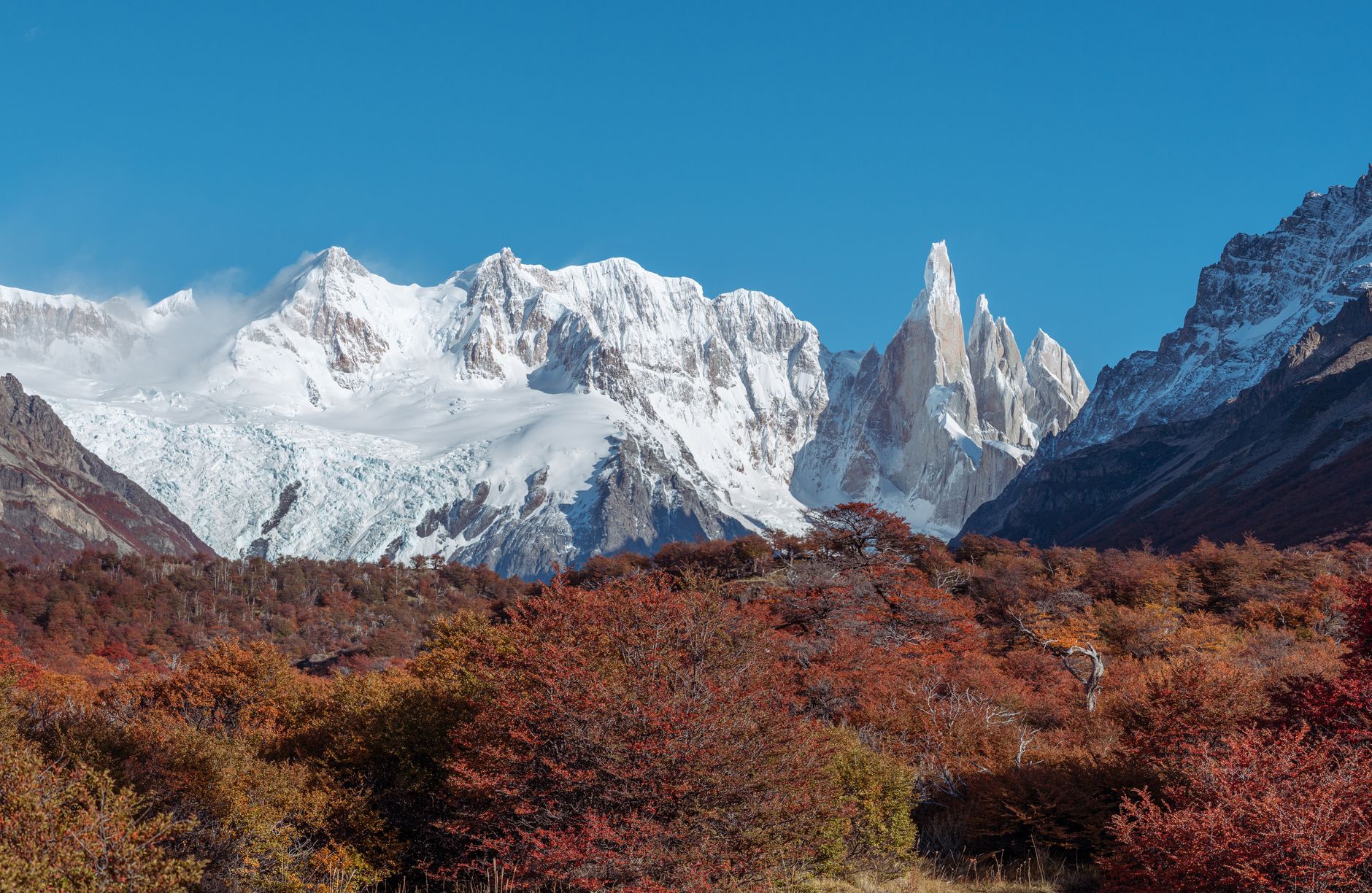
El Chaltén is a village of 300 people 215km northwest of El Calafate. It has no entrance fee, no permits, no guides required, and some of the most dramatic mountain scenery in South America. The village is the base for two primary treks.
Getting there from El Calafate
Bus from El Calafate to El Chaltén: 3 hours, €8–10, departures at 8am and 2pm (Los Glaciares, Caltur, or Turisimsa). Book 1–2 weeks ahead in December–January; walk-ups are possible in shoulder seasons. The road is partially unpaved; travel is slow but straightforward. El Calafate airport (FTE) has rental cars if you prefer flexibility; a four-person group should consider splitting a car (€60–80/day for a standard compact).
Laguna de los Tres: The Fitz Roy hike
This is the primary pilgrimage trek in El Chaltén: 20km round trip, 1,200m elevation gain, 8–10 hours. The route climbs steadily from sea level (relative) at 340m to Laguna de los Tres at 1,300m, then a steep 45-minute scramble above treeline to the lagoon's edge for the view of Fitz Roy (3,405m) reflected in the water.
Route and timing: Trailhead is in the village; no transport needed. The walk is well-marked and heavily used (expect 30–50 other hikers on fair-weather days). The ascent takes 5–6 hours; expect to reach the lagoon around 2–3pm if you start at 7am. The final 45 minutes above treeline is steep (800m in 1.5km) and exposed to wind. On windy days, the last section is exhausting; on very windy days (gusts >80km/h), it is dangerous and should be avoided.
Weather and timing: El Chaltén averages 60+ days of high wind per year. Check a mountain forecast (mountain-forecast.com or elchaltén.com) the night before and aim for the clearest day in your window. The mountain often clouds over by noon, so an early 6:30am start is worthwhile. If you wake to clear skies, go; if the forecast promises afternoon clearing, wait.
Multi-day approach: The trailhead connects to Laguna Capri campsite (3km from start, free first night, €15–20 per night after; basic shelters available). Camping at Capri allows a 5am start on Fitz Roy for the best light and minimal wind exposure. The early ascent reaches the lagoon by 10–11am, offering a four-hour window before afternoon wind builds.
Supplies: carry 2–3 litres of water (streams are potable but Iodine tablets are recommended). Self-catering is possible; the village has a small supermarket and a few panadería (bakeries). Bring your own food for the hike; no shelter exists between the village and the lagoon.
Laguna Torre: The Cerro Torre hike
A less crowded alternative, 16km round trip, 400m elevation gain, 5–7 hours. This trek ascends to Laguna Torre with views of Cerro Torre (3,128m), a technical climbing peak. The hike is easier than Fitz Roy (lower elevation gain) and follows a shaded forest trail most of the way, making it more tolerable on very hot days.
The Cerro Torre view: Unlike Fitz Roy, which is frequently visible, Cerro Torre is cloud-covered most days. Your best chances are early morning (6–8am) on clear-forecast days. The peak's spire is distinctive only when fully exposed; partial views offer less reward.
Combined two-day approach: Starting from the village, hike Fitz Roy on day one and Cerro Torre on day two (or vice versa). The trailheads diverge 2km from the village; you can link them via a 4km connector trail.
El Chaltén logistics and accommodation
Hostels: Albergue Laguna de los Tres, Rancho de Caballos, and Hostería Helsingland offer dorm beds for €20–30/night and private rooms for €60–100/night. Book via Booking.com or email directly 4–6 weeks ahead for December–January. Single rooms often sell out before dorms.
Meals: The village has four restaurants (Rincón de Comidas, La Cervecería, Vegan Patagonia, Casa de Guías). Prices reflect remoteness (€15–25 for a main course). Supermarkets stock basics; your best option is self-catering (breakfast and lunch in the hostel, dinner out).
Cost estimate: €30–50 per day (hostel dorm + meals).
Perito Moreno Glacier: A worthwhile day trip from El Calafate
If you're passing through El Calafate before or after El Chaltén, allocate a day for Perito Moreno Glacier. The glacier face is 70m high and 5km wide—one of the few glaciers on Earth that is not retreating. Entry is €30; the glacier is 80km south of El Calafate. Book a guided tour (€30–50 including transport) or rent a car and self-drive (€60–80/day). The walk among the viewpoints takes 1–2 hours; the glacier actively calves in front of the viewing platforms, creating dramatic sounds and (occasionally) small icebergs in the lake. Plan half a day minimum; a full day is better.
Connecting the Two Sides: The Patagonia Circuit
The standard route is El Calafate → El Chaltén (3 hours) → Puerto Natales (5 hours) → Torres del Paine (2 hours by ferry) → return flight from Punta Arenas or El Calafate.
Timing: 10–12 days is the minimum for both regions without rushing:
- Day 1: Arrive El Calafate, rest
- Days 2–3: Perito Moreno Glacier + El Calafate
- Days 4–6: El Chaltén (two full hiking days + travel)
- Days 7–11: Torres del Paine (W Circuit, five days)
- Day 12: Return to El Calafate or Punta Arenas, fly out
Allow three weeks if this is a once-in-a-decade trip and you want flexibility for bad weather.
Realistic Budget Breakdown: 10-Day Independent Circuit
| Item | Cost |
|---|---|
| Flight (Santiago to Punta Arenas return) | €100–150 |
| Flight (Buenos Aires to El Calafate return) | €100–150 |
| Bus El Calafate to El Chaltén | €10 |
| Bus El Chaltén to Puerto Natales | €25 |
| Torres del Paine park entry | €35 |
| Ferry Paine Grande | €28 |
| Torres del Paine camping (5 nights × €20) | €100 |
| Torres del Paine food | €40 |
| El Chaltén hostel (2 nights × €25) | €50 |
| El Chaltén food | €35 |
| Perito Moreno entry | €30 |
| Perito Moreno transport | €30 |
| Total (excluding international flights) | €483–633 |
Budget variant (refugio option): Replace camping with refugio beds (€80/night × 5 = €400) and add €30 for pre-booked meals. This increases the Torres del Paine portion to €495–545, making the total circuit €620–770.
Accommodation in Puerto Natales (3 nights pre/post Torres del Paine): €45–75 in hostels (€15–25/night dorm).
Practical Considerations: Weather, Fitness, and Safety

Weather: Patagonian weather is notoriously volatile. December–February is the austral summer and the only reliable window for Torres del Paine. Expect rain 3–4 days per week; clear days are treasured. Wind is the dominant feature: gusts of 60–80km/h are routine in Torres del Paine; 100km/h gusts occur. Check mountain forecasts the night before planning major hikes. The Torres and Fitz Roy hikes are weather-dependent; poor visibility reduces them from stunning to ordinary.
Fitness requirements: Both regions demand strong fitness. The W Circuit is 50km over five days with 2,000m cumulative elevation gain; the Fitz Roy hike is steep. Do not underestimate these walks because they are day hikes or because the scenery is famous. Train with loaded backpacks (10kg+) on hills before arrival.
Permits and regulations: No permits are required for the W Circuit or El Chaltén treks. Torres del Paine has a daily visitor limit (enforced via pre-booking). Camping within Torres del Paine is permitted only at designated sites. Wild camping is prohibited. In El Chaltén, camping at Laguna Capri requires registration at the visitor centre (free first night, then €15–20/night).
Injury and rescue: The nearest hospital to El Chaltén is in El Calafate (3 hours away). Torres del Paine has a small medical clinic. Helicopter rescue is possible but expensive (€5,000–10,000+). Avoid solo hiking; travel with at least one other person. Carry a basic first aid kit. Download offline maps (Maps.me works without signal).
Honest Assessment: What Most Itineraries Get Wrong
Most travel guides overstate how easy these treks are for fit recreational hikers. The Fitz Roy ascent involves scrambling above 1,200m elevation; the final 45 minutes is steep and exposed. If you have no mountain-hiking experience, hire a guide (Rancho de Caballos in El Chaltén offers guides for €60–80). The W Circuit, while non-technical, involves five consecutive days of heavy hiking in wind and rain; it is not a "moderate" trek.
Most guides also understate the importance of weather luck. You can arrive with a two-week window and see both Fitz Roy and the Towers once due to cloud cover. This is not failure; it is Patagonia. Build in extra days if at all possible.
Final Recommendation
Travel Patagonia in December or January if you value weather stability; travel in November or February if you prefer smaller crowds and lower accommodation prices (at the cost of more unpredictable conditions). The self-guided approach works if you book accommodation 6 months ahead, carry proper gear, arrive early in the day at trailheads, and accept that some hikes may be cancelled or delayed due to wind. Two weeks minimum, three if this is a once-in-a-decade trip. The landscapes are not overstated; they are exactly as extraordinary as photographs suggest—which almost never happens with anywhere worth going.