

A Rwanda gorilla permit costs $1,500 USD per person in 2026. One hour with a mountain gorilla family. There is no discount for arriving late, no partial refund if the group isn't found (they always are), and no other way to access a habituated gorilla group in Volcanoes National Park. This is the price of the most reliably extraordinary wildlife experience on the continent, and the question is not whether it's expensive — it is — but whether the experience justifies it.
| Aspect | Rwanda | Uganda (Bwindi) |
|---|---|---|
| Permit cost | $1,500 | $700 |
| Road infrastructure | Excellent (paved) | Poor (dirt roads) |
| Typical trek time | 1.5–3 hours | 2–4 hours |
| Lodging cost (mid) | $150–300/night | $100–200/night |
| Permit lead time | 3–6 months | 4–8 weeks |
| Best for | Time-constrained, first-time | Budget travellers, East Africa tours |
The $1,500 permit: where to book and what it includes
The permit is non-negotiable at $1,500 USD per person. You cannot negotiate the price, cannot split a permit between two people, and cannot obtain a refund if you cancel after booking. Book directly through rwandatourism.com, the Rwanda Development Board's official portal. Do not use travel agents as intermediaries — they will add 10–15% commission and cannot offer anything the RDB cannot.
Apply 3–6 months ahead if you're targeting June through September (the main dry season). January through February and April can sometimes be booked with 4–6 weeks' notice, but do not rely on last-minute availability. The RDB allocates eight permits per gorilla family per day across 12 habituated families. That's 96 permits total per day. On peak season days, they sell out.
The permit includes park entry, a trekking guide, and exactly one hour with your assigned gorilla family. It does not include a porter (hire one anyway — $15–20/day, essential if you're over 40 or carrying weight), guide gratuity ($20–50 standard), meals, or transport to the park. The park is not responsible if you arrive late or if weather prevents trekking — treks proceed in rain unless conditions become dangerous, which is rare.
There is also a Habituation Experience permit, $1,500 for a different experience: four hours with the Isimbi family, a semi-habituated group still in early-stage tourism exposure. This is more physically demanding, limited to six people per day, and books up faster. It is best suited to wildlife photographers or those with strong gorilla research interest, not first-time gorilla trekkers.
What the trek requires: terrain, fitness, and altitude
The trek to find your assigned gorilla family takes between 30 minutes and four hours one way. Most commonly, it's between 1.5 and three hours, depending on where the family has moved since dawn. You hike until the guides locate them using radio collars and tracker reports, then you spend exactly 60 minutes observing them — no more, no less.
The terrain is volcanic mountain forest between 2,500m and 4,000m elevation. Trail sections alternate between steep forest paths, bamboo thickets requiring constant ducking, and switchback ascents. After rain, the mud becomes adhesive and deep. The park provides walking poles. Most sections are easily managed at a steady pace, but if you have difficulty with sustained inclines or knee issues, hire a porter — community porters are trained to physically assist trekkers up slopes, making a substantial difference to the experience.
Altitude is a genuine factor if you're arriving from sea level. Kigali sits at 1,567m and Volcanoes National Park base is at 2,350m, but the trek peaks at 3,000–4,000m depending on family location. If you're flying from Europe or North America, spend one full day in Kigali before trekking. This dramatically reduces the risk of altitude headaches on the trek itself. If you arrive day-of, you will almost certainly feel the elevation on the ascent.
The hour with the gorillas happens at close range — seven metres between you and the family is enforced by guides. Silverbacks can weigh 250kg and will move toward you to establish dominance. The standard protocol: stand still, avoid direct eye contact, crouch if instructed. Guides use this same protocol with every group; it works. Your guide will brief you on behaviour before you reach the family. The experience is nothing like a zoo or a safari — you are in a confined forest space with a family of large primates that tolerate your presence but do not perform for you.
Gorilla families: assignment, habituation, and which you'll actually trek
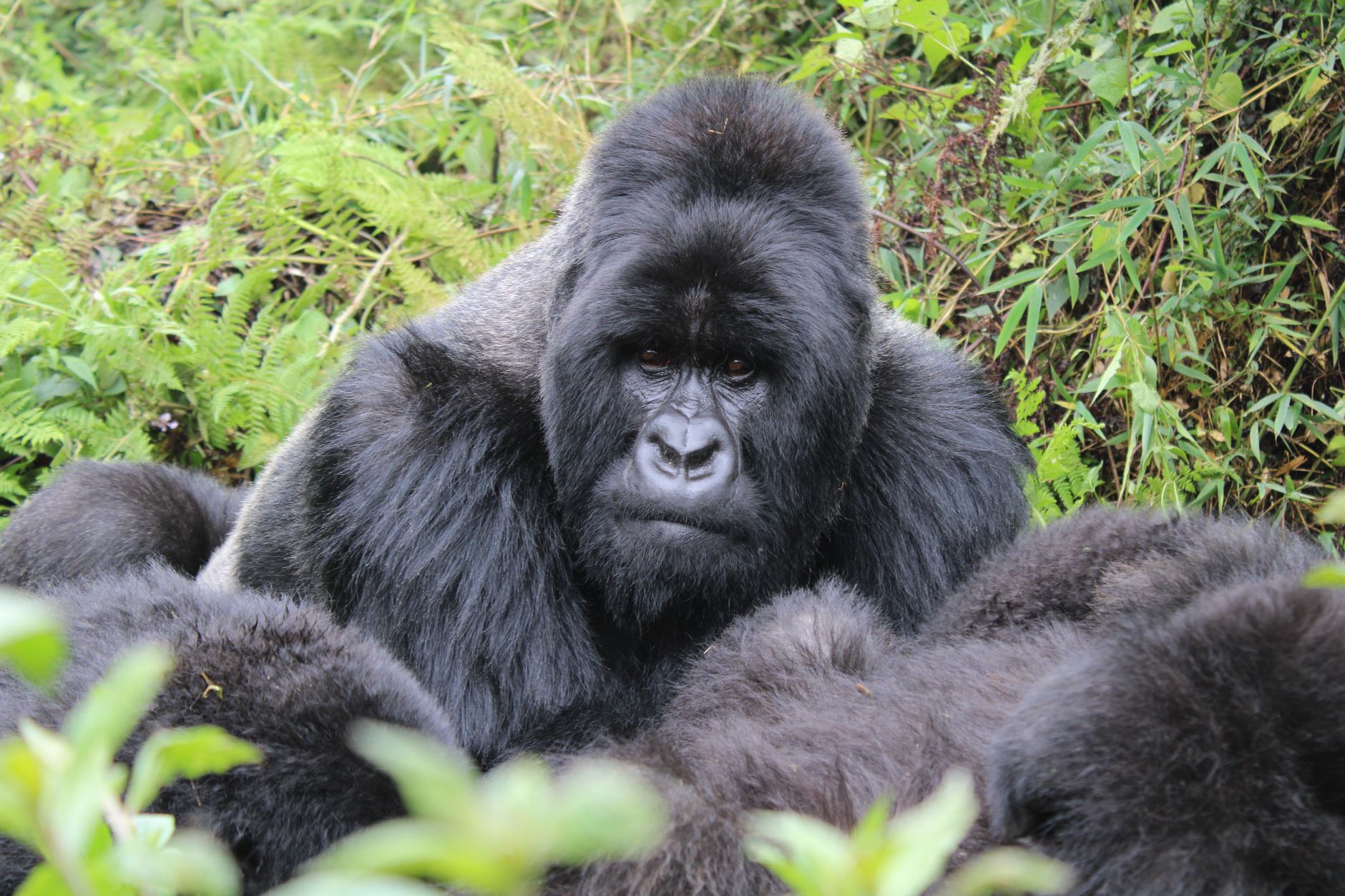
Twelve gorilla families are habituated for tourism in Volcanoes National Park. The park assigns you to a family on permit booking based on permit availability that day — you do not choose. The Susa family and Amahoro family are frequently mentioned in guidebooks because Susa is often the longest trek and Amahoro often the shortest, but this varies week to week. More recently habituated families (Ugenda, Kwitonda) have slightly higher permit costs in some years, though pricing is standardised in 2026.
All families have been habituated over years. The gorillas treat human presence as neutral — they have never attacked tourists and do not perceive you as food, threat, or rival. They will ignore you, feed beside you, and rest near you. Infants will watch you with curiosity. Silverbacks will occasionally move toward you to signal that you've stepped too close; guides use radio communication to anticipate this.
The park does not lose gorilla families. Habituation is permanent once established. If one family is "unavailable" due to unexpected departure or behaviour change (rare), the RDB will refund your permit. In 25 years of organized tourism in Volcanoes, this has occurred only a handful of times.
Getting to Volcanoes National Park: flights, roads, and lodging
Kigali International Airport (KGL) is well-served by major carriers. RwandAir operates daily flights from Brussels, Entebbe, and Nairobi. Kenya Airways, Ethiopian Airlines, Qatar Airways, and Brussels Airlines all have regular service. Budget approximately $600–1,200 for return flights from Europe and $1,000–1,800 from North America, depending on season and how far ahead you book.
From Kigali to Volcanoes National Park is 112km on fully paved road, taking 2–2.5 hours by car. You have three options: shared minibus from Nyabugogo bus station (RWF 3,000, approximately $2.50, 2.5–3 hours with stops), private hire car (RWF 60,000–100,000 one way, approximately $50–80, direct), or lodge-arranged transfer (typically included at mid-range and above lodging, or $80–120 if arranged separately).
Most visitors book transfers through their lodge — it's simpler, ensures someone meets you, and the cost is transparent. The shared minibus is viable if you travel light and don't mind the pace.
Lodging near Volcanoes National Park spans three tiers. Budget options in Musanze town (the nearest large town, 30 minutes from the park) run RWF 30,000–50,000 per night ($25–40) and offer basic but clean rooms, no reliable WiFi, and limited food options. Mid-range lodges on the park periphery (Gorillas Nest, Mountain Gorilla View Lodge, Sabyinyo Silverback Lodge) cost $150–300 per night and offer hot water, decent food, and often park views. Luxury lodges on the park boundary (Bisate Lodge, One&Only Gorillas Nest) run $1,200–2,000+ per night and include guides, often multiple activities, and refined dining.
For a first gorilla trek, mid-range is the practical choice — you sleep well, eat reliably, and have a guide available if needed, without the cost doubling your total trip. Book lodging three months ahead for peak season; it books faster than permits.
Rwanda versus Uganda: the $800 permit question
Uganda's Bwindi Impenetrable Forest offers habituated gorilla families under a $700 permit system (as of 2026). This saves $800 per person compared to Rwanda. However, the trade-offs are real.
Uganda's road to Bwindi is rough — 400km of dirt road from Kampala, requiring 8+ hours of driving, typically split across two days. Kigali to Volcanoes by contrast is paved highway, 2.5 hours. Lodging near Bwindi is more limited and often more remote; getting there usually requires staying in Fort Portal first, adding logistics. Trek times to find gorilla families are often longer — 2–4 hours is standard, compared to Rwanda's 1.5–3.
If you are already in East Africa (Kenya, Tanzania) or planning a longer regional tour, Uganda is rational. You save $800 and the experience is identical — one hour with a habituated family in montane forest. If you have limited time (four days total) and are flying specifically for gorillas, Rwanda's infrastructure is worth the premium. You land, drive in one day, trek the next, and leave. In Uganda, you lose a day to roads alone.
For most first-time trekkers with limited time, Rwanda pays for itself in convenience.
Best time to visit: dry season versus crowds versus permit availability
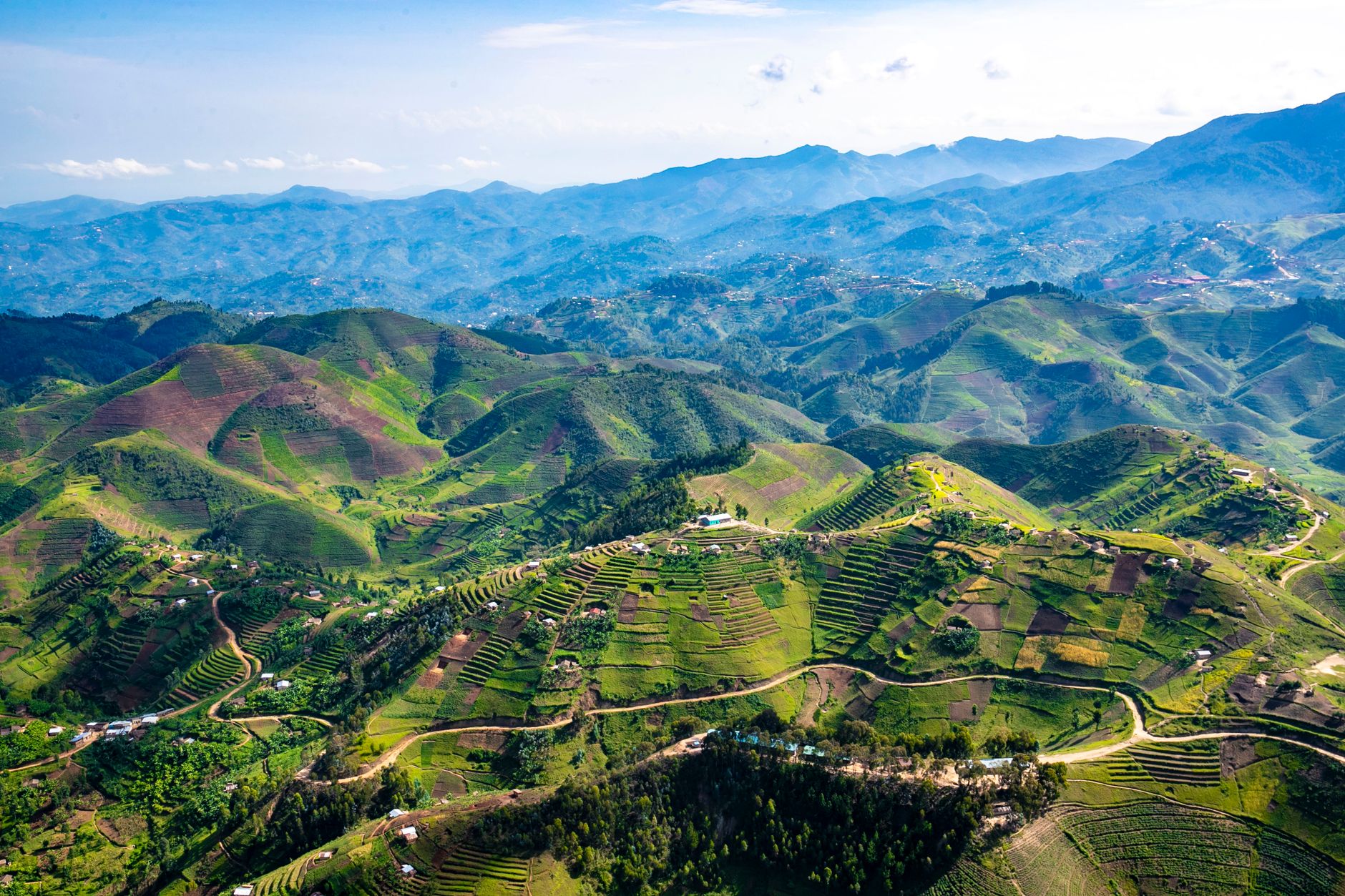
June through September is the main dry season — trails are drier, rain during the trek is unlikely, and the forest is less muddy. This is peak season. Permits book out 4–6 months ahead. Expect other tourists on the trail; the daily permit cap means you'll never encounter more than seven other trekkers, but you'll encounter them.
December through February is the secondary dry season. Trail conditions are nearly as good as June–September, but visitor numbers drop significantly. Permits typically book 6–10 weeks ahead. This is the second-best window — good conditions, fewer people, lower lodge demand.
March through May (long rains) and October through November (short rains) bring mud and rain, but the forest is at its most lush and green. Permits are easiest to book (4–6 weeks ahead) because fewer tourists travel then. Trails are harder — ankle-deep mud in places, rain during the trek, damp clothing afterward. The gorillas are still there and unaffected. If you prioritize solitude and don't mind physical discomfort, these months offer the same experience at lower pressure. If you dislike mud, avoid them.
April and November (transition months) are the least stable — short windows of rain mixed with dry days. Book accommodation with flexibility.
The permit and gorilla family placement are unaffected by season. You will find your family in June and in May. The question is whether the trail condition matches your tolerance.
The full cost: building a realistic budget
A gorilla permit is $1,500 per person. Round-trip international flights from Europe are $600–1,200; from North America, $1,000–1,800. Factor the upper end unless you book 8+ weeks ahead.
Kigali hotel (one night, arriving city): $80–150 for mid-range.
Transport Kigali to Volcanoes: $80–150 (private car or lodge transfer).
Lodge near Volcanoes (two nights): $150–300 per night at mid-range, so $300–600 total.
Porter and guide gratuity combined: $50–80.
Meals: $50–100 for two days (lodges vary; budget options are $5–10 per meal, mid-range $10–20).
A four-day Rwanda gorilla trip for one person at mid-range runs approximately $2,700–4,000 excluding international flights. Add the international flight tier appropriate to your location, and the true cost is typically $3,400–5,800 per person.
This is expensive. It is also the baseline cost of the experience — there is no discount tier, no budget alternative that accesses the same gorillas.
Kigali: preparation and context
Spend one full day in Kigali before trekking if you're arriving from low elevation. Kigali is clean, functional, and has good restaurants. It is also the site of the Genocide Memorial, which is not optional. The memorial is direct and painful — it documents the 1994 genocide against Tutsis with photographs, testimonies, and preserved remains. Many visitors find it difficult; all who visit find it essential for understanding the country and the tourism you're about to experience.
Visit the Kigali Genocide Memorial early in your stay (it closes at 5 PM, allow 2–3 hours). Guided tours are available but not required; independent visitors often prefer to walk at their own pace.
Kigali's city center (KMC area near the Marriott and Nyarutarama district) has restaurants ranging from Rwandan local food (try isombe — cassava leaf with peanut sauce) to international cuisine. Use the SafeMotos app for motorcycle taxis — they are cheaper than regular taxis ($1–2 across the city) and significantly faster in traffic. The city bans plastic bags; don't attempt to bring them through customs.
For gorilla trekking, Kigali serves one purpose: altitude acclimatization and logistical staging. One night is enough.
The honest assessment: is it worth $1,500?
The permit is expensive because the experience is genuinely rare. Fewer than 1,000 people trek mountain gorillas worldwide per year across all locations (Rwanda, Uganda, Democratic Republic of Congo). You are paying for access to one of the last wholly wild populations of large primates on the planet.
The hour itself is not an adrenaline event or an achievement trophy. It is an hour of quiet observation in a forest, watching a family of gorillas behave as they do. Infants play. Adults feed. Silverbacks nap. There is no performance, no drama unless a silverback decides to assert space (uncommon and managed by guides). It is profoundly calm.
Travellers report that the experience is "worth it" in roughly the following terms: the physical effort of the trek, the rarity of the situation, and the directness of the encounter make it memorable in a way that a safari or zoo visit cannot match. Many say it is the single most memorable day of their travels. Some say it isn't worth the cost. Both responses are honest.
You are most likely to find it worth the cost if:
- You have limited time and can't absorb the Uganda logistics or longer treks
- You are deeply interested in primate behaviour or conservation
- You are willing to sit still for an hour and observe without demanding spectacle
- You can afford the cost without financial strain
You may not find it worth the cost if:
- You expect the gorillas to interact with you, display, or perform
- You're comparing purely to safari wildlife viewing (gorilla trekking is categorically different — more intimate, shorter duration, less action)
- You're arriving with limited time and consider one hour insufficient payoff for one day of hiking
- The cost represents a financial stretch
Book only if the latter two categories don't apply to you.
How to book: the exact steps
Check your fitness level. If you can hike sustained uphill for 3 hours at moderate altitude, you're ready. If you have serious knee or back issues, consider hiring a porter (adds $15–20/day but makes the trek manageable).
Visit rwandatourism.com. Create an account. Choose "Gorilla Permit" under the permit section. The system will present available dates; book 3–6 months ahead if targeting June–September, or 4–6 weeks ahead for January–February and shoulder months.
Receive your permit certificate. The RDB will email you a PDF certificate within 48 hours of payment. Print it or have it accessible on your phone. Present it at Volcanoes National Park gate on the day of your trek.
Book a lodge. Use the lodge as your base. Arrange your transfer to the park through the lodge or independently (shared minibus or private car). Confirm your trek start time — the park usually begins treks between 6:00 and 7:00 AM.
Pre-trek briefing. Arrive at the park entrance the evening before, or 30 minutes before your assigned trek time. The guide will brief you on gorilla behaviour, trail conditions, and safety protocol. This is when you learn which family you've been assigned.
Trek. Hike until you find your family. Spend one hour with them. Return.
Frequently Asked Questions
Is the gorilla trek guaranteed to find the gorillas?
Yes. All 12 families are habituated, radio-collared, and located daily. The park has never failed to produce a gorilla encounter for permit holders. If a family becomes unexpectedly unavailable (extremely rare), the RDB refunds or reschedules your permit.
Can you visit Volcanoes National Park without paying for the gorilla permit?
Yes. Day passes to hike the general park cost RWF 50,000 ($40) per person and don't include gorillas. You can visit the park, hike to viewpoints, and see the volcanic landscape. This is viable if you're interested in the broader experience but not committed to gorillas specifically.
How difficult is the trek for someone over 50 or in moderate fitness?
Most people over 50 complete it without serious difficulty, but porters are essential insurance. Hire one for $15–20/day — they will physically assist you up steep sections and reduce the psychological burden of the climb. The pace is slow; guides walk at whatever speed keeps the group together.
Do you need a guide, or can you trek alone?
Guides are mandatory. All trekkers are assigned a trained guide by the park as part of the permit. The guide speaks English (or French/Spanish on request) and is trained in gorilla behaviour and safety protocol. You cannot trek independently.
What should you pack for a gorilla trek?
Waterproof jacket (even in dry season, mist and rain are possible), long-sleeved shirt and trousers (nettles and thorns), waterproof bag for camera gear, walking boots with ankle support, 2 litres of water minimum, energy food (crackers, nuts), sunscreen and hat, and a basic first aid kit. Bring a waterproof camera bag — even a small leak can destroy electronics.
How does Rwanda compare to seeing mountain gorillas in the Democratic Republic of Congo?
The DRC's Virunga National Park offers gorilla trekking at $400–600 per permit, far cheaper than Rwanda. However, the region has experienced armed conflict; security and accessibility are unpredictable. The trekking experience itself is similar. Rwanda is the reliable, safe, well-organized option. The DRC is cheaper but requires more flexibility and carries geopolitical risk that most travellers prefer to avoid.
Travel to Volcanoes National Park in Rwanda if you have four–five days available, budget for mid-range accommodation, and can book permits 3–6 months ahead for the dry season. The $1,500 permit is steep, but the infrastructure, reliability, and quality of the experience make it the most consistently rewarding gorilla encounter available to independent travellers. Go in June or September if you can tolerate crowds; December–February if you want better solitude. Don't go if you expect the gorillas to perform; go if you're comfortable sitting still and watching them live.