

Angkor Archaeological Park covers 400 square kilometres with over 1,000 temple structures spread across terrain that takes four to five hours to traverse. Most visitors see five to eight key sites. The standard circuit takes a full day; the outer circuit adds another. Accomplishing it all in a few hours leaves the most interesting temples—Banteay Srei, Beng Mealea, Pre Rup—unseen and means missing what makes Angkor archaeologically distinct beyond Angkor Wat itself.
Tickets: pricing, duration, and where to buy
A one-day pass costs $37 USD. Three days: $62. Seven days: $72. The ticket office operates cash-only—no cards, no digital payment. Buy tickets the afternoon before if you plan a sunrise visit, since gates open at 5am and the office doesn't open until 6am on park days. The passes are valid from any date you choose; the three-day pass allows non-consecutive visits spread across ten calendar days, which is useful if you want to break up temple fatigue with city days.
Drone photography requires a permit (rarely approved; don't count on it). GoPro-mounted helmets and selfie sticks are permitted. Large tripods are restricted at Angkor Wat itself, though other temples allow them.
Getting around the park: transport costs and trade-offs
Tuk-tuk (standard choice): Negotiate $15–20 per day directly with your driver. Drivers know the main circuit and adjust pace to your interest. The trade-off: traffic between sites, exposure to midday heat during transfers, and no climate control. A competent driver will suggest a logical routing (main circuit, then outer circuit) and know which temples are least crowded at specific hours. Agree on the full-day rate before leaving; hourly rates cost more.
Bicycle: $3–5 per day rental in Siem Reap town. Practical only if daytime temperatures stay below 32°C (roughly November–February). The distances work—main circuit is about 15km; outer circuit adds another 20km—but headwind, soft sand sections, and dehydration risk are real in dry season. Skip bicycles in March onward.
Private car with driver: $35–50 per day. Air-conditioned, faster transit between sites, gives you flexibility to extend time at less-crowded temples. Worth the cost in April or September when midday heat exceeds 38°C, making tuk-tuk exposure genuinely uncomfortable.
Grab and inDriver: Both apps work in Siem Reap town but coverage becomes unreliable inside the park itself. Don't rely on calling a ride from inside Angkor—confirm your tuk-tuk driver stays the entire day.
Honest ranking of temples: which ones justify your time
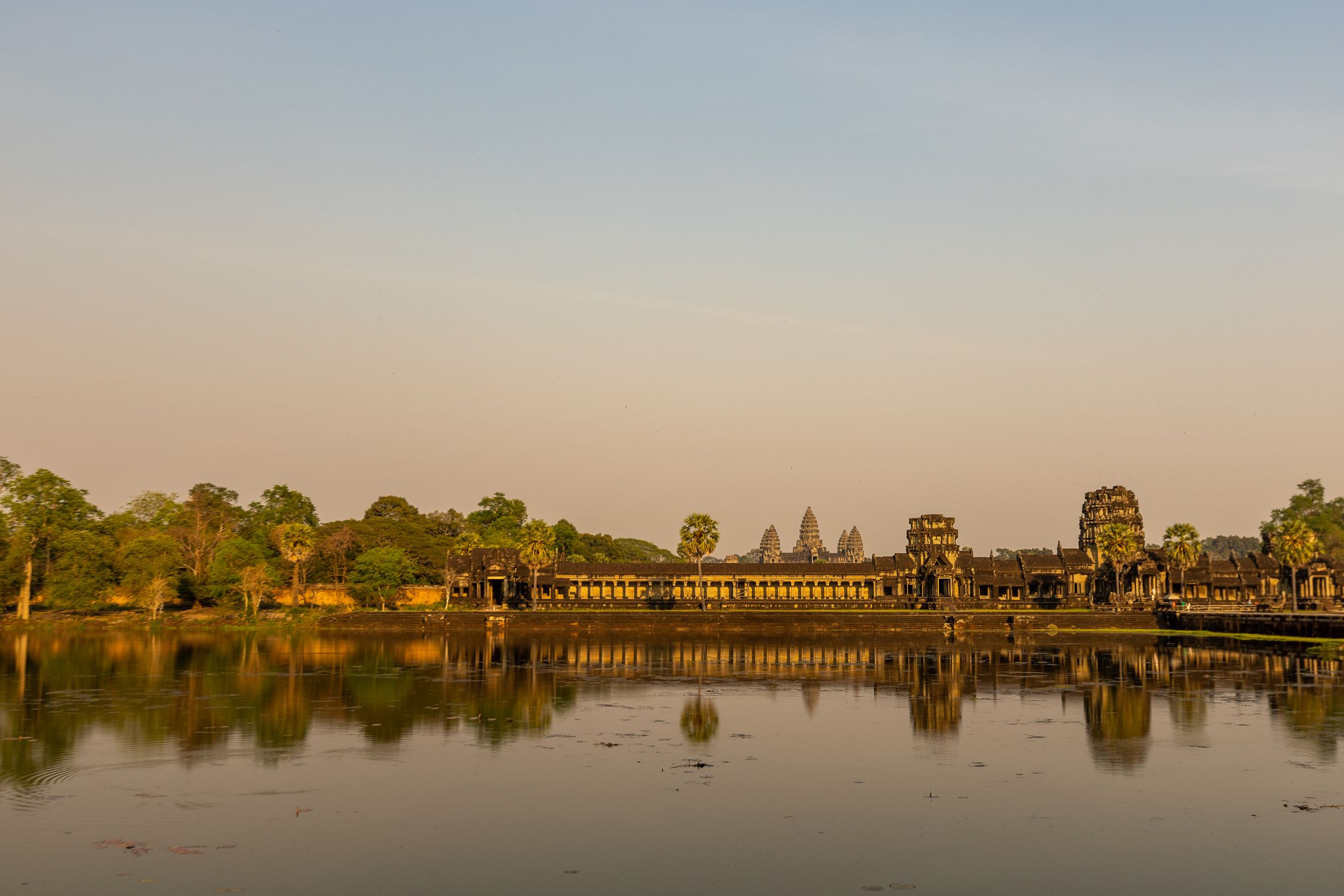
Angkor Wat (must-see): The main temple. Sixty-five-metre towers, a 5.5km outer moat, and an 800-metre causeway with detailed bas-reliefs. The south gallery's Churning of the Ocean of Milk is the finest carving in the park. Allow two to three hours minimum for the interior galleries and towers. Sunrise here is genuinely worth the 5am start; the reflecting pool shot is iconic for reason. Interior viewing improves after 7am when the sunrise crowds thin.
Bayon (must-see): Two hundred sixteen massive stone faces on 54 towers. The layout is labyrinthine and architecturally strange—almost no straight corridors, no obvious centre. It's excellent precisely because it frustrates the tourist expectation of symmetry. Located within Angkor Thom's walled city; approach via the South Gate to see the face towers integrated into the city walls. One and a half hours suffices.
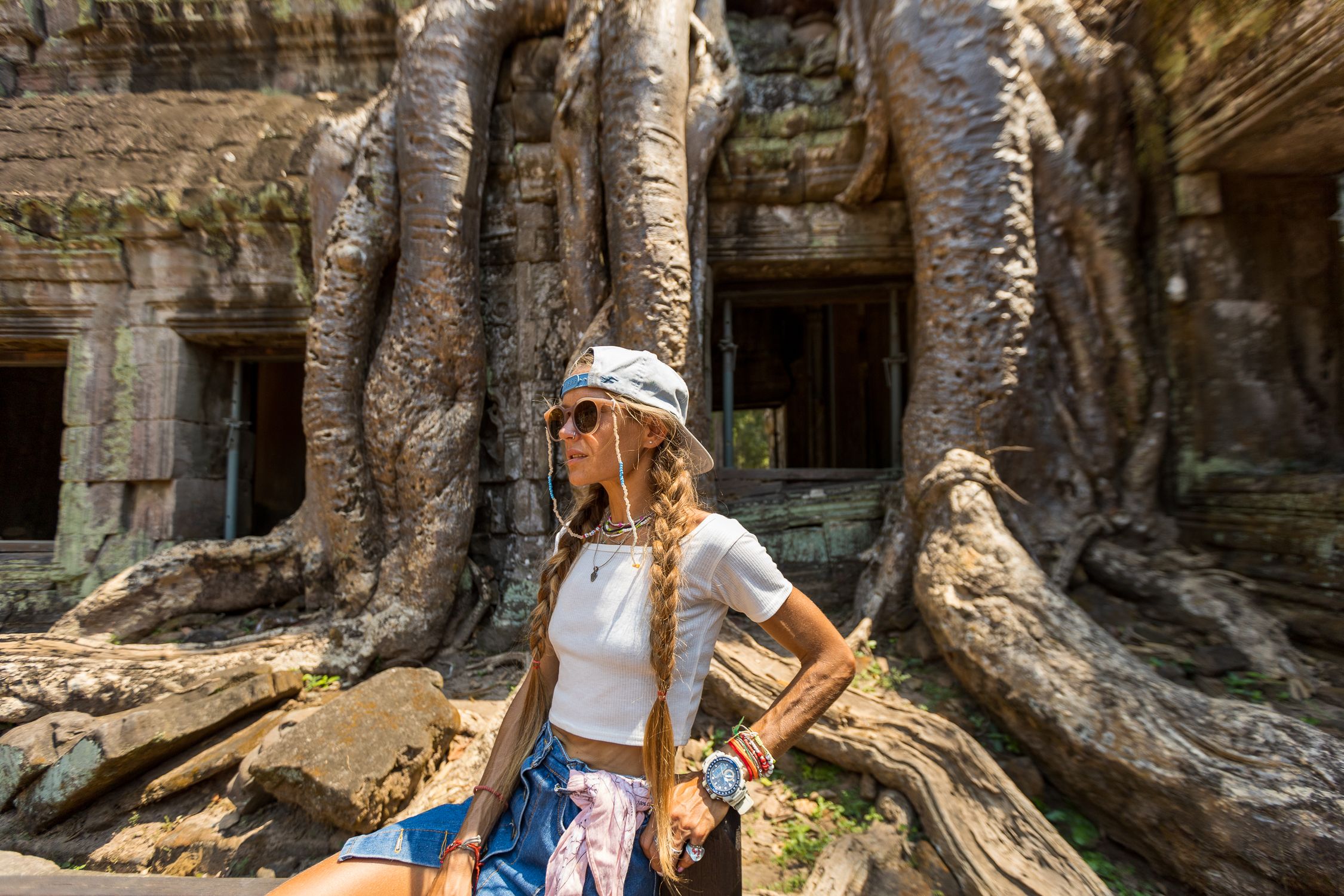
Ta Prohm (must-see but visit carefully): The "Tomb Raider temple"—trees growing through collapsed stones, atmospheric decay. It's also the park's most crowded site. Arrive before 8am or after 3pm to avoid the 9am–2pm mass tourism hours. Fifty minutes is adequate time.
Banteay Srei (worth extra time): Twenty-five kilometres north, made of pink sandstone with finer carving detail than Angkor Wat. It requires a full morning dedicated to the drive and viewing. Most day-trippers skip it; they shouldn't. The carvings show Khmer precision at its height. Two hours at the site, plus 90 minutes return travel.
Pre Rup (worth the drive): A large pyramid temple with excellent late-afternoon light (4pm onward). Fewer visitors than Ta Prohm, decent views from the top, worth the 20-minute detour from the main circuit if you have afternoon time.
Neak Pean (unusual layout): A small island temple from the 12th century, reached by wooden boardwalk across shallow water. The layout—concentric circles, four pools with different animal-headed fountains—is unlike anything else in the park. It's peaceful and architecturally interesting. Thirty minutes.
Beng Mealea (half-day excursion): Sixty kilometres east, largely unrestored and jungle-encrusted. It's the closest Angkor comes to an actual archaeological dig aesthetic—collapsed galleries, stone scattered, trees reclaiming the site. If you have a second day, this is the most worthwhile second-day choice. Three hours at the site plus 120 minutes return travel.
Phnom Bakheng (skip for sunset): Famous for sunset views. Sunset queues now run 90 minutes to two hours due to capacity limits. The view itself is atmospheric but the wait is punitive. Better alternative: book timed entry to Angkor Wat's central tower when you purchase your park pass (an additional $5 and limited to 30-minute slots). You'll get the same elevated view, fewer crowds, and still have light to explore the temple interior afterward.
Sunrise logistics: is it worth the 5am start?
Yes—but only at Angkor Wat.
Position yourself at the reflecting pool on the causeway's left side. Gates open at 5am; be there by 5:10am to claim decent positioning. The sunrise peaks around 6:15am in November–February. After 7am, when ambient light improves, most sunrise tourists leave and the temple's interior bas-reliefs become actually photogenic. That 7am–9am window is when you can photograph the galleries without fighting crowds.
Sunrise at other temples (Pre Rup, Phnom Bakheng) generates lower-quality light and attracts crowds for no particular reward. Skip them.
Planning the schedule: how many days you actually need
One day: Angkor Wat sunrise, Bayon, Ta Prohm, Pre Rup. Rushed but functional. Covers the essential temples.
Two days: Add Banteay Srei and Neak Pean on day two. Comfortable pace. This is the standard allocation and it's justified.
Three days: Use the three-day pass ($62) to include Beng Mealea and the outer circuit temples (Kbal Spean, Preah Khan). Only pursue this if you're genuinely interested in Khmer architectural evolution and have read beforehand about the differences between each site. Most visitors overestimate their interest in a third day.
Practical logistics: accommodation, heat management, money
Siem Reap base: The town is a 15-minute tuk-tuk from Angkor Wat. Budget hotels run €15–40 per night; mid-range €50–100. Book four to six weeks ahead for December–January travel.
Heat management: Start at 5am, visit temples until 11am, return to air-conditioned accommodation or restaurant at noon, resume site visits at 3pm until sunset (6pm). Temples are open 5am–6pm year-round. The midday break is not laziness; it's essential hydration recovery.
Water: Bring two litres minimum per person. Coconuts are sold at most major sites for roughly $1.50.
Dress code: Shoulders and knees must be covered to enter temples. Lightweight linen or cotton works. Carry a wrap if your shirt doesn't qualify—enforcement is inconsistent but not worth testing at the ticket gate.
Currency: USD is the functional currency at Angkor and in Siem Reap. The exchange rate hovers around $1 USD to 4,100 Riel. Prices are quoted in dollars; you'll often receive change in Riel.
Siem Reap beyond the temples: how many days in the city itself
Most guide writing treats Siem Reap as pure transit—a hotel to sleep in before temple visits. The city is worth one full day if you're interested in the National Museum (decent Khmer sculpture collection, two hours), the floating villages (Tonlé Sap Lake tours, three to four hours, polarizing—see poverty tourism concerns before booking), or simply eating methodically through the Restaurant Row area between Street 7 and Street 9, where real Khmer restaurants sit alongside upmarket dining.
If temples are your sole interest: two days in Siem Reap (one day temples, one travel day) is sufficient.
If you're curious about contemporary Cambodia or want to rest: three days (two temple days, one city day) is better.
When to visit: temperature, rainfall, and crowd patterns
November to February offers dry conditions and manageable heat (25–30°C daytime). Crowds peak in December–January. This is the easiest window for first-time visitors.
March temperatures climb to 35–38°C. April peaks at 40°C—genuinely uncomfortable without air-conditioned transport between sites. Avoid April unless heat tolerance is exceptional.
May to October brings monsoon rainfall and humidity. Rain typically falls in afternoon downpours, leaving mornings clear. Temple crowds drop significantly. Vegetation is lush. If you can tolerate wet clothes and reduced visibility during afternoon sessions, May–June and September–October are rewarding.
Two days allows the standard main circuit plus one secondary site. This is the correct allocation for most visitors—enough time to absorb what Angkor offers without temple fatigue eroding the experience. Go in November through February if you dislike heat; go May–June if you value solitude and accept rain. Either way, plan for two days minimum.


