

Budapest is one of Europe's most architecturally striking cities — divided by the Danube into two distinct characters. The hilly Buda side holds the castle district and panoramic viewpoints; the flat Pest side spreads the grand boulevards, markets, ruin bars, and most of the restaurants and nightlife. It was genuinely cheap a decade ago. It's now firmly mid-range by European standards — cheaper than Vienna, Amsterdam, or London, but no longer a bargain destination. That said, a meal costs half what it does in Scandinavia, and the thermal baths remain inexpensive relative to their quality.
Where to stay on a first visit
Pest is the practical choice for first-timers. District V (the 5th district, inner city) is the most central — a 10-minute walk reaches Parliament, the chain bridges, the markets, and most restaurants. It's crowded and has lost some character, but the location saves time. District VI, around Andrássy Avenue, offers more breathing room: tree-lined streets, grand neo-Renaissance townhouses, and metro access that's just as good. Quieter, better value, and you can walk to most attractions in 20 minutes.
District VII (the Jewish Quarter) is noisier and more student-oriented, but it's the epicenter of ruin bar culture — if nightlife is a priority, stay here. You'll pay €5–10 less per night than District V, and you're 50 meters from Szimpla Kert.
Buda's Castle District is architecturally beautiful but functionally impractical. Getting to restaurants, bars, or the metro requires a tram or bus journey back down the hill. Stay here only if you have more than five days and want a complete break from Pest; otherwise, visit for the afternoon and return across the chain bridge.
Budget accommodation in Pest ranges from €30–55/night for guesthouses and hostels (private rooms, not dormitories). Mid-range hotels run €70–120/night. The Jewish Quarter and District VI offer the best value within Pest proper.
What actually needs to be done in three days
Day one: Parliament, the Danube, and the chain bridges.
Book a guided interior tour of the Hungarian Parliament Building before arrival (€20, 45 minutes, online booking required). The neo-Gothic building on the Pest bank is unavoidable — you'll see it constantly — but the interior justifies the ticket. The central dome is genuinely vast; the view from the gallery down the main staircase is what photographs fail to capture. The display case holds the Holy Crown (St. Stephen's Crown, dating to 1031). Tours run every 30 minutes on weekdays; book early morning to avoid school groups.
Walk the Széchenyi Chain Bridge on foot (it's 375 meters; takes eight minutes). This is the iconic 1849 suspension bridge and it costs nothing. Walk it at golden hour (last hour before sunset) and you'll understand why Budapest appears in so many European architecture books. The view from midway is the standard postcard angle.
Cross to Buda and climb to Fisherman's Bastion. The terraces are free to walk; the tower entry is €8. The panorama of Pest and the Danube from the terraces is the best citywide vantage in Budapest. Matthias Church stands next to it — the geometric tile roof (Zsolnay porcelain, produced in nearby Pécs) is extraordinary. Church entry is €8.
Eat dinner on the Pest bank. Liszt Ferenc Square (named after the Hungarian composer) has outdoor seating and mid-range restaurants; most charge €12–18 for a main course. Menza serves traditional Hungarian food; Borkonyha Winekitchen pairs wine with Hungarian dishes. Avoid the restaurants immediately surrounding Parliament and on the chain bridge approach — they exploit foot traffic.
Day two: Museums, markets, and the thermal baths.
Start at Széchenyi Baths (City Park, yellow neo-baroque palace with outdoor pools and indoor thermal halls). Day ticket is €25–30; arrive when it opens (6am) to avoid the weekend crowds and see locals in their routine. You'll see elderly Hungarians playing chess in the water (seriously — they sit in the 42°C thermal pools and play chess with floating boards). Spend two hours here. Bring a towel or rent one (€4).
Walk to Heroes' Square and the Millennium Monument (built for the 1000th anniversary of Hungarian settlement, 1896). The Museum of Fine Arts and Hall of Art flank the square. Skip them on the first visit — they're less essential than the city's architecture.
Walk Andrássy Avenue. This grand boulevard stretches 2.3 kilometers from central Pest to the Városliget (City Park). The Millennium Line (yellow metro, Europe's second-oldest underground line, opened 1896) runs beneath it. The Millennium stations themselves are art nouveau — Vörösmarty tér and Deák Ferenc stations are the best. Don't skip the metro ride itself; it's worth the €2 for the experience.
End the afternoon at the Great Market Hall (Vásárcsarnok). Three storeys, iron-framed, dating to 1896. Ground floor: vegetables, meat, fish, fresh produce. Upper floor: paprika, lace, folk embroidery, and tourist goods. Buy paprika from the ground floor spice vendors (€5–8 for quality Hungarian paprika), not the packaged versions upstairs. Lángos (fried flatbread with sour cream and cheese) is sold from stalls inside; €3–5 and genuinely good fuel. Buy chimney cake (kürtőskalács, a spiral pastry) from the market stalls, not the tourist shops in the castle district.
Day three: The Great Synagogue, ruin bars, and wine.
The Dohány Street Synagogue (Great Synagogue) is the largest in Europe and second-largest in the world. Entry is €10. Arrive when it opens (usually 10am on weekdays) to avoid crowds. The memorial garden — the Tree of Life sculpture with names of Hungarian Holocaust victims engraved on the leaves — is more affecting than the ornate interior. Allow 45 minutes.
Walk the Jewish Quarter (District VII) in daylight. Kazinczy Street and the surrounding streets are where the ruin bars cluster — narrow lanes, faded stucco, galleries, and small cafes. Visit during the day when they're closed to see the bones of the architecture.
The Hungarian National Museum (nearby, Múzeum körút) covers Hungarian history from pre-Roman times to the 20th century. €5 entry. The coronation mantle — a 1031 embroidered silk cloak — is the standout artifact. Plan 90 minutes.
Return to the Jewish Quarter in the evening (after 8pm). Ruin bars open from 4pm, but they're genuinely lively only after 9pm. Szimpla Kert is the original and most famous — now also the most touristy, packed with stag parties and tour groups after 9:30pm. Go early (8–9pm) or skip it. Ellátó Kert, also on Kazinczy Street, is smaller and more local. Mazel Tov (higher-end, Israeli mezze, excellent cocktails, €15–20 per drink) gives you the ruin bar atmosphere with better food and less chaos.
Drink Hungarian wine. Tokaji Aszú is a genuinely world-class dessert wine (€8–15 per glass). Egri Bikavér (Bull's Blood, a red blend from the Eger region) is well-priced and food-friendly (€6–10 per glass). DiVino, on St. Stephen's Square, has a solid wine list by the glass and outdoor seating.
How the thermal baths work — and which to choose
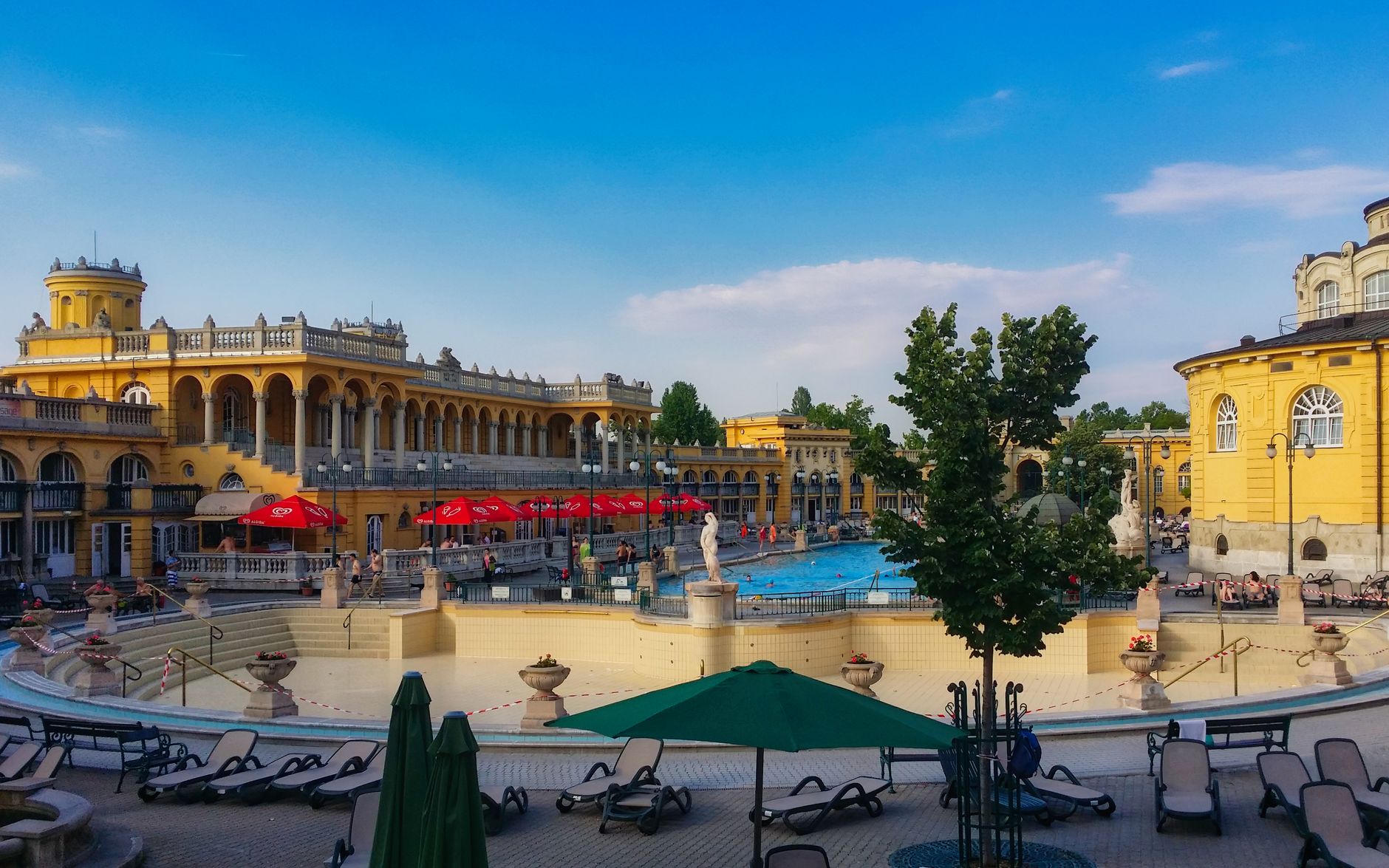
Budapest sits above a geothermal spring network. The bathing culture dates to the Ottoman occupation (16th–17th centuries), and thermal bathing is embedded in Hungarian daily life. The three major baths each offer different atmospheres.
Széchenyi (City Park, near Heroes' Square) is the most famous. Yellow neo-baroque palace with 18 pools (indoor and outdoor). The outdoor pools in winter, with steam rising and snow falling, are a genuine experience. Day ticket is €25–30. It's large, well-signposted, and designed for tourists. Weekends are crushingly busy; go on a weekday morning.
Gellért (Buda side, at the foot of Gellért Hill) is art nouveau, smaller, and more elegant. €28–35. The interiors feel less like a public bath and more like a grand hotel from 1918. Better for atmosphere; crowds are manageable. Book online in advance.
Rudas (Buda, near Gellért) is the oldest. Built in 1566, it retains Ottoman architecture (octagonal pool, skylight dome) and a genuinely local clientele. The rooftop pool (€10 add-on, timed sessions of 90 minutes) has an open-air view of Pest and is the best thermal bath experience in the city. This is where locals go, not tourists. Friday and Saturday evenings are coed; other times the sexes bathe separately (Turkish tradition). Book the rooftop in advance online — it fills up fast, especially summer and weekends.
How to use them: Buy your ticket at the entrance. You'll receive a locker key (or electronic wristband) and a changing cubicle. Bring a towel or rent one (€3–5). You can spend as long as you like (except Rudas rooftop, which runs timed 90-minute sessions). The temperature markings on the pools are accurate — 42°C is genuinely hot; 38°C is warmer than a bath.
Ruin bars: what they are and where to go
Ruin bars are a genuine Budapest invention from the early 2000s. Derelict apartment buildings and warehouses in the Jewish Quarter (District VII) were converted into multi-room bars with mismatched furniture, art installations, and courtyard gardens. The concept has now been copied in Eastern European cities, but Budapest's originals remain the best.
Szimpla Kert is the first one, opened in 2002 in an abandoned apartment block. Rooms flow into each other — a garden courtyard, a kitchen serving food, a bar, a cinema room, a library room. It's architecturally remarkable. It's also become very touristy after 9:30pm, with groups of stag parties dominating the space. Go between 8–9pm or skip it. The Sunday farmer's market (10am–2pm) is genuinely good — local producers selling cheese, bread, and vegetables.
Ellátó Kert (also on Kazinczy Street) is smaller, quieter, and more local. The crowd skews Hungarian rather than international. This is the bar to pick if you want an actual evening rather than a tourist experience.
Mazel Tov is the high-end ruin bar concept. Israeli mezze (hummus, labneh, roasted vegetables), excellent cocktails (€15–20), and the ruin bar aesthetic with better food and less chaos. Expect to spend €30–50 per person. It's good, but it's no longer a bar — it's a restaurant.
Don't mistake ruin bars as the only nightlife in Budapest. They're a specific aesthetic for a specific crowd. The Jewish Quarter has wine bars, casual restaurants, and smaller cafes that are open earlier and less overwhelming. Visit a ruin bar for the architecture and the night scene; don't build an evening around the expectation of it being authentic or local.
Food and drink that matters
Goulash (gulyás) is a paprika beef soup, not the thick stew served internationally. Try it at Borkonyha Winekitchen (mid-range, €14 for the soup and bread) or Menza on Liszt Ferenc Square (€12, more casual).
Lángos is fried flatbread with sour cream and grated cheese. €3–5, sold from stalls near the market and subway stations. This is the quintessential Budapest street food.
Chimney cake (kürtőskalács) is spiral pastry cooked on a spit, dusted with cinnamon sugar or chocolate. €4–5. Buy from the market stalls, not the tourist shops in the castle district.
Wine: Tokaji Aszú (dessert wine, genuinely excellent, €8–15 per glass) is worth trying at least once. Egri Bikavér (Bull's Blood, a red blend, €6–10 per glass) is approachable and affordable. White wines from Badacsony region are decent but less distinctive. DiVino on St. Stephen's Square has a good selection by the glass and actual outdoor seating (not the setup on Parliament promenade).
Coffee: Budapest has genuine café culture. New York Café (extravagantly decorated neo-baroque interior on Erzsébet körút) is worth seeing once for the architecture; it's overpriced (€8 for a cappuccino) but historically significant. For daily coffee, use the independent cafes around the Jewish Quarter — they're cheaper (€2–3) and better.
Practical information you actually need

Transport: Buy a Budapest Card (€28 for 24 hours, €50 for 72 hours). It includes unlimited public transport and discounts at most museums. The metro has four lines; trams and buses cover everywhere else. Line 1 (yellow, the Millennium Line) runs under Andrássy Avenue — ride it for the experience, not necessity.
Currency: Hungarian Forint (HUF). €1 ≈ 400 HUF as of 2026. Cash is useful for markets, smaller restaurants, and taxis. Cards are accepted at most establishments. ATMs are everywhere.
What not to do: Skip the boat tours unless weather is genuinely poor. Skip the hop-on-hop-off buses. Skip the castle tourist restaurants (food is mediocre, prices are €25+ for a main course). Skip the spas marketed to tourists in leaflets on the street.
Day trips: Eger (wine region, 2 hours by train, €8) is worth an overnight if you have time. Szentendre (30 minutes by local HÉV rail, €3) is picturesque but crowded. Vienna (2.5 hours by train, €30–60) works as a day trip, though you'll exhaust yourself. Bratislava (2.5 hours, €15–25) is less worthwhile — the main square is half an hour, then you're done.
Three days in Budapest covers the essential Pest — thermal baths, Parliament interior, the markets, one ruin bar evening, Danube panoramas from Buda, and meals that remind you why Hungarian food has been underrated for decades. If you have a fourth day, the Danube Bend (Szentendre, Esztergom, Visegrád) makes an excellent excursion by HÉV rail. Budapest is the kind of city that lingers longer than photographs suggest.