

Amsterdam's canal ring spans roughly two kilometres across—the entire city centre takes thirty minutes to walk end to end. Most first-time visitors dramatically overestimate how much ground they need to cover, which means they either overschedule transport or miss the fact that the best use of three days is depth over distance. This guide covers where the time actually goes, what requires advance booking, and what the city demands that other guides leave vague.
Where to stay: the neighbourhood choice matters more than the hotel
Pick your neighbourhood first. The hotel is secondary.
Jordaan (west of the Canal Ring) offers the best balance for a first visit. It's where locals actually live—residential streets, independent coffee shops, proper brown cafés (bruine kroegen), and grocery stores that aren't tourist operations. The Rijksmuseum and Van Gogh Museum sit ten minutes' walk south. A double room costs €150–220 per night. Café 't Smalle on Egelantiersgracht is the reference point for a traditional Dutch beer experience: wood-dark interior, locals playing cards, Dutch beer on tap. This is where your evening should end on Day 1.
Canal Ring (Grachtengordel) delivers the postcard version of Amsterdam—you wake to canal reflections and seventeenth-century façades. It's also where the noise concentrates on weekends, where the restaurants charge premium prices (€35+ mains), and where rooms cost €220–350. Worth it if the aesthetic matters to your trip more than budget or quiet. Avoid blocks immediately around Leidseplein and Rembrandtplein (party districts).
De Pijp (south, around Albert Cuyp Market) is multicultural, less picture-postcard, and genuinely cheaper—€120–180 per night. The Albert Cuyp Market here is the largest outdoor market in the Netherlands. It's slightly less central, but the metro connection makes it practical. Good if you want less tourism, better food options, and to see how Amsterdam functions outside the canal belt.
Avoid the area directly surrounding Centraal Station. It's noisy with tram traffic, packed with tourists and sex workers, and has minimal character. Staying there forces you to commute into the actual city.
Day 1: Rijksmuseum, Van Gogh Museum, Vondelpark, and Jordaan
Book Rijksmuseum timed entry online before you arrive (€22.50, typically available two to four weeks out). You'll see Rembrandt's The Night Watch and Vermeer's The Milkmaid—the works that anchor Dutch Golden Age painting. Budget two and a half to three hours. Download the museum's free audio guide app (available before arrival) rather than renting a headset. The app lets you move at your own pace without the rental queue.
The Van Gogh Museum sits five minutes' walk away. Book this online as well (€22)—it sells out weeks in advance throughout summer. Allow ninety minutes to two hours. This is the world's largest Van Gogh collection, but it's smaller and more manageable than the Rijks. You'll encounter his work in chronological order, which matters: watching him move from dark Dutch interiors to explosive colour in Paris has narrative weight.
Between the museums sits Vondelpark. Amsterdam's central park runs 1.2 kilometres and actually functions as a neighbourhood amenity, not a tourist attraction. Have lunch at Groot Melkhuis café on the park's north edge (€12–18 for sandwiches and coffee). The park is where you'll see actual Amsterdam life—joggers, students, people reading by the water.
Evening: walk to Jordaan. Find Café 't Smalle on Egelantiersgracht. Order a Dutch beer (Amstel, Heineken, or Brouwerij 't IJ's Zatte if they have it—€4–6 per glass). Sit by the window. Watch the canal. This is the experience that makes Amsterdam distinct from other European cities: the light on water, the domestic scale of the buildings, the absence of car noise in the narrow streets.
Dinner in Jordaan: avoid restaurants on the main canals (Prinsengracht, Keizersgracht). Instead, eat on the smaller streets—Egelantiersgracht or Westerstraat. Prices drop sharply one block inland.
Day 2: Anne Frank House, canals, and the city's hidden requirement

Anne Frank House booking is non-negotiable. This is the single most important advance reservation. Online booking opens two months ahead on a rolling basis at 09:00 CET. During peak season (April–August), popular dates sell out within hours. You must have a confirmed ticket before you book your flight. Entry is €16 and the experience lasts forty-five to sixty minutes.
What the Anne Frank House actually is: eight small rooms where eight people lived in hiding for twenty-five months. The original diary pages are displayed under glass. There is no theatrical recreation, no dramatization. The experience is emotionally substantial and claustrophobic in a way that photographs cannot convey. Expect to spend longer than the time estimate suggests if the space affects you. The gift shop sells annotated editions of the diary and related books—prices are standard, not inflated.
If Anne Frank House is fully booked, book the Moco Museum instead (€20, Banksy and Salvador Dalí works, less crowded). Don't skip museums because one is unavailable.
What most guides miss: how to actually avoid tourist trap canal cruises. The boats operating directly from Centraal Station and Dam Square charge €16–18 for 45 minutes and run diesel engines that make conversation impossible. Instead, book Blue Boat Company from the dock near Leidseplein (€18 for one hour, electric motor, narrated by the captain, significantly better). Alternatively, rent a small motorboat yourself: no licence required in Amsterdam, €15 per hour, fits four people, and you control the route. Canal Motorboats operates near the Anne Frank House.
Afternoon: Bloemenmarkt on Singel canal is smaller than travel writing suggests—a single row of flower stalls along the water, not a sprawling market. Go anyway, for ten to fifteen minutes. Buy tulip bulbs to take home (they're legal to transport to most countries). Cross to Spui Square, which has bookshops and a calmer atmosphere than the tourist core.
Day 3: Stedelijk Museum or FOAM, markets, and the Jewish Quarter
Stedelijk Museum (€22.50) houses the most significant modern and contemporary collection in the Netherlands. The permanent collection spans from Mondrian through Jeff Koons. It's less crowded than the Rijks or Van Gogh because first-timers don't know it exists. Budget two hours. The building itself—a copper-roofed nineteenth-century structure with a modern extension—is worth seeing.
Alternatively, FOAM Photography Museum (€15, Keizersgracht 609) is smaller and hyperspecific. It hosts rotating exhibitions of contemporary photography. Forty-five minutes to one hour is sufficient.
Morning or early afternoon: Albert Cuyp Market in De Pijp (open Monday–Saturday, 09:00–17:00). This is the largest outdoor market in the Netherlands—a proper market, not a tourist product. Stroopwafels fresh off the iron cost €2. The flower stalls, cheese vendors, and fish stands are worth the walk. It's a functioning neighbourhood market where locals buy groceries.
Late afternoon: Jewish Historical Museum + Portuguese Synagogue (€17 combined ticket). The museum occupies four joined seventeenth-century buildings. The Portuguese Synagogue, attached, has been in continuous use since 1675—still an active synagogue, not a museum. The combination offers substantive context on Dutch Jewish history and the community's experience during World War II. Allow two hours for both.
Getting around: the walk-first principle
On foot covers ninety percent of what you need. Amsterdam's city centre is genuinely small. From Jordaan to the Jewish Quarter is a twenty-five-minute walk. The Canal Ring is designed for walking at human pace.
By bike is practical once you understand the rules. OV-fiets rental at any train station costs €4.25 per day (requires a Dutch bank card or €50 deposit). Tourist rental shops charge €12–15 per day and require a passport or €200 deposit. Cycling protocol: stay to the right side of the path, don't look at your phone, ring the bell when passing (not optional—locals enforce this), and park in designated bike racks (not on the street). Bikes are stolen constantly; lock both wheels and the frame. If you haven't cycled in traffic before, stick to walking.
By tram is useful for the Rijksmuseum district. A day ticket costs €9 or load an OV-chipkaart at a machine and pay €2.80 per journey. Trams are efficient but unnecessary if you're staying in Jordaan or the Canal Ring.
Red Light District (Wallen): safe to walk through during the day or evening. Treat it as a neighbourhood, not a spectacle. Photographing sex workers in window displays is illegal and deeply unwelcome—locals will call you out and the police enforce it. The district is a working area, not entertainment. Visit if you're genuinely curious about the history and architecture; skip it if you're treating it as a tourism tick.
When to visit: the actual seasonal breakdown
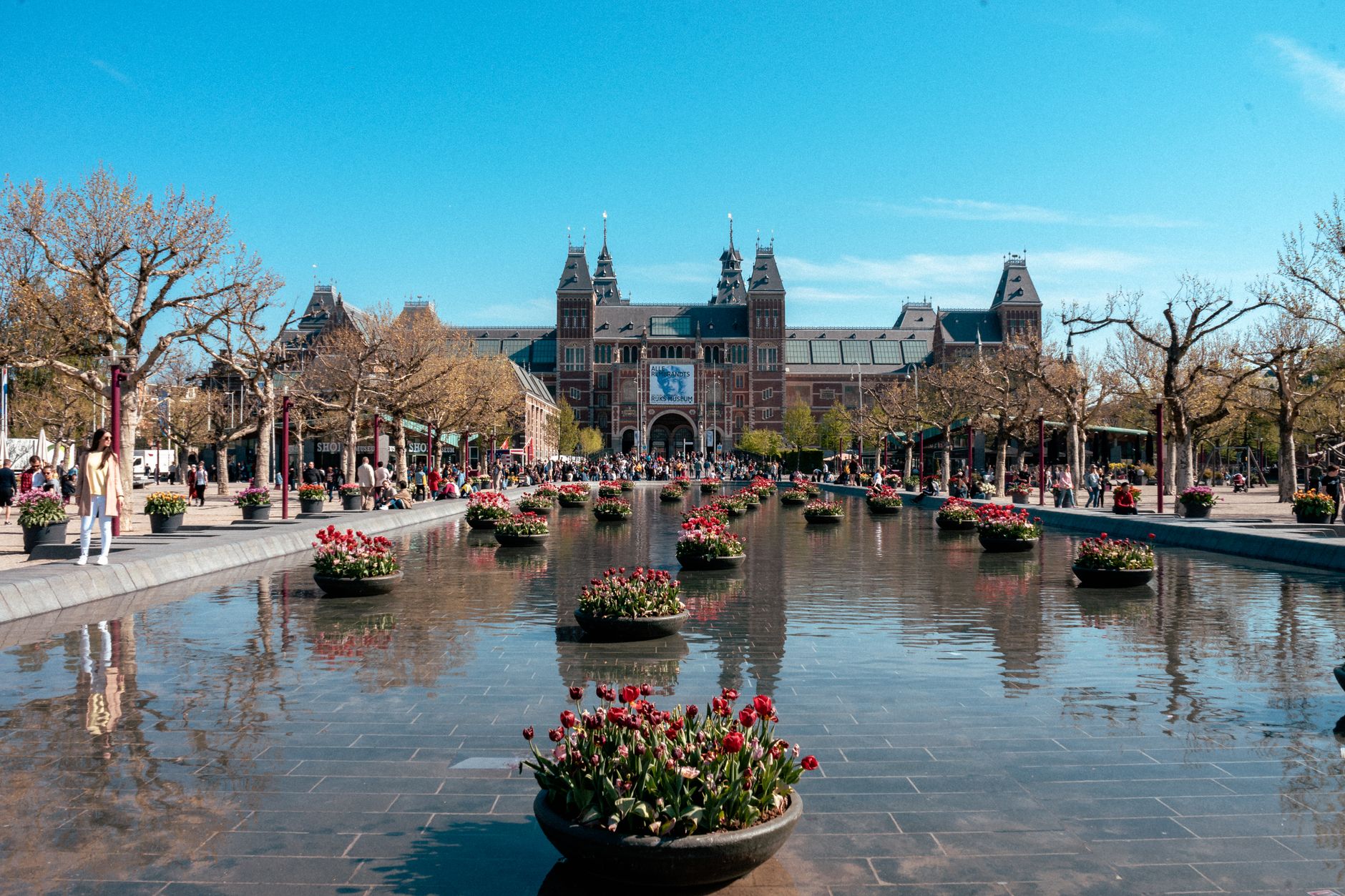
April–May (tulip season) brings peak colour. Keukenhof Gardens, 30 kilometres south, opens mid-March through mid-May (€20 entry, book online). The canal reflections in spring light are genuinely exceptional. Crowds are substantial—expect full museums and high accommodation prices (€200–280 in Jordaan). The tradeoff is worth it if tulip season is central to your reason for going.
September–October is the practical sweet spot. Temperatures range 15–18°C, rain is occasional, museums are visibly quieter, and accommodation drops to €140–180. This is when the city functions best for a first-timer. Fewer people, equally beautiful, better bookings.
July–August hits 28–30°C+ and draws maximum crowds. Hotels are expensive and full. Museums require very early arrival to avoid hour-long queues. Canal swimming is genuinely possible (Pontoon Beach at Java Park, free entry). This works if you embrace the summer energy rather than fight it.
December brings Christmas markets on Dam Square and Spui, ice rinks, and fewer tourists in museums. Days are short (8 hours of daylight) and cold (2–5°C). The city is atmospheric rather than busy.
Booking priorities and practical requirements
Before booking your flight, secure two things: the Rijksmuseum (€22.50, book eight weeks ahead for peak season) and the Anne Frank House (€16, opens two months ahead, sells out within hours for popular dates). Both require online advance booking. If Anne Frank House is unavailable, book the Moco Museum immediately as a substitute (€20).
Book accommodation in Jordaan or De Pijp, not near Centraal Station. Amsterdam requires less planning than other major European cities, but these two museum tickets are non-negotiable because the queues are genuinely long and the supply is fixed.
A three-day first visit to Amsterdam works best in September or October, when the crowds thin, the light remains good, and accommodation is affordable. April and May are exceptional if tulips matter to you; accept the crowds and book everything eight weeks ahead. Avoid July–August unless summer heat and energy are your preference. The city is compact enough that a three-day visit covers the substantive museums, one major neighbourhood, and the canal system—realistic depth rather than rushed breadth.