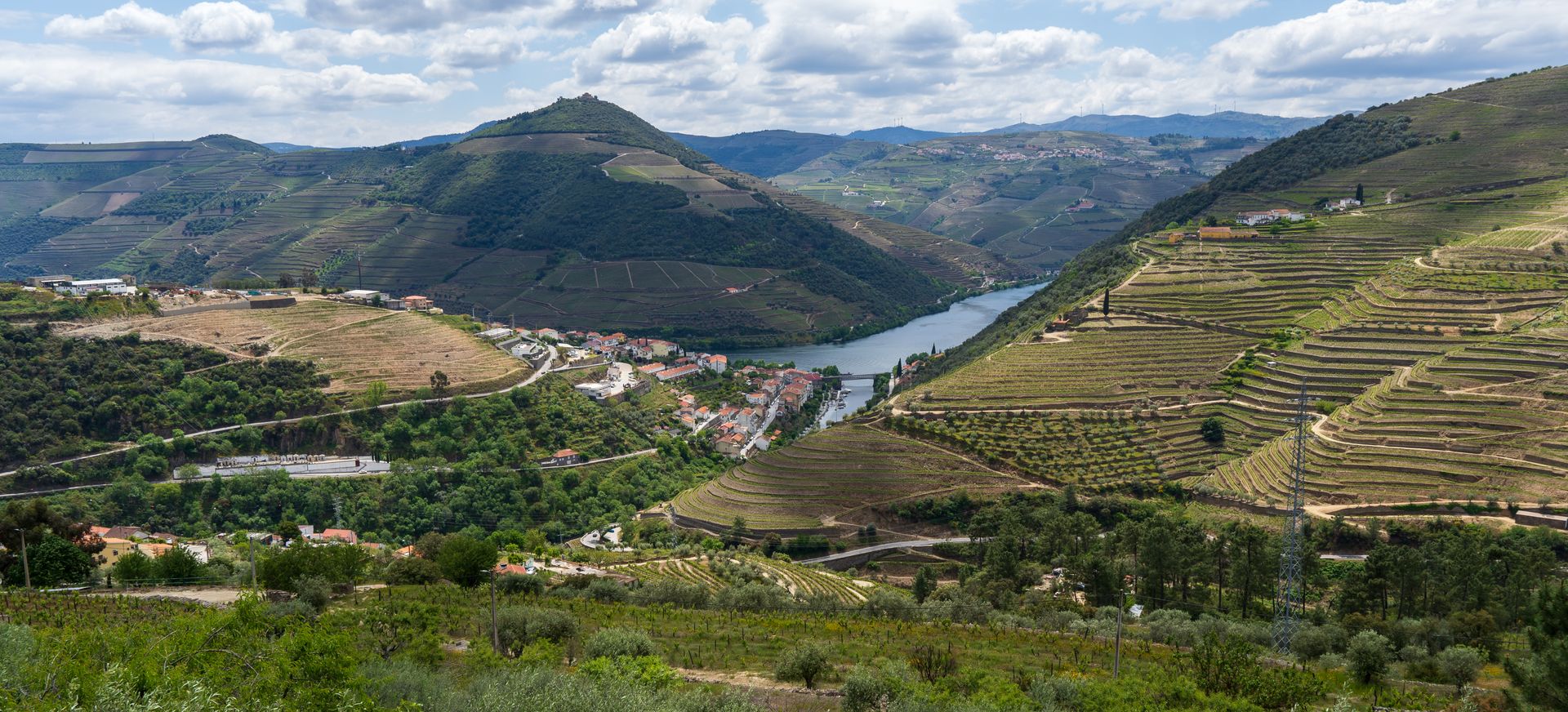

The Douro Valley is a UNESCO World Heritage Site covering 250km of the Douro river from just east of Porto to the Spanish border, with terraced vineyards rising steeply on both banks. The schist and granite slopes are too steep for mechanised harvesting; everything is done by hand. Port wine (fortified with grape spirit to stop fermentation, preserving residual sugar) is the traditional product; Douro DOC table wines have grown in quality and reputation over the past two decades to the point where they compete seriously on the international market. The valley is primarily a wine destination — it's also one of the most spectacular agricultural landscapes in Europe.
The River and the Valley's Geography
The Douro runs 930km from its source in the Castile y León region of Spain to its mouth at Porto. The wine region (Denominação de Origem Controlada) begins at the Marão mountains east of Porto and extends in three sub-regions: Baixo Corgo (the westernmost, cooler, more productive), Cima Corgo (the centre, including Pinhão, producing the finest Port wines), and Douro Superior (the eastern section, more arid, fewer visitors).
The river valley walls rise 400–600m above the water in the steepest sections. The terraces — some newly engineered on a vertical wall system (patamares), others on the traditional narrow socalcos cut by hand over centuries — hold the vines in place. The system requires continuous maintenance; abandoned terraces collapse within years. The labour cost makes Douro wine inherently expensive to produce, which partly explains why the cheaper end of the Port market remains reliable value and the upper end competes with Bordeaux for price.
Pinhão: The Valley's Hub
Pinhão is a small village (population ~600) in a pronounced bend of the Douro river, surrounded on three sides by steep vineyards. It's the centre of the Cima Corgo subregion and the most practical base for visiting the valley's quintas. The train station (terminus of the Porto line and junction for the now-closed Tua valley line) is notable for its 20th-century azulejo tile panels depicting the traditional grape harvest — the most complete pictorial record of pre-mechanisation Douro agriculture in the valley.
The São Salvador do Mundo viewpoint, a short drive or 40-minute walk above Pinhão, gives the classic Douro panorama — the river curve below, terraced hills on both banks, the Quinta do Crasto across the water. Late afternoon light is best. The Quinta de la Rosa, walkable from the village, is one of the more accessible quintas for informal visits and tastings without a reservation.
Wine Tasting at the Quintas

The major quintas (wine estates) of the Douro offer tours and tastings at varying levels of formality. Most charge €15–30 for a standard tour (cellar, vineyard walk, three to five wines); premium tastings with older vintages or reserve wines run €40–80. Booking in advance is advisable for well-known properties in spring and autumn; in summer (July–August) it's essential.
Quinta do Crasto (across the river from Pinhão) produces some of the Douro's most respected table wines alongside Port; their Reserva and LBV Port are consistently excellent. Quinta do Vale Meão in the Douro Superior produces Barca Velha, arguably Portugal's most famous red wine, in years when conditions allow (released years later). Quinta da Pacheca near Lamego offers accommodation in oversized wine barrels — each barrel converted into a circular bedroom — which is either charming or gimmicky, depending on your patience for novelty. The wine is good regardless.
Taylor's, Graham's, and other Vila Nova de Gaia lodges also own quintas in the valley (Quinta de Vargellas, Quinta dos Malvedos) that open for visits. These tend toward more polished visitor experiences than family-owned properties and are useful if you want consistent presentation.
The Porto to Pinhão Train
The regional train from Porto Campanhã to Pinhão (2h30, €12.15 one way) runs along the Douro riverbank for most of its length. The section from Régua onwards (the last 25km) is the most spectacular: the train runs at water level on a single track cut into the valley wall, with the terraced vineyards rising on both sides. There's no dining car, but the views compensate. This journey is consistently listed among the finest rail routes in Europe, which is a defensible claim for the Régua–Pinhão section.
Trains run 4–5 times daily; the morning service from Porto reaches Pinhão by midday. Return services run until late afternoon. The Comboios de Portugal booking system (cp.pt) allows advance ticket purchase; in harvest season (late September–October), book ahead. Trains to Régua (the larger town, 1h45 from Porto) run more frequently and connect to a separate short service to Pinhão.
Douro River Cruises
Long-distance Douro cruises between Porto and Pinhão (5–7 days return) are sold by various operators (Douro Azul, Nicko Cruises, Viking) and typically combine river travel with excursions to wine estates and historic towns. The ships lock through five dams on the upriver journey. Prices run €1,000–2,500 per person for a full river cruise.
Day boat trips from Pinhão are a more accessible option — a 2–3 hour excursion up or downriver from Pinhão, typically stopping at a quinta, runs €35–60 per person. In summer, the "five dams" day trip from Porto (10 hours, passing through all five locks on a catamaran) is a popular option at €70–90 per person. Both work better than driving the valley if you want to understand the scale of the river rather than just the vineyards.
Harvest Season
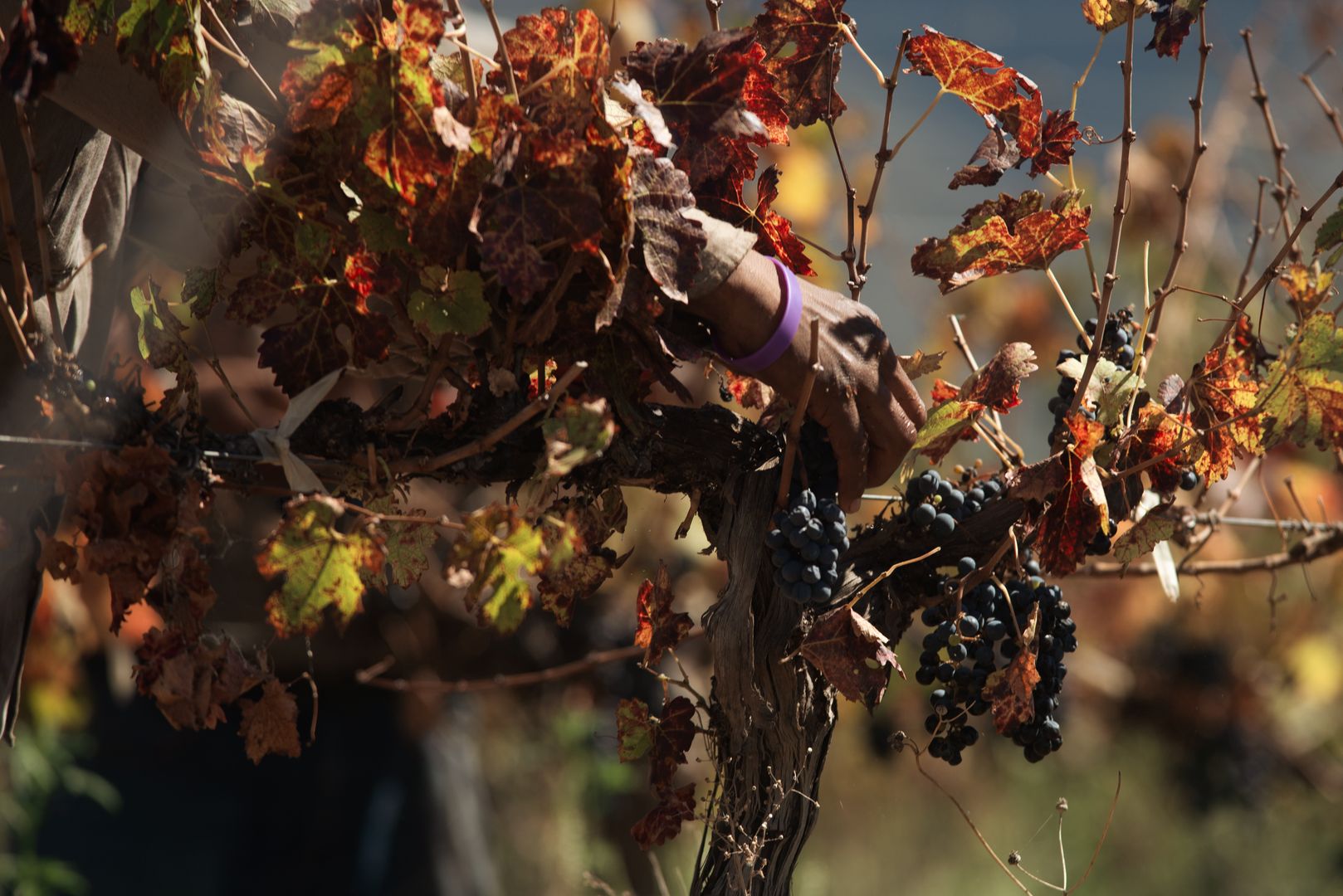
Harvest (vindimas) runs from mid-September through mid-October, timed to the vine variety and the weather that year. The Touriga Nacional and Touriga Franca grapes that go into the finest Port wines are typically picked in the first two weeks of October. At some quintas, grapes are still trodden in foot in granite lagares (treading tanks) — a continuation of the practice that aerates the must and releases colour more gently than mechanical crushing. It is labour-intensive, theatrical, and effective; watching it is a genuine experience rather than a tourist performance, at quintas that do it seriously.
Accommodation in Pinhão and the surrounding quintas books out months ahead for harvest season. Prices rise 30–50% above the shoulder-season rate. If you can get a room and a quinta tour during harvest, the combination of the landscape, the wine production, and the social energy of the valley in full operation is hard to replicate at any other time of year.
Practical Costs
Pinhão has a handful of small hotels and quintas offering accommodation; prices run €100–200 per night outside harvest season, €150–300 in September–October. Lamego (30km west, a sizeable town with a cathedral and a Baroque sanctuary) has more options at €70–120. A quinta tasting runs €15–30; a meal at a quinta restaurant €25–45 for a fixed menu. Local cafés and restaurants in Pinhão charge €8–15 for a full lunch. A bottle of excellent Douro DOC wine in a restaurant runs €15–30; the same bottle in a supermarket in Porto is €8–15.