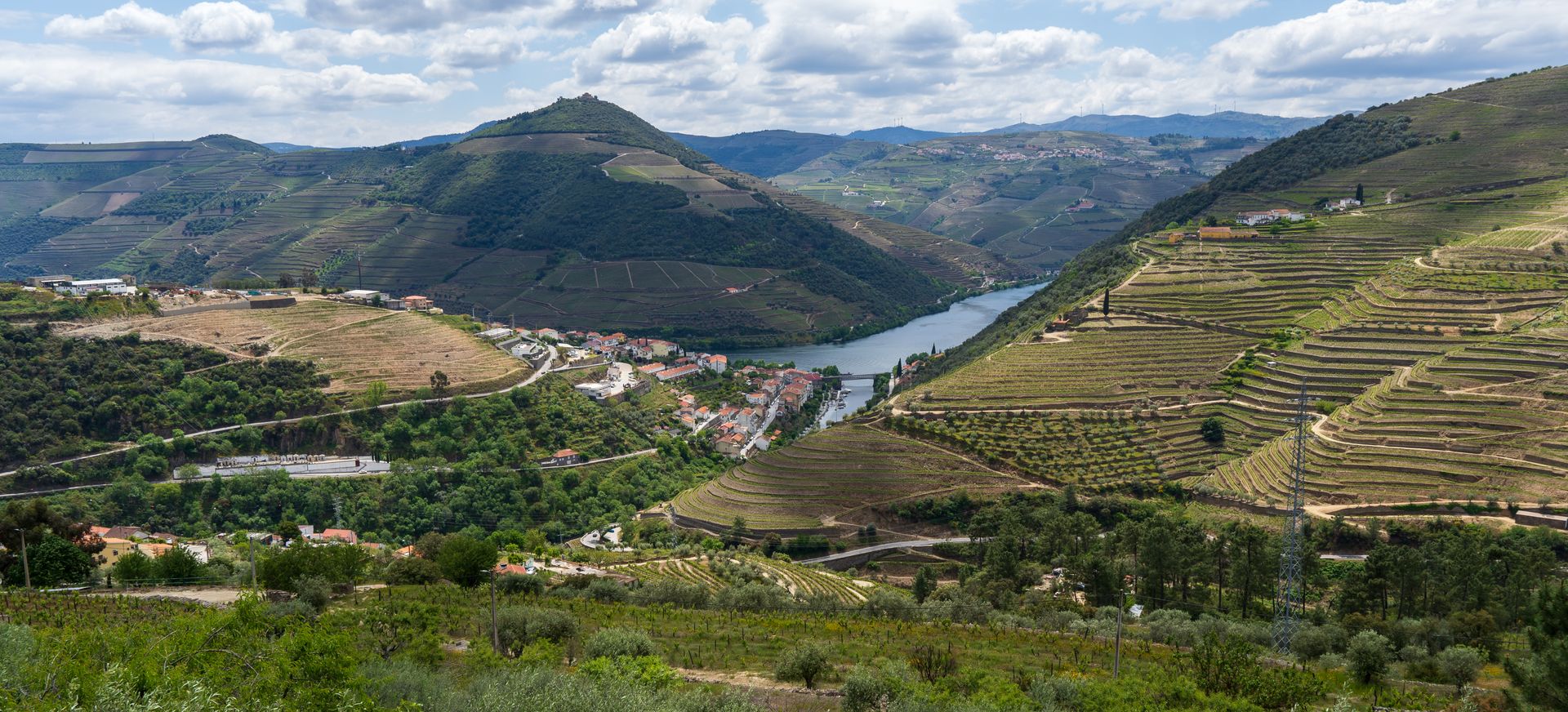
Porto is smaller than Lisbon (220,000 people in the city proper) and less immediately legible to first-time visitors — the historic centre is steep, the public transport is less comprehensive, and the city's self-presentation has historically been lower-key than the capital. The flip side is that it retained a residential character through the tourism boom of the 2010s that Lisbon's most-visited neighbourhoods largely lost. The wine lodges of Vila Nova de Gaia, the historic centre around the Clérigos Tower, and the Matosinhos seafood district are all within a 40-minute metro ride of each other. The city rewards an extra day over what most itineraries allocate.
The Ribeira: Waterfront and the Douro
The Ribeira is Porto's historic waterfront district, compressed between the steep cliff below the Sé cathedral and the Douro riverbank. The tall, narrow tiled buildings — predominantly 17th and 18th century, some older — are the image most associated with the city. The rabelo boats moored on the waterfront (flat-bottomed, traditionally used to transport wine barrels from the Douro Valley) now serve tourist boat trips; the real commercial wine traffic moved to road transport in the 20th century.
The Cais da Ribeira promenade has restaurants and bars at ground level — most are tourist-facing and reasonably reliable. The Praça da Ribeira, a small square one block back from the water, has tables from several restaurants and a medieval tower. The Dom Luís I Bridge (1886, designed by a student of Gustave Eiffel) connects the Ribeira to Vila Nova de Gaia across the Douro; the upper deck carries the metro, the lower deck carries pedestrians and cars. Walking across the lower deck takes 10 minutes and gives the best frontal view of the Ribeira facade.
Vila Nova de Gaia: The Wine Lodges
Port wine is made in the Douro Valley but aged and bottled in the wine lodges (caves) of Vila Nova de Gaia on the south bank of the Douro. The geography is colonial-era accident: British merchants established their warehouses here in the 17th and 18th centuries, where the Atlantic humidity was better suited to barrel aging than the Douro Valley's extremes. The major houses — Graham's, Sandeman, Taylor's, Croft, Ramos Pinto — line the riverside and open hillside of Gaia.
Most lodges offer tours and tastings at €15–25 per person, including 2–3 wines. Graham's has the most well-presented visitor experience (and a restaurant with views); Sandeman trades partly on the visual brand (the cloaked Don figure); Ramos Pinto has the best wine-to-price ratio in the tastings. All can be visited without advance booking from Tuesday–Saturday outside high season; in July and August, book ahead online. The Gaia cable car (€6 one way) connects the riverside to the hilltop, where several viewpoints look back across the Douro to the Porto skyline.
The Historic Centre: Clérigos, Lello, and the Bolhão Market
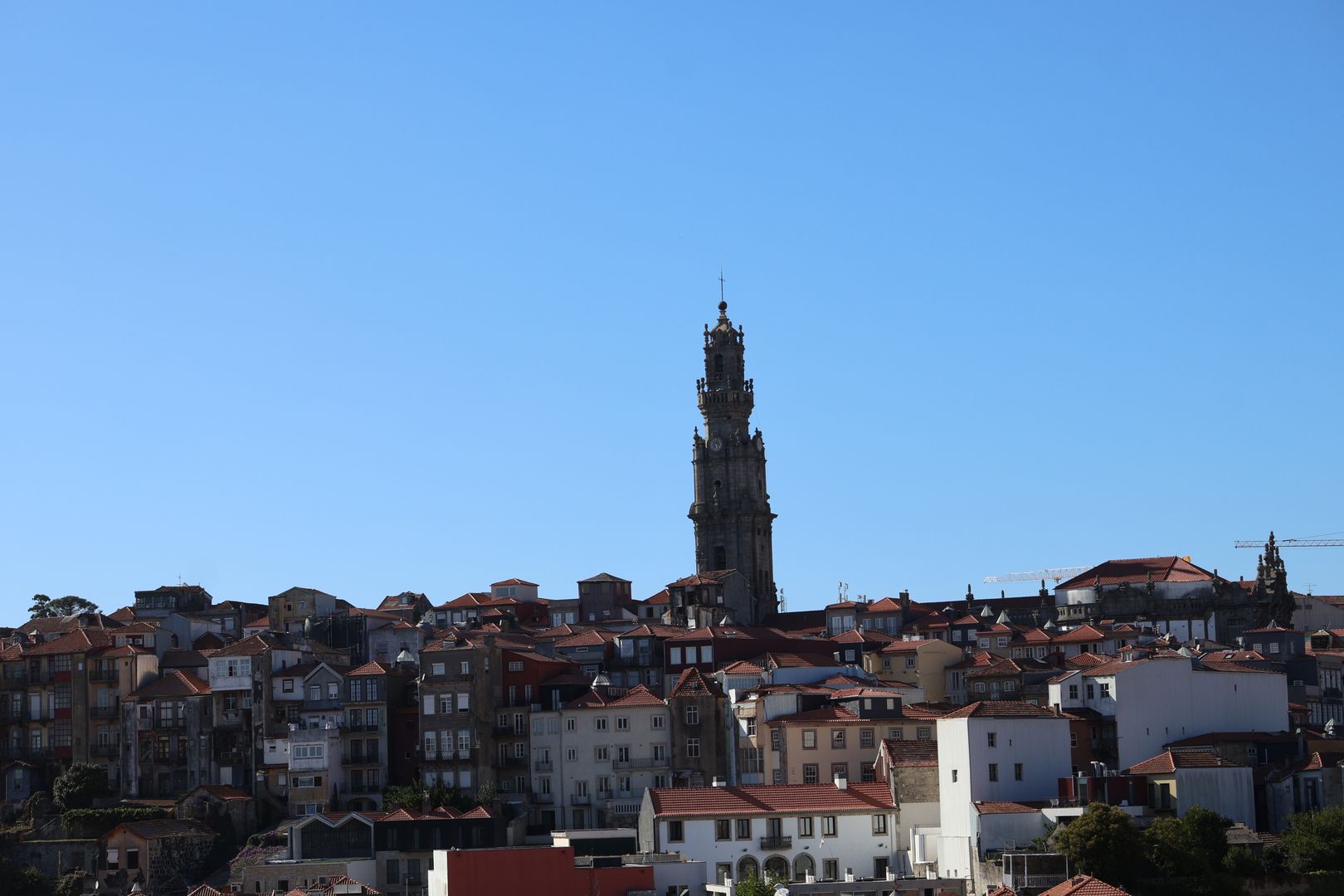
The Clérigos Tower (1763, 75m, 240 steps, €8) is the architectural centrepiece of Porto's skyline and gives the best elevated view of the city. The baroque church at its base is worth entering briefly. The tower is visible from most of Porto's hills; finding it on foot is a reasonable navigation method for first-time visitors.
Livraria Lello, two streets west of Clérigos, is the most internationally famous bookshop in Portugal — a 1906 neo-Gothic interior with a divided staircase, carved wooden shelving, and a stained glass ceiling. The €5 entry fee (redeemable against a book purchase) was introduced to manage the crowds that followed J.K. Rowling's claim that the staircase inspired Hogwarts. The claim is disputed by historical record; the bookshop is genuine regardless. Come before 10am or after 6pm. It is still an operating bookshop and stocks Portuguese literature in translation.
The Bolhão Market, fully restored and reopened in 2022, is Porto's main covered market — a two-storey iron-and-granite structure from 1914. Fresh fish, vegetables, flowers, cheese, and bacalhau on the ground floor; delicatessens and restaurants on the upper floor. Open Monday–Saturday; busiest Tuesday and Saturday mornings. The Bolhão metro stop connects directly.
Foz do Douro and Matosinhos
Foz do Douro is the neighbourhood at the mouth of the Douro river, where the river meets the Atlantic. The Praia do Molhe and Praia de Gondarém are the city-facing beaches — wind-exposed, Atlantic, cold water (17–19°C in August). The Passeio Alegre garden and the Rotunda da Boavista are the neighbourhood's residential anchors; the café culture along Rua do Padrão is more local than central Porto.
Matosinhos, one stop further north on the metro (Matosinhos Sul station), is a working port with the best fresh seafood in the Porto area. Rua Heróis de França and the surrounding streets have 30-odd fish restaurants operating on the same basic model: whole grilled fish, priced by weight (€8–15 per 100g for turbot or sole, less for sea bream), house wine, chips. At lunch on weekdays, the clientele is primarily Portuguese. The covered market on Rua Brito Capelo sells the catch directly in the mornings.
Food and Coffee in Porto
The francesinha is Porto's signature dish — a sandwich of bread, cured meats, and a fried egg, covered in melted cheese and submerged in a spiced tomato-beer sauce. The first encounter is confronting; the second is usually better. Café Santiago (Rua Passos Manuel, near Bolhão) is the most commonly cited reference; Lado B (same street) is the less-known alternative with a shorter queue. Budget €12–16 for the dish plus a beer.
Coffee culture in Porto runs on galão (milky coffee served in a glass, similar to a flat white), meia de leite (half-coffee, half-milk in a cup), and bica (espresso). The Majestic Café on Rua de Santa Catarina is the heritage option — Art Nouveau interior, expensive (€4 for a coffee), perpetual Instagram queue. Café Guarany on Avenida dos Aliados is almost as historic and considerably less crowded. Neighbourhood cafés charge €0.70–1.20 for an espresso.
Day Trips from Porto

Braga (1 hour by direct train, €3.40) is a religious and university city with Roman walls, a 12th-century cathedral (the oldest in Portugal), and the Bom Jesus do Monte sanctuary on a wooded hill above the city — a Baroque staircase of 577 steps with chapels at each landing, built over 200 years. The city is more straightforwardly Portuguese than the tourism-oriented parts of Porto and Lisbon.
Guimarães (1h10 by train, €3.40) is the birthplace of the Portuguese nation — the first capital, where the first king Afonso Henriques was born in 1110. The medieval centre, a UNESCO World Heritage Site, is compact and well-preserved. The castle and the Paço dos Duques (ducal palace) are the main sites. Most of what Guimarães's historic centre contains has been restored with more care than is typical of Portuguese heritage management.
Getting Around and Practical Costs
Porto's metro covers the airport, main neighbourhoods, Matosinhos, and the Gaia riverside reasonably well. A single trip costs €1.50–2.25 depending on zones; a 24-hour pass is €7. Trams operate in the historic centre (line 1 along the Douro, line 22 up the hill to Batalha) and are scenic but slow. Bolt and Uber are cheap and useful for cross-city trips.
A mid-range hotel in central Porto runs €90–160 per night (noticeably less than Lisbon at comparable quality). Restaurant dinners average €12–22 for a main course; the cheaper end is genuine restaurants rather than tourist concessions. A glass of port at a Gaia lodge tasting is included in the entry fee; a glass in a wine bar on the Ribeira runs €5–12 depending on the vintage. Daily costs (excluding accommodation) of €60–90 are realistic for a comfortable visit.