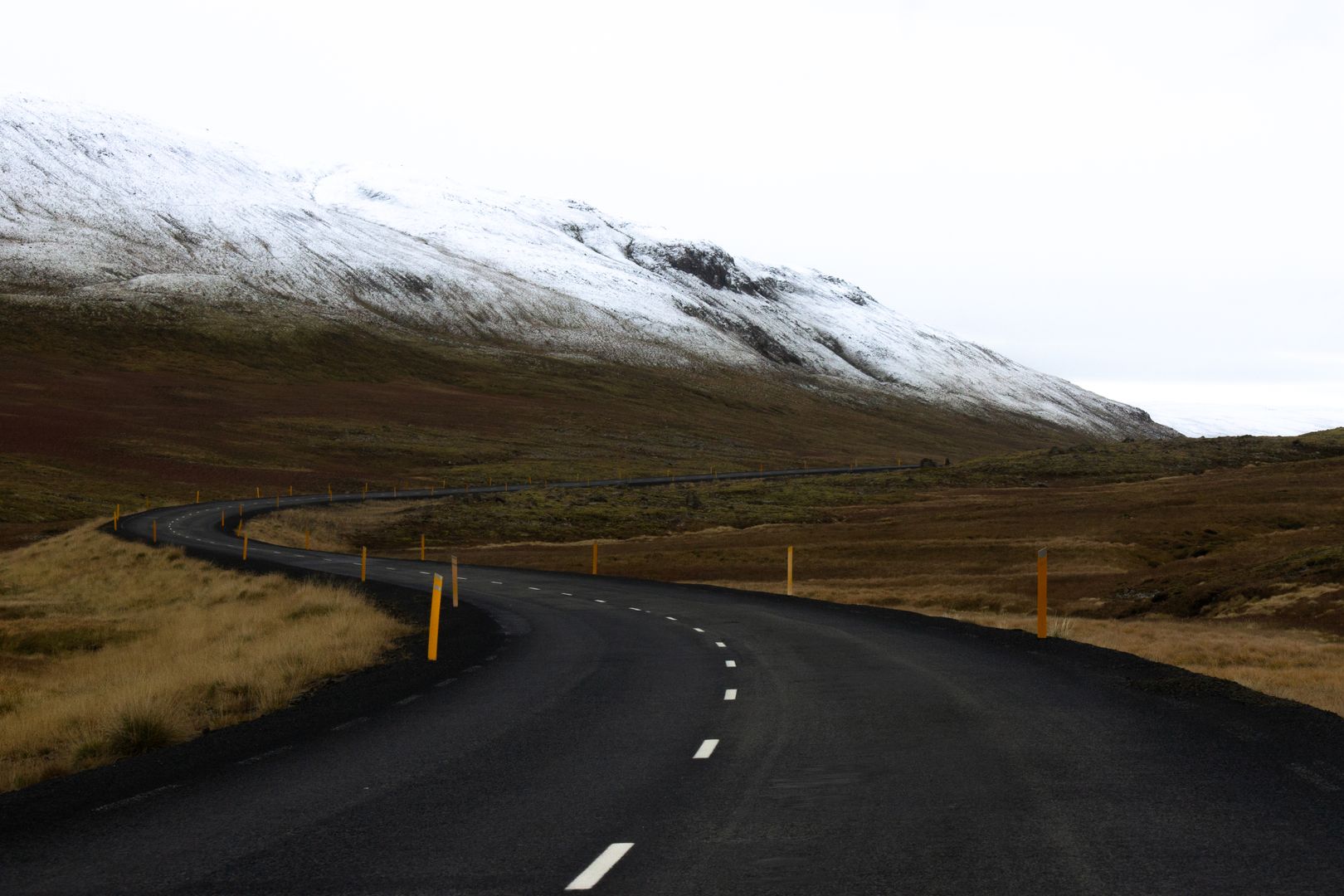
The aurora borealis is caused by charged solar particles entering the Earth's atmosphere and colliding with oxygen and nitrogen molecules at altitudes of 100–300km, releasing energy as light. The characteristic green colour (from oxygen at lower altitude), red and purple (oxygen at higher altitude), and blue-violet (nitrogen) are visible to the naked eye when solar activity, geomagnetic conditions, and sky clarity combine. Iceland's position in the auroral oval — the ring around the geomagnetic pole where aurora is most commonly observed — makes it one of the most reliable locations in the world for sightings between September and March.
When the Aurora Is Visible
Darkness is the first requirement. Iceland has 24-hour daylight from mid-May to late July (the midnight sun); the aurora is present overhead during this period but completely invisible. The dark season begins in late August; genuine darkness (astronomical twilight or better) arrives in September. The auroral season runs from the autumn equinox (September 21) to the spring equinox (March 21), with October through February offering the longest dark windows.
Solar activity is the second factor. The KP index (a 0–9 scale of geomagnetic disturbance) is the practical measure: KP 2 is visible in Iceland on a clear night at dark locations; KP 3 is visible with some atmospheric interference; KP 5 and above produces full-sky displays visible even through moderate cloud. The KP index is updated every three hours by NOAA; aurora-service.eu and vedur.is (Iceland's Met Office) provide 1–3 day forecasts. Forecasts beyond 48 hours have limited accuracy; a 27-day solar rotation produces some predictability in solar storm activity, but cloud cover — the more common limiting factor in Iceland — is forecast at 24–48 hours reliably.
Where to Go from Reykjavik
Reykjavik's light pollution is the main obstacle to aurora viewing from the city centre. On nights with KP 3 or above, the aurora is visible from the city's edges — the Öskjuhlíð hill near the Perlan museum, the beaches east of the airport at Seltjarnarnes, and the harbour area all reduce obstructing light to the north. For a proper display, driving 20–40 minutes from the city is the practical solution.
The most reliable dark-sky locations within an hour of Reykjavik: Þingvellir National Park (45 minutes east via Route 36, no light pollution, the lake as a reflection surface); Hvalfjörður (30 minutes north, the fjord gives a north-facing dark horizon); the Reykjanes Peninsula coast south of Grindavík (30 minutes, flat lava fields, sea horizon). Northern Lights boat tours from the Old Harbour (ISK 8,000–12,000) move into the bay away from city light and are useful if you're without a car; the guide's job is essentially to watch the weather forecast and call a go/no-go correctly.
Best Aurora Locations Beyond Reykjavik
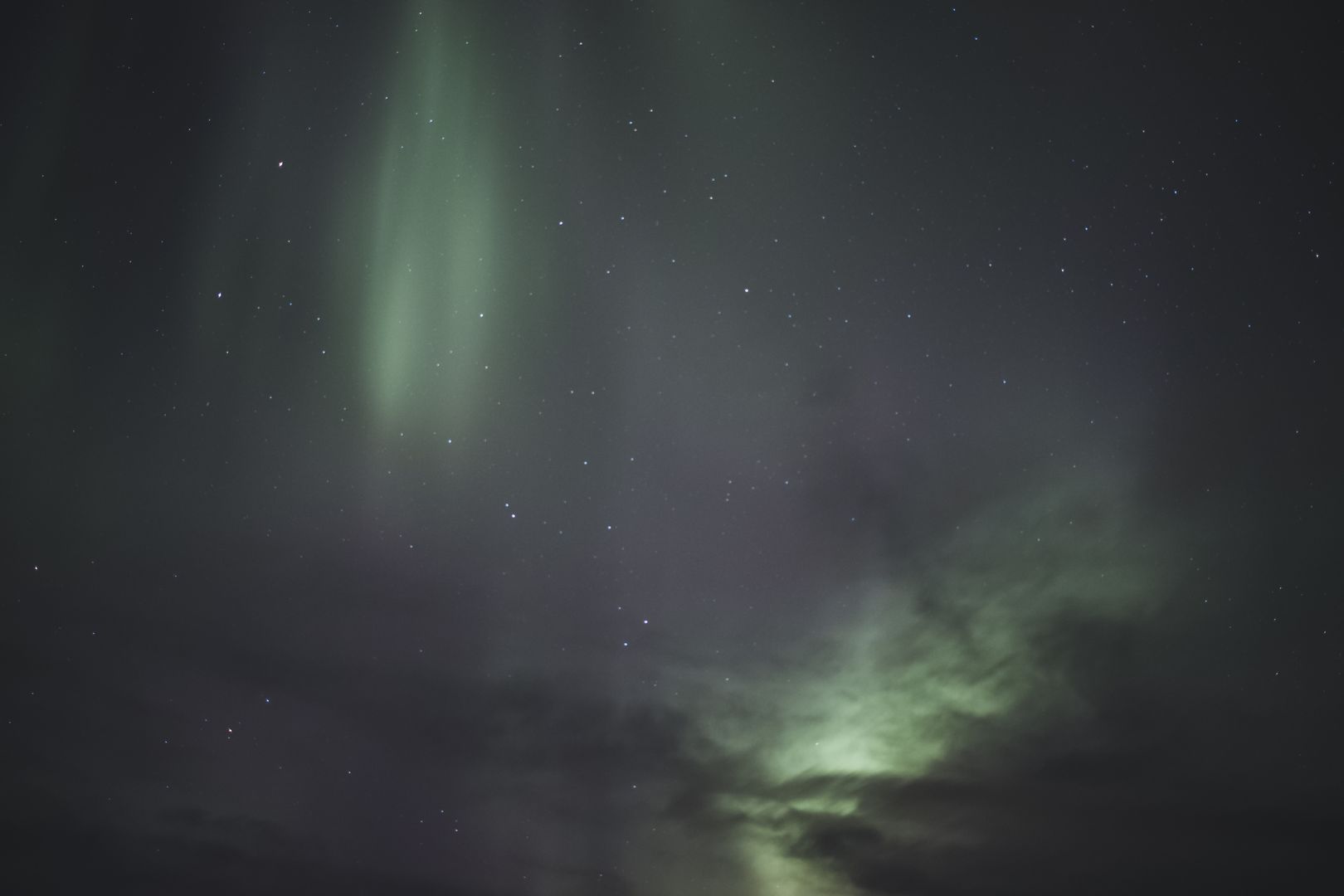
The north and east of Iceland have darker skies and clearer weather patterns than the south coast, which is more frequently cloudy. Akureyri, on the Ring Road north, is far enough from Reykjavik that weather systems differ; a cloudy Reykjavik night may produce clear viewing in the north. The Mývatn area (with the lake's reflections and the geothermal activity providing foreground interest) is one of the more celebrated aurora photography locations in Iceland.
Kirkjufell mountain on the Snæfellsnes Peninsula (2.5 hours from Reykjavik) produces the most technically photographed aurora images — the distinctive pyramid peak, the Kirkjufellsfoss waterfall to the left, aurora overhead. The composition is standard but the combination of mountain, waterfall, and aurora is genuinely dramatic. The mountain faces north, which is optimal when the auroral oval dips south as it does during moderate to high activity.
The East Fjords have the clearest skies in Iceland statistically and the lowest visitor density. Aurora viewing from Seyðisfjörður or the fjord roads outside Djúpivogur, without other vehicles and without any artificial light visible, represents the experience most visitors are imagining when they plan an aurora trip.
Photographing the Aurora
Aurora photography requires a tripod, a wide-angle lens with an aperture of f/2.8 or wider, and manual exposure control. Starting settings: ISO 800–3200, aperture at maximum (f/1.8–f/2.8), shutter speed 5–20 seconds depending on how fast the aurora is moving. A faster-moving, more active display requires a shorter exposure to avoid blur; a static glow requires longer exposures and lower ISO to reduce noise. Modern mirrorless cameras (Sony A7 series, Fujifilm X-T5) produce usable aurora images at ISO 3200–6400 that film cameras at any ISO could not.
The aurora's brightness varies dramatically within a single night. A faint green glow barely visible to the naked eye photographs clearly at long exposure; a full-sky display with moving curtains and colour shifts saturates a sensor at the same settings. The camera consistently records more than the eye sees in low-activity situations; in high-activity situations, no photograph fully captures what is directly overhead.
Managing Expectations Honestly
A trip to Iceland in September–March has a probability of at least one clear, active aurora night that most operators (and honest guides) put at 60–80% for a week-long trip. Specific nights cannot be guaranteed. The October–November period has a reasonable combination of darkness, auroral activity (solar cycle position matters; the 11-year solar maximum of 2024–2025 is producing higher-than-average activity), and weather that is poor but not as consistently stormy as January–February. March is statistically cloudier than October but produces equinox-related solar storm increases.
The most common experience: three cloudy nights, one night with a brief pale green curtain visible for 15 minutes, one night with a clear display for 45 minutes. The second-most common: multiple strong sightings across a week in a good aurora year. The least common but most memorable: a full-sky KP 6+ display with visible colour from ground level, lasting two hours. All three are possible; none can be booked.