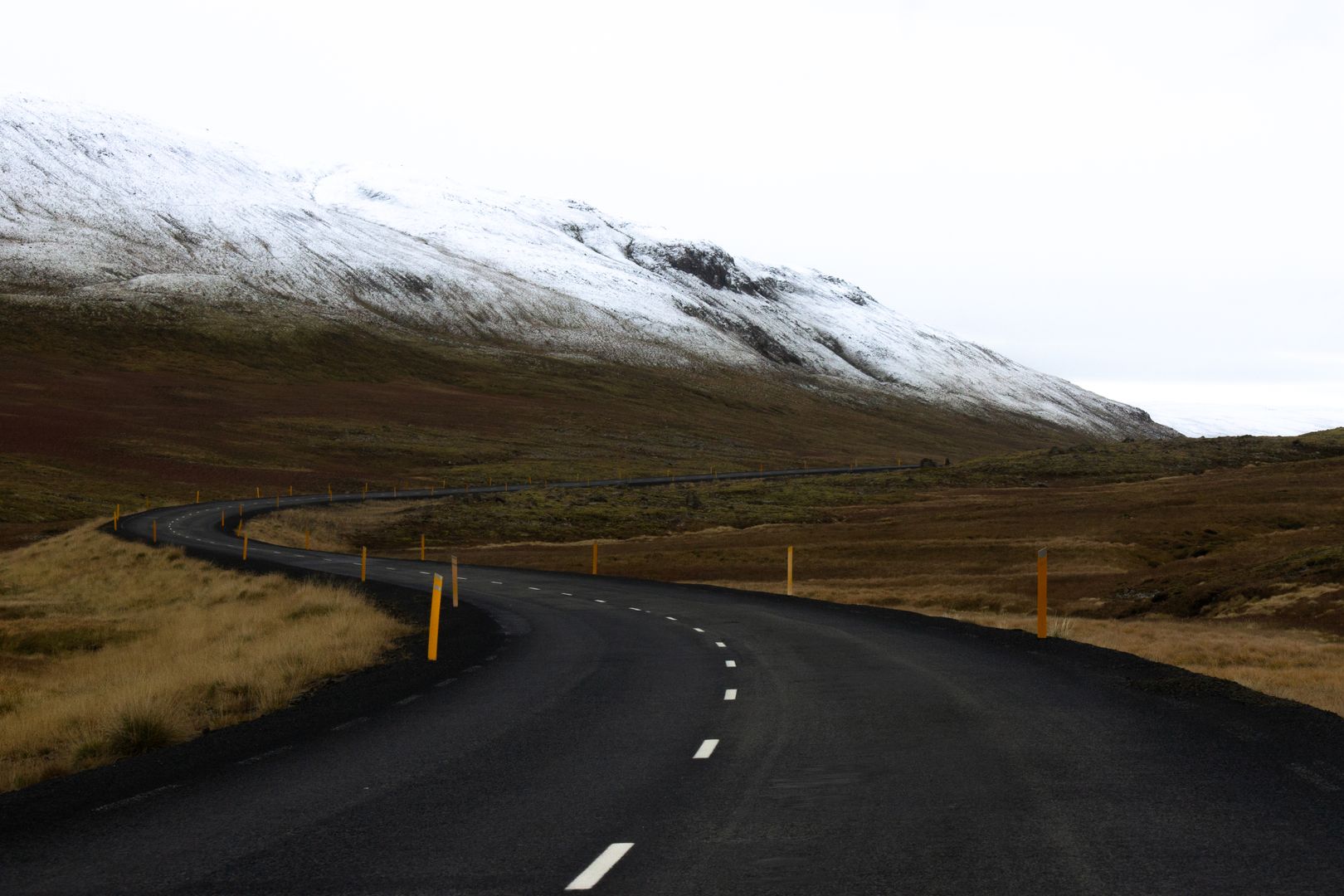
Reykjavik contains 40% of Iceland's total population in a city whose walkable centre fits within a 20-minute radius of the main square. The scale is that of a small European town; the setting — the bay, the mountains across the water, Esja rising to 914m on the north shore — is that of somewhere much larger. The city's infrastructure is disproportionately good for its size: a serious music and theatre scene, a restaurant culture that punches above its weight, and a concentration of museums relevant to understanding the country's unusual history. It is also, by any reasonable European standard, expensive.
Hallgrímskirkja and the City Centre
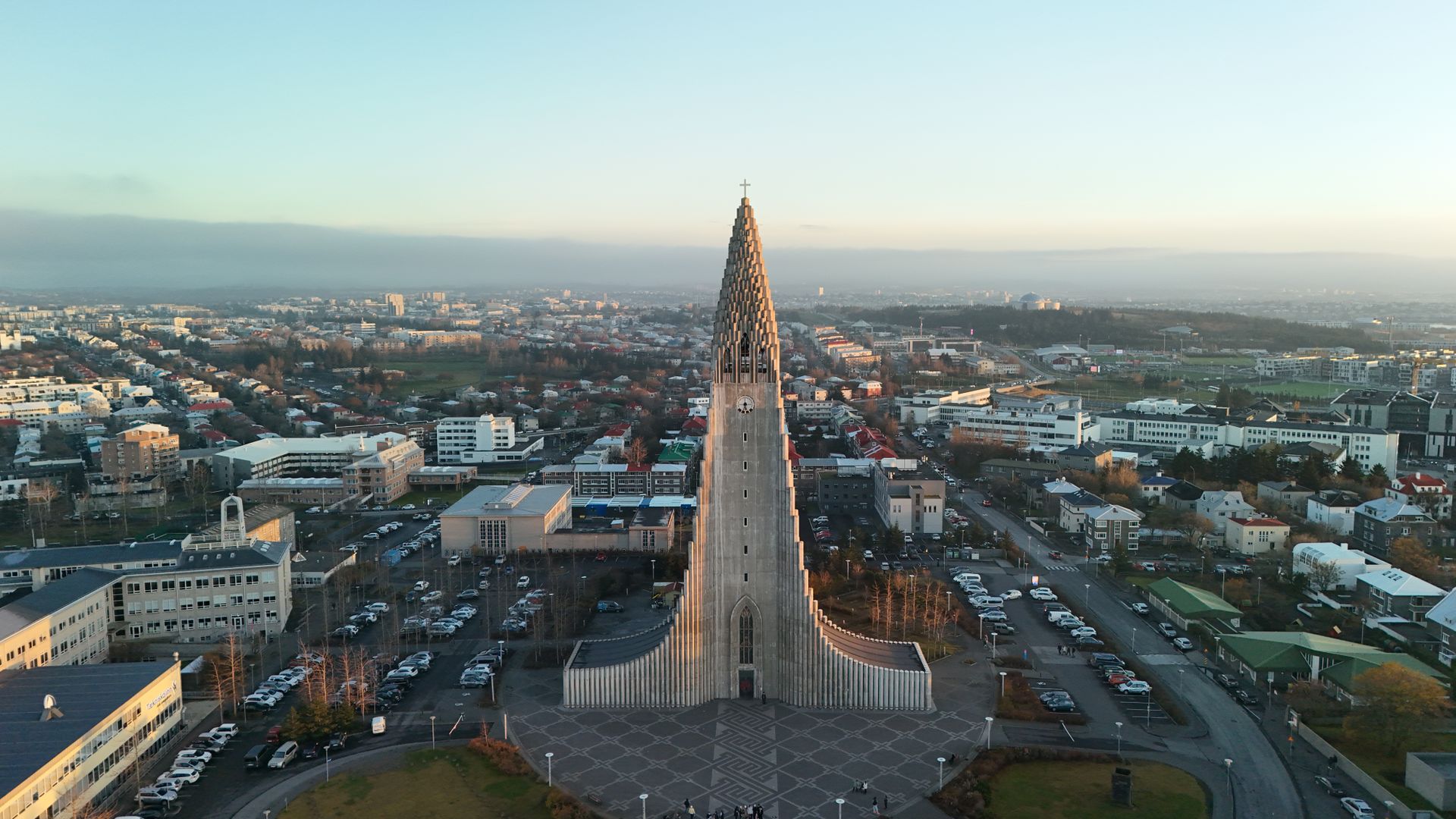
Hallgrímskirkja, the Lutheran parish church on the hill above the centre, was designed by state architect Guðjón Samúelsson and took 41 years to build (1945–1986). The expressionist concrete facade — a central tower flanked by two sloping wings — was inspired by the basalt column formations at Svartifoss waterfall in the south. At 73m it's the tallest structure in Iceland and visible from most of the city. The elevator to the tower (ISK 1,100) gives the best elevated view of the capital, the bay, and the mountains. The interior is spare: white walls, organ pipes, a single nave without the decoration of Catholic equivalents. The statue in front of the church is Leif Eiríksson — a gift from the United States in 1930, predating the church by 15 years.
The walking axis from Hallgrímskirkja down Skólavörðustígur to Laugavegur (the main shopping and restaurant street) and then west to the old harbour covers most of what the city centre contains. Laugavegur has the highest concentration of restaurants, bars, and shops; it's also where the weekend crowds concentrate. The pond (Tjörnin), the City Hall, and the parliamentary building (Alþingi) cluster around the bottom of the hill south of Laugavegur.
Museums Worth the Entry
The Settlement Exhibition (Landnámssyningin, ISK 2,200) is built around an actual Viking-age longhouse excavated in 2001 under the current city centre. The house dates to around 930 AD — roughly contemporary with the founding of the Alþingi at Þingvellir. The museum uses the original stone walls as its centrepiece, with interpretation covering the Norse settlement of Iceland (870–930 AD). It is genuinely unusual: an archaeological site inside a museum inside a city that didn't exist when the longhouse was built.
The National Museum of Iceland (ISK 2,500) covers Icelandic history from settlement to the present day with a strong Viking Age collection (including the 12th-century Valþjófsstaður door, one of the finest examples of medieval Icelandic wood carving). The Reykjavik Art Museum (ISK 1,900, three venues) is the better option if Icelandic contemporary art or Erró's pop-collage paintings are the draw. The Whales of Iceland exhibition (ISK 2,900) has life-size whale models — educational and worth an hour with children; optional for most adults.
The Harbour and Whale Watching
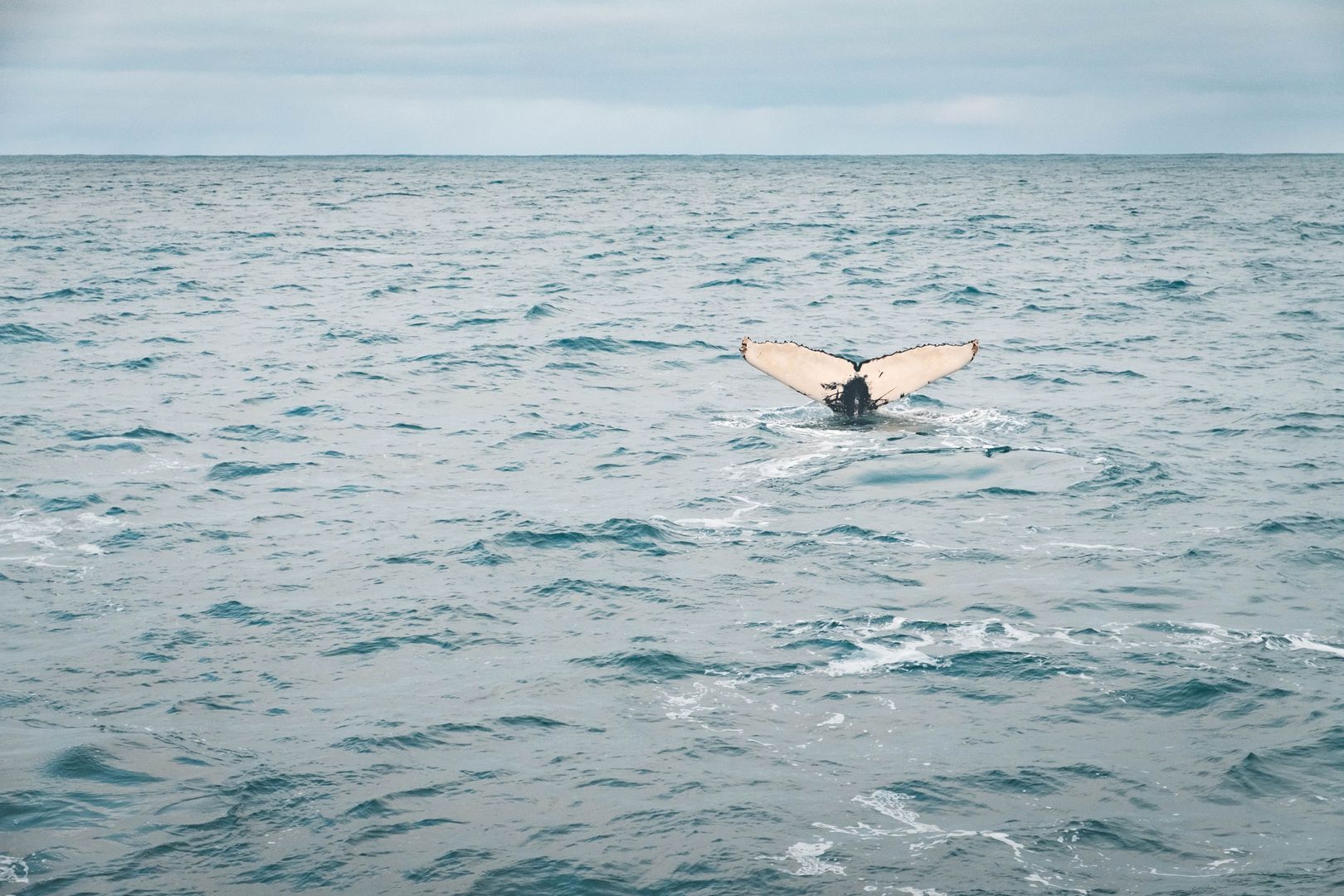
The Old Harbour (Grandi) has been converted from a working fishing port to a district of converted warehouses containing restaurants, a food hall (Grandi Mathöll), the Sea Baron fish soup restaurant (the langoustine soup is the standard order), and the departure points for whale watching and Northern Lights boat tours. Minke and humpback whales are present in Faxaflói Bay from May through October; whale watching success rates run 80–95% in summer, lower in shoulder months. Tours last 3 hours and cost ISK 9,900–12,000.
The Sundhollin public swimming pool, 10 minutes from Hallgrímskirkja, is the most centrally located of Reykjavik's geothermally heated public pools. The hot pots (outdoor pools at 38–42°C) are the social infrastructure of Icelandic life and the cheapest entertainment in a city with few cheap options (ISK 1,050 entry). The ritual — shower in before entering, sit in hot water for an hour — is the same at every pool and costs the same regardless of whether the pool is in central Reykjavik or a small town on the Ring Road.
Day Trips: Golden Circle and Blue Lagoon
The Golden Circle is the standard day trip from Reykjavik — a 300km loop covering three main sites: Þingvellir National Park (UNESCO, the rift valley where the North American and Eurasian tectonic plates meet and where the world's oldest parliament met from 930 AD), Geysir geothermal area (the original geyser that gave the word to other languages, now dormant, alongside the active Strokkur which erupts every 4–10 minutes to 15–30m), and Gullfoss waterfall (a two-tiered cataract on the Hvítá river, the most powerful waterfall in Iceland by volume after Dettifoss). The loop is self-drivable in a day; organized tours run ISK 9,000–15,000.
Kerið volcanic crater (ISK 800, walkable around the rim and down to the lake, 30 minutes off the Golden Circle route) is a 3,000-year-old explosion crater with a vivid green lake 55m below the rim. It's small and worth the detour on a self-drive route; less obvious value on a bus tour with fixed timing. The Blue Lagoon geothermal spa (40 minutes southwest of Reykjavik, advance booking essential, ISK 8,490–19,990 depending on package) is Iceland's most visited attraction. The mineral-rich water at 37–39°C is genuine; the experience is more spa resort than natural thermal bath. Book at least two weeks ahead in summer.
Snæfellsnes Peninsula
The Snæfellsnes Peninsula, 2.5 hours west of Reykjavik, is sometimes called "Iceland in miniature" for its concentration of geological features — the Snæfellsjökull glacier-capped stratovolcano (Jules Verne's entry point to the centre of the Earth, per the 1864 novel), the Kirkjufell mountain (the most photographed peak in Iceland, with a small waterfall at its base), basalt cliff formations at Arnarstapi and Hellnar, and the Vatnshellir lava tube cave. A day trip is possible but produces a rushed experience; one night on the peninsula allows a more reasonable pace.
Practical Costs
Reykjavik is among the most expensive cities in Europe for food and accommodation. A hostel dorm costs ISK 4,500–7,000 (€30–47); a mid-range hotel room ISK 22,000–45,000 (€148–302). A restaurant dinner with one glass of wine costs ISK 4,000–7,000 (€27–47) per person. A beer at a bar runs ISK 1,200–1,800 (€8–12). A coffee costs ISK 600–900 (€4–6). Supermarket cooking reduces food costs substantially; a self-catered day is feasible from a guesthouse with kitchen access. Car hire (essential for anything beyond city limits) starts at ISK 8,000–12,000 (€54–80) per day for a small 2WD.