

Porto operates on different principles than Lisbon. Where Lisbon spreads across rolling hills and feels systematically organized, Porto crowds itself into steep terraces that tumble toward the Douro River—the stone is older and rougher, the staircases narrower, the whole city feels like it's sliding downhill. Lisbon rewards broad itineraries and efficient ticking off; Porto rewards walking in circles, sitting on a curb with coffee, noticing that a street you walked this morning connects to one you're on now from a completely different angle. Most first-time visitors arrive expecting a smaller version of Lisbon with port wine. The port wine is real and worth one afternoon. The rest of Porto—the worn-down residential neighbourhoods, the small standing-room cafés, the fact that you'll get genuinely lost and find something better than the guidebook suggests—is what actually anchors a three-day visit.
Where to stay in Porto: neighbourhood specifics and honest trade-offs
Ribeira (riverside old town)
The postcard version of Porto lives here: coloured townhouses stacked vertically, laundry strung between windows, restaurants at street level opening directly onto cobblestones. It is also the noisiest, most crowded, and most expensive part of the city. Weekend nights, the sound of drunk tourists in the streets continues past midnight. Mid-range accommodation runs €100–160 per night. Book a table at restaurants in July–August three weeks ahead or eat at 6pm. The advantage is proximity to water, the bridge (Dom Luís I), and everything postcard-adjacent. If your priority is being immersed in the visual centre, accept the noise and book a room on a quieter side street (search Rua da Madeira, Rua Ferreira Borges) rather than the main waterfront drag.
Bonfim (east of centre, residential)
Ten minutes uphill east of Ribeira's heart, Bonfim has become the neighbourhood where Porto people actually live—flatter than Ribeira, better coffee infrastructure (Candelabro, Moustache), cheaper accommodation (€70–120 per night), and a working-city texture that survives tourism. The trade-off: you'll walk downhill to reach the river and walk back up to leave. The gain: Bonfim proper has no tourist restaurants. Rua de Cedofeita runs through the centre and contains bakeries, small clothes shops, a dry cleaner, and exactly the kind of functioning urban life that makes a city coherent. A 10-minute downhill walk puts you at the São Bento train station or in Ribeira proper. This neighbourhood suits people staying four days or longer, or anyone for whom a quieter base with better value matters more than waterfront proximity.
Baixa (downtown, lower city)
The historic commercial centre—flatter terrain, central location, mix of offices and residential. Less photogenic than Ribeira, but genuinely walkable without the constant incline. Accommodation is mid-range (€80–140). The streets here are narrower and older than Bonfim; the density is higher. No river views. The advantage is logistics: you can reach Ribeira in five minutes, Bonfim in ten, and the train stations without planning a route. Best for people who want the city functional rather than scenic.
Avoid: Matosinhos
The beach suburb 6km west of the centre. The fish restaurants here are excellent—Ristorante Rei do Camarão, O Gaveto, Mar Magnum—and worth a half-day trip. Basing yourself here adds 25–30 minutes of transport each way into the centre. Only choose Matosinhos if beach proximity is your primary goal; for a city visit, it fragments the three days with commuting.
Day 1: São Bento, Clérigos, and understanding Ribeira's layout
São Bento train station: 20 minutes, free
Walk in through the main entrance. The walls are covered entirely in azulejo—hand-painted blue and white tiles depicting scenes from Portuguese history. The scenes are literal: Dom João I meeting Philippa of Lancaster, the conquest of Ceuta, a merchant exchange, rural life. They were completed in 1916 and cover approximately 20,000 individual tiles. The panels don't compete with the building's function; they are the function—this is how the station announces that it's a Portuguese train station. Most people photograph the two main panels and leave. Spend twenty minutes reading the tiles instead. The station's café is adequate but unremarkable.
Clérigos Tower: €5, 75.6 metres, 225 steps
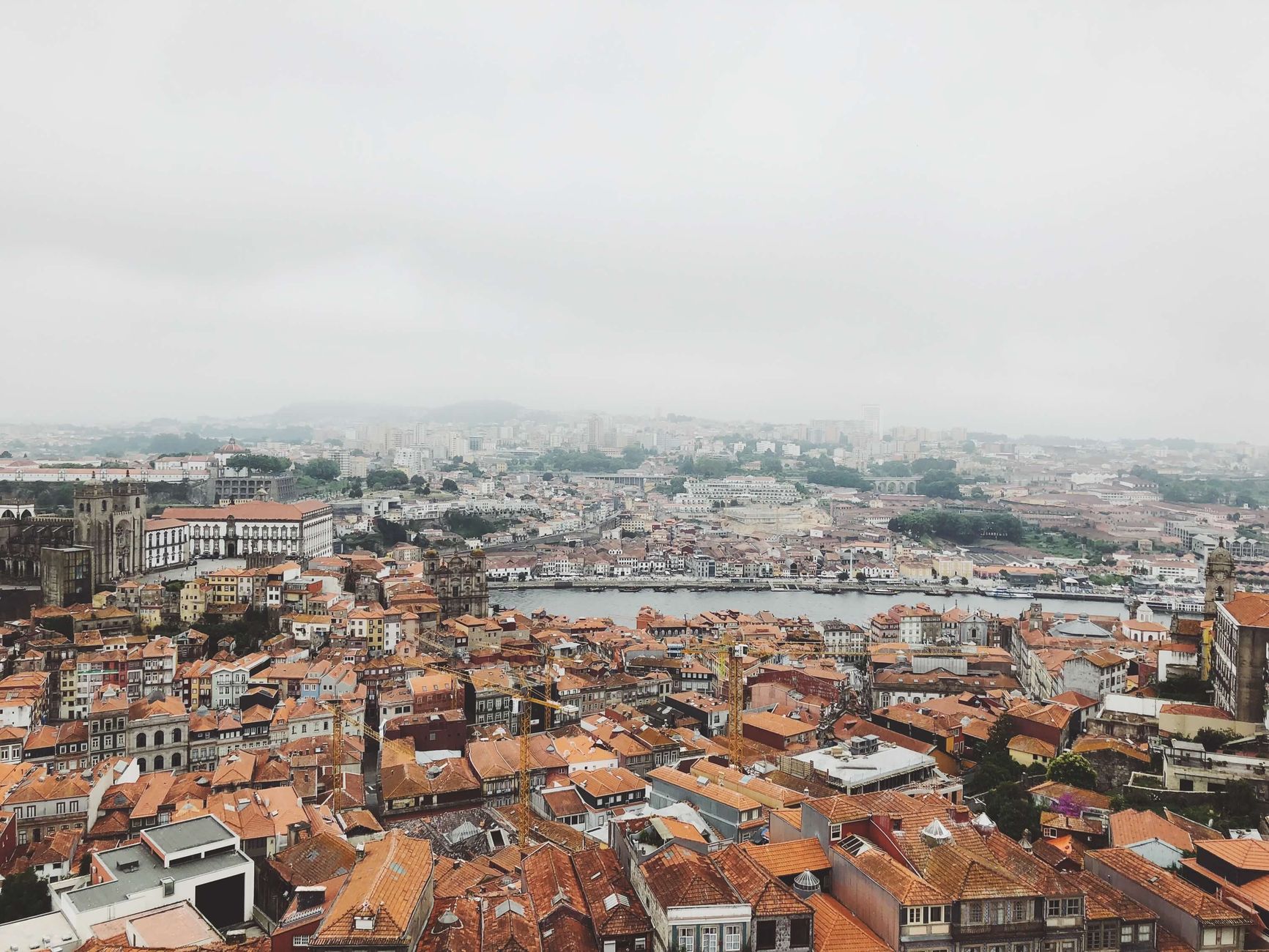
Climb before 11am. In summer heat, the stone interior becomes an oven by midday. The 225 steps are not evenly distributed—the spiral tightens toward the top. The view from the observation deck shows the Douro's curve, the Dom Luís I bridge's two levels, and the way the city's density decreases dramatically as you move east. Architectural note: the tower was completed in 1763. The church attached to it is closed to tourists and rarely open to anyone. The tower stands alone, deliberately visible from most of the city. Budget 30 minutes total including the climb down.
Ribeira waterfront: 1–2 hours, free
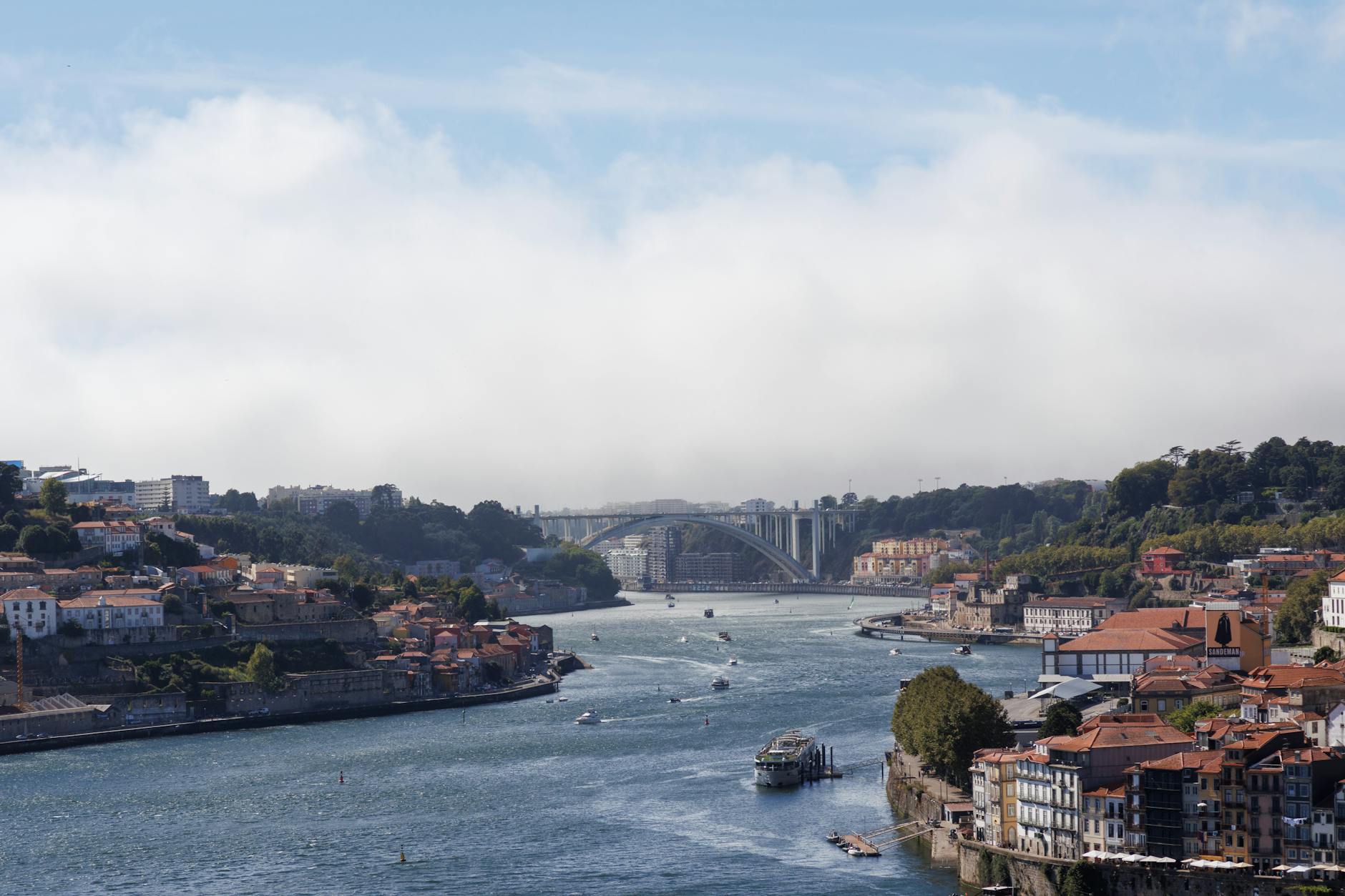
Walk down—the streets narrow and steepen as you descend toward the water. The famous coloured houses people photograph are on the waterfront and on the steep streets immediately behind them. Walk the Dom Luís I bridge at the upper level (the higher suspended deck, 60 metres above the river). The crossing is free and takes eight minutes. From the Gaia side, the view back toward Ribeira shows the stacked buildings and the water clearly. This is the postcard angle. The bridge's lower level carries cars and a tram; the upper level is pedestrians only.
Return to Ribeira and spend an hour on the waterfront—standing at the riverside edge, entering one of the small museums (Museu da Bolsa, Museu Tyndall da Cruz), or sitting in one of the bars with direct water views. The water is cold and industrial; boats pass constantly. Nothing romantic happens here, but the scale of the view—looking across to Gaia, the stone buildings rising directly from the water—explains why the city developed where it did.
Livraria Lello (on Rua Carmelitas, at the edge of Ribeira, €5 entry)
The famous 1906 bookshop with the neo-Gothic staircase. The €5 entry fee is redeemable against any purchase. The interior is genuinely impressive—the stained-glass ceiling floods the central atrium with coloured light, the staircase curves upward through all three floors, and the shelves are organized by colour rather than genre (which makes finding a specific book require staff help). Queue before 10am on weekdays or purchase timed-entry tickets online in July and August (available through the website, €5, allows you to skip the queue). The actual bookshop is secondary—people come for the architecture and spend twenty minutes inside. If you read Portuguese, the literary history section is strong; for English-language books, the selection is tourist-oriented and pricey (€18–22). Budget 45 minutes including entry time.
Day 2: Port wine, Vila Nova de Gaia, and Foz do Douro
Understanding port wine before tasting it
Port is a fortified wine—brandy is added to the fermenting must, which stops fermentation and leaves residual sugar in the wine. The fortification process is the defining step; without it, you have wine. With it, you have port. Two styles matter: Ruby is younger (two to three years old minimum), aged in steel or concrete, dark red, fruit-forward, and straightforward (20–25% abv). Tawny is aged in wood for a specified time (10-year, 20-year, 30-year, 40-year), becomes lighter and more complex, and develops nutty and dried-fruit notes from oxidation. A 10-year tawny is the reference point—not entry-level, not expensive, legitimately good.
Port wine lodge tours: 45 minutes, €15–20 per person
All major lodges operate across the Douro in Vila Nova de Gaia (the suburb directly across the river from Ribeira). Graham's, Taylor's, Quinta do Crasto, and Sandeman all run identical formats: a short talk, a tour of the barrel rooms (the scale is genuinely impressive—16,000 barrels in some cellars), and a seated tasting of two or three ports. Graham's has the best terrace, where you sit with a glass facing directly across to Ribeira. Taylor's has the largest collection and the most detailed education. Sandeman is the most crowded. Book online the day before; they fill in summer. Walk or Metro to Vila Nova de Gaia (three minutes by tram 1, or 10 minutes on foot across the bridge). The lodge itself often includes a small shop; port purchased there is cheaper than buying it in Lisbon or at airport duty-free (a 10-year tawny runs €30–40 versus €45–50 at duty-free).
The counter-intuitive fact about port wine tourism: one lodge visit is enough. A second tasting the same day or the next day teaches diminishing lessons. The lodges are nearly identical in layout and quality. The afternoon on the Graham's or Taylor's terrace, with a glass of aged tawny and a view across the river, is genuinely the best afternoon many people have in Porto. It's the one specific memory that appears in almost every travel diary written about the city. It's also why most port lodges are packed by 3pm—they deliver that one perfect moment.
Foz do Douro: where the river meets the Atlantic, 6km downstream
Take tram 1 from the Ribeira waterfront—a wooden heritage tram (€4 one way, €6 return), restored and running since 1995, taking 25 minutes to reach the terminus. The tram runs parallel to the river for the entire journey. At Foz, the Douro widens dramatically into an estuary, and a small beach forms where the river meets the Atlantic. The temperature drops perceptibly here (Atlantic wind). The restaurants along the waterfront serve fresh fish—O Gaveto is reliable and expensive (€25–35 per head), with grilled fish and seafood risotto. Cheaper options run €12–18. Budget two to three hours: 25 minutes tram, 30 minutes wandering the estuary, 90 minutes eating, 25 minutes return. The tram back departs every 15 minutes.
Day 3: Serralves, Matosinhos fish market, and the Stock Exchange palace
Serralves Museum of Contemporary Art: €20 combined entry (museum + gardens), 3 hours minimum
An internationally respected modern art institution that receives a fraction of the attention it deserves. The building—a white curved structure by Álvaro Siza—sits above terraced gardens. The collection is strong: Portuguese contemporary art, rotating international shows, a dedicated space for architecture and design. The gardens are exceptional and designed by Vladimir Sitta—a series of descending spaces with water features, trees planted for seasonal colour, and long sightlines. The museum shop is excellent (books, design objects, Porto-specific items). The café serves passable lunch. Allow 90 minutes for the museum proper and 90 minutes for the gardens. Best visited in morning light. Metro to Miragaia, then a ten-minute walk uphill, or a €5 taxi ride.
Matosinhos fish market and restaurants: morning or lunch, €15–25 per head
Twenty minutes north of the centre by Metro (line A, direction Hospital de São João, exit Matosinhos sul, €1.70 one way). The market building is functional and unglamorous—a modern fish market where the day's catch is auctioned and sold wholesale. Behind it, a row of restaurants directly sources from the market: Ristorante Rei do Camarão, Mar Magnum, O Gaveto, Bom Bouchon. Walk the market first—the scale, noise, and speed of the fish dealing is genuinely impressive. Then sit down in one of the restaurants on Rua Heróis de França, order grilled fish of the day, white wine, and bread. Most fish is between €15–20 per head; shellfish (arroz de marisco) runs €20–25. This is not a tourist experience packaged for visitors—it's the wholesale market with a restaurant component. Arrive before noon if you want table choice.
Palácio da Bolsa (Stock Exchange Palace): €10, includes 45-minute guided tour
An absurdly ornate Neomanueline building (a 19th-century Portuguese architectural style mixing Gothic, Moorish, and Manueline elements). The ground floor is functional—a modern business space. The second floor contains the Arab Room, a gold-leaf and tile-work interior that took 18 years to complete and exists for no reason other than aesthetic extravagance. The room is 15 metres long and entirely covered in decorative work—it's genuinely overwhelming. Tours run every 30 minutes, in Portuguese and English on rotation, and are mandatory (you can't walk around unguided). The tour covers the building's commercial history, the artistic choices, and the economic context. Budget 45 minutes. Go in late afternoon when the light from the high windows becomes golden.
Food and drink—what to eat, not where
Francesinha: Porto's working-class sandwich, €12–15
Bread, cured meat (paio or carne seca), sliced ham, sliced sausage, a fried egg, melted cheese (usually cheddar or similar yellow cheese), all pressed together and poured over with a beer-tomato sauce called molho. It's heavy, fried, and requires beer to consume. Café Santiago on Rua Passos Manuel does the version most Porto residents will defend as the definitive one—the bread is crusty, the meat ratio is exact, the sauce is balanced. Go for breakfast or lunch, not dinner. The sandwich is a breakfast meal that has somehow become lunch.
Tripas à moda do Porto: slow-cooked tripe stew
Porto residents are historically called tripeiros—tripe-eaters. This stew of slow-cooked tripe, beans, chouriço, and aromatics is the historical dish. It's acquired taste. It appears in restaurants as a traditional option, not as a modern chef's re-invention. If you want to try authentic Porto food culture, this is it. A small bowl runs €6–8. Try it once.
Bifanas: pork roll, €3–5
Thinly sliced marinated pork in a bread roll, served at any pastelaria. This is breakfast fuel and street food. Better quality versions use pork thinner than ham, marinate in wine and garlic, and toast the bread. Worse versions are heavy and salty. The price difference signals quality.
Coffee culture
Porto has strong local coffee culture. Candelabro (Bonfim area) does excellent espresso and pastries. Moustache (also Bonfim) is minimalist, fashionable, and legitimately good. Café com Calma (downtown) is a standing counter with strong coffee and no seating. In Ribeira, most cafés are mediocre and overpriced. Bring a reusable cup if you plan multiple visits—two cafés offer a 50-cent discount.
When to visit Porto: seasonal reality
May–June (20–24°C, longer daylight) and September–October (19–23°C) are optimal. Crowds are moderate, accommodation prices are 10–20% lower than summer, and the weather reliably permits walking and sitting outside. July–August brings 26–30°C heat, maximized tourism, and accommodation premiums of 30–40%. It's not unbearable—the Douro River provides a cooling effect—but it's crowded and expensive.
October–March: Porto is significantly wetter than Lisbon. November and January average eight to nine rainy days per month. Rain doesn't cancel outdoor activities here; it just requires rain gear. Pack a light waterproof jacket regardless of season.
Who should visit Porto and when
Book Porto for three days in May, early June, or September—the window when crowds haven't peaked and weather is reliable. Go if you read slowly, prefer neighbourhoods to monuments, and want a city that feels lived-in rather than optimized for tourism. Skip it if you prioritize maximum sightseeing or large beaches. The definitive afternoon—a lodge terrace, a glass of tawny, facing back across the water toward the old city in afternoon light—anchors the entire visit and explains why people return to Porto when they've seen everywhere else.


