
When to Go: Winter vs. Summer
Swedish Lapland has two distinct visitor seasons defined by phenomena that are the opposite of each other: the polar darkness of deep winter, and the midnight sun of midsummer.
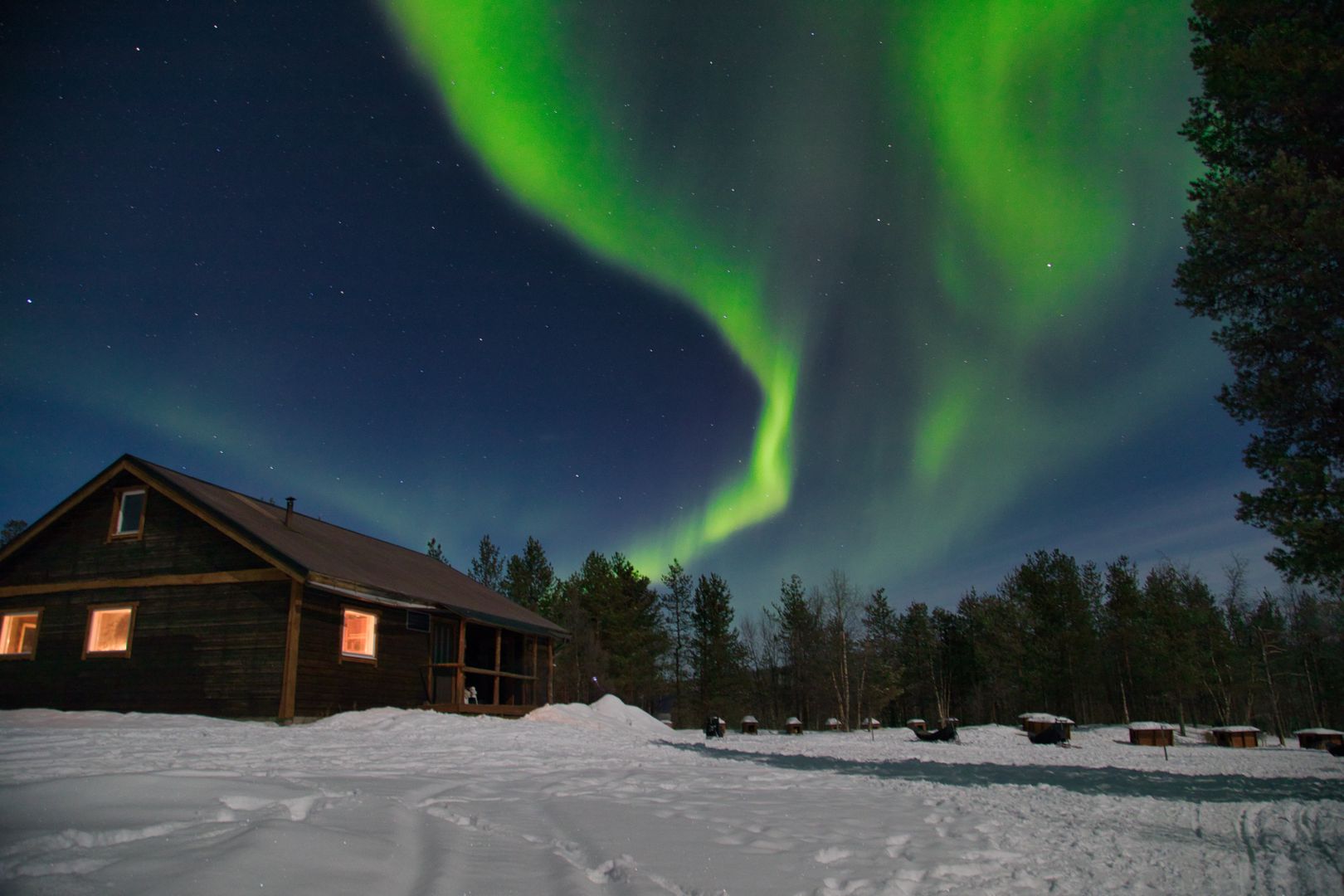
Winter (November–March) is aurora season. Dark skies are essential, which means arriving before late March when daylight extends significantly. January and February offer the most reliable dark-sky windows — four to five hours of twilight per day at the coldest period. This is also ICEHOTEL season; the original ice building exists only from December through April.
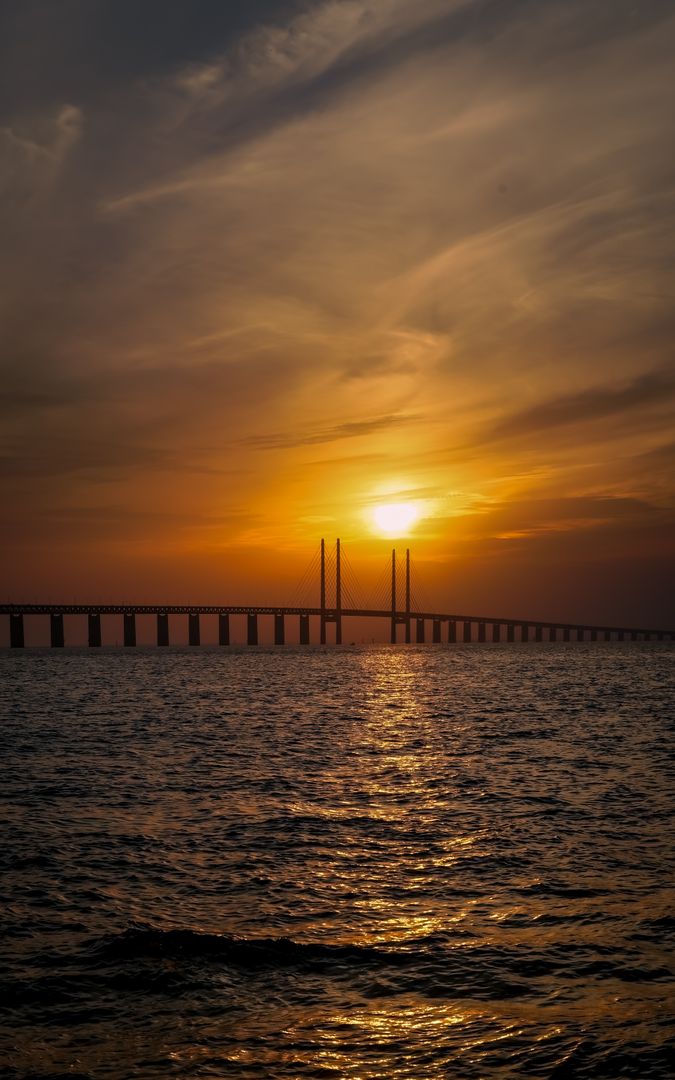
Summer (June–August) brings continuous daylight around the solstice. The tundra flowers, reindeer calving happens in May–June, and the national parks are fully hikeable. Some visitors find 24-hour daylight disorienting; others consider it the point of coming.
October is underrated: early snow, short nights beginning to produce aurora windows, fewer visitors, and the full range of accommodation available.
Getting to Kiruna
Kiruna has its own airport (IATA: KRN) with daily SAS flights from Stockholm Arlanda. Flight time is 1 hour 40 minutes; fares run 1,500–3,500 SEK return depending on season and advance booking. The remoteness of the destination is reflected in the price.
The overnight train from Stockholm is a slower but more atmospheric option: the SJ sleeper departs in the evening and arrives the following morning, crossing the full length of Sweden through the night. Travel time is 17–20 hours. Sleeper cabins are comfortable and the route crosses the Arctic Circle after midnight. Train prices are broadly comparable to flights booked in advance; the difference is the experience of the journey itself.
Kiruna is 145 km north of the Arctic Circle. The city has been in the process of physical relocation — the iron ore mine that built the town has extended beneath the original city centre, requiring the entire downtown to be moved 3 km east. The relocation is ongoing; the new city centre was inaugurated in 2023. The ICEHOTEL is in Jukkasjärvi, 19 km east of Kiruna.
The ICEHOTEL in Jukkasjärvi

The ICEHOTEL opened in 1989 as an art and design experiment: a hotel built entirely from ice and snow harvested from the Torne River, operating from December to April and melting back into the river each spring. It has been rebuilt annually in a new form every year since, with different artists designing the rooms each season.
The hotel has two sections: the seasonal original building, which melts each spring with rooms carved fresh each winter, and ICEHOTEL 365, a permanent cold-room section kept frozen year-round by solar-powered cooling systems. The 365 section allows visits in summer for those who can't come in winter.
Sleeping in the ICEHOTEL means sleeping in a room carved from ice at around -5°C, on a bed of ice covered in reindeer skins and a sleeping bag rated to -35°C. Common areas at normal temperatures exist for meals, changing, and warming up. Guests receive full thermal sleeping suits and a briefing on cold-weather sleeping.
Art suite rooms in the ice run 10,000–30,000 SEK per night at peak season. Warm rooms in the adjacent building with full ICEHOTEL access cost 2,500–5,000 SEK. Daytime visits without an overnight stay are available for around 300 SEK and are a useful way to assess whether spending the night is worth it.
Abisko and the Aurora Sky Station
Abisko National Park is 95 km west of Kiruna along the southern shore of Lake Torneträsk. The area has a documented microclimate that produces clearer skies than the surrounding region more often than average — an effect of the mountain topography around the lake. This makes it one of the more reliable aurora viewing locations in Scandinavia, not because of its latitude but because of the frequency of clear nights.
The Aurora Sky Station at the top of Mount Nuolja — reached by chairlift from Abisko Tourist Station at an elevation of 900 metres — has operated as a viewing platform since 2000. On nights when low cloud sits at valley level, the sky station is above it. On fully clear nights, the aurora is visible from the valley too.
Abisko has its own stop on the Ofoten Railway, making it accessible from Kiruna in one hour by train without needing a car. The tourist station in the park offers accommodation from dormitory beds to private cabins. In summer, Abisko is the starting point of the Kungsleden (King's Trail), a 440 km hiking route through the Swedish mountains. The first section south to Nikkaluokta takes 4–7 days.
Sámi Culture
The Sámi are the indigenous people of Sápmi, a region spanning northern Norway, Sweden, Finland, and the Kola Peninsula of Russia. Swedish Lapland is the Swedish portion of their traditional territory. The Sámi have been semi-nomadic reindeer herders for thousands of years; around 2,500–3,000 Sámi in Sweden still practice reindeer husbandry today, with grazing rights codified in Swedish law.
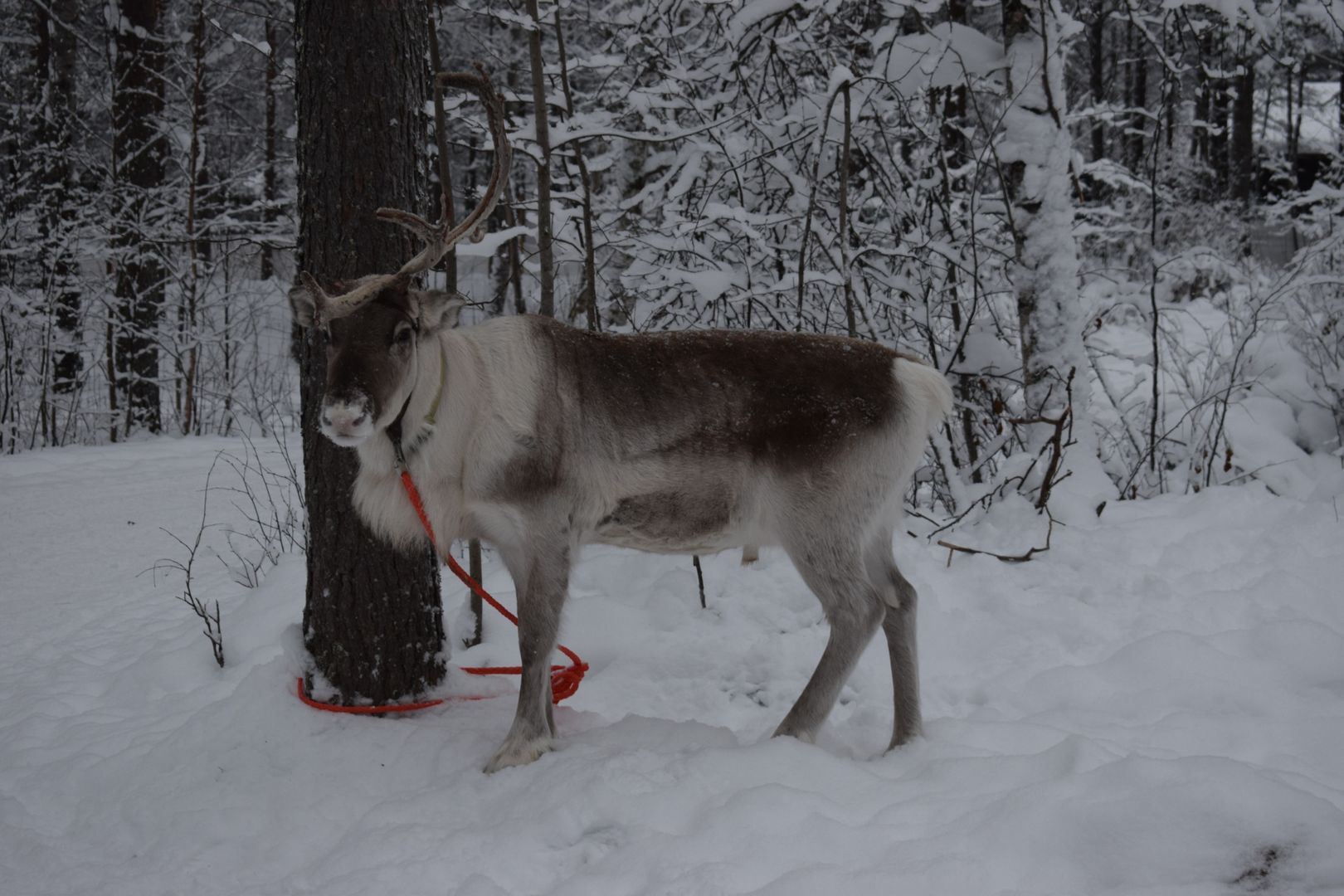
Reindeer are visible throughout the Kiruna region year-round — on roads, in open tundra, and in large herds during seasonal migrations. Several Sámi cultural operations in the area offer guided visits: traditional lavvu camps (conical tents), reindeer feeding, and joik (traditional Sámi vocal music). Nutti Sámi Siida near Kiruna and Sámi cultural programming at Abisko Tourist Station are among the more established. The meaningful distinction is whether an operation is run by Sámi people themselves — in this part of Sweden, most established programmes are.
Practical Information
January and February temperatures regularly reach -20°C to -30°C, with occasional drops to -35°C. Proper layering is not optional: thermal base layer, mid-layer fleece, windproof shell, insulated gloves, balaclava, and boots rated to at least -20°C. Most tour operators and the ICEHOTEL provide thermal suits for outdoor activities. If arriving independently, winter clothing rental is available in Kiruna town.
Mobile coverage is reliable in Kiruna and Jukkasjärvi. It drops off in the national parks. Download offline maps before heading into Abisko. ATMs in Kiruna work reliably; most accommodation and restaurants accept cards. Cash is rarely necessary.
Frequently Asked Questions
When is the best time to see the Northern Lights in Swedish Lapland?
The aurora is possible from September to March. January and February give the longest dark periods and statistically the highest frequency. Clear skies are the limiting factor — Abisko's microclimate makes it more reliable than most nearby locations.
How cold does it get in Kiruna in winter?
Average temperatures in January range from -15°C to -25°C, with occasional drops below -30°C. The air is dry, which makes cold conditions more manageable than wet cold at similar temperatures would be.
Is the ICEHOTEL worth the price?
At 2,500–5,000 SEK per night for warm rooms with ICEHOTEL access, it's expensive but within the range of premium hotels in Stockholm. The art suite rooms (10,000 SEK+) are for people who specifically want the cold-sleeping experience. A 300 SEK daytime visit is a good way to decide whether overnight is worth it.
Can you combine Kiruna and Abisko in one trip?
Yes — they're 95 km apart and connected by train. A practical split is 1–2 nights in Kiruna or Jukkasjärvi for the ICEHOTEL and Sámi culture, then 2–3 nights at Abisko for the Aurora Sky Station and national park. A week is comfortable for the combination.