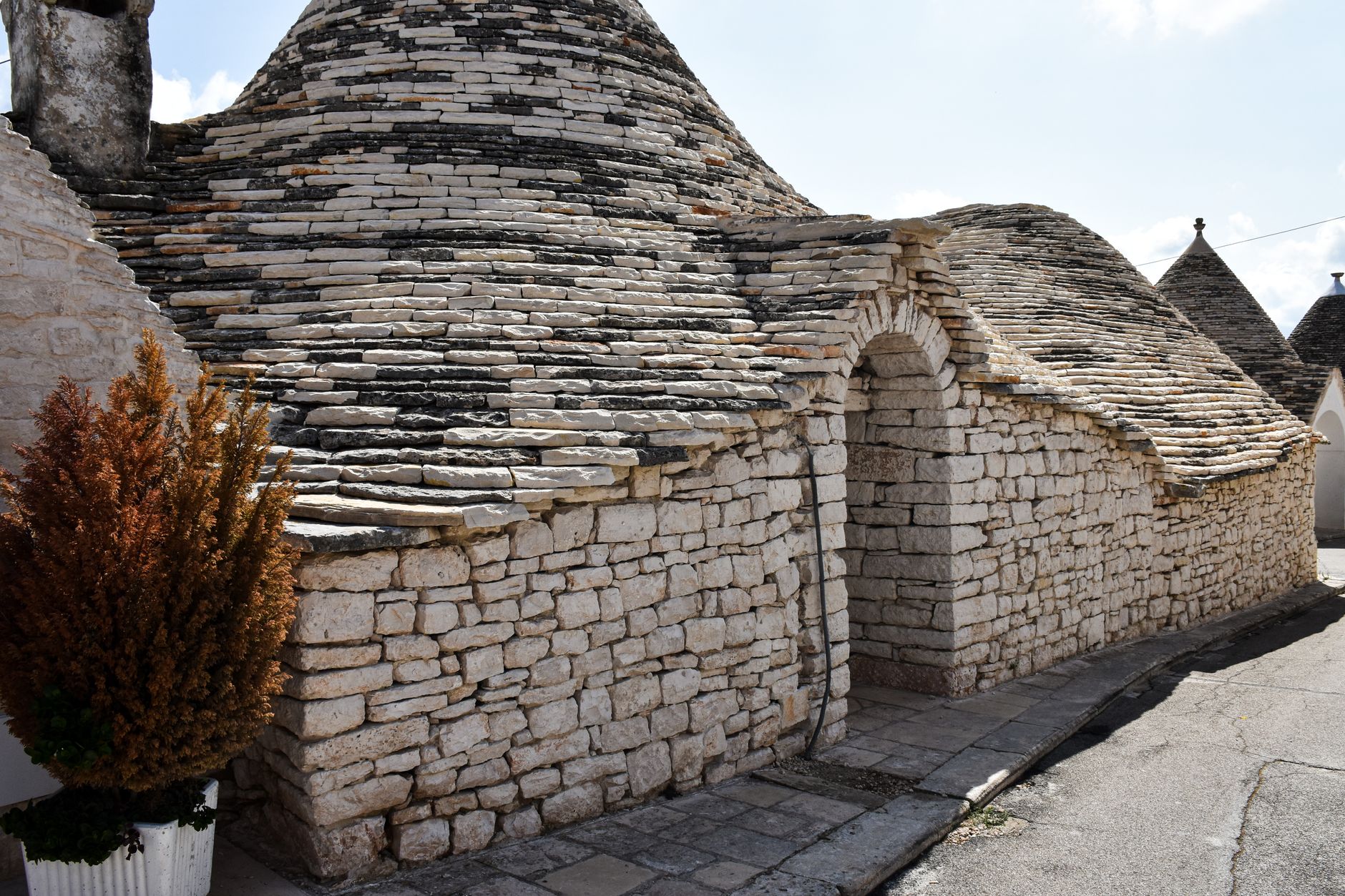

Alberobello's trulli are not a reconstruction or a theme park — roughly 1,500 of the stone cone houses are still standing in the original form, many still inhabited, and the two concentrations in the Rione Monti and Aia Piccola districts have been UNESCO World Heritage Sites since 1996. The trulli (singular: trullo) are a dry-stone construction technique specific to the Valle d'Itria in Puglia: whitewashed limestone walls, corbelled conical roofs with no mortar, and rooms of 15–25 square metres inside. The cone shape is not architectural whimsy — the Romans taxed permanent roofed buildings, and a dry-stone roof could be dismantled and rebuilt quickly to avoid inspection.
How Trulli Are Built
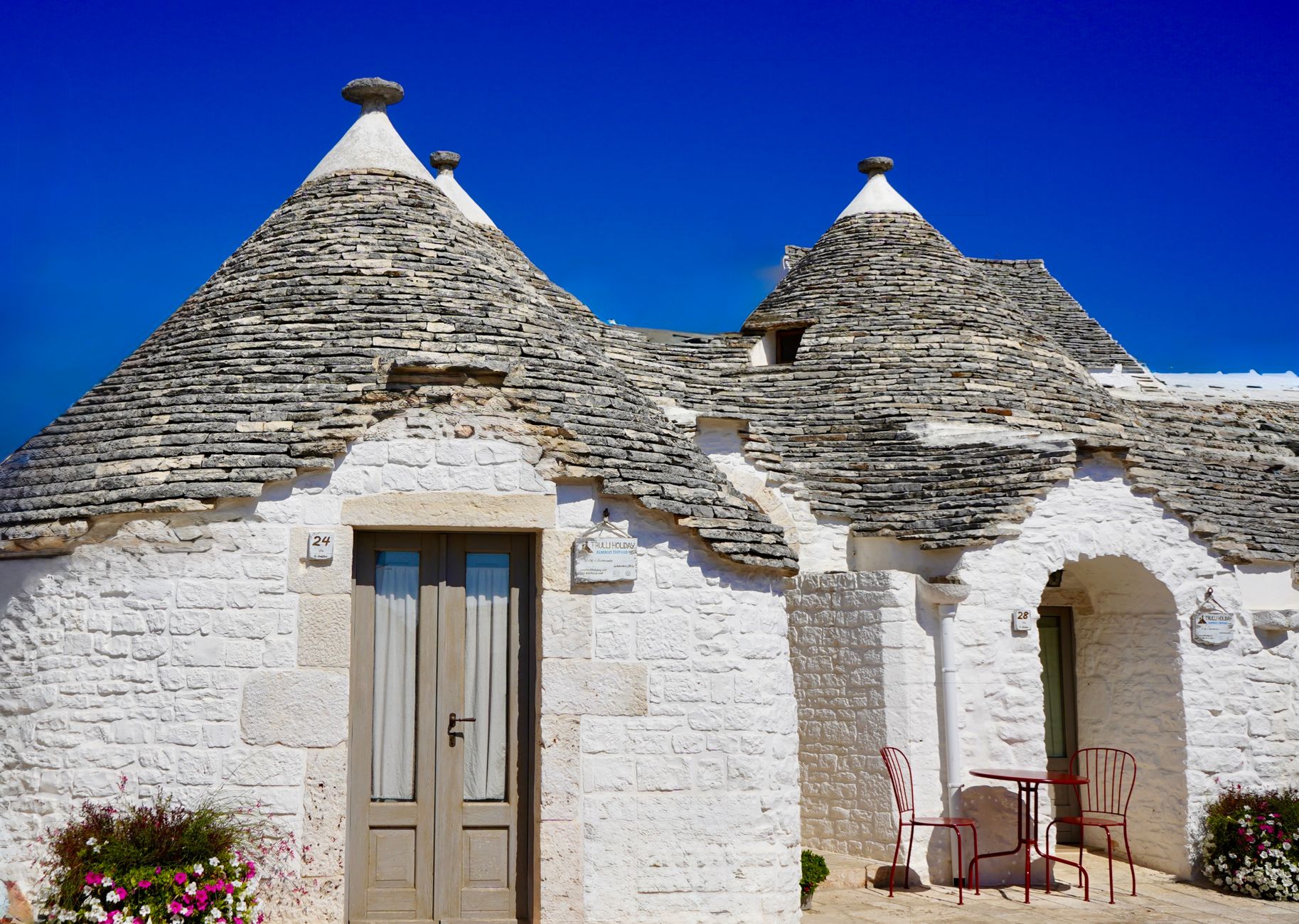
A trullo is constructed from limestone slabs without mortar — each stone is shaped and balanced, with the weight of the structure above keeping every piece in place. The pointed cap at the top of each cone is made from a flat slab (chiancarella) and is the only piece that can be lifted to collapse the roof on short notice. The interior is a single round or rectangular room with thick walls (1–1.5 metres), which maintains a temperature 8–10°C cooler than outside air in summer and retains heat in winter. Most trulli have been connected to electricity and plumbing, though the interior floor plan — one room per cone — makes larger living arrangements require multiple interconnected trulli.
The pinnacle ornaments on the roof peaks are decorative additions: spheres, discs, and crosses in limestone or terracotta, each with a family meaning. The symbols painted in whitewash on some exterior roofs are apotropaic marks — protective symbols from pre-Christian traditions.
The Two Districts
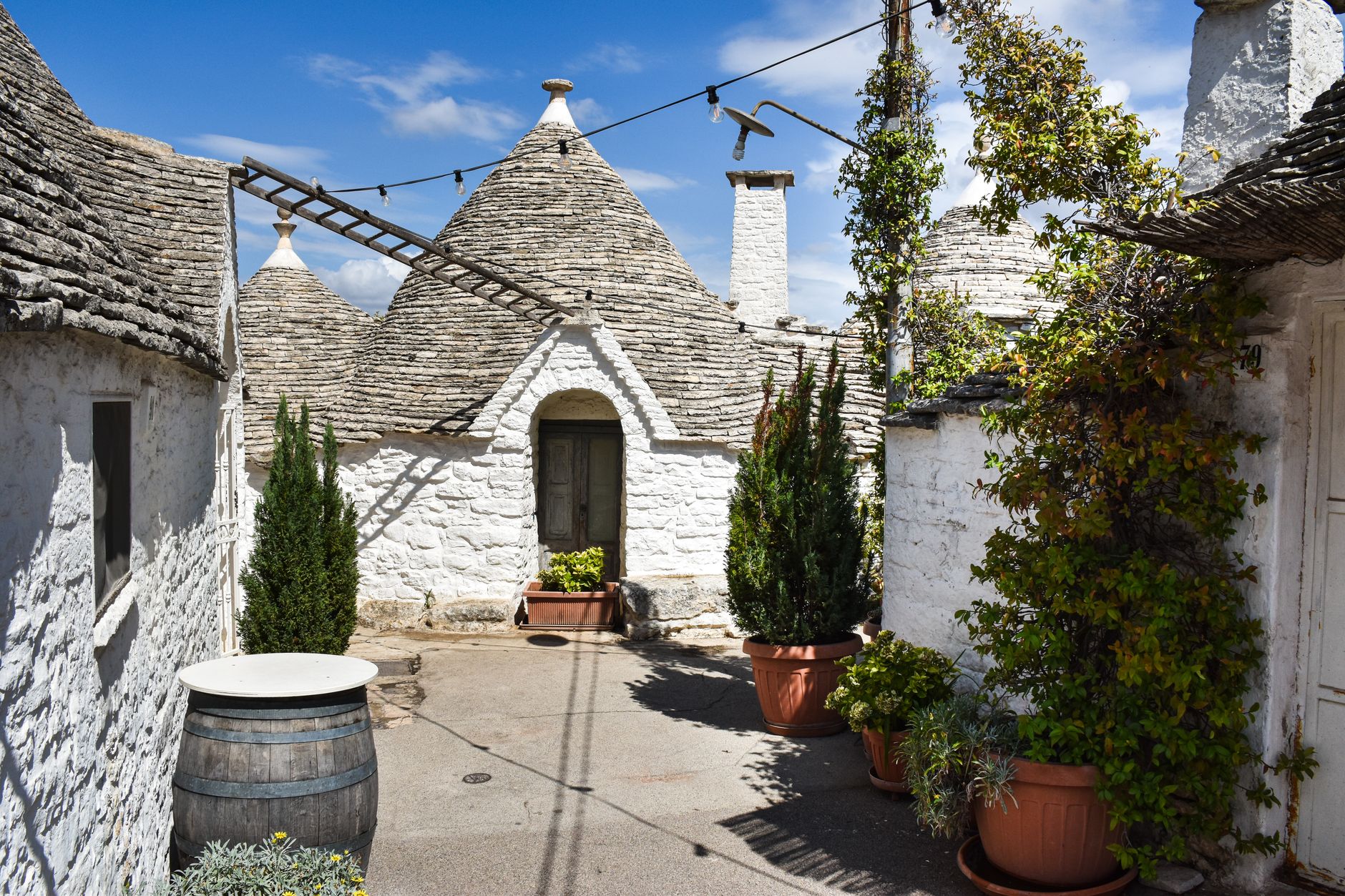
Rione Monti: the larger concentration, 1,000+ trulli on a hillside south of the main piazza. This is the commercial district — souvenir shops, wine bars, and trullo hotels occupy most of the ground-floor spaces. The tourist density between 10am and 4pm is the highest in the Valle d'Itria. Go before 9am or after 6pm for a substantially different experience. The walk up to the top of the hill gives the best overview of the cone-covered slope.
Aia Piccola: directly opposite Rione Monti across the main road, a smaller concentration of around 400 trulli that remains primarily residential. Fewer shops, quieter lanes, and the chance to see trulli being used as ordinary homes rather than guesthouses. This is where Alberobello actually lives. The contrast between the two districts, separated by 100 metres, is the most useful thing about visiting both.
Trullo Sovrano
The Trullo Sovrano on Piazza Sacramento is the only two-storey trullo in Alberobello — built in the 18th century by a wealthy local family (the Perta family) for use as a private chapel and residence. Entry €3, allow 30 minutes. The ground floor has original furniture and domestic items; the small upper floor under the apex of the cone is the only point from which you can look up into the interior of a trullo roof from inside.
Getting to Alberobello
From Bari: Ferrovie del Sud-Est (FSE) narrow-gauge train from Bari Centrale (FSE station, adjacent to the main Trenitalia station), 1h30–1h45, €4–6. Change at Casamassima or take direct service. About 8–10 trains daily. This is the recommended connection — no need for a car.
From Taranto: FSE train, 1h15, €5. Less frequent than the Bari connection.
By car: 60km southeast of Bari on the SS100. Parking in the lower town; walk up to the trulli districts on foot (5–10 minutes).
The FSE network connects Alberobello, Locorotondo, Cisternino, and Martina Franca — all within 15km and all with trulli (in smaller concentrations). A day on the FSE covers the entire Valle d'Itria without a car.
What to Eat Near Alberobello
The food in the Valle d'Itria is Puglian — burrata, orecchiette con le cime di rapa (ear-shaped pasta with turnip greens), and fave e cicoria (broad bean puree with wild chicory) are the standards. The restaurants immediately adjacent to the trulli districts in Rione Monti are tourist-priced. Walk three streets away from the main tourist lane for the same food at normal prices.
Locorotondo DOC: a dry white wine made from Verdeca and Bianco d'Alessano grapes, produced in the nearby village of Locorotondo (15km, 15 minutes by FSE train). Clean, light, local. Available in any bar in the Valle d'Itria.
When to Visit Alberobello
April–June: best window. Temperatures 18–26°C, the trulli districts manageable before the summer peak, the Valle d'Itria countryside in spring green. The cherry blossom equivalent in Puglia is the almond blossom in February — if that is the reason to visit, adjust accordingly.
September–October: second-best. Post-summer heat, harvest activity in the surrounding farmland, trulli guesthouses at better rates than July–August.
July–August: very hot (32–38°C), maximum visitor numbers. Rione Monti at midday in August is unpleasant. The early morning visit (before 8:30am) is when it is worth it.
November–March: quiet, 8–15°C, most souvenir shops closed but the districts walkable and atmospheric without any crowds at all.
Frequently Asked Questions
How many hours do you need in Alberobello?
3–4 hours is sufficient to walk both districts, visit the Trullo Sovrano, and have lunch. A half-day excursion from Bari is the standard visit. An overnight in a trullo guesthouse (€80–150/night) is a specific experience that justifies the extra time.
Can you stay inside a trullo?
Yes. Several trulli in both Rione Monti and Aia Piccola are licensed as tourist accommodation. The experience is authentic in the sense that the building is original; the comfort level varies significantly by operator. Book directly with guesthouses rather than through aggregators for better rates.
Is Alberobello overcrowded?
In July–August between 10am and 4pm, yes — Rione Monti specifically. Aia Piccola is less affected. Early morning or evening visits in peak season, or any visit outside July–August, reduce the density significantly.
What other trulli towns are near Alberobello?
Locorotondo (15km, FSE train) has a circular historic centre with trulli on the outer ring and a DOC wine. Cisternino (20km) is a whitewashed hill town with less concentrated trulli but excellent pork butchers and outdoor barbecue restaurants (fornelli pronti). Martina Franca (20km) has a Baroque old town with trulli visible from the surrounding countryside.
What are the symbols painted on trulli roofs?
Apotropaic (protective) symbols from pagan and early Christian traditions: cross, sun, tree of life, moon. The meanings vary by family and local tradition; no single authoritative interpretation exists. Some are painted fresh each year for luck.