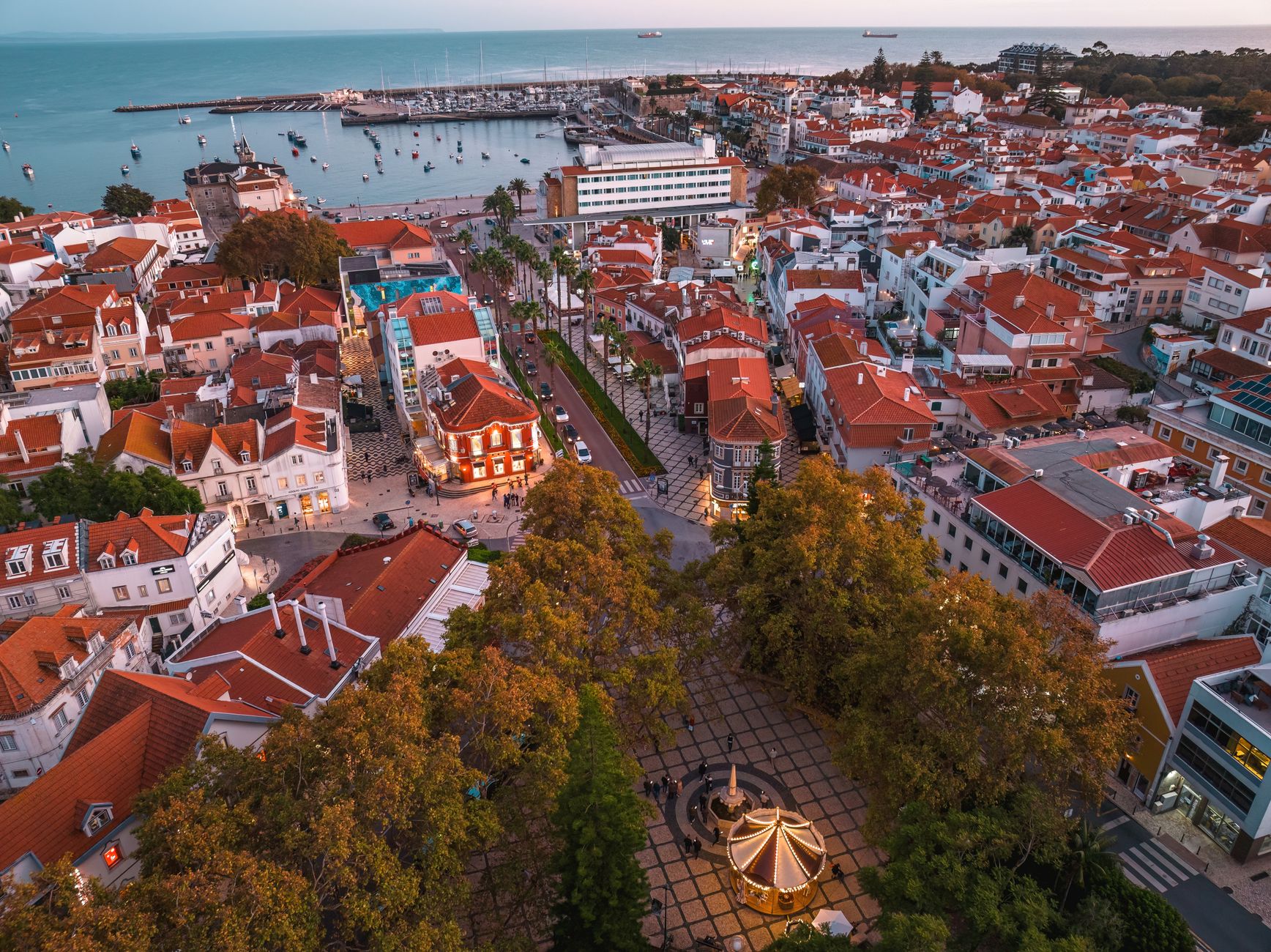
Portugal's southernmost region stretches 150km along the Atlantic coast and contains around 300 days of sunshine a year, the warmest sea temperatures on mainland Europe's Atlantic side, and a tourist infrastructure that ranges from well-run family hotels to large resort complexes that could be anywhere. The Algarve is not a secret and hasn't been for decades — it receives around 12 million visitors annually in a region of about 450,000 residents — but outside July and August, and in parts of the coast away from the main centres, it's still a functional place to spend time.
Western Algarve vs Eastern Algarve: Which Half to Choose
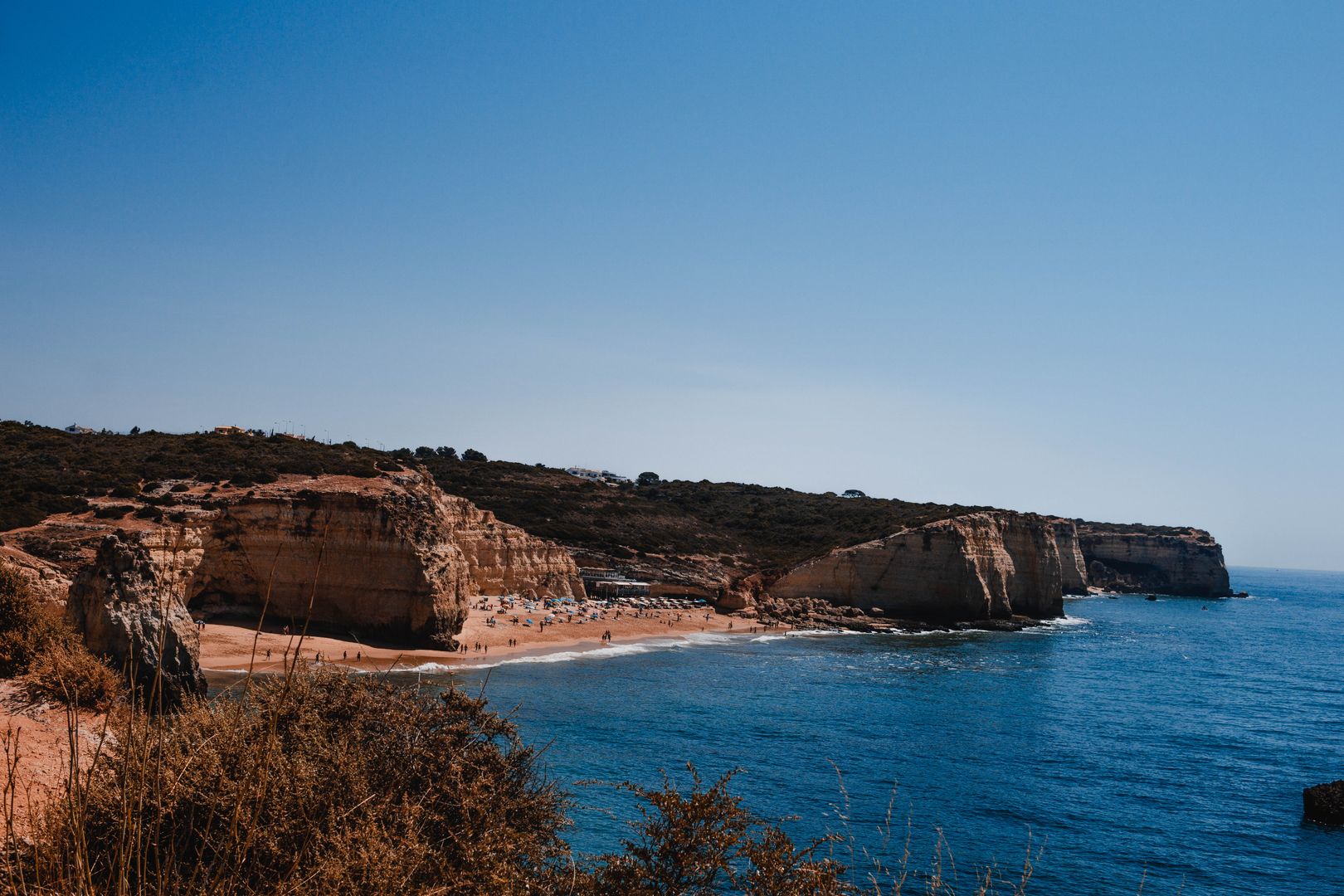
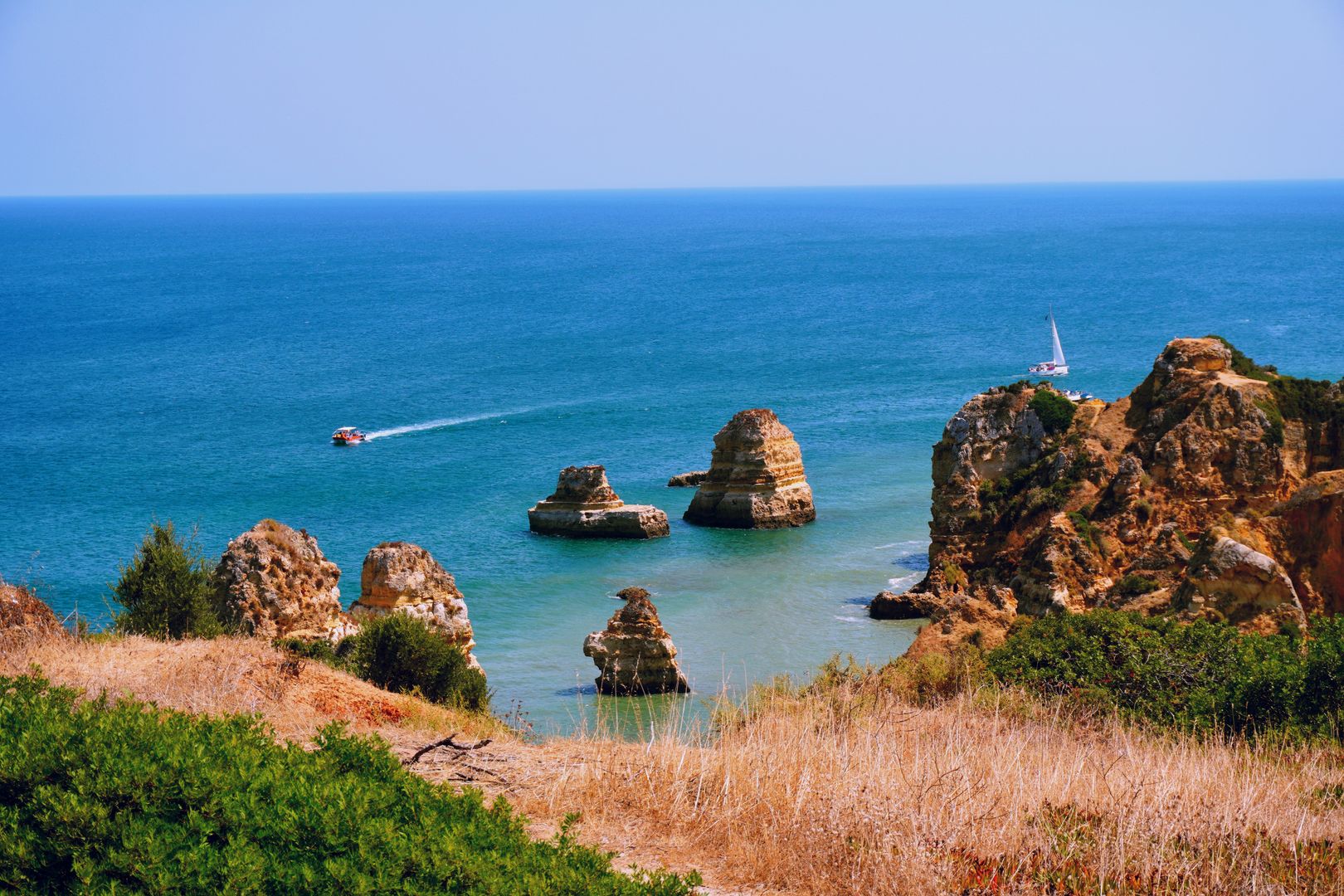
The Algarve coast divides roughly at Albufeira into two different experiences. The western half, from Lagos to Sagres, faces the open Atlantic and has more dramatic cliff scenery, stronger waves, and beaches suited to surfing rather than calm swimming. The most photographed beaches — Praia da Marinha, Praia de Benagil, Praia do Camilo — are here, along with the rock arch formations that appear on most Algarve travel imagery. This stretch is hillier, less developed, and the villages are smaller.
The eastern half, from Albufeira toward the Spanish border, has calmer water protected by barrier islands and sandbanks, a flatter landscape, and the highest concentration of golf courses and resort hotels. The Ria Formosa Natural Park, a lagoon system stretching 60km, runs along much of this coast. It's better for families with young children and for people who want flat water for swimming. Faro, the regional capital and main airport, is at the eastern end.
Best Beaches in the Algarve
Praia da Marinha, near Lagoa, is consistently cited as one of the best beaches in Europe and the accolade is not undeserved — the rock formations are unusual and the water clarity is excellent. It's small and gets crowded in summer; arrive before 10am or after 4pm. Parking is limited and the path down is steep.
Praia de Benagil is known for the sea cave accessible only by kayak or paddleboard, which you rent from the beach. The cave itself takes about five minutes to paddle to. It's genuinely worth doing once; the queues to rent equipment peak between 11am and 3pm in summer. Meia Praia near Lagos is the longest flat beach in the western Algarve and big enough to absorb large numbers without feeling crowded. Praia de Odeceixe, near the border with the Alentejo region, is the furthest north and west, and one of the least visited — a river meets the sea here, creating a natural pool on the inland side.
When to Visit the Algarve
May, June, and September are the optimal months. Sea temperatures reach 20–22°C, the weather is reliably sunny, and accommodation prices are 25–40% below July–August peaks. The water in May is around 18°C — swimmable for most people, cold for those who prefer warmer seas. October is warm and sunny but the sea cools quickly after mid-month.
July and August are the peak months by a significant margin. Beaches become crowded by 10am, prices peak, and the main roads along the coast (EN125) see heavy traffic. If these are your only available months, stay west of Albufeira where the beaches are larger relative to visitor numbers, and book accommodation at least two months ahead.
- May: Sea 18°C, warm air, very quiet, lowest prices
- June: Sea 20°C, busy from mid-month, prices rising
- July–August: Peak crowds and prices, sea 23–24°C
- September: Excellent — crowds thin after first week, sea still warm
- October: Good weather, sea cools, many beach facilities close mid-month
Getting Around the Algarve
A rental car is the most practical option for exploring beyond the main towns. Public transport exists — buses connect the major towns and the railway links Faro to Lagos in around 1h40 — but beach access without a car typically requires a taxi or a long walk. Car rental from Faro Airport runs €25–45 per day in shoulder season and €50–80 in August; booking two to three weeks ahead gets better rates.
The EN125, the main east–west road running inland from the coast, is the main artery but carries heavy traffic in summer. The A22 motorway runs parallel and is faster but costs tolls (around €4–6 Faro to Lagos). For moving between towns, the motorway is worth it; for reaching beaches, you'll end up on local roads regardless.
Where to Base Yourself
Lagos is the most practical base for the western Algarve: a town of 30,000 with a historic centre, good restaurants, and easy access to the best cliff beaches. It has more year-round character than the resort towns. Accommodation runs €80–150 per night for a mid-range option.
Tavira is the most attractive town in the eastern Algarve — a compact historic centre with Roman bridges, white-painted churches, and access to the Ria Formosa islands by ferry. Less resort-heavy than Albufeira or Vilamoura, and noticeably cheaper.
Albufeira is the largest tourist hub and makes sense only if you want the full resort experience with the highest density of bars and restaurants. It's functional but has little of its original character remaining.
Costs and Practical Budget
The Algarve is moderately priced by western European standards. A meal at a mid-range restaurant — grilled fish, which is the local default and usually the best option — costs €15–25 per person including wine. A piri-piri chicken at a local grill runs €10–14. Supermarkets are well-stocked and cooking your own meals is straightforward if you're in self-catering accommodation, which is common and often good value for groups.
Daily costs for a mid-range traveller — accommodation, food, one activity — run €80–120 per person in shoulder season. In August, add 30–40% for accommodation and expect to pay for parking (€5–10 per day at the popular beaches). The Algarve Card tourist discount card is rarely worth buying; individual attraction prices are low enough that the maths don't work out unless you're doing three or four paid activities per day.
What the Algarve Is Not Good For
It's worth being direct: the main towns — Albufeira, Portimão, Quarteira — are heavily developed and oriented entirely toward package tourism. If you're expecting a traditional Portuguese fishing village atmosphere, you'll find traces of it in Tavira, Ferragudo, and Cacela Velha, but not in the main resort towns. The food in tourist-facing restaurants is often mediocre and expensive relative to quality; the fish restaurants that locals use are typically a few streets back from the seafront. The Algarve works well as a beach holiday; it works less well as a cultural destination.