
Why These Three Together
Wat Pho, Wat Arun, and the Grand Palace form a cluster of Bangkok's most historically significant landmarks, all within a short walk or a two-minute ferry ride of each other on the Chao Phraya River. Covering all three in a full day is straightforward. The crowds at each are substantial — Bangkok ranks among the world's most-visited cities, and these are its most-visited sites — but the logistics are simple enough that the main variable is how much time you spend at each.
Combined entrance fees run 800–1,000 THB. Dress requirements at all three are non-negotiable: shoulders and knees covered. Sarongs are available for rent or purchase at the entrances, but bringing a scarf or lightweight overshirt avoids the queue. The rules are enforced at the gates, not relaxed once you're inside.
Wat Pho: The Reclining Buddha
Wat Pho is the oldest and largest temple complex in Bangkok, predating the city itself — the site has functioned as a centre of Buddhist learning since the 16th century. The complex covers eight hectares and contains over 1,000 Buddha images, 91 chedis (memorial towers), and the monk residences that formed Thailand's first public university.
The centrepiece is the Reclining Buddha: 46 metres long, 15 metres high, covered in gold leaf, with soles inlaid with 108 auspicious images in mother-of-pearl. The scale requires adjustment — you cannot see the full figure from any single position inside the building. A row of alms bowls along one wall invites coins for merit; the sound carries through the hall.
Wat Pho also houses the national headquarters of Thai traditional massage, and a session here costs around 260–420 THB for 30–60 minutes. The school has been running massage courses since 1962.
Entrance: 200 THB. Open 8am–6:30pm. An hour to 90 minutes covers the main areas at a comfortable pace.
Wat Arun: The Temple of Dawn
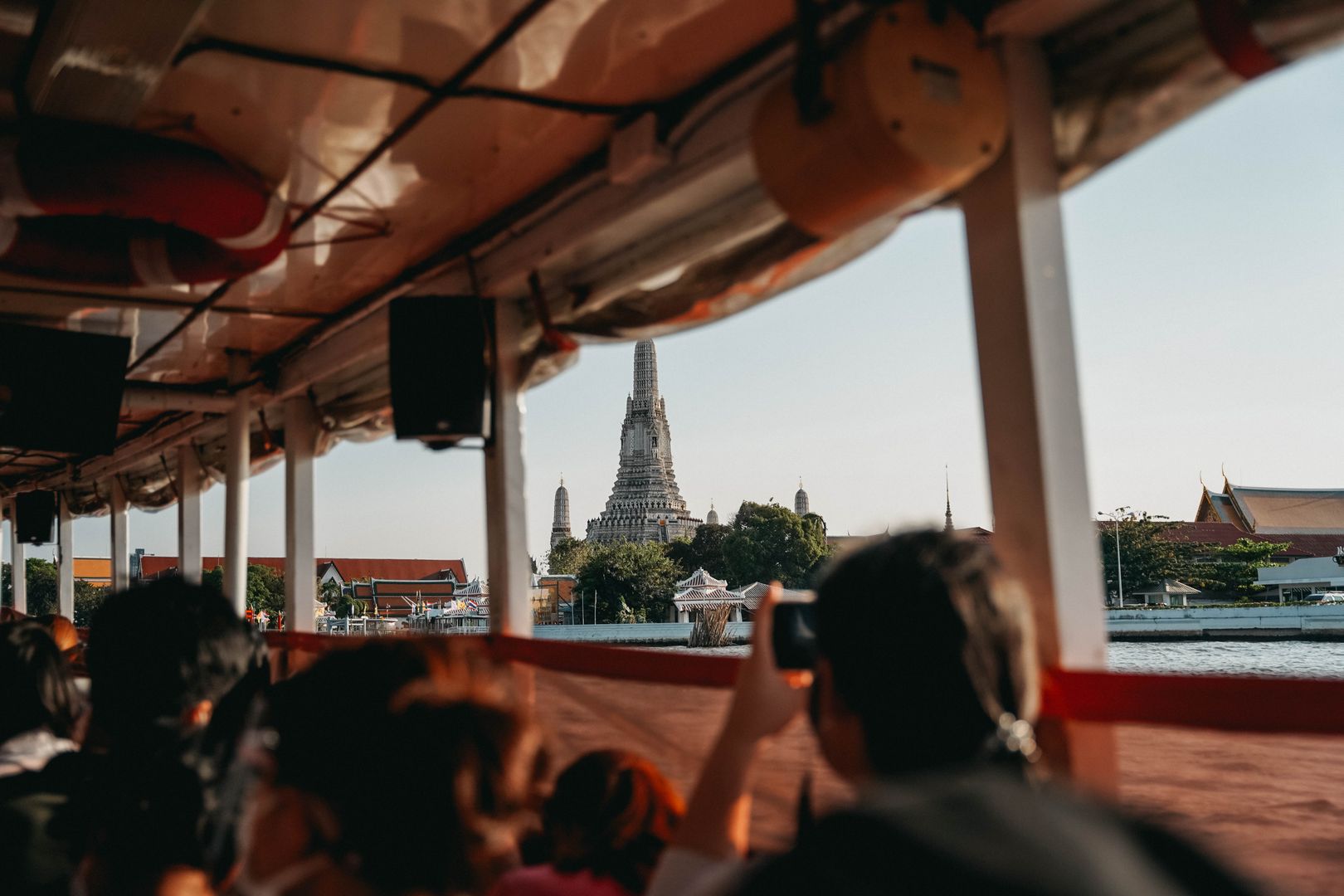
Wat Arun sits directly across the Chao Phraya from Wat Pho. Cross-river ferries leave continuously from the pier beside Wat Pho and cost 5 THB — the crossing takes about two minutes.
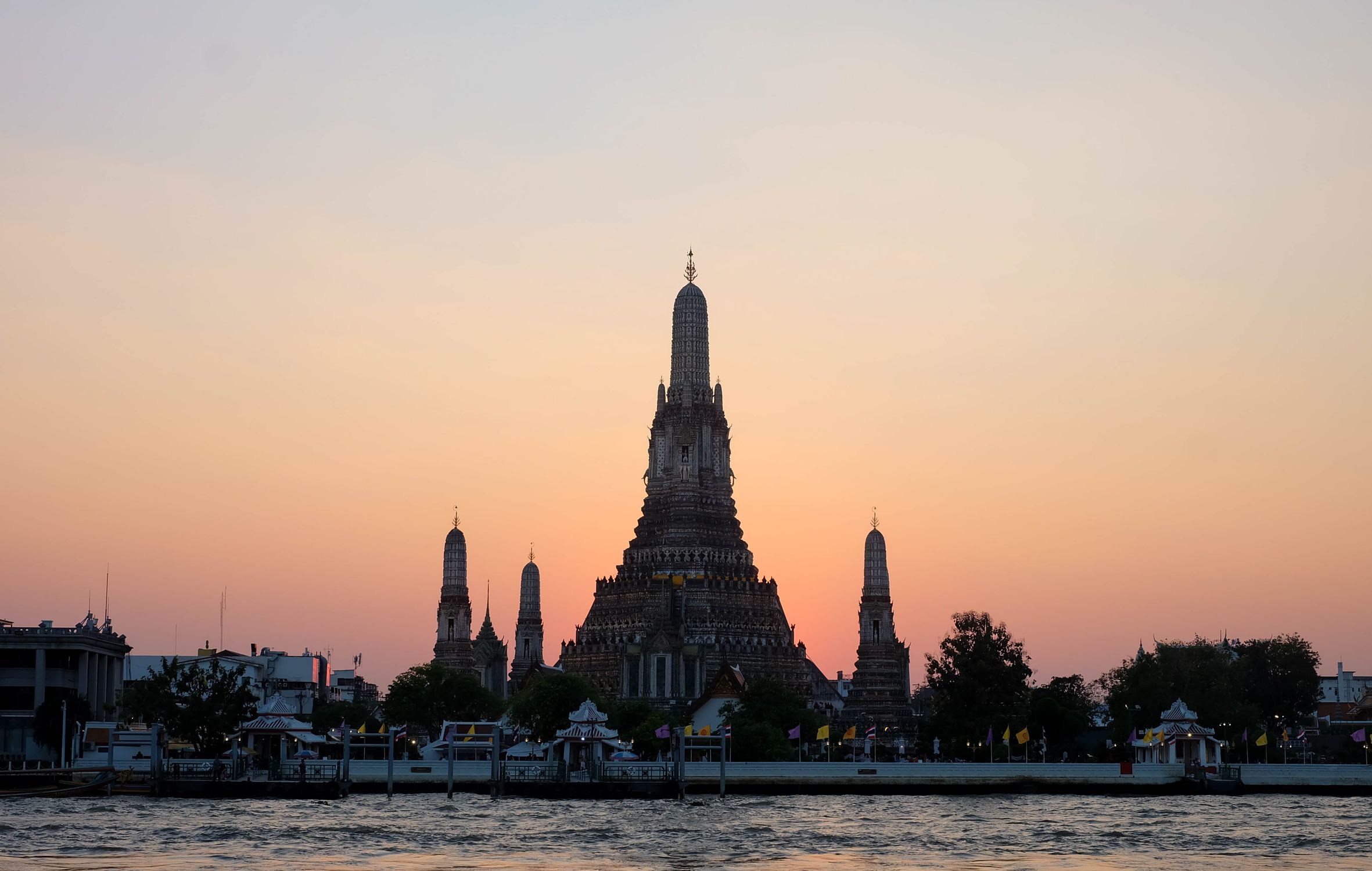
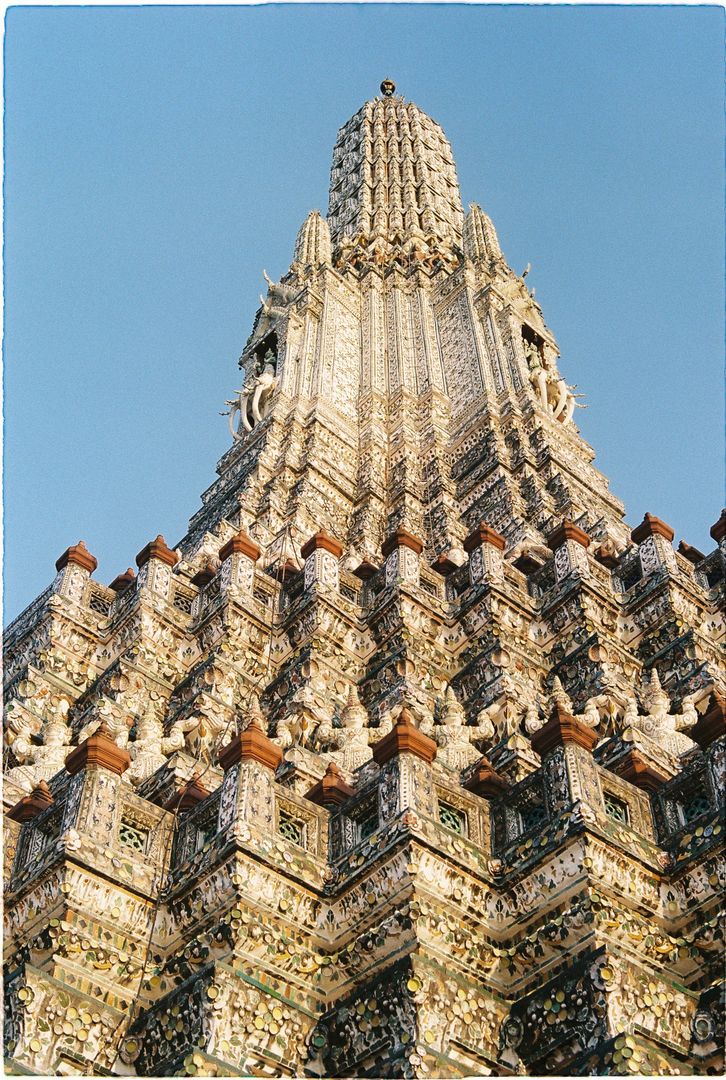
The central prang (tower) rises 70 metres and is covered entirely in fragments of Chinese porcelain — plates, bowls, and decorative tiles broken and set into the plaster in the early 19th century under King Rama II. From a distance the surface appears grey and textured. Up close, the density of the mosaic work becomes clear.
You can climb the prang's steep steps with a rope to hold. The view from the upper terraces covers the Chao Phraya bend and the Bangkok skyline in both directions. It's worth the climb for the perspective and for the closer look at the porcelain work that photographs from below don't capture.
Wat Arun faces east. Sunrise from the opposite bank produces the most direct light on the prang. Sunset gives warmer colour but the light is behind the structure. Most visitors arrive mid-morning, which avoids both extremes.
Entrance: 100 THB. Open 8am–5:30pm.
The Grand Palace and Wat Phra Kaew
The Grand Palace complex was the official residence of the Thai royal family from 1782 until 1925. The buildings still serve for state ceremonies. Wat Phra Kaew — the Temple of the Emerald Buddha — within the grounds is an active royal temple and the most sacred Buddhist site in Thailand.
The Emerald Buddha itself is small: 66 cm tall, seated high on a large golden throne at the far end of the temple hall. Photography inside is prohibited. The image is dressed in one of three seasonal costumes by the King of Thailand at the start of each season — the change is a royal ceremony attended by the court.
The entrance to both the palace and Wat Phra Kaew is combined: 500 THB, which also includes the Vimanmek Mansion (the world's largest teak building) and two additional museums on the grounds. Open 8:30am–3:30pm. The late afternoon crowds at the Grand Palace are among the densest at any tourist site in Bangkok — arriving before noon is strongly advised.
Dress enforcement here is the strictest of the three sites. The main gate faces Na Phra Lan Road. Approach via Sanam Luang (the large open plaza to the north) to avoid the persistent tuk-tuk touts who congregate in the surrounding side streets and will tell you the palace is closed for a ceremony. It almost never is. Walk past them and verify at the gate.
Getting Around and Practical Order
All three sites are in Bangkok's Rattanakosin Island area, the historic core surrounded by the Chao Phraya and canals. The easiest approach from modern Bangkok is the Chao Phraya Express Boat to Tha Chang pier (N9), which lands directly in front of the Grand Palace entrance. From BTS Skytrain, take the Silom line to Saphan Taksin and transfer to the express boat.
A practical sequence for a single day: Grand Palace at opening (8:30am) before the tour groups arrive. Walk south 10 minutes to Wat Pho. Cross by ferry to Wat Arun. Return ferry, then boat or Grab back to your hotel. Budget four to six hours total.
Frequently Asked Questions
What is the dress code for Bangkok temples?
Shoulders and knees must be covered. Sleeveless tops, shorts, and short skirts are refused entry at Wat Pho, Wat Arun, and the Grand Palace. Sarongs and shawls are available for rent at all three. Sandals are permitted.
Can you visit all three temples in one day?
Yes, comfortably. Start at the Grand Palace when it opens at 8:30am, visit Wat Pho next, cross to Wat Arun, and return. Budget four to six hours depending on pace.
Is the Reclining Buddha at Wat Pho or the Grand Palace?
Wat Pho. The Grand Palace contains Wat Phra Kaew and the Emerald Buddha — a much smaller image on a high throne. The 46-metre Reclining Buddha is only at Wat Pho.
How do you get to the Grand Palace from Sukhumvit?
Take BTS to Saphan Taksin, then the Chao Phraya Express Boat northbound to Tha Chang pier (N9). Takes around 30 minutes and costs approximately 50 THB. A Grab taxi takes 20–45 minutes depending on traffic.