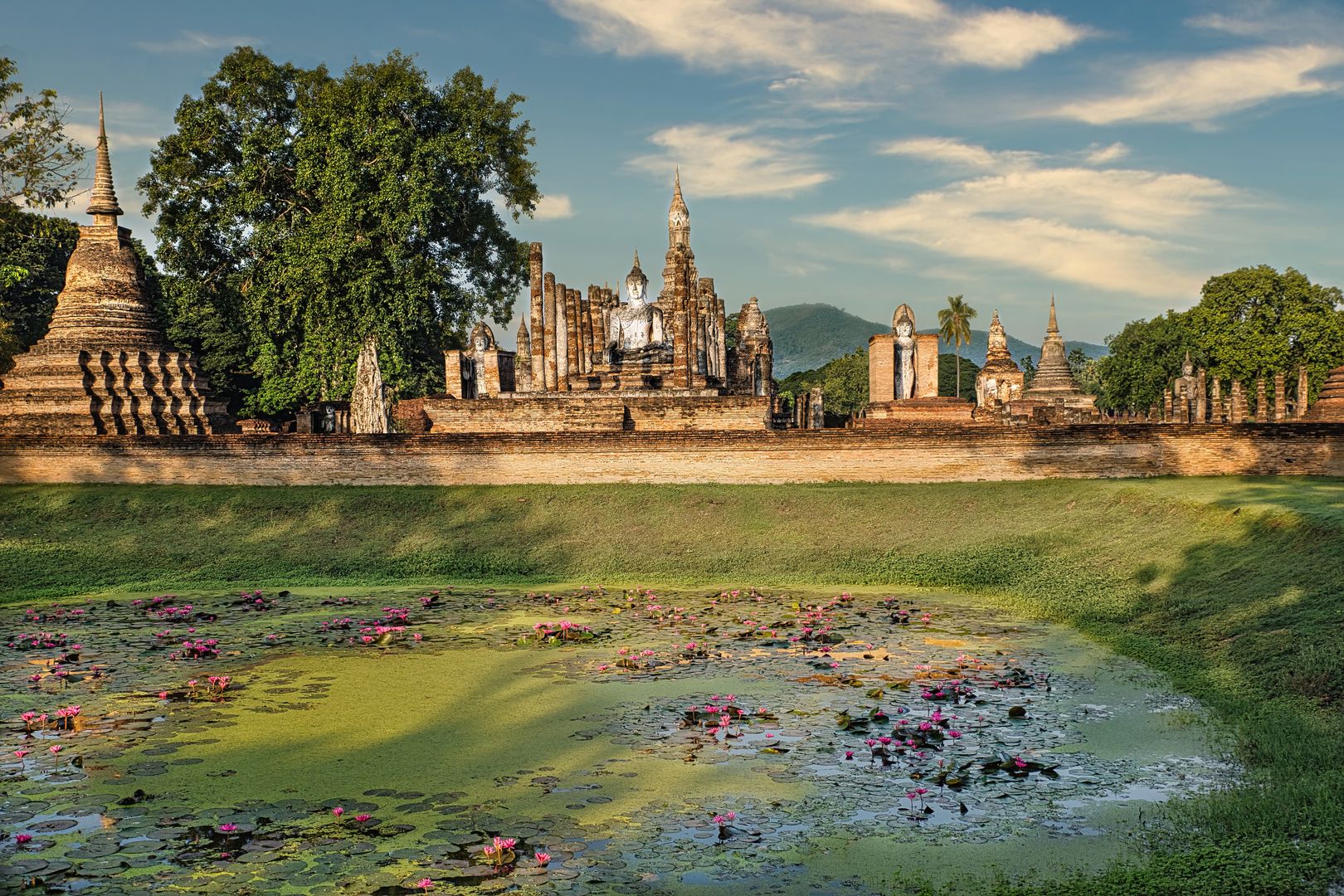

Ayutthaya was the capital of Siam for 417 years until Burmese forces sacked it in 1767. The ruins covering the island—surrounded by three rivers—are a UNESCO World Heritage Site and Southeast Asia's most historically significant archaeological complex. Eighty kilometres from Bangkok, it's reachable by train in 90 minutes, making it the most straightforward day trip from the capital.
How to get to Ayutthaya from Bangkok
Train (recommended): Depart Hua Lampong Station on an ordinary or express service. Ordinary trains take 1 hour 45 minutes; express services run 1 hour 20 minutes. Third-class tickets cost 15 THB, second-class around 50 THB. Trains run every 1–2 hours, with departures at 7:30am, 8:55am, 11:10am, 1:15pm, and 4:55pm. The train arrives at Ayutthaya Station on the east bank. Cross the Chao Phraya by ferry (5 THB, three minutes) to reach the temple island. This is the most pleasant option—cheaper, slower, and you'll see the landscape rather than sitting in traffic.
Minivan from Bangkok: Depart from Mo Chit Station or Victory Monument. Journey time is 1.5 hours; fare is approximately 60 THB. Direct service, no stops. Minivans depart every 30 minutes between 6am and 6pm.
Organised tour: Typically 1,200–1,500 THB per person. Covers four to six temples, includes lunch, uses minibus transport. Convenient if navigation feels risky, but you'll move in a fixed group and lose flexibility around timing and which temples to prioritise.
Getting around Ayutthaya
Bicycle: Rent near the ferry landing for approximately 60 THB per day. The island is flat and roughly 5km across at its widest. Cycling is the best way to navigate between temples—you control your pace, stop spontaneously, and avoid the constant negotiation required with tuk-tuk drivers. Roads are paved but traffic is light except on the ring road encircling the island.
Tuk-tuk: Negotiate a circuit of the main temples (Wat Phra Si Sanphet, Wat Mahathat, Wat Ratchaburana, Wat Chaiwatthanaram) for 200–400 THB over 2–3 hours. Drivers will suggest a logical route. Agree on the fare before starting.
Songthaew: Local pickup trucks run fixed routes around the ring road, approximately 20 THB per section. Slow but authentic, and useful if you're tired from cycling.
The essential temples and what you'll find
Wat Phra Si Sanphet (entry 50 THB) is the largest temple complex in the old capital. Three intact chedis—tall, tapering stupas—contain the ashes of three Chakri-era kings. This is the most photographed site in Ayutthaya, and for good reason: the three chedis are symmetrical, the brickwork is still mostly intact, and it conveys the scale of the old city without confusion. Plan 45 minutes here.
Adjacent is Wiharn Phra Mongkol Bophit, a separate compound housing a colossal gold-plated sitting Buddha (free entry, no shoes). The statue is 17 metres tall and dates to the 15th century. It's the most intact large Buddha image in the ruins.
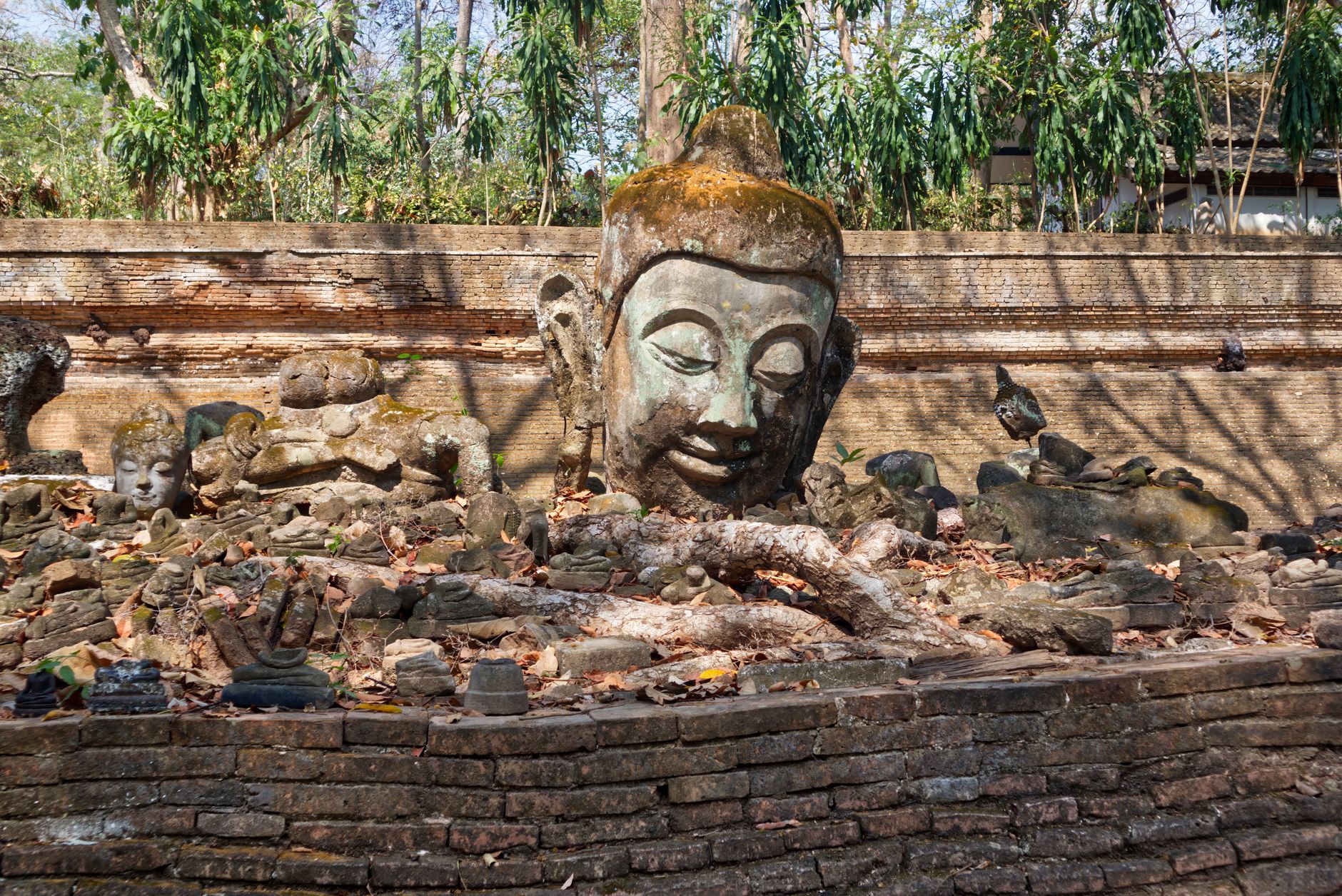
Wat Mahathat (50 THB) contains the famous tree-root Buddha head—a stone Buddha head absorbed by a banyan tree's roots over seven centuries. The roots now cradle the head like a cage. This is possibly the most photographed single object in Ayutthaya. The rule here is strict: photograph at eye level only, never from above. This is a sign of respect; sitting or standing above the Buddha's head is considered disrespectful. Guides will correct you if you try. The temple also contains underground crypt ruins and a central prang (tower) worth climbing for views across the complex. Plan 40 minutes.
Wat Ratchaburana (50 THB) is south of Wat Mahathat. Two dramatic prasats (towers) flank a central prang. Underground passages lead to a crypt accessible via a staircase at the base of the main tower (10 THB additional fee). Frescoes painted on the crypt walls are still faintly visible. The prasats offer the best scrambling view in the complex if you're willing to climb the narrow staircases. Plan 45 minutes.
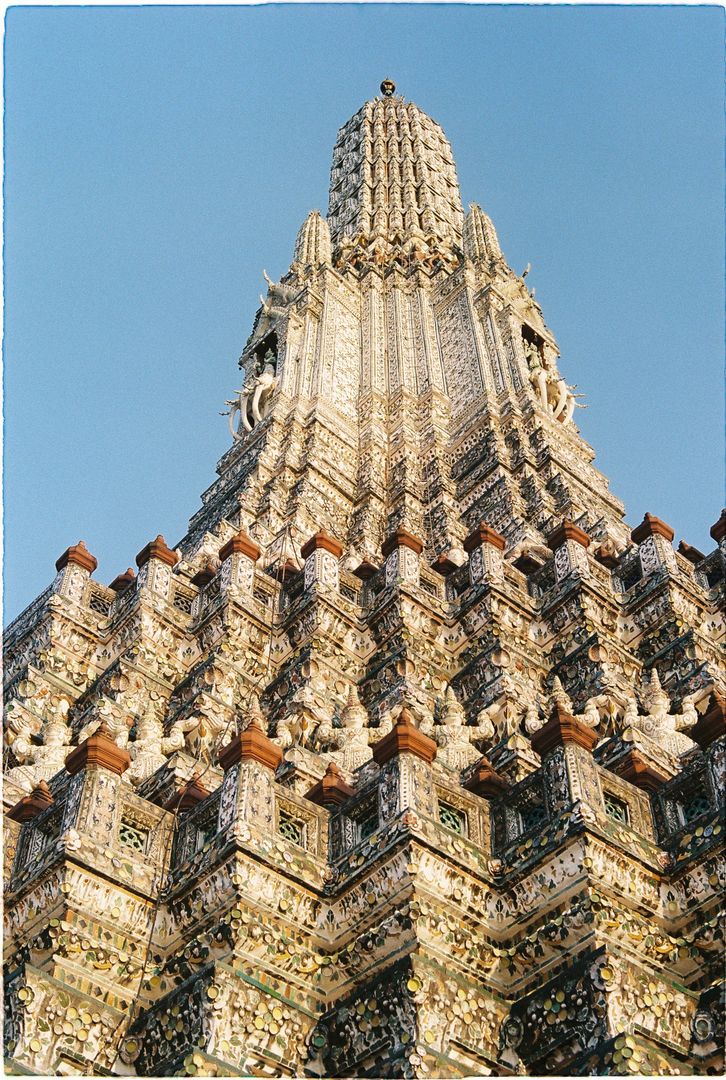
Wat Chaiwatthanaram (50 THB) sits 2km west of the main temple cluster on the river's edge. It was built in Khmer style with a central prang surrounded by smaller chedis—visually distinct from the Thai temples surrounding it. The site is best visited at sunset; the western orientation bathes the prang in orange light roughly 45 minutes before dusk. The riverside setting is also less crowded than the central temples. Cycling takes 20–25 minutes each way from the main island. Plan 1 hour, timing your arrival for late afternoon.
Combination ticket: 220 THB covers entry to six major temples (Phra Si Sanphet, Mahathat, Ratchaburana, Chaiwatthanaram, and two others). Saves 80 THB if you visit all six.
A practical one-day Ayutthaya itinerary
7:30am: Depart Hua Lampong Station on an ordinary or express train.
9:30am: Arrive Ayutthaya Station. Cross the Chao Phraya by ferry. Rent a bicycle near the landing (60 THB).
9:45am–12:30pm: Cycle directly to Wat Phra Si Sanphet (10-minute ride from ferry). Spend 45 minutes. Visit adjacent Wiharn Phra Mongkol Bophit (20 minutes). Cycle 1km south to Wat Mahathat. Spend 40 minutes. Cycle to Wat Ratchaburana. Spend 45 minutes.
12:30pm–1:30pm: Lunch. The old market near the train station is 15–20 minutes by bicycle. Alternatively, eat at one of the small shophouses along Naresuan Road. Pad Thai costs 40–50 THB; roti and mango sticky rice cost 60–80 THB.
1:30pm–4:30pm: Cycle to Wat Chaiwatthanaram (20–25 minutes). Spend time exploring the crypt and prasats. Linger until 45 minutes before sunset for photography.
4:45pm: Cycle back to the ferry landing.
5:15pm: Return bicycle. Board ferry across to Ayutthaya Station.
5:30pm: Catch the 5:50pm or 6:50pm train back to Bangkok (check the schedule online or at the station).
7:30pm–8:15pm: Arrive back at Hua Lampong.
This schedule is tight but feasible. You'll see the four most significant temples. If you prefer a slower pace, skip Wat Chaiwatthanaram and spend more time at Wat Phra Si Sanphet and Wat Ratchaburana.
Ayutthaya by bicycle: routes and practicalities
The temple island is ideal for cycling. Most roads are paved, flat, and traffic-light on weekdays. Weekends attract more Thai tourists, particularly from midday onward. Start early to avoid congestion and heat.
Main temple circuit (6–7km loop): Ferry to Wat Phra Si Sanphet → Wiharn Phra Mongkol Bophit → Wat Mahathat → Wat Ratchaburana → back to ferry. Takes 2.5–3 hours with stops.
Extended route adding Wat Chaiwatthanaram (additional 4km return): Same circuit, then west along the river road to Wat Chaiwatthanaram. Add 1.5–2 hours.
Wat Phra Nang Sang and Wat Phra Ram alternative loop: If crowds at the main temples feel heavy, cycle north to quieter sites. Wat Phra Ram is a smaller temple with a central prang and fewer tourists. Plan 1–1.5 hours for this area.
Rent bikes with lights if you're staying past sunset. No helmet rental available; Ayutthaya doesn't enforce helmet laws, but wear one anyway. Water bottles are essential—fill up at 7-Eleven, which appears every 800 metres.
Overnight in Ayutthaya: accommodation and the evening

Two nights allows a relaxed pace, a sunset river cruise, and exploration of less-visited temples. Overnight trains return to Bangkok around 6am if you prefer avoiding the day-time rush.
Guesthouse options:
- Baan Are Gong (~2,000 THB/night): Riverfront property with good reviews. Wooden-style bungalows. Includes breakfast. Book ahead on weekends.
- Ayutthaya Budget Guesthouses (500–800 THB/night): Basic, clean, near the train station. No frills. Walk-in availability usually fine.
Evening activities: The town is quiet. A night market operates near the train station with cheap eats (grilled meat skewers, fruit, coconut ice cream, 30–60 THB per item). A handful of riverside bars face the Chao Phraya; beer costs 50–100 THB. Sunset river cruises depart from near Wat Chaiwatthanaram (roughly 600–800 THB per person for 90 minutes). Most travellers eat, walk the waterfront, and sleep early.
Practical considerations
Dress code: Cover shoulders and knees for temple entry. Sarong rentals are available at major temple gates (approximately 50 THB). Wear enclosed shoes or bring slip-ons—you'll remove them frequently.
Heat and sun exposure: The temple complex offers almost no shade. Travel in April–June is uncomfortable; temperatures reach 38–40°C. Bring two litres of water, high-SPF sunscreen, and a hat. Midday (11am–3pm) is worst. Cyclists should ride early morning and late afternoon.
Navigation: Download a map of the temple island offline before arriving. WiFi is available at some guesthouses but not reliable across the ruins. The temples are signed, but the English transliterations vary; a map prevents confusion.
Common mistake: A modern "Royal Palace" reconstruction near Wat Phra Si Sanphet is well-signed and easily confused with ancient structures. It's a 1990s-built educational exhibit. Don't waste time inside unless you're deeply interested in palace architecture; the actual ruins are more compelling.
Photography rules: Avoid photographing the Buddha head at Wat Mahathat from above, as mentioned. Sunrise and sunset light is superior to midday glare. Most temples allow photography without fee.
Frequently Asked Questions
Can you visit Ayutthaya temples without a guide?
Yes. Temples are well-signed in English. A offline map, rented bicycle, and 2–3 hours allows independent navigation of the main sites. Guides (available near Wat Mahathat, typically 400–600 THB for 2–3 hours) add historical context but aren't essential for a first visit.
Is the train or minivan faster from Bangkok to Ayutthaya?
Train takes 90 minutes to 1 hour 45 minutes depending on service type. Minivans take 1.5 hours in light traffic but can exceed two hours if traffic is heavy (typical on weekday mornings). The train is more reliable and costs less.
Which single temple should you prioritise if time is short?
Wat Phra Si Sanphet. The three chedis, adjacent gold Buddha, and scale convey the historical importance of the city. Budget 45 minutes minimum. If you can add one more, visit Wat Mahathat for the tree-root Buddha head.
Is cycling in Ayutthaya safe for inexperienced riders?
Yes. The temple island is flat, traffic is light, and roads are paved. Avoid the busy ring road if possible; use smaller internal roads connecting the temples. Weekday cycling is calmer than weekends.
What's the best time of year for a day trip to Ayutthaya?
November to February. Temperatures range from 20–30°C, humidity is lower, and rain is rare. March–May brings heat of 35–40°C. June–October is monsoon season (wet, but fewer tourists). Avoid April (hottest) unless you have high heat tolerance.
Can you reach Ayutthaya from other Bangkok train stations besides Hua Lampong?
Trains also depart from Bangkok Noi (a smaller western station), but Hua Lampong has more frequent services and is more convenient if you're central Bangkok. The journey from Bangkok Noi is slightly shorter (1 hour 20 minutes).
Day-trippers should take the early train and cycle between the four main temples (Phra Si Sanphet, Mahathat, Ratchaburana, Chaiwatthanaram), aiming to return by 5:30pm. This requires discipline around timing but captures the essential ruins. Overnight visitors gain breathing room to explore secondary temples, take a sunset river cruise, and avoid rushed photography. Choose the day trip if you prefer minimal planning and a concrete deadline; choose overnight if you value slower observation and better light for photographs.