
What the 2018 Closure Changed
In April 2018, Philippine President Rodrigo Duterte declared Boracay a cesspool and ordered it shut to tourists for six months. The closure was the most dramatic environmental intervention applied to a beach destination in Southeast Asia in recent memory. Hundreds of businesses operating in protected beach setbacks were demolished. A new sewage system was installed. The beach itself was cordoned off for rehabilitation.
When the island reopened in October 2018, it had a wider, cleaner beach, stricter construction controls, and reduced tourist capacity. The karaoke bars that had lined White Beach to the waterline were gone. Vendor and table encroachments were pushed back. The rehabilitation also displaced large numbers of informal workers whose income depended on beach-side operations.
The island today is cleaner than before 2018, more regulated, and has a different atmosphere — quieter in some respects, more resort-oriented in others. It remains one of the finest beaches in the Philippines and is still built entirely around tourism. The specific character has shifted, but the beach itself is better for it.
Getting There
Boracay has no airport. The island is reached via Caticlan (IATA: MPH) or Kalibo (IATA: KLO), both on Panay Island.
Caticlan Airport is 15 minutes from the island by ferry and a short van ride from the terminal. Flights from Manila take about 50 minutes. Caticlan handles fewer airlines and books out faster in peak season, but the proximity to the ferry makes it the more convenient option when seats are available.
Kalibo is 70 km from Caticlan — a two-hour minivan transfer costing around 200–250 PHP. More airlines fly to Kalibo, including budget carriers, and fares are often lower. If flying from Manila on a budget or connecting from an international flight, Kalibo is frequently the only option.
From either terminal, pump boats cross to Boracay's Cagban Jetty Port in 10–15 minutes. Terminal and boat fees combined run about 150–200 PHP. From Cagban, tricycles reach the main beach areas for another 50–100 PHP.
White Beach and Bulabog

White Beach runs 4 km along Boracay's western coast, divided informally into three stations. Station 1 (northern) is calmer, more resort-focused, and more expensive. Station 2 (central) is the commercial hub — most restaurants, bars, and the D'Mall complex. Station 3 (southern) has the lowest prices and the highest concentration of budget guesthouses.
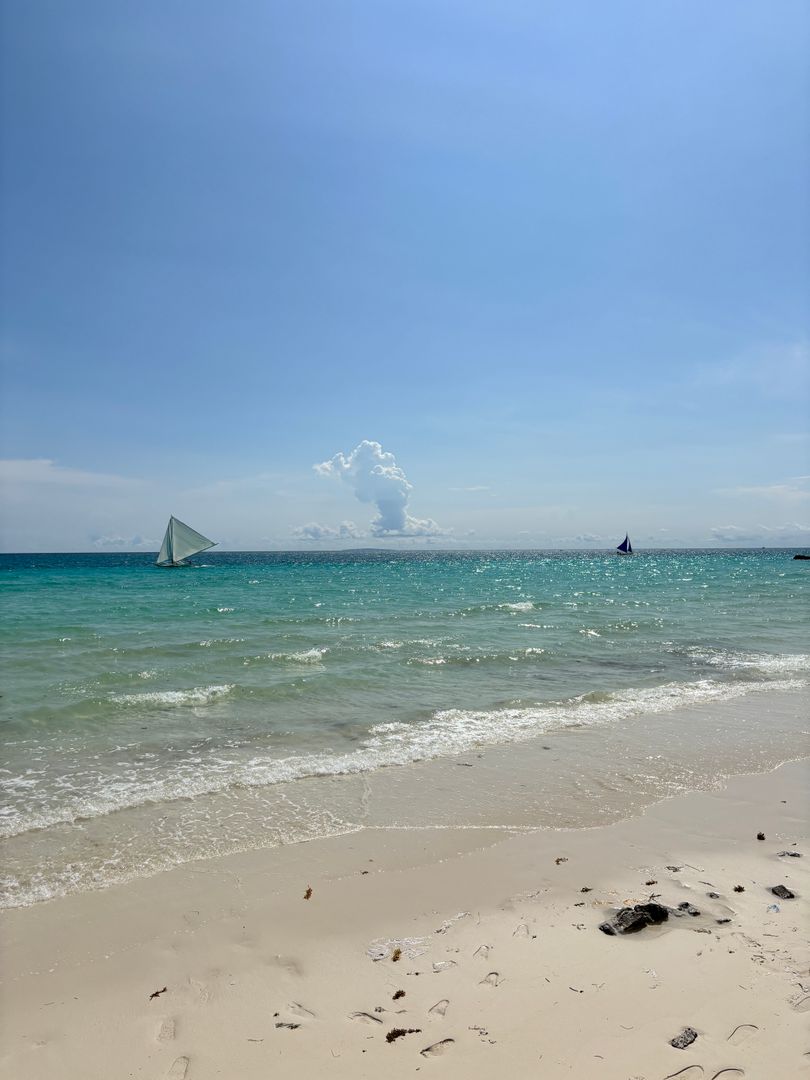
The sand is fine and powdery in the way the photographs suggest. At low tide, the beach is wide and the water shallow for a long way out. The sunsets face directly west and are the reason many visitors time their arrival specifically for the White Beach side of the island.
Bulabog Beach is on the east coast, a 10-minute tricycle ride from White Beach. It catches consistent northeast trade winds from November to April, making it the centre of kite surfing and windsurfing on the island. Instruction and rental are available at the beach access point. When the amihan winds are running, Bulabog is one of the better kitesurfing locations in Southeast Asia.
Eating and the Beach Scene
Station 2 has the densest concentration of restaurants, from local Filipino food to international options. D'Mall, a low-rise complex just off the beach path, has dozens of restaurants in a shaded walkway that's easy to navigate without planning.
Worth seeking out: kare-kare (oxtail in peanut sauce), fresh seafood sold by the kilo and cooked to order, halo-halo (shaved ice dessert), and tuba (local coconut wine). The hawker-style seafood grills that operate on the beach near Station 2 in the evenings are a reliable way to eat well for 300–500 PHP per person.
The beach has an 11pm curfew for loud music and activities, a post-2018 regulation. The fire dancing shows that were a Boracay fixture have largely been removed. The bar scene at Station 2 runs until late but is less frenetic than before the closure.
Where to Stay
Accommodation ranges from dormitory beds at 500–800 PHP per night to beachfront resorts above 15,000 PHP. Station 1 has the most luxury resorts. Station 3 has the better budget options. Station 2 covers the widest range in the middle.
Beachfront positioning commands a significant premium because the frontage is prime and limited. Properties one or two rows back are substantially cheaper and often quieter. The beach path is narrow and accessible from anywhere along its length, so the practical distance penalty for non-beachfront accommodation is minor.
Peak season (December–March) books out significantly. The shoulder seasons (April–May, September–November) offer better rates. June through August is rainy season, with reduced visibility and occasionally rough seas on the west coast.
Practical Information
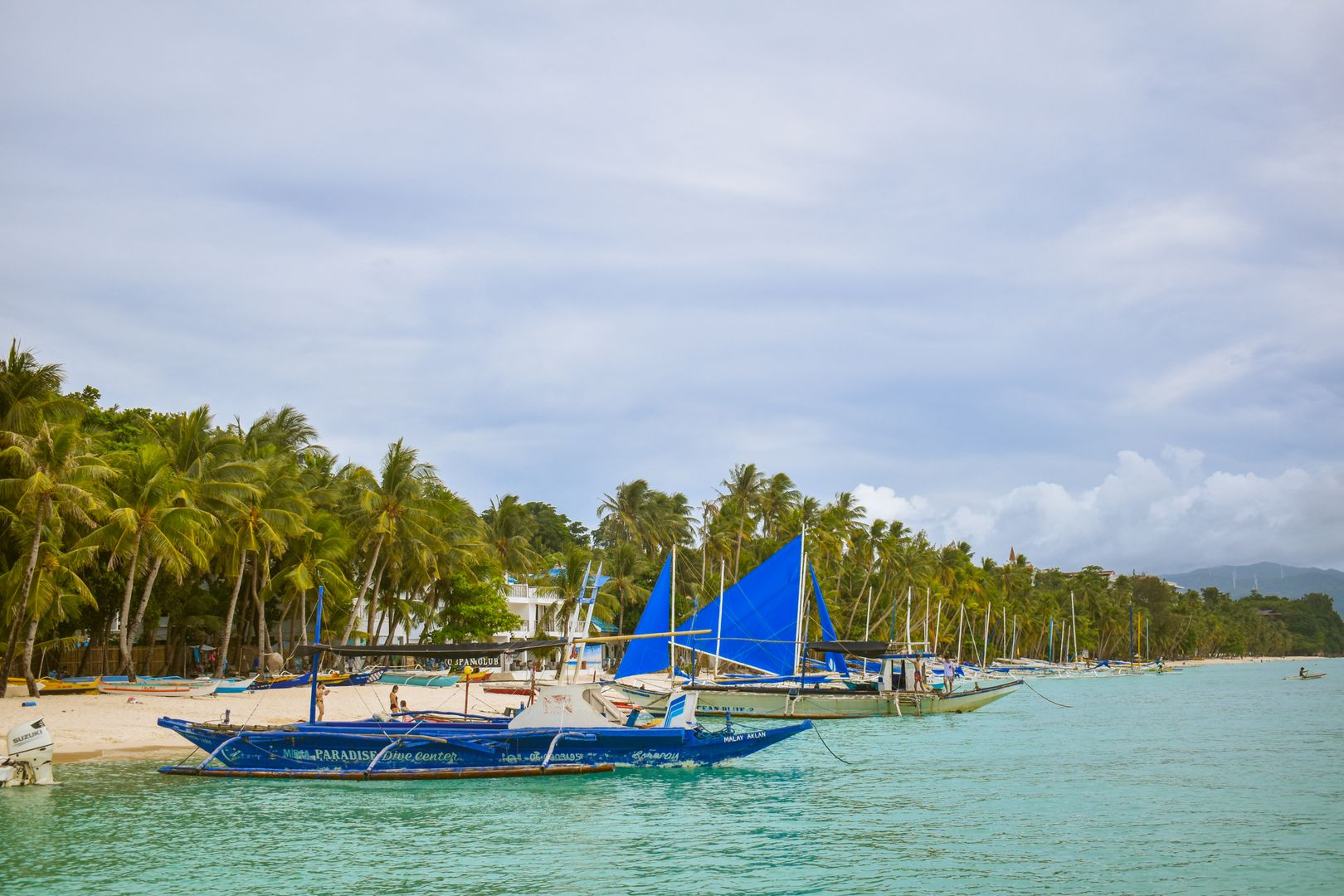
Tricycles are the main island transport — three-wheeled motorbikes with sidecars. Fixed-route rides cost 20–30 PHP; chartered rides for specific destinations run 100–200 PHP depending on distance. The main road runs north-south along the island and most destinations are within a short ride.
The Philippine Department of Tourism has kept daily arrival controls in place since 2018. Environmental fees are charged at the ferry terminal. As of 2024, the controls have prevented a return to the pre-2018 overcrowding, though peak season is still visibly busy.
Frequently Asked Questions
Is Boracay worth visiting after the cleanup?
Yes — the beach is in better condition than before 2018. The atmosphere is more resort-oriented and less chaotic. If a tight nightlife scene is the main draw, the post-2018 restrictions have reduced that somewhat. If the beach itself is the priority, it's better than it was.
What is the best time to visit Boracay?
November to April brings dry weather, calm seas on White Beach, and wind conditions for water sports at Bulabog. May and June transition to rainy season. July through September are the wettest months with potential for rough seas.
How long should you stay?
Three to five days covers White Beach, Bulabog, a snorkelling or diving trip, and island exploration without rushing. A long weekend works if you're flying from Manila and the priority is beach time.
Is Boracay safe for tourists?
Generally yes. Standard precautions apply: don't leave belongings unattended on the beach, use hotel safes for passports and larger amounts of cash, and take licensed tricycles rather than random transport offers at night.


