
The Bulgarian Black Sea coast runs 378km from the Romanian border in the north to the Turkish border in the south, with a continuous strip of sandy beaches, resort towns, and two cities (Varna and Bourgas) anchoring the northern and southern sections. The water temperature reaches 24–26°C in August; the coast gets 300 days of sun per year in the south. The summer tourist season runs June through September, peaking in July and August when Romanian, Russian, Ukrainian, Czech, Slovak, and Polish visitors join the Bulgarian domestic crowd. The infrastructure — hotels, restaurants, beach bars — is extensive and functional. The prices are consistently lower than Greek or Croatian beach destinations at comparable quality levels.
Nesebar (Nessebar)
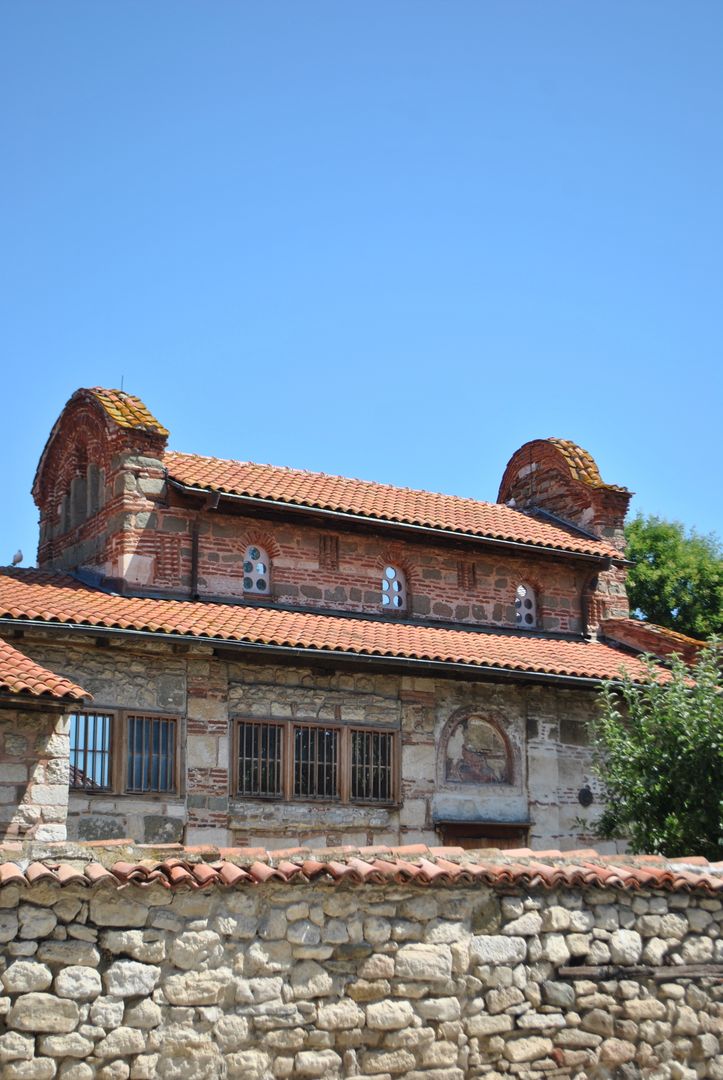
Nesebar is a peninsula town connected to the mainland by a narrow 400m isthmus, inhabited continuously since approximately 3200 BC — initially Thracian, then Greek (as Mesembria, one of the most important Greek colonies on the Black Sea), then Roman, Byzantine, Bulgarian, and Ottoman. The UNESCO World Heritage designation covers the ancient town on the peninsula, which contains the ruins of 40 Byzantine churches (several dozen from the 5th–14th centuries), 8 of which remain largely intact.
The Church of the Holy Saviour, the Church of Christ Pantocrator (the most photographed, with its decorative ceramic disc frieze), and the New Metropolitan Church ruins are the main ecclesiastical sites. The Archaeological Museum (€3) on the isthmus holds finds from all periods of the town's history. The town is genuinely ancient and genuinely atmospheric — the peninsula is small enough that the density of Byzantine ruins per square metre is unlike anywhere else on the Bulgarian coast. It is also extremely crowded in July and August; the narrow isthmus creates a bottleneck and the souvenir shops that line every street in the old town become the primary sensory experience at peak times. Visit in May, June, or September.
Sozopol
Sozopol, 35km south of Bourgas, was founded by Greek colonists around 610 BC as Apollonia Pontica (the first Greek colony on the western Black Sea) and retains a compact old town of 19th-century wooden houses on a small peninsula, more modest in scale than Nesebar and somewhat more liveable as a base. The Archaeological Museum (€2) holds finds including the Sozopol bronze head (3rd century BC, one of the finest examples of Hellenistic portraiture in Bulgaria). The Apollonia Arts Festival in early September transforms the old town into a performance space.
The beaches directly accessible from Sozopol (Harmanite to the north, the town beach on the peninsula's east side) are smaller than the resort beaches further north; the character is more taverna and fishing boat than sun-lounger resort. The surrounding area has quieter beaches reachable by short drives: Kavatsite, Smokinya, and the strip south toward Primorsko and Tsarevo. Tsarevo (40km south) is a smaller, less-visited version of Sozopol with good beaches and a fishing village character that June tourism hasn't yet overtaken.
Varna and the Northern Coast

Varna is Bulgaria's third-largest city (300,000) and the main port city of the Black Sea coast. The Archaeological Museum (€5) holds the Varna Chalcolithic Necropolis collection — 6,500-year-old gold artefacts from a burial site excavated in 1972, representing the oldest worked gold in the world. The assemblage (over 3,000 individual gold objects, including an unambiguous elite burial with a gold penis sheath) challenges earlier assumptions about the development of social complexity in prehistoric Europe. The museum presentation is thorough; allow two hours.
The Sea Garden (Morska Gradina), a 2km coastal park running from the port to the beach complex, is Varna's public waterfront — cafés, an open-air theatre, the Naval Museum, and the Aquarium. The city's beach runs 3km north of the Sea Garden; Golden Sands (Zlatni Pyasatsi, 18km north) is the most developed resort on the northern coast — dense hotel development from the communist era and significant subsequent expansion, with 3.5km of beach backed by a resort strip. Albena, further north, is newer and somewhat better-managed. Neither is the reason to visit Varna; the archaeological museum is.
The Black Sea Season and What to Expect
The beach season runs June through September. May and October are shoulder months — warm enough for walking and sightseeing, too cold for most people's swimming threshold (water at 17–19°C). July and August are fully operational: every resort hotel is occupied, every beach bar is open, and every road between Bourgas and Varna has summer traffic. The coastal strip from Sunny Beach (the largest resort, 35km north of Bourgas, purpose-built in the 1970s and entirely resort infrastructure with no particular character) to Nesebar is the most visited section and requires the most tolerance for crowd management in high season.
Outside July–August, the coast reverts to a scale that reveals what it was before the tourist development: fishing villages, Byzantine ruins, and a sea that belongs to the people looking at it rather than those selling sunloungers in front of it.
Getting Around the Coast
Bourgas Airport has direct seasonal flights from most major European cities (Ryanair, Wizz Air, British Airways). Varna Airport similarly. From Sofia, buses to Bourgas (380km, 5.5 hours, BGN 25–35) and Varna (470km, 6 hours, BGN 30–40) run multiple times daily. Between coastal towns, local buses and minibuses cover the main routes; a car gives substantially more flexibility for the quieter beaches. Nesebar is 30 minutes by bus from Bourgas; Sozopol is 40 minutes.
Practical Costs

Beach resort hotels in summer (July–August): BGN 80–200 (€40–100) per night for a double room. Old Town guesthouses in Nesebar or Sozopol: BGN 60–140 (€30–70). Varna city hotel: BGN 80–160 (€40–80). Restaurant meals: BGN 15–35 (€7.50–17.50) for a full dinner with wine — roughly half comparable Greek or Croatian coast prices. Beach sunlounger hire: BGN 10–20 (€5–10) per day at resort beaches; many public beach sections are free. The gap between Bulgarian Black Sea prices and equivalent Mediterranean alternatives remains significant and consistent.