
Sofia has been inhabited continuously for 7,000 years — the Thracians, then the Romans (who called it Serdica and made it an important provincial capital), then the Byzantines, then the Ottomans for 500 years, then independence in 1878 and the subsequent century of architectural layering that produced the city's current character. The result is a compact centre where a Roman rotunda sits next to a Soviet-era ministry building, a working Ottoman mosque faces a former communist headquarters, and the country's largest cathedral occupies the centre of a wide Soviet-era square. Bulgaria joined the EU in 2007; the euro has not yet replaced the lev; prices remain among the lowest in Europe.
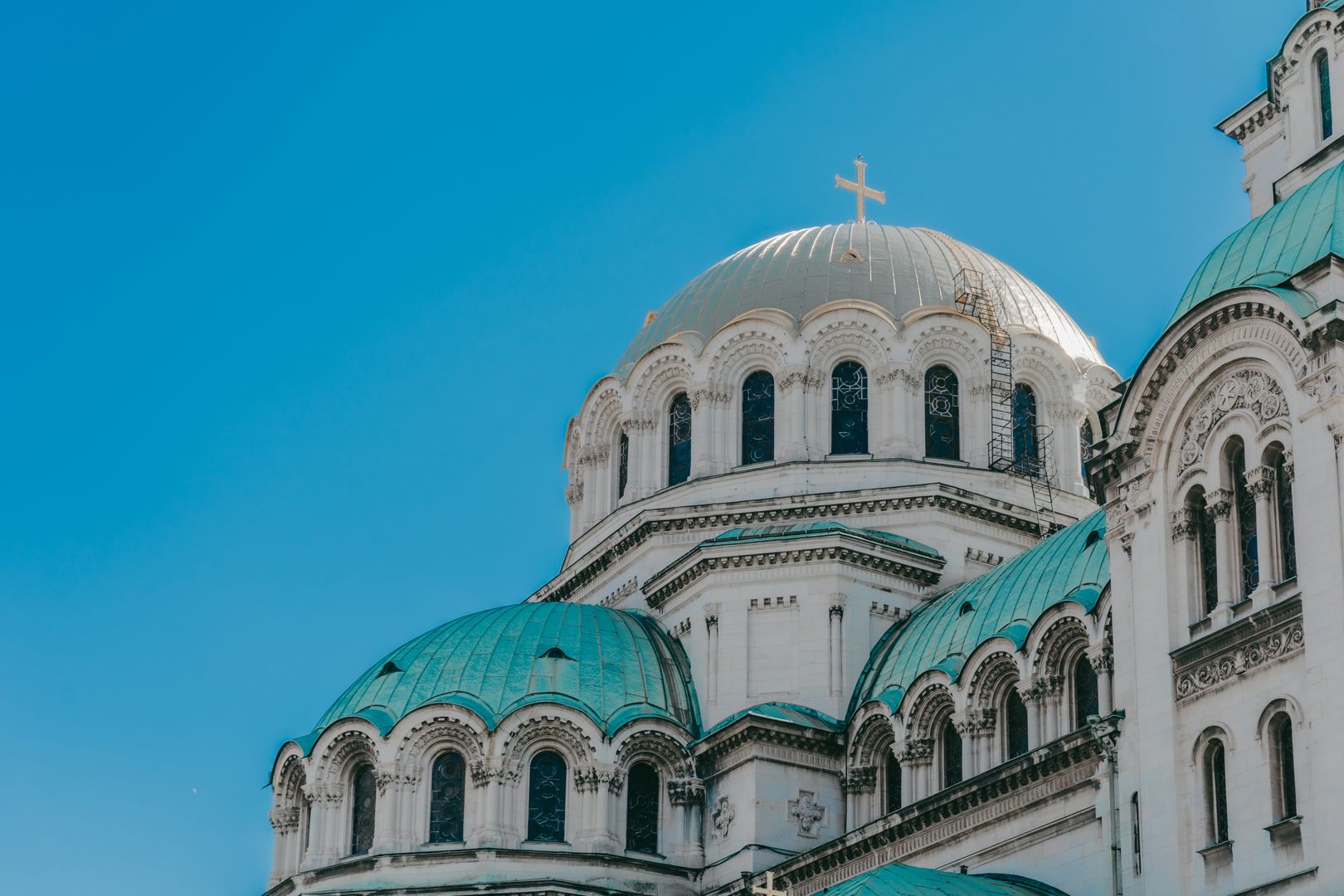
Alexander Nevsky Cathedral
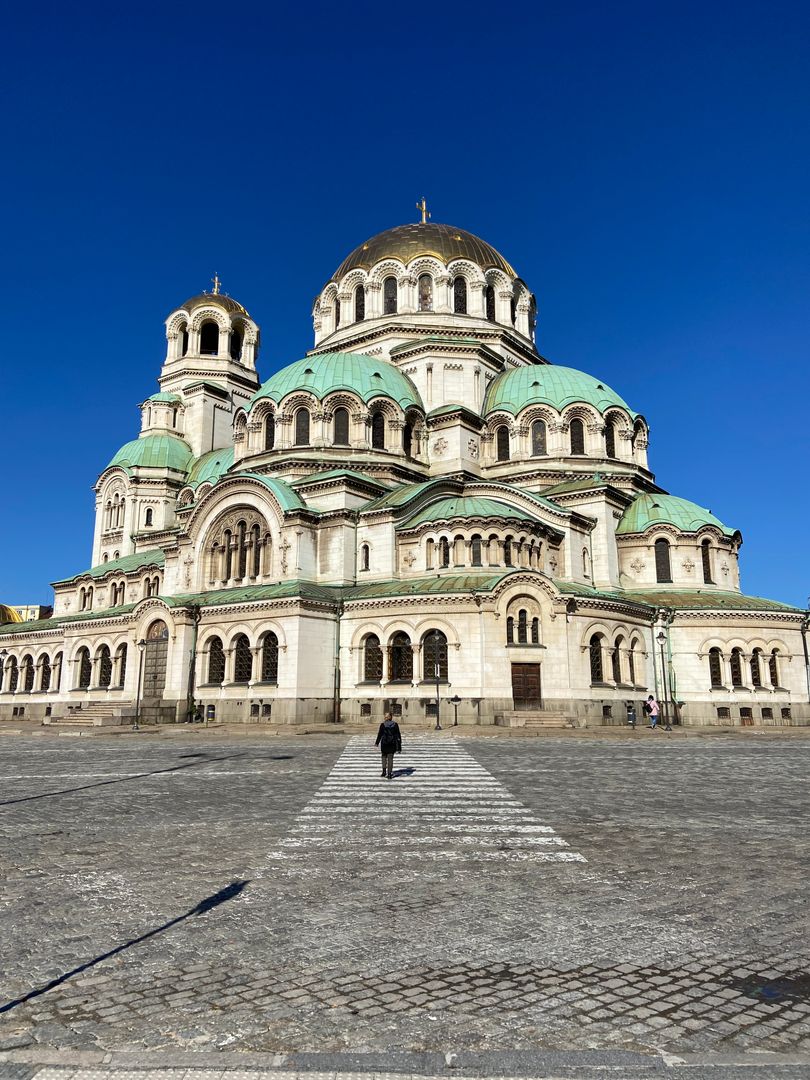
The Cathedral of Saint Alexander Nevsky was built between 1882 and 1912 as a memorial to the Russian soldiers who died in the Russo-Turkish War of Liberation (1877–1878), which ended 500 years of Ottoman rule. The gold-plated central dome rises 45m; the bell tower reaches 53m; the interior seats 5,000. It is one of the largest Eastern Orthodox cathedrals in the world by floor area (2,916 m²) and the most architecturally significant building in Bulgaria.
Entry to the main cathedral is free; the crypt museum (containing medieval icons and religious artefacts, €3) is separate. The best exterior view is from Alexander Nevsky Square at dawn, before the tour groups arrive. The square itself — paved, open, ringed by embassies and the Bulgarian Academy of Sciences — hosts an outdoor antique and book market on weekends.
Roman Serdica: The City Under the City
The Roman city of Serdica (2nd–4th century AD) lies directly beneath central Sofia. Excavations during the construction of the metro in the 2000s uncovered an extensive network of streets, buildings, and defensive walls; much of what was found has been incorporated into underground display spaces rather than reburied. The Serdica Archaeological Complex at Largo (the central square in front of the Presidency and Council of Ministers buildings) is an open-air excavation with glass floors showing the original street surface and structure walls — free to view, accessible from street level and from the metro connecting tunnel.
The Rotunda of St George (Rotunda Sveti Georgi), inside the courtyard of the Presidency building, is a 4th-century Roman brick rotunda later converted to a church under both Byzantine and Ottoman occupation. It's the oldest building in Sofia still standing at its original height. Free entry (the courtyard is open), with original medieval frescoes visible inside. The Banya Bashi Mosque (1576, functioning mosque, free entry outside prayer times) faces the Central Mineral Baths building across a square — the juxtaposition of the Ottoman mosque and the Belle Époque bath house captures several centuries of Sofia's history in a single view.
Boyana Church and the National History Museum

Boyana Church (UNESCO, €8, 10km south of the city centre) is a small 11th–13th century church containing frescoes from 1259 that are considered the most significant examples of medieval painting in Bulgaria and among the finest in Eastern Europe. The naturalism of the portraits — rendered 50 years before Giotto brought similar technique to Italian fresco — is the basis for their UNESCO designation. Access is timed and limited to small groups (advance booking essential: boyanachurch.org); the visit lasts 10 minutes inside the church, which is sufficient to see everything.
The National History Museum, in a former Communist Party residence in Boyana (same neighbourhood, walkable from the church), holds 660,000 objects across Bulgarian history from the Chalcolithic period onwards. The Panagyurishte Gold Treasure (4th century BC Thracian gold rhytons) and the Varna Chalcolithic Gold (4500 BC — among the oldest worked gold artefacts in the world, though the main collection is in Varna) are the headline exhibits. Allow two to three hours. Getting there: take bus 63 or 111 from the centre (35 minutes), or taxi (€5–7 one way).
Vitosha Mountain
Vitosha rises to 2,290m immediately south of Sofia — the city's boundary runs partway up its slopes, and the mountain is a national park. The Cherni Vrah summit is accessible by two cable cars from the Simeonovo and Dragalevtsi neighbourhoods (both reachable by bus from the centre; the cable cars operate intermittently — check before going) and by marked hiking trails from the city edge. The route from Dragalevtsi Monastery to the summit takes 3–4 hours; the panoramic view over Sofia from the top extends to the Balkan Range to the north and the Rhodopes to the south.
In winter, Vitosha functions as a ski resort with 8 runs. The skiing is modest but the proximity — you can ski in the morning and walk in central Sofia for lunch — is unusual for a capital city. Zlatni Mostove (the Golden Bridges), a field of ancient rock formations (periglacial block streams) at 1,400m elevation on Vitosha's western slope, is accessible by bus on summer weekends and is the most visited point on the mountain.
Day Trips: Rila Monastery and the Seven Rila Lakes
Rila Monastery (UNESCO, 120km south of Sofia, 2 hours by bus) is the largest Eastern Orthodox monastery in Bulgaria, founded in the 10th century and expanded in the 14th and 19th centuries. The current monastery buildings date mostly from the 1833–1837 reconstruction after a fire; the Nativity Church inside the courtyard has murals covering every surface of the portico — over 1,200 individual scenes painted between 1840 and 1848. The monastery is free to enter; overnight accommodation for pilgrims and tourists is available within the walls at basic rates.
The Seven Rila Lakes are a chain of glacial lakes at 2,100–2,500m in the Rila Mountains, reached by gondola from Panichishte (1.5 hours from Sofia by bus to Samokov, then onward). The lakes are accessible from June through October; the circular hiking route through all seven takes 3–4 hours and requires no technical equipment. Both Rila Monastery and the lakes are possible as separate day trips from Sofia; combining them in a single day is rushed.
Getting Around Sofia and Practical Costs
Sofia's metro has three lines covering the main districts and extending to the airport (Line 2, 30 minutes from airport to city centre, BGN 1.60 / €0.80). A 24-hour transit pass costs BGN 4 (€2). The city centre is walkable; taxis are metered and cheap (BGN 0.90 / €0.45 per km starting rate).
A mid-range hotel in Sofia runs €35–70 per night; centrally located apartments €30–55. Restaurant dinner (Bulgarian cuisine): €5–10 per person including a glass of wine. A coffee costs €1–1.50. The opera (Sofia National Opera, one of the Balkans' finest) charges €5–15 for tickets. Museum entries: €1–5. Sofia is consistently cited as the most affordable capital for a European city break; the caveat is that the city's best qualities — architecture, mountain proximity, food and drink culture — are not concentrated in ways that typical 2-night itineraries reveal. Three days is a better allocation.