

Cancún is a purpose-built resort strip with direct international flights, large all-inclusive hotels, and reliable infrastructure. Tulum became globally known for boutique eco-lodges and wellness culture but has transformed dramatically in five years into an expensive, crowded version of its former self. Neither is a hidden gem. The choice is between different types of packaged experience, each with specific trade-offs worth understanding before committing to one.
| Category | Cancún | Tulum |
|---|---|---|
| Best for | All-inclusive resorts, direct flights, family travel | Cenotes, nightlife, wellness boutique aesthetic |
| Signature draw | Chichen Itza day trip, island ferries | Underground cenotes, coastal Maya ruins |
| Beaches or nature | Wide white sand, turquoise water, good surf | Good but narrower, limestone cliff setting unique |
| Nightlife | Resort bars, basic clubs, manageable scene | DJ clubs, electronic music, premium-priced events |
| Mid-range daily cost | €5–8 downtown food, €20–25 hotel zone meals | €50–70 wine, €80–100 massage, €250–400 hotels |
| Peak season | December through April, dry and warm | December through April, same weather window |
| Crowd level | High in Hotel Zone, manageable downtown | Very high, especially cenotes and nightlife |
| Recommended stay | 2–3 nights, or use as flight hub base | 3 nights minimum if cenotes are priority |
| Getting there | Direct international flights to CUN airport | Ferry from Playa del Carmen or colectivo van |
Cancún: Two completely different destinations
The confusion about Cancún stems from the fact that there are two Cancúns, separated by 20 minutes of geography and a massive price gap. Most visitors experience only one.
The Hotel Zone (Zona Hotelera) is a 25km strip of all-inclusive resorts built on a barrier island between the Caribbean and a lagoon. The beaches are genuinely good — Delfines Beach is the widest public beach with strong white sand and proper surf. The water is turquoise. However, the Hotel Zone is a closed loop: resort restaurants charge €18–25 for a mediocre plate of fish, bars serve weak cocktails at €12–15 each, and the tourist experience is entirely managed and priced accordingly. Most guests never leave the resort.
Downtown Cancún — the actual city — is 20 minutes away by local bus (€0.50). This is where locals live and eat. Mercado 28 and Mercado 23 are working markets with fresh produce and cooked food. Tacos al pastor cost €0.80 per plate. Small restaurants serve proper ceviche for €5–8. The contrast is stark. A traveller spending five nights in the Hotel Zone at €120/night (€600 total) could spend the same amount and stay downtown with room left for dozens of restaurant meals.
The Hotel Zone makes sense only for all-inclusive packages where the isolation from pricing is part of the model, or for travellers who genuinely prefer not to navigate a Mexican city. For independent travellers, base yourself downtown and commute to the beach, or don't come to Cancún at all.
Day trips from Cancún: Chichen Itza, islands, and diving
The real value of Cancún is proximity to archaeological sites and islands.
Chichen Itza (2.5 hours by bus, €20 return on ADO) is the most famous Maya ruin site and genuinely extraordinary — a large ceremonial city built between 600 and 1200 CE with El Castillo (the pyramid) as the signature structure. The key detail most guides skip: arrive at 7:45am, before the site officially opens at 8am. The tour bus rush begins at 9:30am and the site becomes a crowded photography exercise. In the early morning, you have room to move and think. Entry is €25. A guided tour (€50–80 for a small group) is worthwhile if you want the architectural and astronomical context; the pyramid's shadow alignment during equinox requires explanation to mean much.
Isla Mujeres (20 minutes by ferry, €15 return from Cancún downtown dock) is a small island 8km long with golf carts for local transport. The beaches are quiet. Garrafon park offers snorkelling above a reef with tropical fish for €40–60 including equipment. The Underwater Museum (MUSA) is a newer attraction: 500 submerged sculptures that attract fish and divers, €40–50 entry. Stay two to four hours and return to Cancún on the afternoon ferry.
Cozumel (reached from Playa del Carmen by ferry, 45 minutes, €20 return) is the most serious diving destination on the Caribbean coast. Palancar Reef is one of the world's best wall dives — a vertical drop from 12m to 60m with sponges, grouper, and nurse sharks. Dive operators charge €60–90 for a two-tank morning dive. Cozumel itself is a larger island with a functional town and several dive shops; a day trip works but an overnight allows two full diving days.
Tulum: The Instagram brand and the current reality
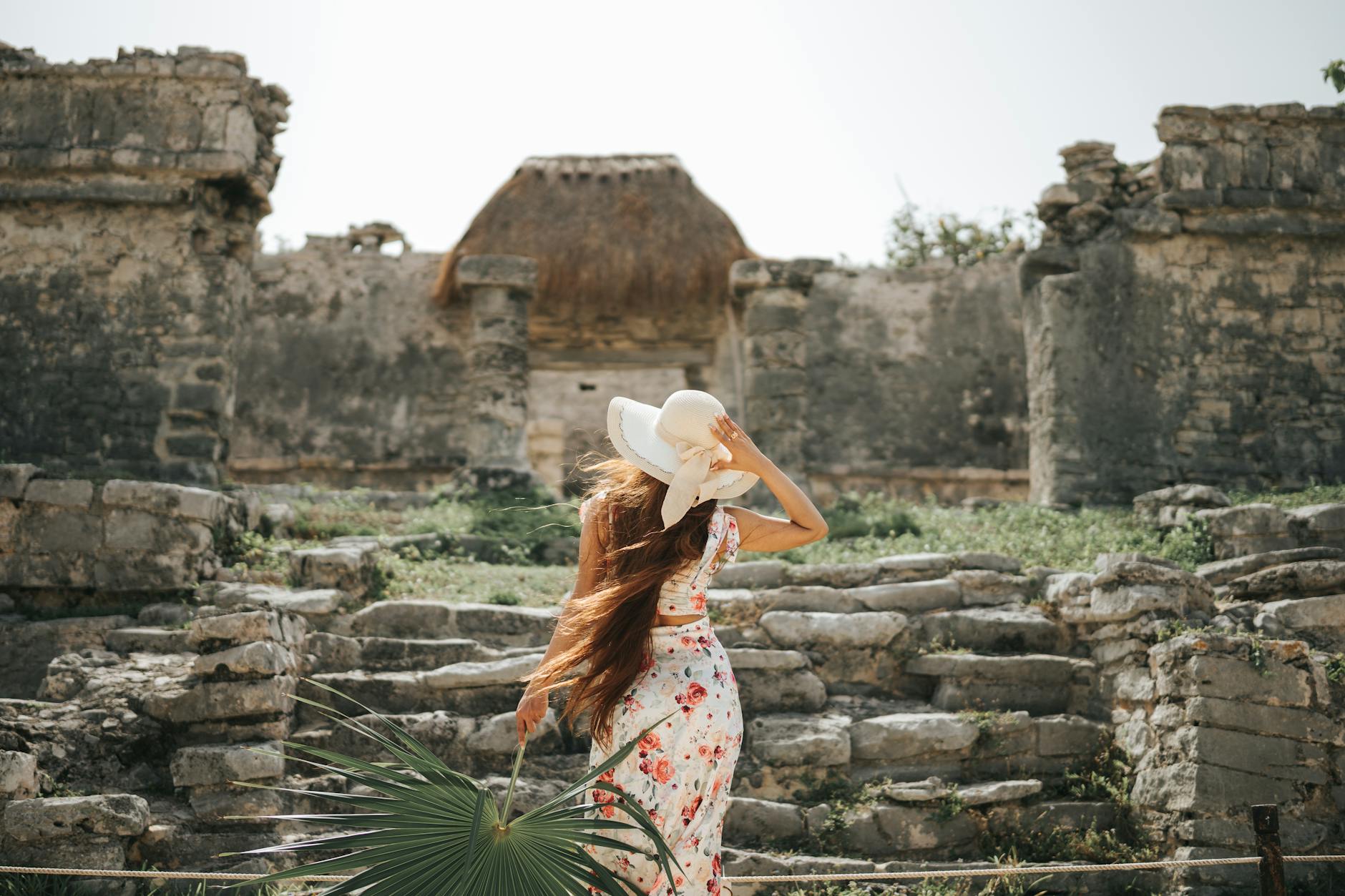
Tulum has become a case study in how a destination's reputation can detach from the on-ground experience.
The Tulum Archaeological Zone is separate from the hotel zone. A fortified Maya coastal trading city built between 1200 and 1450 CE, perched on a limestone cliff 12m above the Caribbean. Entry is €25. The site is small — 30 to 45 minutes of walking — but the setting is spectacular. The photograph of the beach below the ruins is accurate and worth seeing in person. Arrive at 8am opening to avoid the tour bus density that arrives by 9:30am.
The cenotes are the actual draw. Limestone sinkholes with fresh groundwater: Gran Cenote (5km from town, €20 entry, swimming with fish and turtles), Dos Ojos (€25, two connected underwater caverns, snorkelling), Cenote Azul (€5, shallow and clear, best value). The experience is specific to this region and genuinely exceptional — swimming in crystal-clear underground water with stalactites, natural stone formations, and the geological oddness of limestone topography. You cannot replicate this in Cancún.
The hotel zone (Zona Hotelera) is a 10km beach road of boutique properties, open-air clubs, and wellness centres. This is where the brand disconnect happens. Five years ago, Tulum offered small eco-lodges at €40–80/night on a quiet beach with a wellness culture. Today, those properties charge €250–400/night and are booked six months ahead. New luxury hotels charge €300–600/night. A bottle of wine in a beachfront restaurant costs €50–70. A massage costs €80–100/hour. The "boho" aesthetic has become a luxury brand sold at premium pricing. The beaches are good but not uniquely good — Cancún's beaches are objectively wider and have better surf. The difference is the nightlife culture: electronic music clubs (Señor Frogs, Palazzo) and DJ-driven events that attract a specific demographic willing to pay for the scene.
Tulum town (the commercial centre on the highway away from the beach) is functional — supermarkets, pharmacies, affordable tacos, pharmacies — but irrelevant to the tourist experience.
The honest take: Tulum in 2026 is expensive for what it delivers as a beach destination. The cenotes remain exceptional and justify basing yourself here. The ruins are worth seeing. The nightlife and wellness aesthetic exist but cost significantly more than the same experience in Cancún or Playa del Carmen. If cenotes are the priority, stay three nights. If beaches and nightlife are the priority, Tulum is overpriced relative to alternatives.
Playa del Carmen: The practical middle option
Playa del Carmen sits 70km south of Cancún and 60km north of Tulum. It is a genuine town — not a resort strip, not a city — with a beach promenade (Quinta Avenida), independent restaurants, bars, and shops. This matters: you can walk and discover things rather than being confined to a hotel or a nightclub.
Accommodation ranges from €20–40/night for budget hostels and small hotels to €50–120/night for mid-range properties with private rooms and decent service. This is significantly cheaper than Tulum Hotel Zone without the downtown Cancún detachment.
Day trips are easier from Playa del Carmen than from either Cancún or Tulum. Cozumel is 20 minutes away by ferry (€20 return). Cenotes in the Riviera Maya (between Playa del Carmen and Tulum) are accessible by colectivo van. Chichen Itza is still 2.5 hours away, but the logistics are the same as from Cancún. Tulum ruins are 60km south, 45 minutes by colectivo (€2–3).
For travellers who want variety without committing to a single resort or boutique hotel zone, Playa del Carmen is the overlooked option.
Choosing between them: A framework
Choose Cancún if you want predictable all-inclusive resort infrastructure, direct international flights, family-friendly services, and zero navigation of Mexican cities. The beaches are genuinely good. The Hotel Zone is expensive but contained.
Choose Tulum if the cenotes are the priority; you specifically want the nightlife and wellness-boutique aesthetic; and you have the budget for €250+/night accommodation and expensive restaurant meals.
Choose Playa del Carmen if you want a base with the widest combination of options (diving, cenotes, town food, nightlife, ruins all accessible), reasonable pricing, and the ability to day-trip to both Cancún and Tulum attractions.
Do all three: The Riviera Maya corridor has a colectivo van system (shared transport) that runs the full 130km from Cancún to Tulum for €2–5 per leg. It is possible to base yourself in one place and day-trip to the others. If you have seven nights, split them: two nights Cancún (Chichen Itza day trip), three nights Playa del Carmen (base operations), two nights Tulum (cenotes, ruins, nightlife).
Seasonal timing and logistics
The best time to visit the Yucatán is December through April — the dry season with temperatures 22–28°C and minimal rain. November and May are good shoulder months with lower prices and smaller crowds. June through October is hurricane season, with September and October carrying real risk of tropical storms and hurricanes. Many beach clubs and smaller restaurants close for two to four weeks during September.
Cancún Airport (CUN) is the main international gateway, with direct flights from Europe, North America, and South America. It is very busy; allow three hours before departure. Tulum has a smaller airport (TQO) with increasing international service, but connections are usually more expensive than flying into Cancún.
Currency is Mexican Peso (MXN). €1 currently exchanges for approximately 19–21 MXN. Cash is essential for local restaurants, cenotes, colectivos, and tipping. All towns have ATMs; international card fees typically apply (€2–3 per withdrawal). Credit cards work in larger restaurants and hotels but not in markets or small establishments.
Transport between the three towns: ADO buses are the formal option (€5–8 per journey, air-conditioned, scheduled departure times). Colectivo vans are informal shared transport (€2–5, depart when full, less comfortable but faster on short routes). Both leave from central stations in each town. Do not rent a car unless you are spending significant time in the Yucatán interior — parking in the Hotel Zone is expensive and unnecessary, and driving standards in Cancún are poor.
Final assessment
The Yucatán Peninsula is outstanding for specific reasons: the cenotes, the Maya archaeological sites (Chichen Itza, Tulum, Coba, Uxmal), and the Caribbean reef diving off Cozumel. The beach resort infrastructure — whether Cancún or Tulum Hotel Zone — is the background framework for accessing those things. If cenotes and ruins are the reason you're traveling, plan the beach base accordingly, not the other way around. The geology and ancient history are extraordinary; the hotels are just logistics.
Frequently Asked Questions
Is Cancún or Tulum better for cenotes?
Tulum is better. The cenotes are concentrated in the Riviera Maya around Tulum (Gran Cenote, Dos Ojos, Cenote Azul) and are the primary reason to choose Tulum. Cancún has no cenotes nearby; the geography around Cancún is coastal and flat. If cenotes are your priority, base yourself in Tulum or Playa del Carmen.
Can I visit Chichen Itza from both Cancún and Tulum?
Yes, but Cancún is closer and more practical. From Cancún, it is 2.5 hours by ADO bus (€20 return). From Tulum, it is 3.5+ hours and requires traveling through Playa del Carmen or taking a more expensive guided tour. If Chichen Itza is the priority, base yourself in Cancún or Playa del Carmen.
Which destination has the cheapest accommodation?
Downtown Cancún and Playa del Carmen are significantly cheaper than Tulum Hotel Zone. Downtown Cancún offers €20–40 per night for decent hotels; Playa del Carmen ranges €20–120/night depending on comfort level. Tulum Hotel Zone starts at €250/night and is booked months ahead. Budget travellers should avoid Tulum Hotel Zone entirely.
Is it worth renting a car in the Cancún area?
No. The colectivo van system (€2–5 per journey) connects all three towns and most day-trip destinations efficiently. Parking in resort zones is expensive, and local driving standards are poor. Use colectivos or formal ADO buses unless you are spending significant time in the Yucatán interior (Chobá, Uxmal, Valladolid).
What is the best time to visit to avoid crowds and rain?
December through April is the dry season with temperatures 22–28°C and the most visitors. November and May are shoulder months with lower prices and fewer crowds. Avoid June through October (hurricane season), with September and October carrying real tropical storm and hurricane risk. Many smaller establishments close during September.


