

Mexico City has 9 million residents in the city proper and 22 million in the metro area—the largest Spanish-speaking city on earth. The first thing to understand about visiting it is that you will not see "Mexico City." You'll see the three or four neighbourhoods you choose to base yourself in. The choice of neighbourhood determines the food, the noise level, the transport options, and the experience more than any single sight. A first-timer who picks the wrong area can spend a week feeling like they're in a quieter version of their home city rather than Mexico City at all.
Where to stay: the neighbourhood makes the trip
The hierarchy is simple: Roma Norte for practical functionality, Condesa for slightly more breathing room, Polanco for upscale insulation. Most first-timers should start with Roma Norte.
Roma Norte is the default choice. Tree-lined streets, the highest density of good restaurants and cafés in the city, and walkable proximity to Condesa. Hotels and guesthouses run €60–120 USD per night for mid-range options. The neighbourhood has gentrified over the past 15 years—prices have risen, and the character has shifted from bohemian to aspirational—but it remains the most functional base for a first visit. You can walk to markets, restaurants, and galleries without needing the metro. The Avenida Álvaro Obregón has taquerías, mezcal bars, and coffee shops within a 10-minute walk of most accommodations.
Condesa sits immediately adjacent to Roma Norte, separated by Paseo de la Reforma. It centres on Parque México, a 6-hectare park ringed by art deco buildings from the 1920s–30s. The neighbourhood is quieter than Roma Norte and slightly more residential—fewer backpackers, more families and long-term residents. Dog-walker density at 7am is a reliable indicator: Condesa has significantly more. Hotels cost €70–150 per night for comparable standards. The trade-off: fewer restaurants within walking distance and less street-level energy. Choose Condesa if you want to sleep deeply and don't mind a 10-minute walk to dinner.
Polanco is upscale, ordered, and expensive. It has Museo Nacional de Antropología (the essential museum), international restaurants, and hotels from €120–250 per night. The experience is closer to staying in a wealthy district of Madrid or Barcelona than to staying in Mexico City. Travellers with a higher budget who want less street-level intensity and more security predictability should base themselves here. Families with young children often choose Polanco for this reason.
Avoid sleeping in Centro Histórico. The historic centre is worth visiting during the day—the Zócalo (the second-largest public plaza in the world, at 57,000 square metres, after Tiananmen), the Metropolitan Cathedral (begun in 1573), and the Palacio Nacional with Diego Rivera's "Dream of a Sunday Afternoon in Alameda Park" are all here. But Centro has limited restaurant quality at night, higher hotel turnover, and higher rates of opportunistic theft after dark. Stay in Roma or Condesa and take the metro there for a few hours during daylight.
What to eat: markets, tacos, and the only real meal decisions you'll make
Mexico City's food scene is built on taquerias and markets, not fine dining.
Tacos al pastor are the canonical entry point. The meat—pork marinated in dried chiles, vinegar, and spices—is cooked on a vertical spit (called a trompo). The server shaves it onto a warmed corn tortilla and tops it with diced pineapple and cilantro. A single taco costs €0.50–1. El Huequito in Centro is the original, opened in 1958, but any taquería on Calle Álvaro Obregón in Roma will deliver equivalent quality. Arrive after 5pm. Many taquerías stop serving at 11pm.
Mercado de Medellín is a 10-minute walk from most Roma Norte accommodations. This is a neighbourhood market, not a tourist market—it's where locals buy produce and eat breakfast. The prepared food stalls make enfrijoladas (fried tortillas in bean sauce), tamales, and pozole (a soup made with hominy, pork, and dried chiles). A full breakfast costs €3–5. Best to go between 8am and 11am. Bring cash; many stalls don't take cards.
Coyoacán market sits 20 minutes south by metro from Centro. The neighbourhood is where Frida Kahlo was born and died. The market around the main square (Jardín Centenario) sells quesadillas (fried corn pockets filled with cheese, flowers, or mushrooms), memelas (thick corn cakes), and tlayudas (large tortillas topped with refried beans, cheese, and meat) at €2–4 each. The neighbourhood has cobblestone streets and a 16th-century colonial feel—it's worth spending an afternoon here.
Mercado Jamaica is the wholesale flower market, open 24 hours. It's not primarily a food destination, though food vendors operate throughout. Go for the visual and sensory experience: 10,000+ produce stalls, flower dealers, and the controlled chaos of pre-dawn commerce. The metro stop (Línea 1, Jamaica) drops you directly into it.
Budget guidance: Tacos and market food will run €3–6 for a full meal. Mid-range restaurants in Roma or Condesa serve dinner (two courses, drink included) for €15–30. High-end restaurants in Polanco or Roma start at €40 and exceed €80 easily.
The sights most visitors actually need to see
Museo Nacional de Antropología is the best pre-Columbian museum in the Americas. It was designed in 1964 around a central courtyard topped with a single umbrella-like concrete structure. The building itself is worth the visit. The Aztec Sun Stone—commonly miscalled the Aztec Calendar—is here, along with the Mayan Temple of the Mask. Allocate 3 hours minimum; many visitors spend 5 and still don't finish. Entry is €5. It's open Tuesday to Sunday, 9am–7pm. Metro Line 7 (Chapultepec stop) drops you at the entrance.
Frida Kahlo Museum (Casa Azul) in Coyoacán is the blue house where Kahlo was born in 1907 and died in 1954. The house—painted a distinctive cobalt blue—is the point of the visit as much as the paintings. Most of Kahlo's major works are in New York or elsewhere; the museum holds drawings, letters, and personal objects. Entry is €16. The critical detail: book online weeks ahead. Walk-in tickets are rarely available, and the museum caps visitors at 150 per hour. The queue without advance booking can exceed two hours in peak season.
Palacio de Bellas Artes is the 1934 art nouveau opera house in Centro Histórico, designed by Italian architect Adamo Boari. The interior—a white Italian marble and stained glass space—is accessible for €1. Diego Rivera, Rufino Tamayo, and José Clemente Orozco murals line the walls. The building is best visited mid-week to avoid crowds. Check if an evening concert or performance is scheduled (the Palacio hosts opera and ballet throughout the year).
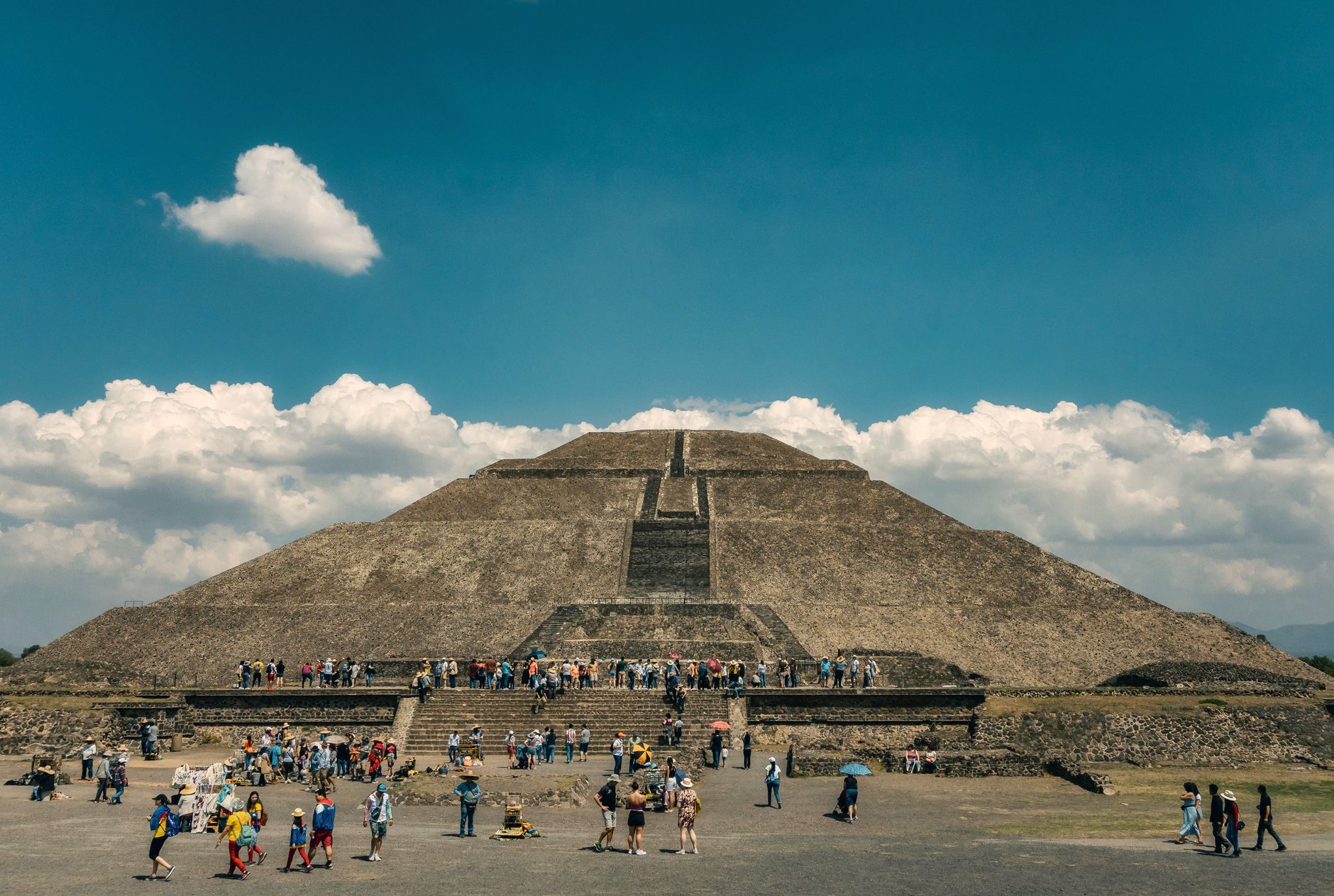
Teotihuacán sits 50km northeast of the city centre, accessible by direct bus from Terminal Norte (45 minutes, €4 return). The two main pyramids—the Pyramid of the Sun (65 metres tall, 248 steps, no handrail) and the Pyramid of the Moon—sit along the Avenue of the Dead, a 4km-long processional axis. The site opens at 8am. Arrive at opening; by 10am it becomes busy, and by noon it's hot (temperatures regularly exceed 35°C in summer with zero shade on the pyramids). Bring 2 litres of water per person. A site guide (€40 for a group) adds context about the Mesoamerican cosmology encoded in the architecture.
Is Mexico City safe for tourists: the specific picture
Mexico City has a complex safety landscape. The short answer: the neighbourhoods where tourists stay (Roma Norte, Condesa, Polanco, Coyoacán, San Ángel) are low-incident areas. The Centro Histórico is fine during daylight hours.
Petty theft—phone snatching and pickpocketing—happens in crowded areas and on the metro during peak hours. Line 1 (pink line, running east-west) has the most reported incidents. Keep phones inside pockets or bags on crowded streets and metro cars, not on café tables or in back pockets. A sensible precaution is not different from staying alert in Barcelona or Paris.
Taxi versus Uber: use Uber exclusively. Street taxis (called sitios) have had historical issues with express kidnapping and short-changing tourists. Uber operates transparently in Mexico City (the app shows the driver, the route, and the fare before you confirm). An Uber across the central neighbourhoods costs €3–8.
The broader context: hundreds of thousands of tourists visit Mexico City each month. The city's reputation for danger is partly historical and partly driven by violence in other parts of Mexico (Guerrero, Sinaloa) being conflated with the capital. Internal crime statistics for central CDMX are lower than those of many major European cities.
Altitude: what 2,240 metres actually feels like
Mexico City sits at 2,240 metres—higher than most European ski resorts. Some visitors experience mild altitude sickness on arrival: headache, shortness of breath, fatigue, and difficulty sleeping. The effect generally passes within 24–48 hours.
Practical mitigation: drink water aggressively on the arrival day (aim for 3 litres), avoid alcohol on day one, and avoid intense physical activity until day two. Do not attempt Teotihuacán on arrival day. A walk through Roma or Condesa at a leisurely pace is fine and actually helps acclimatisation by forcing you to breathe. If you're prone to altitude sensitivity, consider spending the first 24 hours at a lower elevation—Cuernavaca, 90 minutes south by bus, sits at 1,540m and is a common acclimatisation stop.
Getting around the city
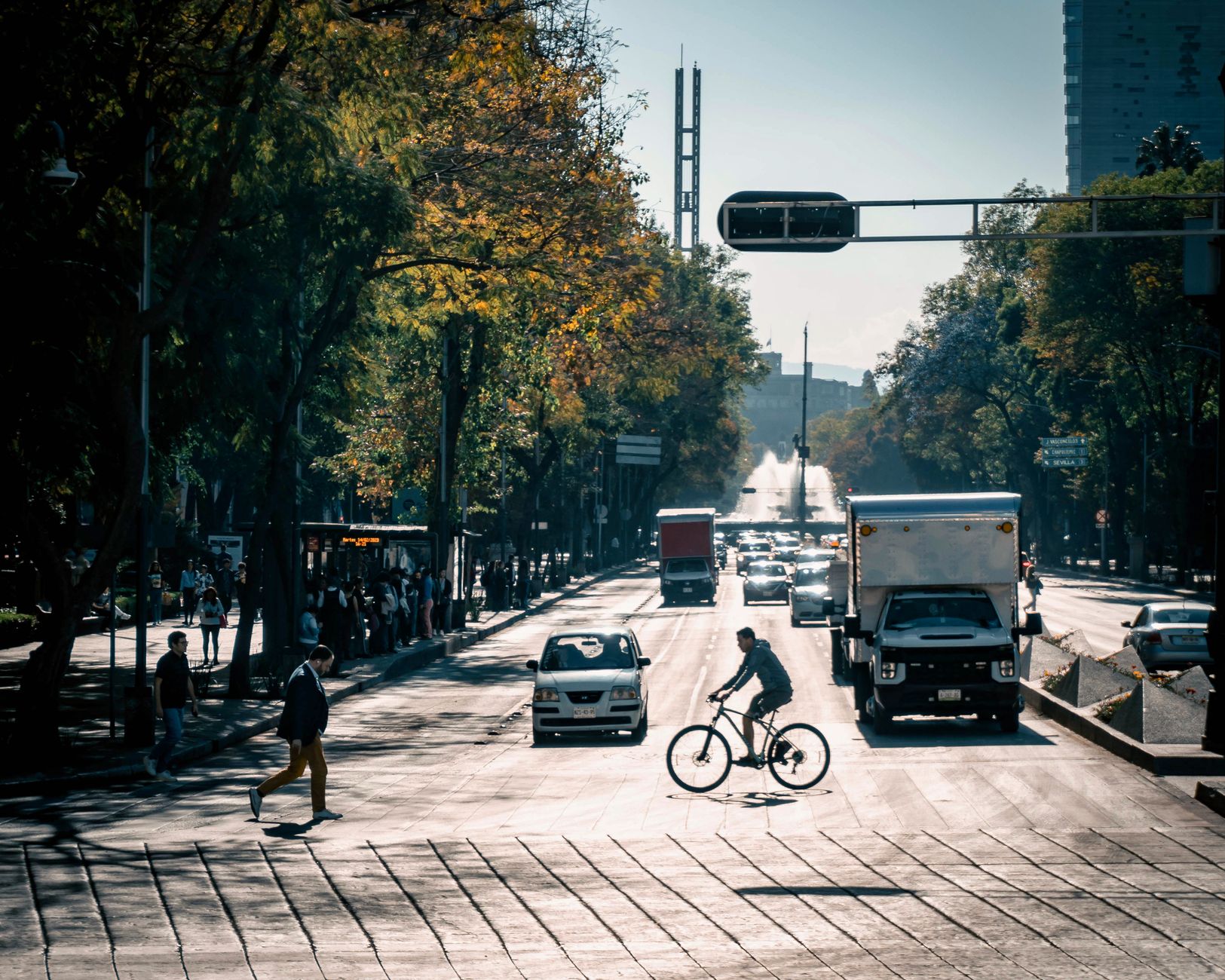
Metro is the fastest and cheapest option: 12 lines covering most neighbourhoods, €0.25 per trip, running 5am–midnight. Line 1 (pink) runs east-west and connects Centro to the western neighbourhoods. It's the most crowded line and has the highest reported pickpocketing incidents. Use it at off-peak hours (not 7–9am or 5–7pm) and keep bags in front. The system is efficient but crowded. A trip across the city takes 30–45 minutes depending on origin and destination.
Ecobici is the bike-share system with 450 stations across the central neighbourhoods. A €2 per day pass allows unlimited 45-minute trips. Practical for moving between restaurants and cafés in Roma and Condesa, but cycling requires confidence in urban traffic—drivers are unpredictable with cyclists.
Uber is reliable and clearer than puzzling out metro combinations. Fares across the central districts (Roma to Condesa, Polanco to Centro) run €3–8. Surge pricing applies during 7–9am and 5–7pm, when fares can double.
How long to stay: 4–5 days minimum
A first visit should last 4–5 days minimum. This breaks down as: one day exploring your chosen neighbourhood, one day at a major museum (Antropología or Frida Kahlo), one day at a market and a secondary sight (Palacio de Bellas Artes or Coyoacán), one day at Teotihuacán. The fifth day allows for meals, cafés, and the unscheduled discoveries that actually define a visit. Shorter stays (2–3 days) work only if you're passing through a larger trip—and they almost never satisfy visitors because you spend the first day adjusting to altitude and navigating the metro system.
The most common mistake: trying to see too much. Mexico City rewards slow movement. Spend 3 hours in a market. Eat twice at the same café. Walk the same street twice in different light.
When to visit
October through April is the dry season: clear skies, comfortable temperatures (15–26°C), and low rainfall. November and December are peak tourist season—expect crowds at major sites and higher hotel prices. October and January–February are sweeter: good weather, fewer tourists, and prices €10–20 cheaper per night.
Avoid June through September (the rainy season): afternoon thunderstorms arrive daily at 4–5pm, and humidity makes the city feel hotter than it is. Summer temperatures are cooler than the dry season, but the streets are wet and the sky is grey by evening.
Final recommendation
Roma Norte is the right base for a first visit: it's walkable, food-focused, and functional. Book accommodation 6–8 weeks ahead if visiting October–December. Spend one day at Antropología, one at Frida Kahlo's house (book online weeks ahead), and one at Teotihuacán on day three or four after acclimatising. Use the metro except for short distances where Uber is cheaper. Avoid Centro after dark, but visit during daylight. Four days minimum, five days better.


