

Oaxaca is not Mexico City scaled down or Cancún remixed — it's a separate category entirely. The city sits in a highland valley at 1,550m elevation, built on the foundations of Zapotec culture rather than Spanish colonial template, and it remains the world's mezcal production centre (over 80% of Mexico's artisanal mezcal originates from Oaxaca state). The food tradition here is the most technically complex in Mexico, built around seven distinct mole sauces and ingredients that are still sourced and prepared by local producers rather than imported for tourists. If you're planning Oaxaca after Mexico City, or weighing it against beach destinations, understand this first: the draw is the cuisine, the craft, and the indigenous cultural continuity — not architecture or monuments competing with Mexico City's collection.
How do you get to Oaxaca?
Flights are the practical choice from anywhere outside Oaxaca state. Oaxaca International Airport (OAX) receives direct flights from Mexico City on five daily Aeromexico and Volaris services; flight time is one hour and costs MXN 1,200–2,500 for a same-day booking. United offers direct service from Houston (3 flights weekly, 2.5 hours). Aeromexico operates seasonal direct flights from Los Angeles (typically November–April). Most other US cities require a connection through Mexico City.
Overland from Mexico City: ADO operates first-class coaches on the route to Oaxaca; the journey is 6.5–7 hours over mountain roads. Cost is MXN 500–700. The road is paved and well-maintained, but it's not a scenic detour — it's a genuine mountain climb on switchbacks with a sleep-disrupting oscillation that justifies the flight premium. Plan to fly.
From other Oaxaca points: buses from Puerto Escondido (4.5 hours, MXN 300–400) and from Huatulco (4 hours, MXN 350–450) are practical if you're combining coastal and highland travel. The same overnight-bus caveat applies.
Where to stay in Oaxaca
Centro Histórico is the only base that makes sense. Everything walkable — the Zócalo (main plaza) is the functional centre of the city, the Mercado 20 de Noviembre is ten minutes on foot, Templo de Santo Domingo is two blocks away, and the best restaurants cluster within a three-block radius. Hotel options are dominated by casas de huéspedes — colonial mansions converted into small hotels — rather than branded chains. These typically offer courtyards with plants, original stonework, and eight to fifteen rooms at MXN 800–2,500/night depending on whether you're booking a whitewashed room with a shared bathroom or a suite with a private terrace. Specific options: Casa Xitla (Calle Valerio Trujano, family-run, very basic but authentic, MXN 800–1,200/night), Casa del Sotano (Calle Matamoros, larger colonial structure, MXN 1,500–2,200/night). Book these directly, not through platforms — they have no online presence.
Jalatlaco, the neighbourhood east of the Zócalo across Calle Díaz Ordaz, is the second choice for people seeking quieter streets and fewer tour groups. Cobblestone lanes, fewer cars, a slightly younger demographic mix. Hotels here cost MXN 2,000–4,000/night for equivalent quality. The trade-off is a ten-minute walk to the main market and the centre. Worth it if you're staying longer than three nights and value quiet.
Avoid the ring-road hotel chains (Holiday Inn, etc.). The distance to the centre defeats the purpose — you'll spend twenty minutes in a taxi for a MXN 200–300 saving per night.
The food — why you actually came
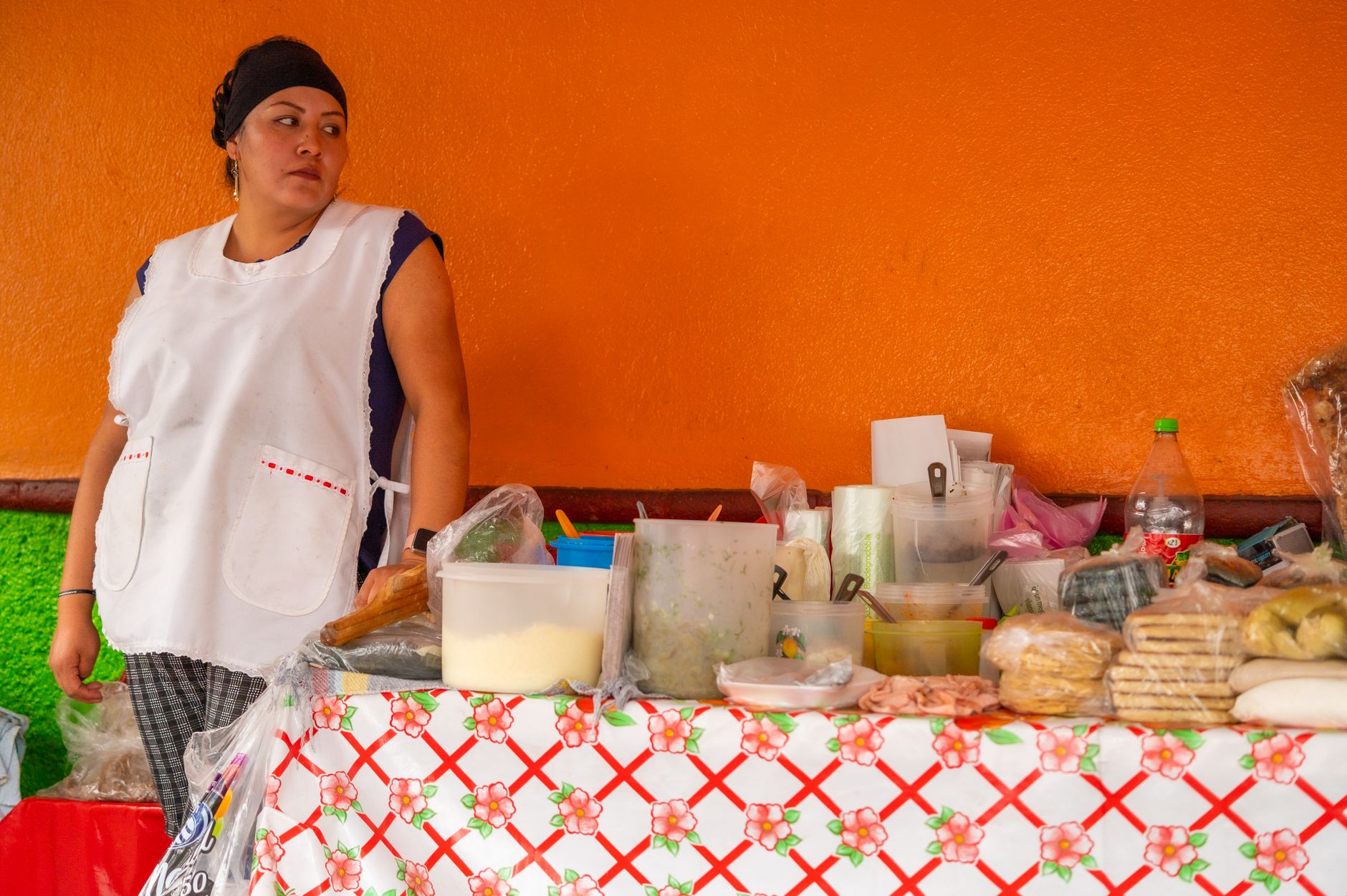
Oaxaca's culinary identity is built on mole, a sauce category that most of Mexico doesn't produce in this depth. The seven moles are not variations on a theme; they are structurally different sauces with distinct ingredient lists and applications.
Mole negro is the most complex and the correct starting point. It combines over thirty ingredients (chillies, nuts, spices, chocolate, dried fruits) into a sauce so dark it approaches black, with a flavour profile that is sweet, spiced, and intensely savoury. A restaurant that makes it properly spends three days in preparation. Order it with chicken at any serious restaurant (Hierba Quemada in Jalatlaco is consistent). Cost: MXN 200–350 for a plate. The other six moles (coloradito, amarillo, verde, rojo, chichilo, manchamanteles) are worth trying if you're in Oaxaca for longer than three days — each is a distinct project. Don't try to pack all seven into one trip; do two or three.
Tlayuda is the essential street food. It's a large (roughly 30cm diameter) crispy corn tortilla topped with black beans, Oaxacan cheese (quesillo), and protein (chorizo, tasajo, or chicken). Order at any street stall or food market. Cost: MXN 80–150. The correct way to eat it: fold it in half, add hot salsa, eat standing at a communal table. It's the definitive breakfast and late-night food simultaneously.
Mercado 20 de Noviembre is the market you eat in, not the one where you buy souvenirs. The Pasillo de Humo (smoke corridor) is the interior section where forty-odd food stalls operate charcoal grills from 7am to 2pm. Protocol: walk the corridor, choose your protein (tasajo/aged salted beef, chorizo, or chicken), confirm the price with that stall (usually MXN 100–150 for a portion), then walk to a separate area where you pay for tortillas and condiments, collect them, eat at the communal tables mixed among the grills. The experience is chaos and smoke and highly functional — there is no ambiance, only food. Plan to spend MXN 150–250 for a full meal. Arrive between 8am and 11am for the best selection and heat; avoid after 1pm when the quality drops.
Tasajo and memelas: tasajo is aged, salted beef that's dried and rehydrated — it's the protein that defines Oaxacan cooking. Memelas are thick oval corn cakes topped with beans, cheese, and salsa. The combination is texturally and flavour-wise the opposite of tourist food. Mercado 20 de Noviembre is the correct place, but any of the smaller markets (Mercado Benito Juárez, Mercado Abastos) will have stands. MXN 80–120 for a memela with tasajo and a drink.
Oaxacan quesillo is a fresh cheese — it's stretched and pulled like mozzarella, then sold in balls the size of a fist. The texture is soft and almost creamy, and it's usually eaten with a slice of chorizo or on a fresh tortilla. Available at Mercado Benito Juárez, the main central market. Cost: MXN 60–80 per ball. Buy one and eat it immediately with a warm tortilla and salsa from a nearby stall.
Chapulines (toasted grasshoppers) are a category worth addressing directly. They're available in markets and at some restaurants, seasoned with lime and chilli. The flavour is distinctly nutty with a faint smoke; the texture is the barrier — they're crunchy and hollow and occasionally have legs. Try them without deciding they're "not for you" based on description. They cost MXN 40–80 for a small bag at a market stall.
Restaurant recommendations: Doña María (pedestrian street south of Zócalo) is a casual spot for mole and regional dishes, heavily used by locals, MXN 120–200 per plate. Hierba Quemada (Jalatlaco) offers more refined presentations, still grounded in Oaxacan ingredients, MXN 200–350. Café Ónice (Calle Alcalá) is the breakfast and brunch spot for eggs and memelas, MXN 80–150. None require reservation; all fill up by 1pm.
Mezcal: the production and where to drink it
The distinction between mezcal and tequila is structural, not marketing. Tequila is always made from blue agave, always industrially produced, always from Jalisco or four other specified states. Mezcal can be made from over thirty agave varieties (primarily espadin, but also tobalá, tepeztate, madrecuixe, and others), uses artisanal small-batch methods, and can come from any part of Mexico — though Oaxaca produces over 80% of the country's artisanal mezcal. The characteristic smoke flavour comes from roasting the agave in wood-fired pits (pibs) rather than ovens. The result is a spirit with more variation, complexity, and terroir than tequila.
Where to try it: In Situ mezcalería (Calle Morelos, Centro Histórico) has one of the most comprehensive selections in Mexico — over 150 labels, mostly from small Oaxaca producers. The staff are knowledgeable. A copita (small pour, 30–40ml) costs MXN 80–200 for artisanal producers. The correct move is seeking producers and expressions that don't have international distribution rather than ordering mass-market brands (Del Maguey, Banhez) at bar prices — buy those at the airport duty-free at a fraction of the cost.
Tlacolula Sunday market, 45km east of Oaxaca, is where small producers (palenqueros) set up on the market plaza and sell directly from their stock. This is mezcal at its origin point — bottles that never reach restaurants or bars, often unlabeled, produced in ceramic pots over open fires. A bottle typically costs MXN 300–500. The risk is quality variation (no regulation, no testing), but the discovery possibility is high. Transportation: a shared taxi from the city costs MXN 50–80 per person; the market runs from 8am to 2pm.
Mezcal village tours from Oaxaca typically cost MXN 500–800 per person for a half-day and cover Mitla and Tlacolula routes with stops at palenques. The quality depends entirely on the operator — many stop only at commercial operations designed for tours. Verify before booking that the tour visits actual small producers. Ask your hotel for a recommendation; they know which guides are serious.
What to see and do in Oaxaca
Monte Albán is a Zapotec ceremonial centre built on a flattened hilltop 9km south of the city, dating from 500 BC and housing a city of estimated 25,000 people at its peak. The scale registers immediately — the central plaza is roughly 300m across, surrounded by pyramids and platforms of pale grey stone. The elevation is 1,940m. Entry is MXN 95. Get there at 8am (opening time) to avoid midday heat and tour groups; allow 2.5 hours. Taxis from the city cost MXN 100–120 return, waiting included. There is a small museum on-site with sculptures and pottery; it's adequate but not essential. The draw is the physical structure and the view across the valley.
Templo de Santo Domingo is the finest baroque church in Oaxaca and the reason to spend a morning in the Centro Histórico. The facade is carved limestone. The interior is gold leaf on wooden panels — not understated. The attached cultural centre contains a genuinely useful anthropology museum covering Zapotec and Mixtec history, with ceramics, textiles, and burial goods. Church entry is free; the museum costs MXN 90. Plan two hours.
Hierve el Agua is a petrified waterfall formation at 1,900m elevation, 70km from Oaxaca, where water rich in minerals has deposited travertine in cascades. There are infinity-edge pools fed by the spring — you can swim in them. The landscape is stark and unusual. However, access has been complicated by ongoing disputes between community cooperatives over entry fees, management, and water rights. The site closes periodically. Verify current accessibility before planning. When open: entry is MXN 60, and you should budget 2.5 hours for transport and 1.5 hours at the site. Go with a tour operator (your hotel can arrange this) rather than independently.
Tule Tree (El Árbol del Tule) is a Montezuma cypress (2,000+ years old) with the widest trunk of any tree on earth — 14.05m in diameter. It's in a small town 15 minutes east of Oaxaca. You'll spend twenty minutes looking at it. Entry is MXN 10. Worth the detour if you have transport, odd if you don't.
Day of the Dead (Día de Muertos)

October 31–November 2, Oaxaca hosts celebrations among the most significant in Mexico. Families visit gravesites from midnight, arrange marigolds and food, and spend the night. The Xoxocotlán cemetery north of the city is where the main activity occurs. Tourists are tolerated but should keep photography discreet — this is an active cultural practice, not a performance.
Critical planning note: accommodation books out three to six months ahead for this period. Prices triple. Flights from Mexico City cost MXN 4,000–8,000 instead of MXN 1,500–2,500. If you're interested in Día de Muertos, book in August.
When to go
November to April is the dry season, with daytime temperatures of 24–28°C and cool evenings (12–16°C). This is optimal. Rain is not a factor.
May to October is the rainy season. Afternoon rains occur (typically 2–4pm), but mornings are usually clear and bright. Daytime temperatures are similar (25–28°C); humidity is higher. The landscape is greener. The Guelaguetza festival runs in late July — a week-long event with parades, dances, and cultural performances. Accommodation books out; prices spike.
Avoid the week before and after Christmas unless you want to compete with domestic tourism and inflated rates (hotels can charge double their standard rate).
| Month | Weather | Crowds | Verdict |
|---|---|---|---|
| January | Clear, cool (12–28°C) | Moderate | Best |
| February | Clear, cool (12–28°C) | Moderate | Best |
| March | Clear, warming (14–30°C) | Low | Good |
| April | Clear, warming (16–32°C) | Low | Good |
| May | Afternoon rain, humid (18–30°C) | Low | Shoulder |
| June | Afternoon rain, humid (18–28°C) | Low | Shoulder |
| July | Afternoon rain, humid (17–28°C) | High | Avoid (Guelaguetza) |
| August | Afternoon rain, humid (17–28°C) | Moderate | Shoulder |
| September | Afternoon rain, humid (17–27°C) | Low | Shoulder |
| October | Afternoon rain, decreasing (16–28°C) | Low | Shoulder |
| November | Clear, cooling (14–28°C) | Moderate | Best |
| December | Clear, cool (12–25°C) | High | Avoid (Christmas) |
Is Oaxaca safe for tourists?
Oaxaca city is considered safe by Mexican standards. The Centro Histórico, Jalatlaco, and tourist-frequented areas have visible police presence. Pickpocketing occurs in markets, particularly Mercado 20 de Noviembre and Mercado Benito Juárez — keep phone and wallet secure.
The state of Oaxaca has security issues in outlying rural areas, particularly the Sierra Juárez mountains north and east of the city. Independent travel to these areas requires checking current advisories and local guidance. Organized day tours from the city are safe and practical.
Budget and costs in 2026
Budget tier (local guesthouse, market food, public transport): MXN 1,200–1,800/day
Mid-range (colonial hotel, mix of restaurants and markets, occasional taxis): MXN 2,500–4,500/day
Transport within the city is MXN 10–15 per trip on buses; taxis cost MXN 50–80 for in-city journeys. A full meal at a market stall costs MXN 120–200; a restaurant meal costs MXN 250–500.
Who should go, and when
Oaxaca is for people interested in food as a technical and cultural practice rather than as experience. It rewards slow travel — three to five days allows you to cook with a local, visit a palenque, eat across multiple markets, and attend a meal with preparation steps rather than just presentation. November through April is ideal. If you're torn between Oaxaca and beach destinations, ask yourself: do you want to understand how something is made, or do you want to consume it? Oaxaca is the former.
Frequently Asked Questions
Should I visit Oaxaca or Mexico City?
They serve different purposes. Mexico City is a megacity with world-class museums, architecture, and restaurants competing on innovation. Oaxaca is a highlands town centred on indigenous food tradition, craft, and mezcal. Choose Oaxaca if you want depth in one category (food, mezcal, craft); choose Mexico City if you want breadth and art historical context. They're both worth five days, and if you have ten days in Mexico, do both: fly Mexico City to Oaxaca, then back to Mexico City to leave the country.
How many days do you need in Oaxaca?
Three days covers the essentials (Zócalo, markets, a mole meal, one ruin site, one mezcal experience). Five days allows you to add a cooking class, a mezcal palenque visit, and food diversity without rushing. Longer than a week requires specific interests (textile workshops, archaeological research, mezcal production study).
What's the best market to visit if you only have time for one?
Mercado 20 de Noviembre for eating, period. Eat breakfast in the Pasillo de Humo, watch it operate, understand how the food system functions. The other markets are for shopping, not for experiencing Oaxaca. If you want to buy crafts or supplies, hit Mercado Benito Juárez on the way out; don't substitute it for the eating market.
Is the water safe to drink?
Tap water from the city supply is safe for locals and has been treated. Bottled water is available everywhere and costs MXN 15–20 per litre. Use tap water for brushing teeth; drink bottled water or ask your hotel for filtered water. The risk of illness is low if you stick to cooked food and bottled drinks.
Can you visit Oaxaca without speaking Spanish?
Yes. Tourist areas, hotels, and restaurants frequented by visitors have staff who speak basic English. Markets and small food stalls do not. Carrying a translation app on your phone helps. Learning basic numbers and food names (pollo, tasajo, chapulines) in Spanish makes ordering vastly easier. If you're food-focused, this knowledge is worth the prep.
What should I bring to Oaxaca?
Comfortable walking shoes (the city is built on cobblestones), sun protection, and a light jacket for cool evenings (November–April can drop to 12–14°C at night). The altitude (1,550m) is noticeable if you're arriving from sea level — some people feel light-headed for the first day. Bring water and move slowly the first afternoon. A small backpack for market shopping is useful. Tipping: restaurants expect 10–15% for table service; markets and street vendors expect no tip (you're not obligated to add one).


