
The Problem with Most Elephant Camps
Thailand has around 4,000 captive elephants, and Chiang Mai province has the highest concentration of elephant tourism operations in the country. For decades, riding was the standard offering — and most camps still provide it. Riding requires training methods that cause lasting psychological and physical damage to the animals. The saddle and howdah structures cause chronic back injury over time.
The ethical alternative — spending time with elephants without riding, watching them eat, bathe, and move freely through their environment — has become the dominant model at a growing number of operations. The visitor experience is often better for it. Watching an elephant consume 150–200 kg of food a day at close range is more engaging than sitting on its back.
The problem is that "ethical" and "no riding" get used loosely. Some camps dropped riding while keeping elephants chained between sessions. Distinguishing genuine welfare operations from greenwashing requires specific questions before booking.
What Genuine Sanctuaries Look Like
Legitimate sanctuaries share specific features: elephants can move freely across large forested areas rather than being tethered, there are no shows or tricks, mahouts (caretakers) use positive reinforcement, and visitor numbers are capped so animals aren't in contact with people all day.
A high mahout-to-elephant ratio — ideally one mahout per elephant — is a meaningful indicator. Elephants should not be chained overnight except in specific documented welfare situations. Good operations will explain each elephant's individual history rather than treating them as interchangeable attractions.
Questions worth asking before booking: How many visitors per day? How many hours do elephants spend with tourists? Are elephants chained at night? What is the bullhook policy?
Elephant Nature Park: The Reference Point

Elephant Nature Park (ENP), founded by Sangduen "Lek" Chailert in 1995, set the standard for ethical elephant tourism in Thailand. The 250-acre property in the Mae Taeng valley, 60 km north of Chiang Mai, houses around 80 rescued elephants. It was the first major operation in the country to ban riding and remains the benchmark against which others are assessed.
A full day at ENP costs around 2,500–3,500 THB per person and includes transport from Chiang Mai, meals, and a full day on the grounds. You feed elephants, walk with them to the river, and observe them interact in family groups. Guides explain each animal's background — the one blinded by a landmine in Myanmar, the one rescued from a logging camp, the one born at the sanctuary.
ENP books out weeks in advance during high season (November–February). Book directly through their official website to avoid third-party markups and to ensure your payment supports the operation rather than an intermediary.
Other Operations Near Chiang Mai
Elephant Valley Thailand operates from a site in Chiang Rai, three hours north, with a slower programme and smaller groups. Elephant Jungle Sanctuary has multiple Chiang Mai locations with generally positive reviews but larger and more commercial than ENP. Baan Chang Elephant Park offers mahout-focused programmes but check current riding policies before booking.
Patara Elephant Farm runs a "mahout for a day" programme where you care for a single elephant throughout the day. Reviews are mixed on welfare standards; verify current practices directly with them.
A reliable filter: if a camp markets itself as ethical but shows riding prominently on its website, skip it.
What a Day at an Ethical Sanctuary Looks Like
Pickup from most Chiang Mai guesthouses runs around 7:30–8:00am. The drive to ENP or comparable sanctuaries takes 45–75 minutes. Most programmes begin with an orientation: sanctuary history, the elephants' individual stories, and behavioural guidelines for being around them.
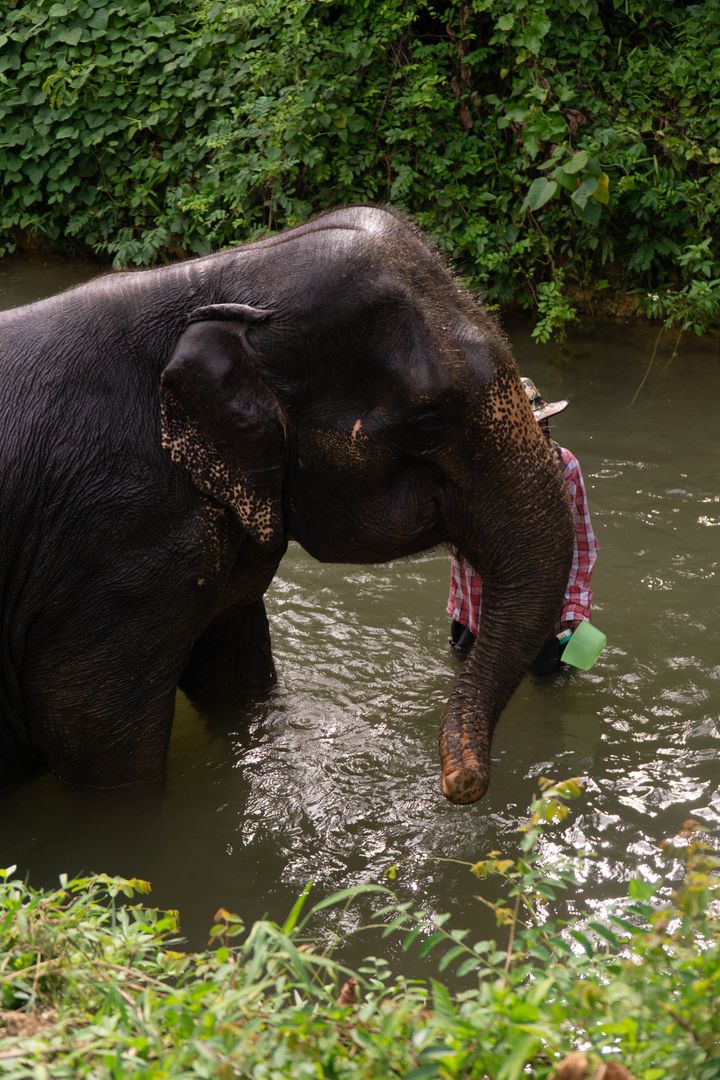
The bulk of the day involves walking with the elephants through forest and farmland, feeding them fruits and vegetables, watching them bathe in the river, and observing how they interact with each other. Guides stay close to specific elephants they know well. There are no shows and no commands given to the animals for visitor entertainment.
Lunch is included at ENP and most comparable operations. Return transport drops off at Chiang Mai in the mid-afternoon.
Costs and Booking

Expect to pay 2,500–4,000 THB (approximately USD 70–110) for a full-day programme at a reputable sanctuary. Cheap elephant experiences under 1,500 THB for a half day almost always involve practices that ethical sanctuaries have abandoned.
The price gap reflects real cost differences: more land, lower visitor-to-elephant ratios, higher staffing, and the absence of revenue from riding fees or performance charges. Sanctuaries that have cut those income streams have to charge more per visitor to sustain operations.
Frequently Asked Questions
Is elephant riding still offered at Elephant Nature Park?
No. ENP banned elephant riding at founding in 1995 and has not offered it since. It is the core principle of the operation.
How far in advance should you book?
For ENP during high season (November–February), book two to four weeks ahead. In low season, a few days' notice is usually sufficient. Smaller sanctuaries tend to have more availability.
Is it safe to be near elephants without barriers?
With proper guidance, yes. Mahouts who work with the same elephants daily know their temperaments well. Follow the briefing instructions — don't approach from behind, don't startle them — and incidents are rare. The elephants at established sanctuaries are accustomed to visitors.
Are there ethical sanctuaries near other Thai cities?
Chiang Mai has the highest concentration. Sanctuaries also operate near Kanchanaburi, Phuket, and Pattaya, though quality varies more outside Chiang Mai.