
Why Kanchanaburi Earns More Than a Day Trip
Most visitors arrive on a bus tour from Bangkok, cross the Bridge on the River Kwai, spend an hour at a war museum, and leave before dark. That approach works if the photograph is the only goal. But the town repays a longer stay: the Death Railway runs north through mountain passes with views that justify the seat on their own, Erawan National Park has a seven-tiered waterfall that most visitors only reach tier two of, and the riverside guesthouses are among the most relaxed in western Thailand.
The history here is considerable. The so-called Death Railway earned that name because an estimated 90,000 Asian labourers and 16,000 Allied prisoners of war died building it under Japanese command during World War II. That weight shapes a visit to Kanchanaburi in a way that sets it apart from most Thai destinations.
Getting There from Bangkok
The cheapest option is the train from Thonburi Station — not Hua Lamphong. Bangkok has multiple stations, and this distinction catches people out. Third-class trains leave twice daily and take around three hours for under 100 THB. The route passes paddy fields, small towns, and river bridges that the highway misses entirely.
Minivans from Victory Monument cost 120–150 THB and take about two hours. They're faster and more frequent, dropping off near the main market area close to the bridge. Buses from Mo Chit (Northern Bus Terminal) run for a similar price.
Renting a motorbike or car from Bangkok and driving west on Highway 323 takes around two hours from the city outskirts. Having wheels gives flexibility for the national parks and sites scattered outside town.
The Bridge on the River Kwai
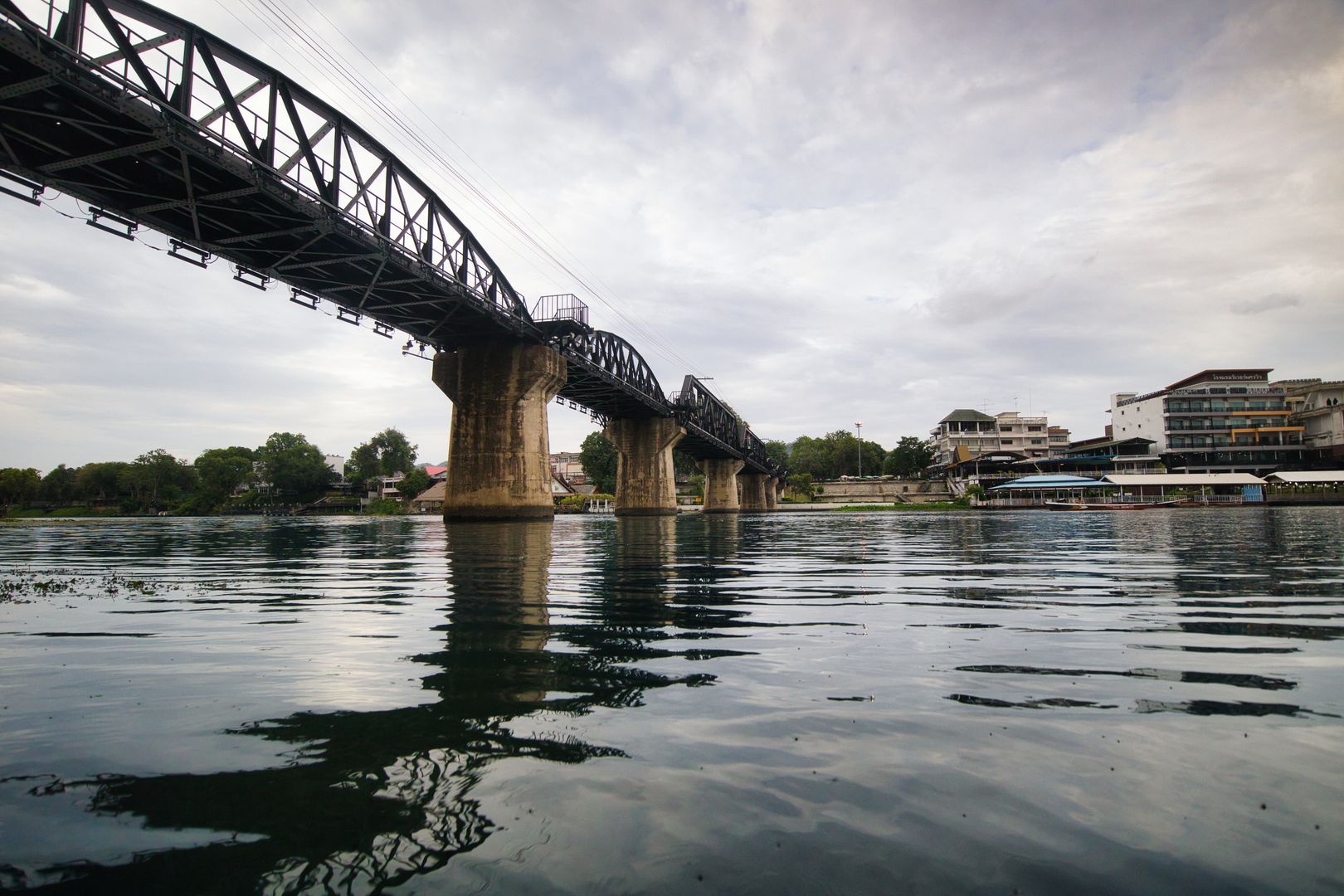
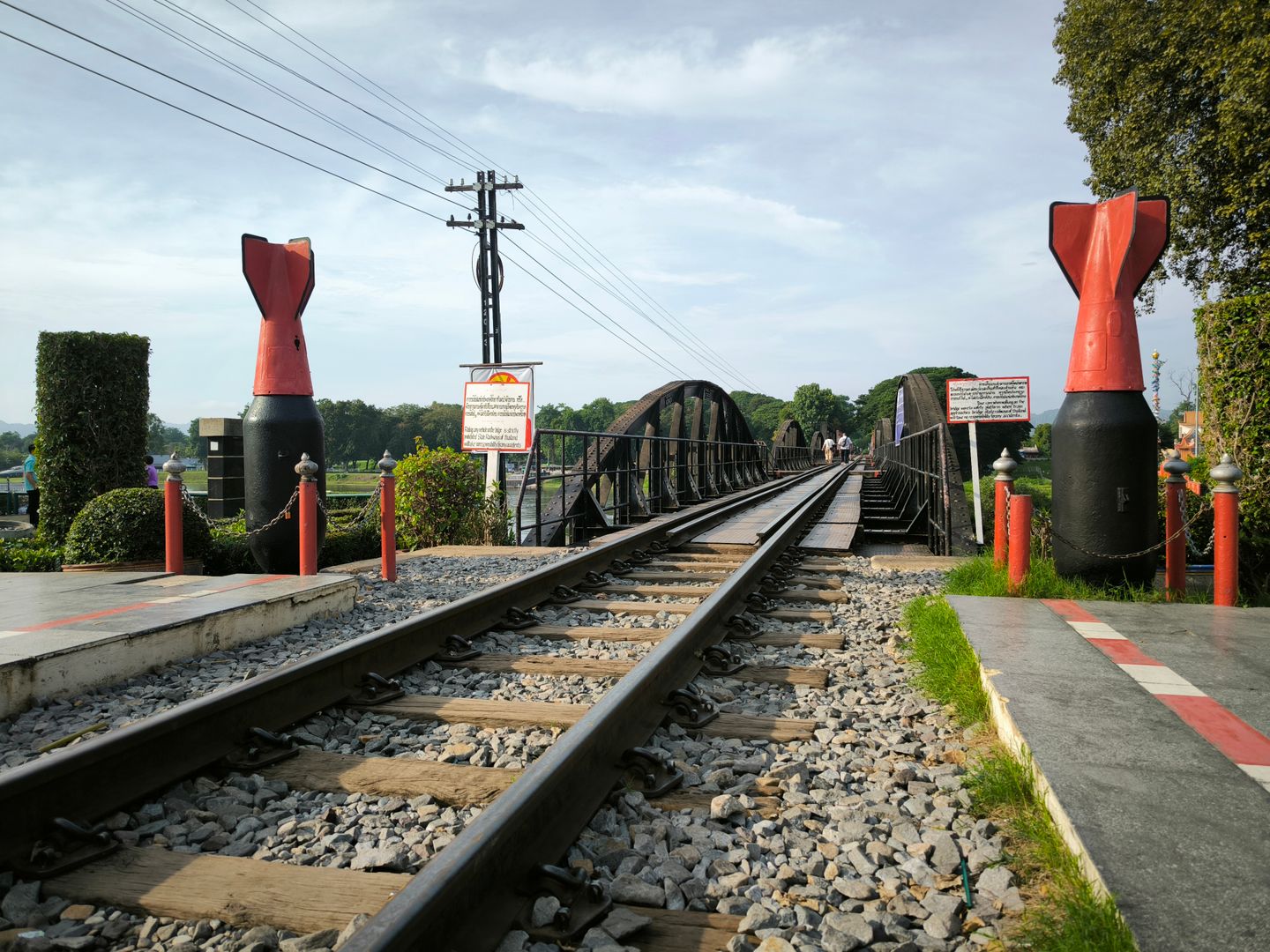
The bridge is smaller than most people expect. It spans the Khwae Yai River at the north end of town and looks like what it is: a functional railway bridge that has been repaired and used continuously since 1945. The famous curved spans are original Japanese-built sections; the square spans replaced bomb-damaged sections after the war.
Walking across is free and takes about five minutes. Trains cross twice daily in each direction — when one approaches, you step onto the small platforms bolted to the sides and wait. Most visitors arrive early morning or late afternoon to beat the tour bus crowds.
The JEATH War Museum (named for Japan, England, Australia/America, Thailand, and Holland) and the Thailand-Burma Railway Centre in town are both worth the entrance fee for historical context. The bridge itself, while the most photographed landmark, is not the most significant site historically.
The Death Railway: Riding North to Nam Tok
The surviving stretch of the Death Railway runs 77 km from Kanchanaburi north to Nam Tok station. Two trains make the journey each day. The section between Wang Po and Nam Tok includes the Wang Po Viaduct, where the track clings to a sheer cliff face above the Khwae Noi River. There is no road access to this section — the only way to see it is by train or boat.
The Wang Po Viaduct is the single most impressive piece of scenery in the Kanchanaburi area. The wooden trestle was built with hand tools by POW labour in 1943. Sitting on the left side of the northbound train gives the better view over the river gorge.
From Nam Tok, a songthaew covers the nine kilometres to Hellfire Pass (Konyu Cutting). The name came from Allied prisoners working by torchlight through the night. The cutting is 500 metres long and 25 metres deep, carved entirely by hand. The Australian government funds the Hellfire Pass Memorial Museum on-site — it's free to enter and one of the more thorough Second World War memorials in Southeast Asia.
Erawan National Park and the Waterfalls
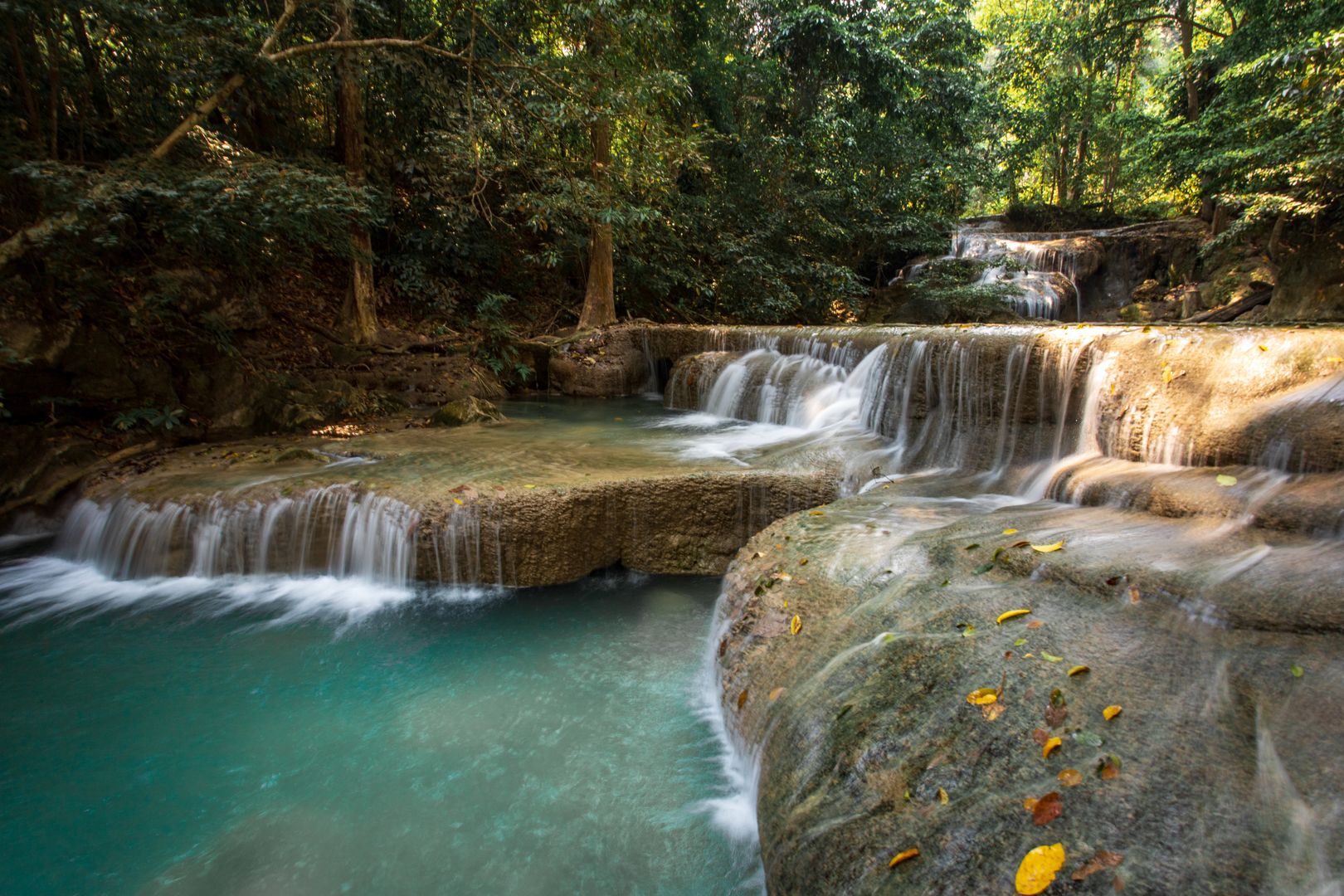
Erawan National Park is 65 km north of Kanchanaburi town. The park's centrepiece is a seven-tier waterfall through a forested limestone gorge. The lower three tiers are the busiest — easy trails, clear pools, and small fish that will nibble at your feet without invitation.
Tiers four through seven require actual walking: the trail steepens, the crowds thin, and the pools become worth swimming in. Tier seven at the top is often empty on weekdays. The round trip to all seven tiers takes three to four hours at a comfortable pace.
Park entrance: 300 THB for foreigners. Weekends from November to February bring significant crowds to the lower tiers. Arriving early (the park opens at 8am) or visiting on a weekday makes a difference. Minivans from Kanchanaburi bus station run frequently and take about an hour; the last return minivan leaves around 4pm.
Where to Stay
Kanchanaburi's guesthouse strip runs along the Khwae Yai River north of the bridge. Most guesthouses offer raft rooms — rooms built on floating platforms tied to the bank — which are genuinely quiet once the tour boats stop running in the early evening.
Budget guesthouses start at 300–600 THB per night for a basic double, more for river-facing raft rooms. The noise from karaoke boats that drift past some evenings is worth considering — recent reviews are worth checking before booking riverside accommodation.
Two nights allows you to do the Death Railway and Erawan on separate days without rushing. One night is enough if you want only the bridge and a museum.
Frequently Asked Questions
How far is Kanchanaburi from Bangkok?
About 130 km by road — roughly two hours by minivan or three hours by train from Thonburi Station.
Can you visit Kanchanaburi in a day from Bangkok?
Yes, for the bridge and a museum. To include the Death Railway ride and Erawan Falls properly, two days is more realistic.
What is the best time to visit?
November through February — cooler, drier, and the waterfalls are flowing well. March and April are hot and dusty. The rainy season (May–October) brings fuller waterfalls but occasional trail closures at Erawan.
Is the Death Railway still operating?
Yes, the Kanchanaburi–Nam Tok section remains in passenger service with daily trains. The wartime extension north toward the Myanmar border was dismantled after 1945.