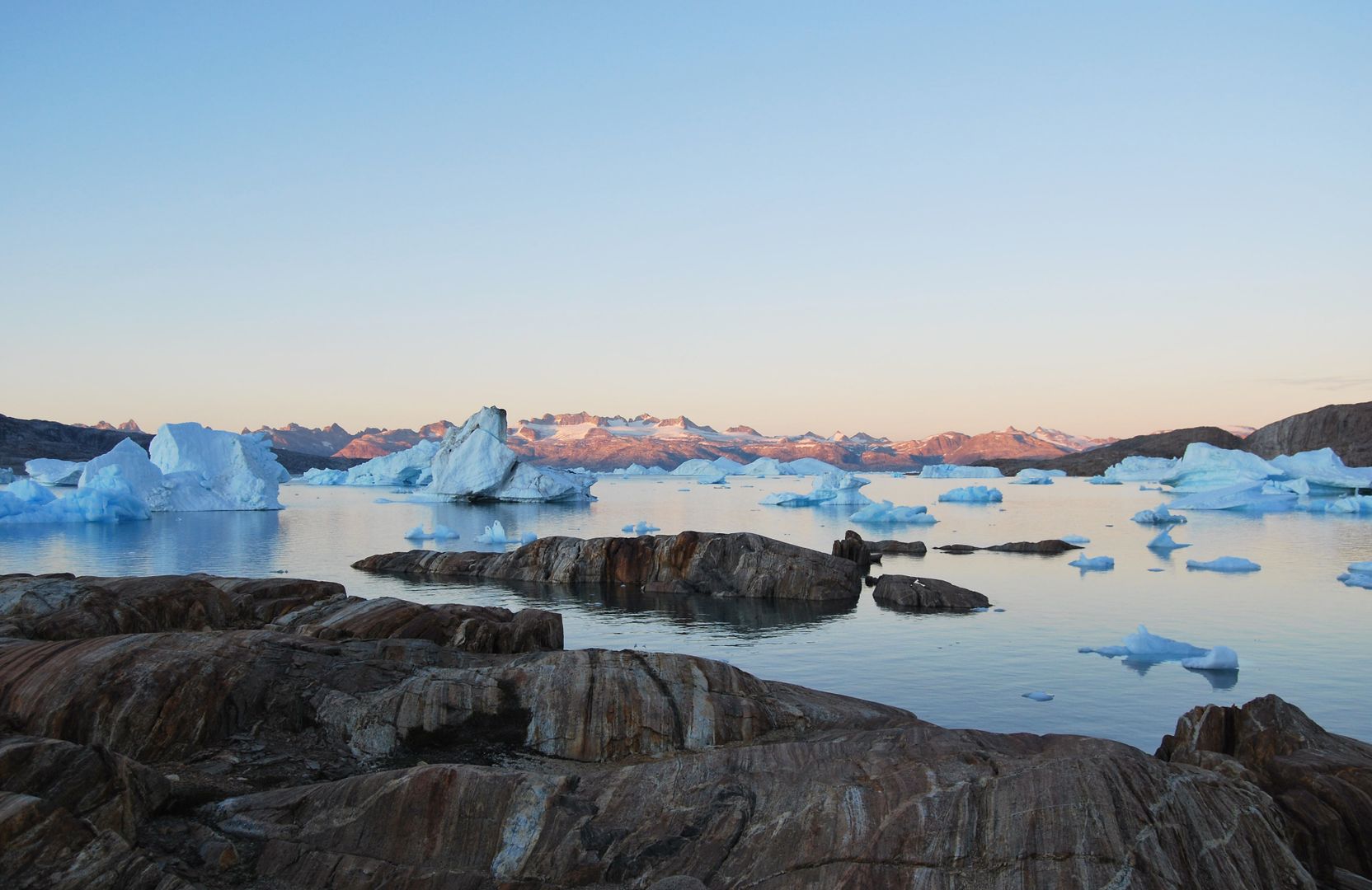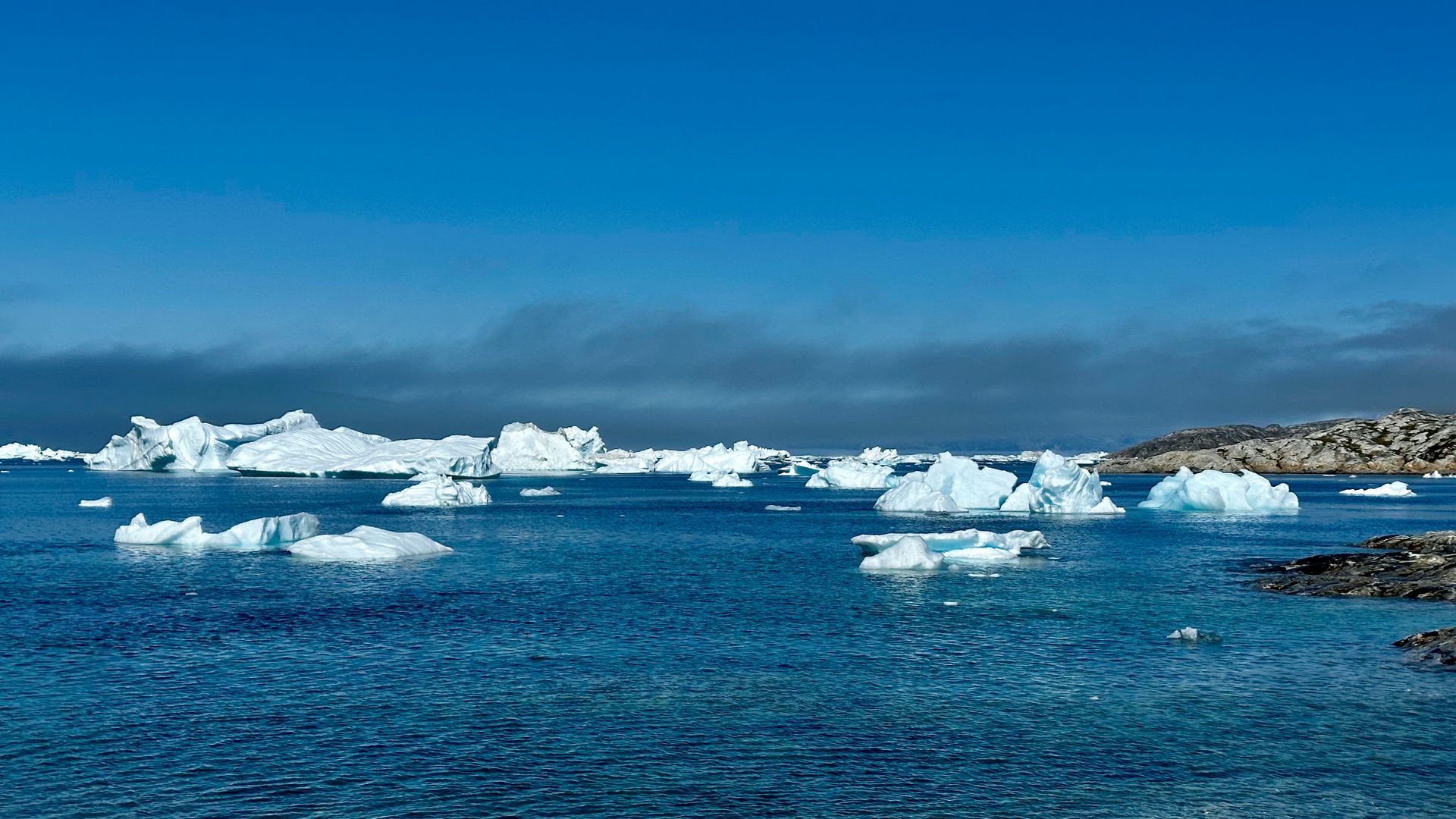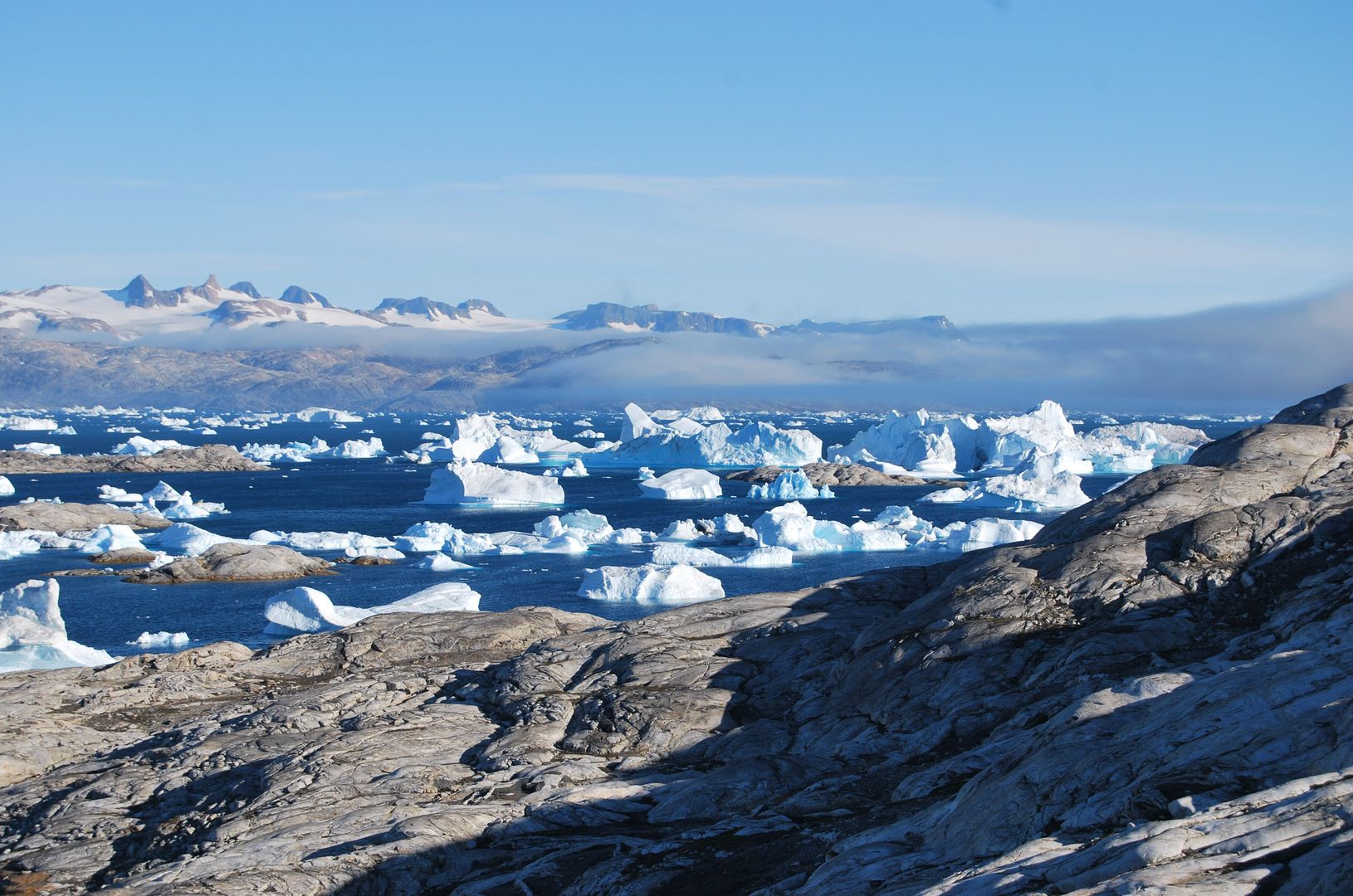

Greenland is 2,166,086 km² — roughly three times the size of Texas, or six times the size of Germany — of which approximately 80% is covered by the Greenland Ice Sheet, a remnant of the last ice age 2.85km thick at its maximum. The remaining coastline is a series of fjords, mountains, and glaciers where 56,000 people live in 17 towns and approximately 60 settlements, none of which are connected to each other by road. Everything moves by plane, boat, dogsled, or on foot across the ice.
Greenland's Geography and What You Can Actually See
The main accessible areas divide roughly into three zones. The west coast — from Nuuk (the capital, 18,000 people) north through Sisimiut, Ilulissat, and Upernavik — has the most developed tourist infrastructure, the most regular flight connections, and the most accessible glacier and iceberg scenery. The east coast — Tasiilaq and the surrounding Ammassalik area — is more remote, with fewer visitors, more dramatic fjord scenery, and the main gateway to the incomprehensible Scoresby Sund fjord system. The far north — Qaanaaq, the Thule area — is reachable only by irregular charter flights and is primarily of interest to expedition travellers, hunters, and researchers.
The ice sheet itself is accessible as a day excursion from Kangerlussuaq (the main international hub airport, inland from the west coast) — a 25km drive across the tundra to the ice edge, where you can walk onto the sheet with no guide required. This is the most accessible entry point for anyone who wants to stand on Greenland's ice without an expedition budget.
Getting to Greenland
Air Greenland operates the main routes from Copenhagen Kastrup (CPH) to Kangerlussuaq (SFJ, 4.5 hours, DKK 2,500–7,000 one way) and to Nuuk (GOH, 4.5 hours, DKK 2,500–6,500 one way). Both operate year-round. Nuuk also has summer connections from Reykjavik (Air Iceland Connect, 2.5 hours, DKK 1,500–2,500 one way). Ilulissat (JAV) has summer direct connections from Reykjavik (Air Iceland Connect, 3 hours) and from Kangerlussuaq. Return flights typically cost DKK 5,000–14,000 (€670–1,880) from Copenhagen; the lowest fares appear 3–6 months ahead and fill quickly.
Within Greenland, inter-town flights on Air Greenland connect the major settlements — a one-way flight from Nuuk to Ilulissat (1.5 hours) costs DKK 1,500–3,000 depending on booking time. There are no ferries between west and east coast towns. The coastal service vessel Arctic Umiaq Line runs a summer route connecting west coast towns from Qaqortoq (south) to Ilulissat (north) — a 4–5 day journey each way with stops, combining transport with scenery. Cabins cost DKK 4,000–8,000 per person for the full route.
Nuuk: The Capital
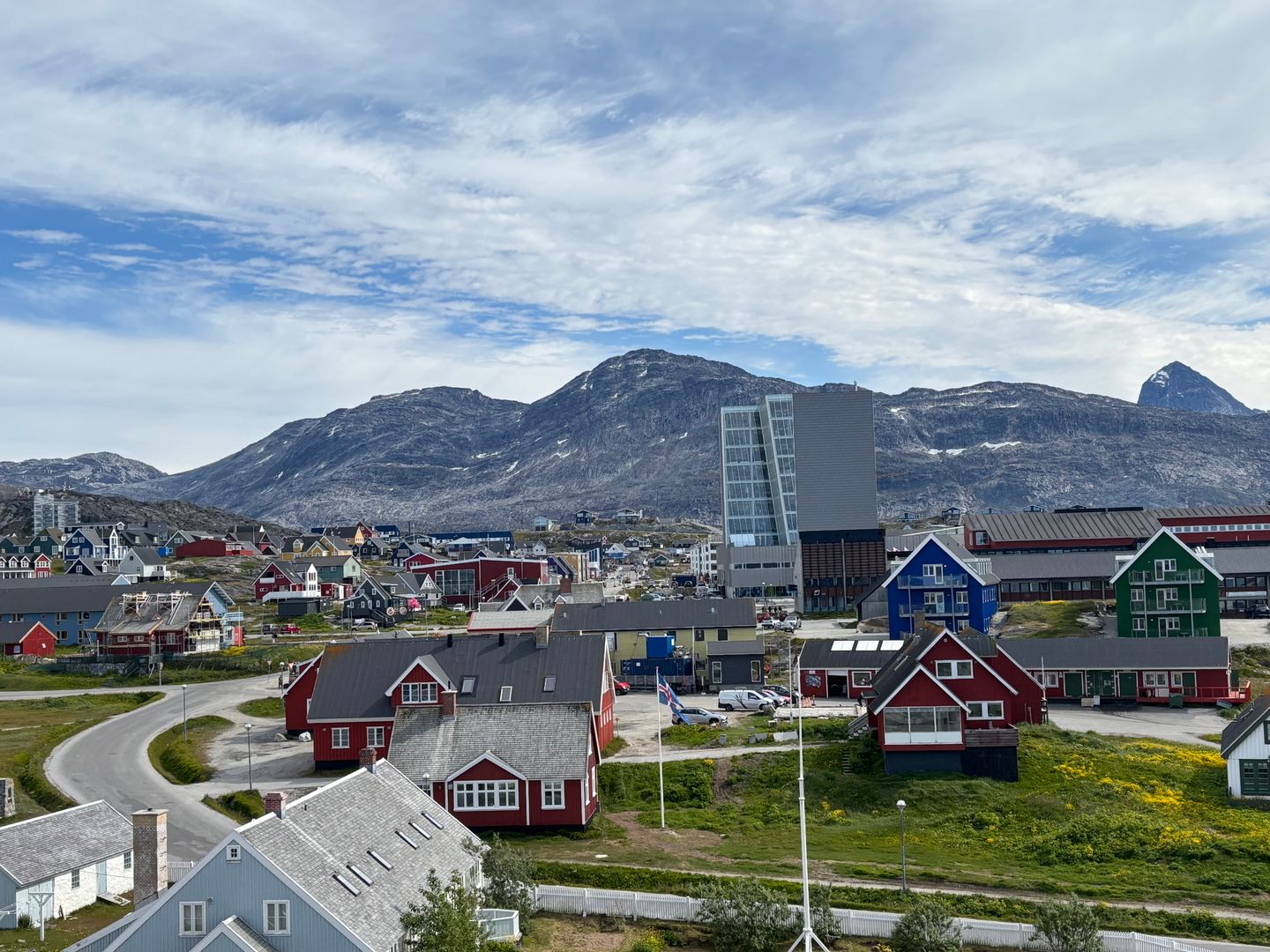
Nuuk is a city of 18,000 people on a rocky peninsula at the mouth of the Nuup Kangerlua (Godthåbsfjord). It has an international airport, a university, a national museum (Greenland National Museum, DKK 60 entry — the best single museum in Greenland, covering Inuit history from the earliest migrations to the present, with the Qilakitsoq mummies: 6 naturally mummified Inuit from around 1475 AD), a football stadium, and a growing contemporary art scene. By Greenlandic standards it's a metropolis; by European city standards it's a large town.
The old colonial quarter (Kolonihavn) around the Hans Egede church (1849) and the original 18th-century houses is the most atmospheric part of the city. The fjord immediately outside Nuuk holds humpback whales in summer (boat tours DKK 550–800) and is extensive enough that boat trips through the fjord system take the better part of a day and rarely feel crowded. The Sermitsiaq mountain (1,210m), visible across the fjord from the city, is accessible by boat and trail for experienced hikers.
Accommodation and What It Costs
Greenland has limited accommodation by any standard. Nuuk's Hotel Hans Egede is the most reliable full-service hotel (DKK 1,400–2,800 per night for a double). Ilulissat has Hotel Arctic (DKK 1,500–3,000) and several smaller guesthouses and B&Bs (DKK 700–1,200). Tasiilaq has the Angmagssalik Hotel and homestay accommodation (DKK 800–1,500). In smaller settlements, the only options are community guesthouses or camping.
Food costs are similarly high. A restaurant dinner in Nuuk or Ilulissat costs DKK 200–400 (€27–54) per person for a main course. Supermarket prices are comparable to Iceland (also expensive by European standards) due to the logistical cost of supplying isolated coastal towns. Greenlandic specialities — musk ox, reindeer, Arctic char, whale (mattak, the raw skin with blubber, a traditional Inuit food available at cultural events) — are available at some restaurants; imported food dominates menus at tourist-facing establishments.
When to Visit
Summer (June–August) is the most accessible period: all boat tours, guided hikes, and whale watching operate; the ice fjord at Ilulissat is most active with calving; the midnight sun provides 24-hour daylight. This is also the most expensive and most visited period. Spring (April–May) has snow on the ground but excellent light and dogsled tours still operating; the sea ice is at maximum extent. Autumn (September–October) is the shoulder season for aurora viewing and the best period for early-season Northern Lights before winter storm systems become frequent. Winter (November–March) is for Northern Lights, cold (−15 to −25°C inland, −5 to −15°C on the coast), and limited services in smaller settlements.
Practical Budget
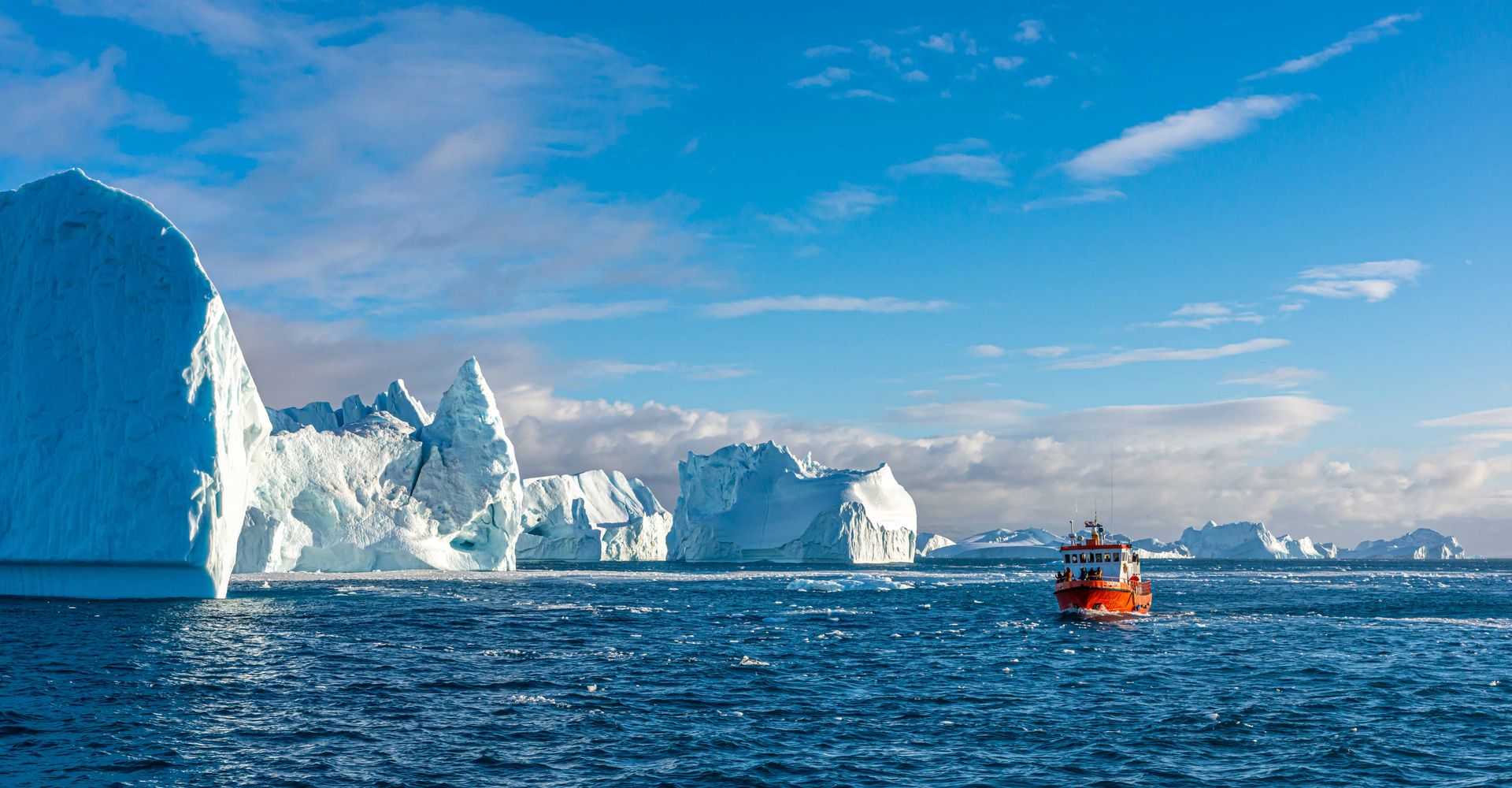
A 7-day trip to Greenland (Reykjavik–Ilulissat return, 5 nights accommodation, meals, boat tours, icefjord walks) budgets realistically at DKK 20,000–30,000 (€2,700–4,000) per person, excluding the return flight to Reykjavik. This is not a destination where budget travel strategies meaningfully reduce costs — the remote infrastructure simply prices what it prices. The travellers for whom Greenland is worth it are those for whom it is specifically Greenland they want to see, not the least expensive version of Arctic scenery.