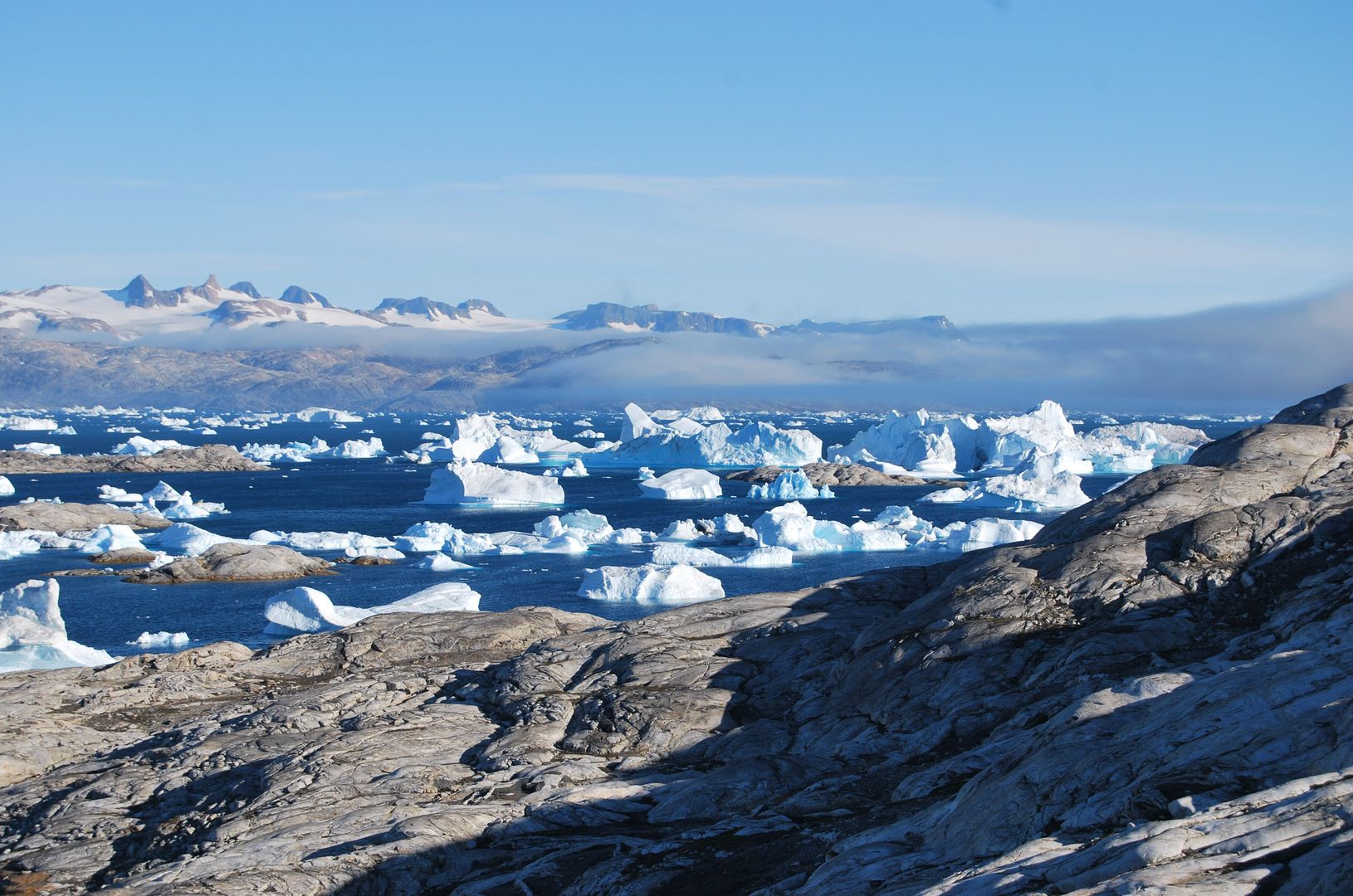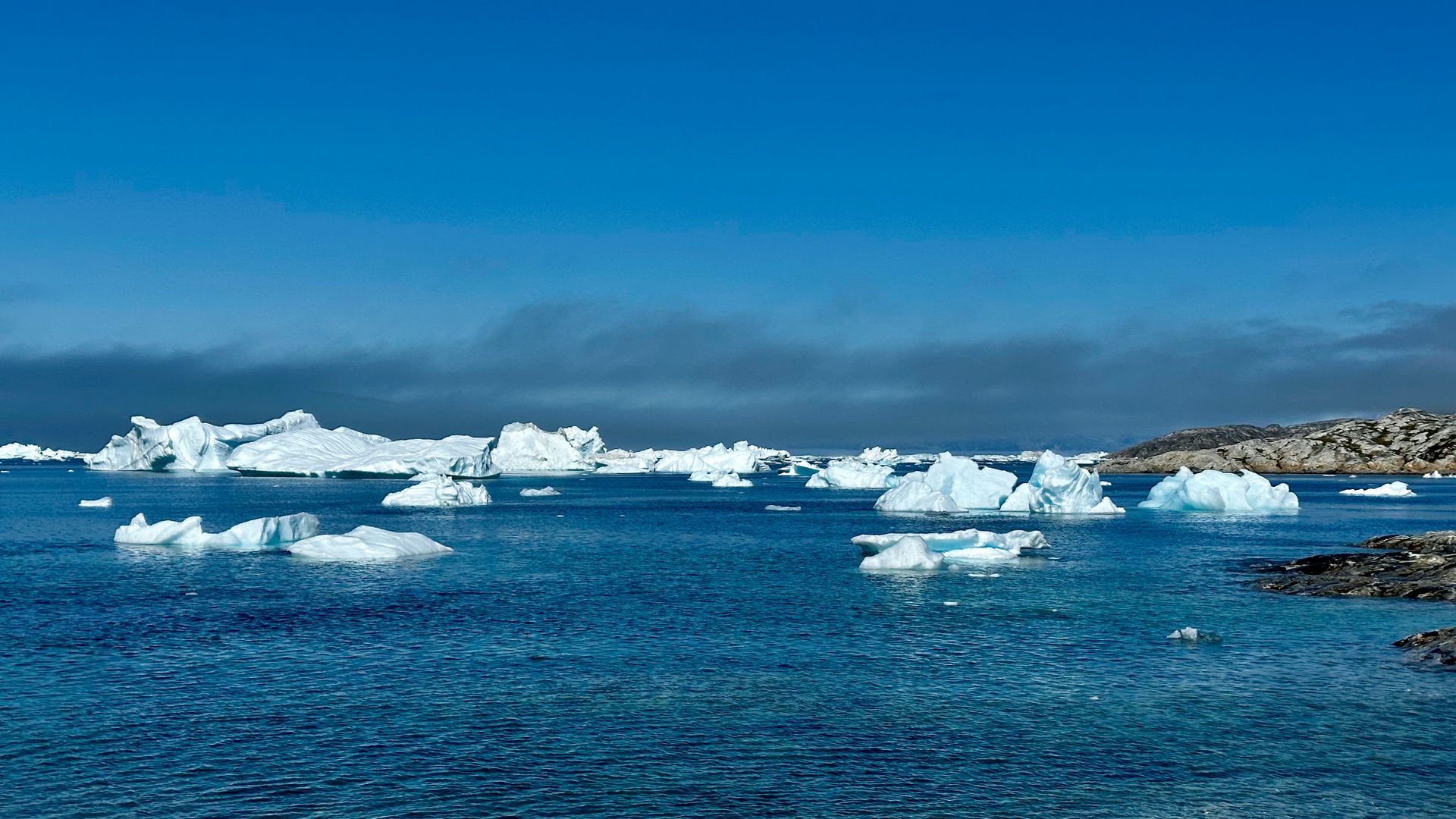

Ilulissat (population 4,500, the name means "icebergs" in Greenlandic) sits on the west coast at 69°N, 250km north of the Arctic Circle. Directly east of the town, the Kangia Icefjord receives ice from the Sermeq Kujalleq (Jakobshavn Glacier) — a glacier that moves at 20–40 metres per day, faster than any glacier outside Antarctica, and produces approximately 10% of all Greenlandic ice calved into the sea. The icebergs it generates are among the largest on Earth; the fjord they accumulate in — blocked by an underwater sill — fills with ice before the largest bergs break through into Disko Bay. The UNESCO designation (2004) covers both the glacier and the fjord system.
The Icefjord: What You See
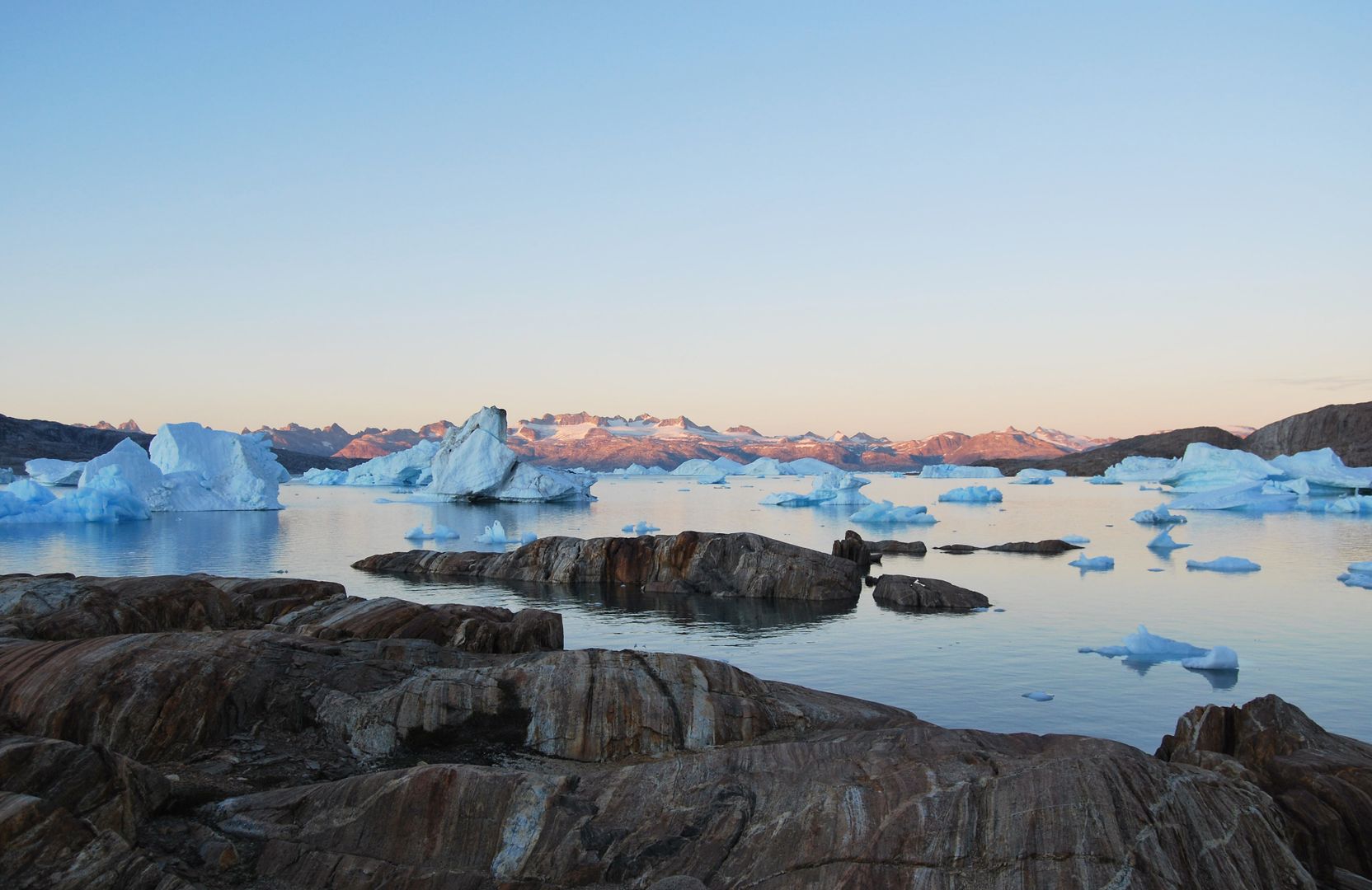
The icebergs visible from Ilulissat are not small. The portion above water is typically 10–30% of the total mass; an iceberg showing 30m above the surface extends 90–120m below. The largest bergs in the fjord — those that haven't yet cleared the sill — can exceed 100m above water, the height of a 30-storey building. They are white, blue-green, striated with volcanic ash layers, and visually overwhelming at close range. The sound of the fjord — a continuous low cracking and grinding as ice shifts against ice — is specific to this environment and unlike anything replicable elsewhere.
The icefjord trail (Sermermiut Trail, 7km loop, free) runs from the town's southern edge along the fjord rim to the Sermermiut archaeological site (former Inuit settlement, occupied from approximately 2000 BC to the early 20th century, with excavated foundations visible alongside the trail) and back along the moraine ridge. The viewpoints over the fjord are numerous; the most dramatic is from the ridge above the fjord mouth where the icebergs stretch inland as far as visibility allows. Allow 2–3 hours; the terrain is rocky but not technical.
Midnight Sun Boat Tours
Between approximately May 25 and July 25, the sun does not set in Ilulissat. The period from 11pm to 2am produces a low-angle orange light that illuminates the icebergs from the side — the blue-green interior of the ice contrasts with the warm gold of the sun's angle in a way that no other time of day replicates. Midnight sun boat tours (DKK 450–700 for 3 hours) navigate between the icebergs in Disko Bay, at distances close enough to feel their scale and hear the occasional crack of calving. The combination of warm light, cold air, and icebergs at eye level from a small boat produces photographs that make post-trip conversations awkward for the quality gap between the image and any verbal description.
Calving events — when sections of ice break from the main iceberg face and crash into the water — are unpredictable in timing but constant in occurrence. A 3-hour tour almost always includes at least one event visible at some distance. The resulting waves are manageable for vessels that maintain the mandated safety distance (usually 300m from larger bergs). The harbour seals that rest on small ice fragments throughout the bay are reliably present.
Whale Watching in Disko Bay
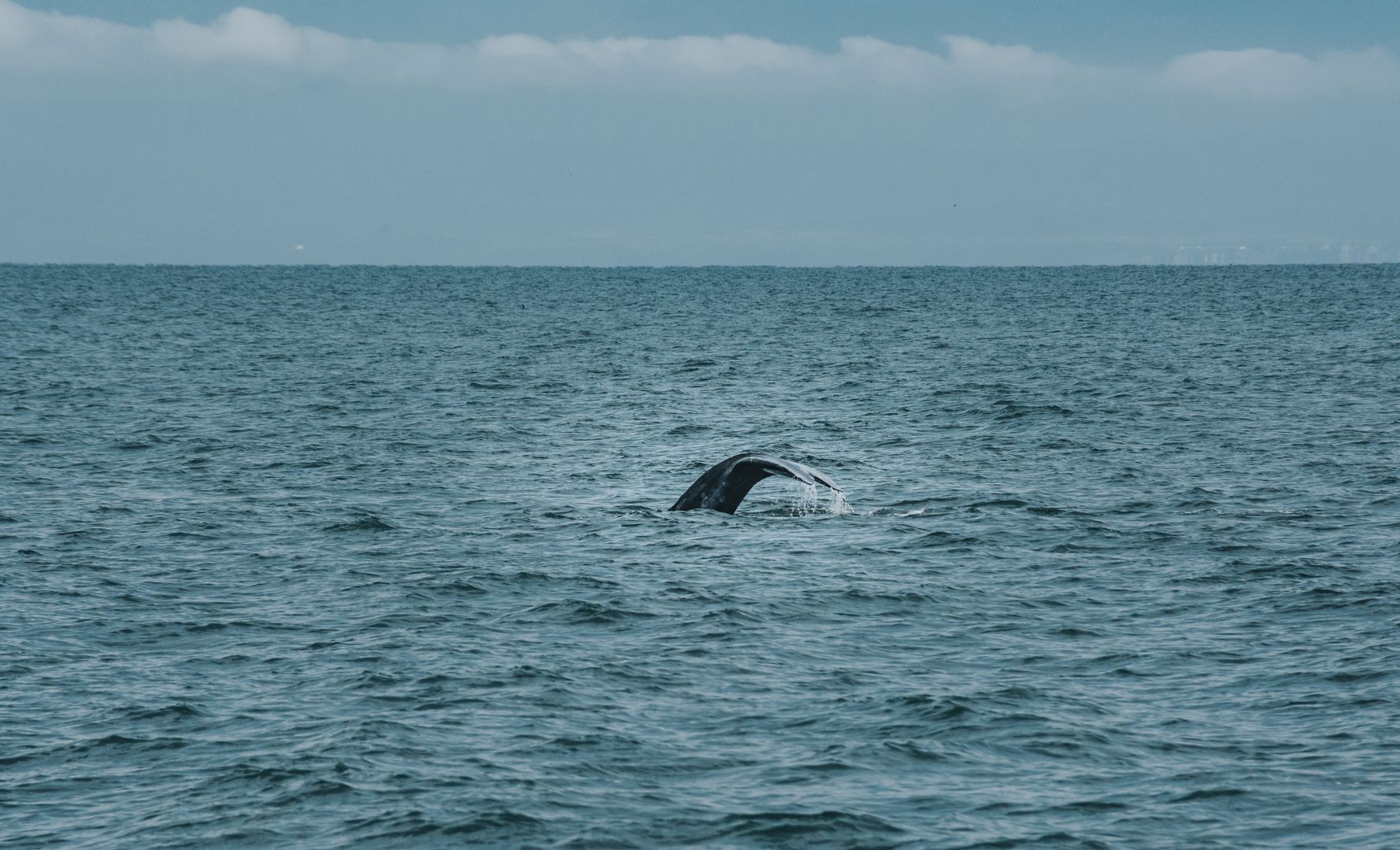
Disko Bay is one of the most productive feeding areas for humpback and fin whales in the North Atlantic. The whales arrive in summer following the capelin and Arctic cod that aggregate in the bay's cold, nutrient-rich water. Humpback whales are the most visible — they surface frequently, breach occasionally, and produce distinctive tail patterns at sounding (diving). Fin whales are the second-largest animal on Earth and are present in large numbers; minke whales are common and closer to boat level. Narwhals (the toothed whale with a single spiral tusk) are present but elusive — more common north of Ilulissat and sighted primarily from shore or by kayak.
Whale watching tours run June–September (peak July–August), lasting 3–4 hours and costing DKK 500–750. Success rates are high in summer but not guaranteed; boat captains monitor whale activity continuously and know where the feeding concentrations are. Some tours combine whale watching with iceberg navigation; others focus on one or the other. A morning start is generally preferable for flat-water conditions and better light.
Dogsled Tours: The Winter and Spring Version
Greenland has more sled dogs than people (estimated 15,000+ dogs on the west coast), and the Greenlandic sled dog (a distinct breed, larger and heavier than Siberian huskies) is still the primary winter transport in areas north of the Arctic Circle. Ilulissat's dogsled culture is genuine rather than touristic — mushers use their teams for hunting and supply runs, and dogsled tourism operates as a secondary income rather than a primary industry.
Dogsled tours run January through April when snow and ice conditions allow (typically late October–May at this latitude). A half-day tour (4 hours, DKK 1,200–2,000) typically travels across sea ice and through the tundra with stops at a hunter's camp. A full-day tour includes a longer route and a traditional camp lunch. Multi-day expeditions can be arranged through local operators: 3–5 days of travel across the inland ice or coastal terrain costs DKK 6,000–15,000 per person depending on the itinerary.
Getting to Ilulissat
Ilulissat Airport (JAV) has direct seasonal flights from Reykjavik via Air Iceland Connect (3 hours, ISK 30,000–60,000 / DKK 1,500–2,500 one way, May–October). Year-round connections run via Kangerlussuaq on Air Greenland (1.5 hours from Kangerlussuaq to Ilulissat, DKK 1,500–3,000). From Copenhagen, the most direct route is CPH–Kangerlussuaq–Ilulissat with Air Greenland. Advance booking is essential — Ilulissat flights have limited seat numbers and the tourist season is short; July departures book out months ahead.
Practical Costs

Hotel Arctic (the main hotel, with sea views and midnight sun packages): DKK 1,500–3,000 per night. Smaller guesthouses: DKK 700–1,200. Restaurant dinner: DKK 200–400 for a main course. Icefjord hiking: free. Midnight sun boat tour: DKK 450–700. Whale watching: DKK 500–750. Dogsled half-day: DKK 1,200–2,000. A 4-night/5-day visit to Ilulissat including flights from Reykjavik, accommodation, two boat tours, and meals budgets at approximately DKK 12,000–18,000 (€1,600–2,400) per person.