

Delhi, Agra, and Jaipur form India's most-travelled circuit because the three cities are connected by express trains, separated by 3–4 hours, and contain the country's most recognisable monuments. This understates what first-time visitors encounter. Delhi alone has 32 million residents, traffic that moves at walking pace during peak hours, and an air quality that can affect breathing within hours of arrival. The sensory intensity — noise, crowding, smell, visual chaos — disorients many travellers who've never been to South Asia. Agra exists almost entirely around the Taj Mahal. Jaipur is more manageable but not small. The circuit takes a minimum of seven days to do with any depth; ten days is comfortable. Going in knowing the actual conditions — the scams, the crowds, the heat — prepares you far better than the standard framing of this as an "easy introduction to India."
What the Golden Triangle actually is: geography and logistics
The circuit forms a rough triangle: Delhi in the north, Agra 206km south, Jaipur 239km southwest of Agra. The route is well-worn because the Mughal emperors chose these cities as capitals or major strongholds, leaving three centuries of accumulated forts, mausoleums, and palaces. The infrastructure is tourist-grade — express trains run multiple times daily, hotels exist in all price ranges, and English is widely spoken in tourist areas. This is not a backpacker circuit in the sense of sleeping in guesthouses and travelling by overnight bus. It's an established tourist corridor where most visitors hire cars, book hotels in advance, and follow a predictable three-city itinerary. The circuit appeals to first-time visitors precisely because you cannot get seriously lost — the monuments are fixed points, transport is reliable, and you move on schedule. The downside: you see India in highly curated form. Expect to see relatively few Indian tourists outside of festival periods, a high concentration of Western visitors, and a local economy structured around selling things to those visitors.
Delhi: navigating 32 million people across two distinct cities
Delhi is not one city but several layered on top of each other, and the distinction between Old Delhi and New Delhi determines how you spend your time and where the actual sensory experience happens.
Old Delhi occupies the area around the Red Fort, built in 1639 by Mughal emperor Shah Jahan. This is historically dense, chaotic, and narrow — streets rarely exceed 10 meters wide, they're roofed with wire and cloth to block the sun, and the permanent population density creates permanent crowding. Chandni Chowk, the main covered bazaar, runs westward from the Red Fort and is lined with spice stalls, textile shops, and fast-moving traffic (cars, scooters, cycle rickshaws all competing for the same space). This area generates the photographs most people imagine when they picture "old India" — it also generates sensory overload for most first-time visitors. The noise is continuous. The smell is a mixture of spices, diesel, and bodies. The physical contact is unavoidable. This is not a warning; it's a description. If you want to understand how Delhi functioned as a Mughal capital, Old Delhi is essential. If you're arriving jet-lagged and overwhelmed, skip it until day two or three.
Red Fort (Lal Qila): Shah Jahan's fortification is surrounded by high red sandstone walls and contains mosques, audience halls, and residential quarters spread across a substantial interior. The most notable interior space is the Diwan-i-Khas (private audience hall), where the emperor met with courtiers. The structure itself is relatively simple — a pavilion with marble inlay — but the pietra dura work (semi-precious stones set into marble) is exceptional detail work. Entry costs €5 for foreigners. The fort opens at 9:30am; arrive before 11am to avoid the main tourist wave. A 45-minute audio guide is available and worth taking — it explains the layout and function of each space. Interior: allow two to three hours. The fort is closed Mondays.
Jama Masjid: India's largest mosque by capacity, completed in 1656, occupies a raised platform in Old Delhi. The courtyard can hold 25,000 people and is open to non-Muslims during non-prayer times. Entry to the courtyard is free; a tower climb is €1 and recommended for views across Old Delhi's roofline. Dress code is strictly enforced (knees and shoulders covered). If you arrive without proper clothing, temporary robes are provided at the gate entrance. Non-prayer times are roughly 7am–noon and 2pm–sunset, but confirm hours before visiting. The interior prayer hall is closed to non-Muslims.
Chandni Chowk food: the Paranthe Wali Gali is a narrow alley running north from the main bazaar, lined with shops selling paranthe (fried breads stuffed with potato, cauliflower, or radish). Shops have been operating since the 1860s. A meal of two paranthas with yogurt costs €2–3. The alley is packed; expect to eat standing up or at a communal table. Go in the late afternoon when lunch crowds have cleared.
Humayun's Tomb: this 1565 mausoleum prefigured the Taj Mahal's design. The architect's grandson, Ustad Ahmad Lahori, later designed the Taj. The symmetry is nearly as precise as the Taj, but Humayun's Tomb is surrounded by substantial Mughal gardens (chahar bagh layout — a quadrilateral water garden) and contains fewer visitors because it lacks the Taj's fame. The complex takes 90 minutes to walk and understand. Entry: €8. Located in New Delhi (easier to reach than Old Delhi by metro).
Qutub Minar: a 72-metre minaret completed in 1193, the tallest in India, built by the first Islamic sultanate. The tower is climable but the climb is steep and rarely worth the interior views. The surrounding complex of ruins — the Quwwat-ul-Islam mosque, the iron pillar of Delhi, medieval arches — is more interesting than the tower itself. Entry: €8. Allow two hours. Located in south Delhi (metro-accessible from central hotels).
Where to stay in Delhi: avoid Paharganj and the areas immediately around New Delhi train station — these neighbourhoods are intensely chaotic and the hotels are often cockroach-infested budget lodges masquerading as "backpacker hostels." Mid-range options exist in Karol Bagh (20 minutes by metro from Old Delhi, local restaurants, less tourist saturation, €40–80/night) or Hauz Khas Village (trendy neighbourhood with cafes, restaurants, younger expat residents, €50–90/night). Budget options in Hauz Khas or Lajpat Nagar: €15–30/night and substantially cleaner than Paharganj. Booking sites: Booking.com, Agoda, or direct hotel websites.
Air quality in Delhi: the US embassy's real-time AQI monitors for Delhi show levels routinely exceeding 300 (hazardous) from November to January due to crop burning in Punjab. March–May heat is severe but air is better. July–September is monsoon (humid, some relief from heat). October is optimal. If you have respiratory sensitivity, avoid November–January entirely. If you're arriving in winter, carry an N95 mask for time spent on busy streets.
Getting from Delhi airport: the Airport Express Metro (direct line from the airport to New Delhi station, 23 minutes, €1.50) is the most reliable option. Avoid pre-paid taxis (commission-based, drivers deliver you to commission-paying hotels instead of your booking). The metro is crowded during peak hours but direct and cheap.
Allocate three nights in Delhi — one to recover from the flight and deal with jet lag, two for actual sightseeing.
Agra: the city built around one monument
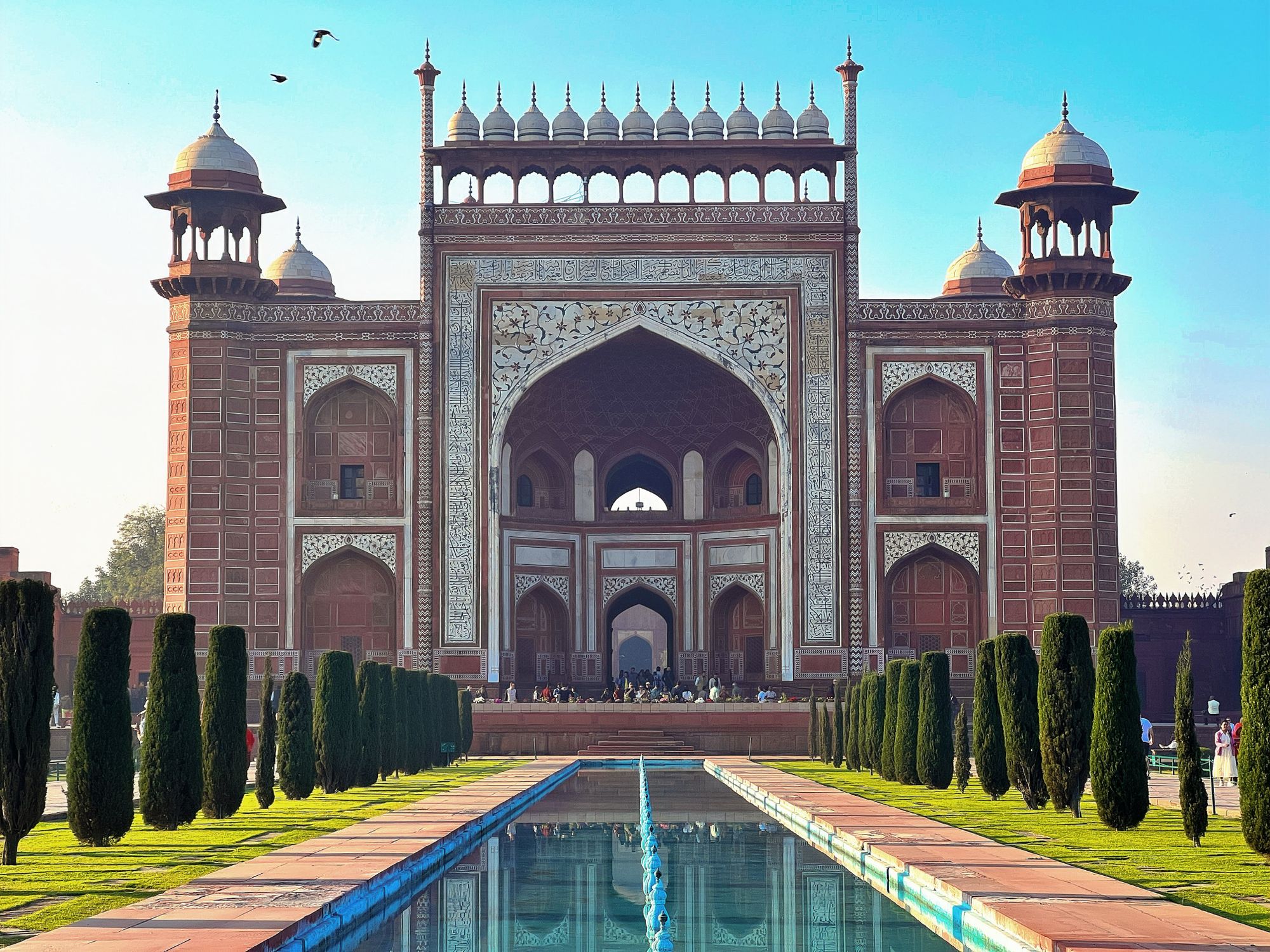
Agra exists because of the Taj Mahal. The city has other historical sites (Agra Fort, several smaller mosques), but roughly 80% of visitor time and money flows toward the mausoleum. This is not unfair; the Taj Mahal justifies the trip.
The Taj Mahal basics: commissioned by Shah Jahan as a mausoleum for his wife Mumtaz Mahal, built 1632–1653, constructed from white marble with inlaid semi-precious stones (lapis lazuli, turquoise, carnelian, malachite) forming floral patterns. The scale: 73 metres long, 56 metres wide, the dome is 35 metres in diameter. The symmetry is architectural precision rather than romantic fancy — every element mirrors its opposite. The optical illusion of the minarets leaning outward is intentional (they're actually perpendicular; the perspective from the garden creates the lean). The inlay work contains roughly 28 different stone types in a single floral motif, repeated across surfaces. This is not "beautiful in the way postcards claim" — it's a technical achievement of staggering precision.
Entry and timing: foreigners pay €15 (Indian citizens pay €3); the difference is substantial and deliberately structured. Buy tickets online at tadmahal.gov.in to skip the main ticket queue (you still queue for security screening, typically 20–30 minutes). Sunrise opening is 6am. The complex closes at sunset (times vary: 6:30pm in summer, 5:30pm in winter). Arrive 30 minutes before opening if you want to see the Taj in first light with minimal crowds. By 9am, the place is packed with tour groups. By 11am, it's shoulder-to-shoulder. The quality of the visit depends almost entirely on arriving early.
Inside the complex: the gardens are the main circulation space — you walk through them to approach the main mausoleum. Allow 30–45 minutes in the gardens for photography and approach. At the main structure, shoe covers are provided (free) or required to enter — there's a shoe-check facility at the entrance. The interior chamber houses two cenotaphs (false graves). The actual graves are below the floor, sealed and invisible. A small mosque building occupies the west side of the complex and is an actual functioning mosque, not a museum space. Non-Muslims should not enter during prayer times.
Photography: the light is best at dawn (warm, low angle, shadow detail visible in the marble) and one hour before sunset. Mid-day is harsh and washes the marble out. Tripods are prohibited on the grounds. Drones are prohibited. Mobile phone and DSLR photos are both permitted.
Time inside: budget 90 minutes to two hours minimum, three hours if you're photographing or sketching. The most common regret is too little time spent here.
Agra Fort (Red Fort): 2km north of the Taj Mahal, this fortification was the court of several emperors and the place where Shah Jahan was imprisoned by his son Aurangzeb during his later years. The towers have views toward the Taj Mahal (visible in the distance). The complex is less crowded than the Taj but offers context — you see where the rulers lived, the audience halls, the gardens they maintained. Entry: €5. Allow two hours. Photographers often skip this; shouldn't.
Fatehpur Sikri: 40km from Agra, built by Akbar in 1571 as his capital, abandoned by 1585 (the water supply was never secure). The city is remarkably intact — palaces, mosques, courts, bazaar streets, all in red sandstone. The Buland Darwaza (Gate of Magnificence) is architecturally extraordinary. A day trip requires four to five hours including drive time. Hire a car with driver for the round trip (€40–60, four to five hours total). This is worth doing if Mughal history and architecture genuinely interest you; it's optional for general tourists.
Where to stay in Agra: the mid-range hotel strip runs along Taj Road, the main approach to the monument. Hotels here are fine (€40–70/night), slightly marked up for location, and convenient. Budget options: €15–25. Agra has a reputation for aggressive touts and commission-based restaurant recommendations; use Google Maps or your hotel's direct recommendation rather than accepting directions from street-level guides offering "good deals."
Allocate one to two nights in Agra — one night is minimum (arrival day, Taj Mahal at sunrise next morning, depart afternoon). Two nights allows for Agra Fort and either a relaxed morning or a Fatehpur Sikri day trip.
Jaipur: the first manageable city
Jaipur feels less intense than Delhi or Agra because it's smaller (4.5 million residents), the layout is organized (the old walled city follows a grid plan), and the tourist infrastructure is less adversarial. The old city is genuinely painted terracotta pink — this was mandated in 1876 for Prince Albert's visit and has been maintained as city law since. The photographs are accurate; this is not overselling.
Amber Fort (Amer Fort): 11km north of Jaipur's city center, built 1592 and expanded over generations, this is the most visually impressive fort in Rajasthan. The approach involves a steep climb (15–20 minutes on foot, or a jeep ride from the base to the upper gate for €3 return). The interior is labyrinthine — multiple courtyards, residential quarters, audience halls. The Sheesh Mahal (Hall of Mirrors) is a small chamber where thousands of mirror fragments set into plasterwork reflect candlelight. The effect with artificial lighting is dramatic; it's less impressive in daylight. Allow two to three hours in the fort. Arrive by 9am if possible; the fort is crowded by mid-morning.
Do not ride elephants up to the fort. This practice continues and involves documented mistreatment and overworking of the animals. Jeeps (€3) or feet (steep but manageable) are the ethical options.
City Palace: built in the 18th century and still the residence of the royal family of Jaipur, this palace complex mixes Mughal and Rajasthani architecture. The museum section is open to the public (€10 entry) and displays royal textile collections, weapons, manuscripts, and artefacts. The Mubarak Mahal (the formal entrance pavilion) has exceptional architectural detail. Allow 60–90 minutes.
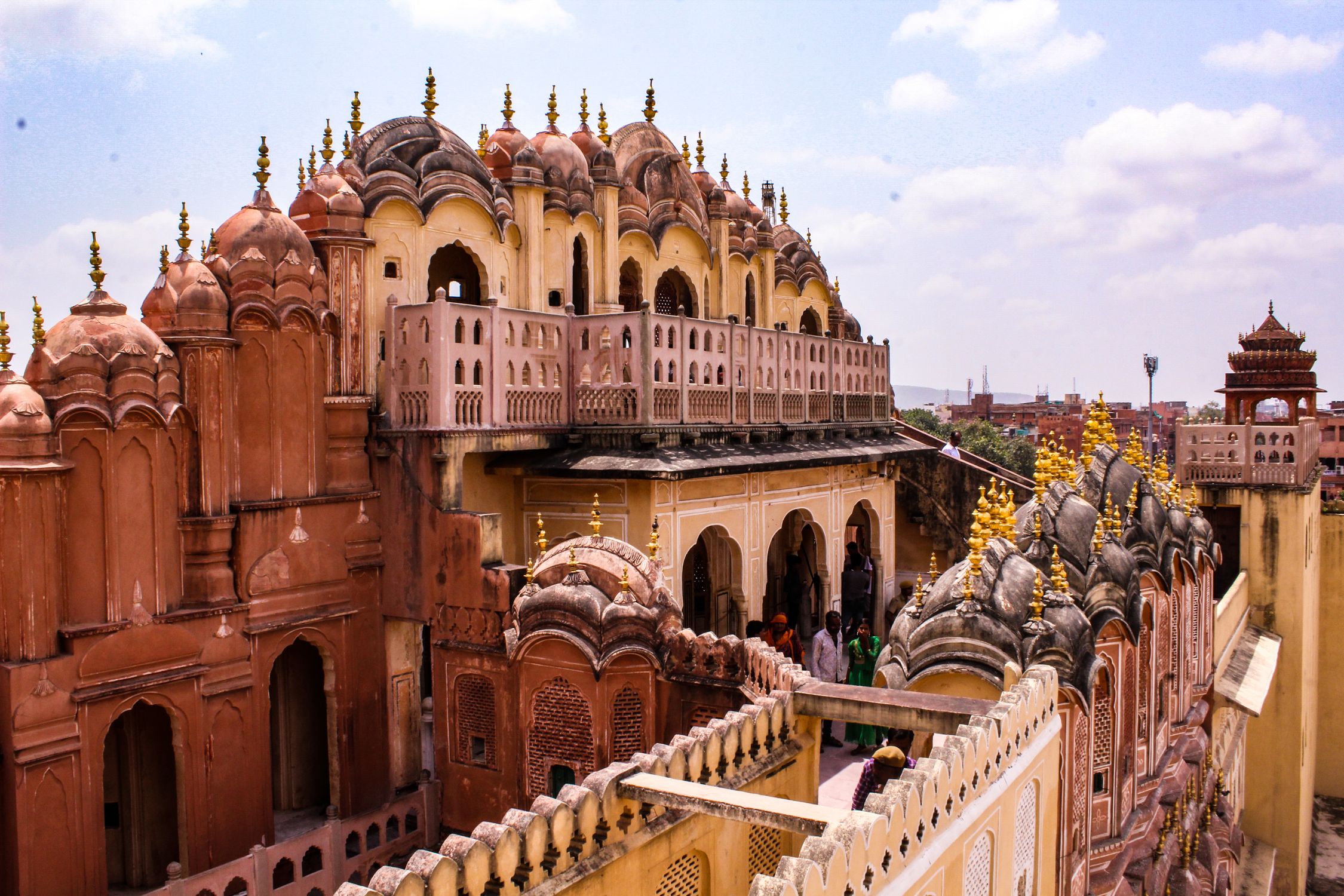
Hawa Mahal (Palace of the Winds): the iconic pink-painted facade with 953 small windows, built in 1799 as a viewing gallery for the royal women. The exterior is more compelling than the interior. The interior consists of small balconies and narrow passages; climbing to the top offers city views. Entry is €2. Worth seeing but spending 30 minutes max here. The entrance is on the busiest street in the old city — arrive early to avoid crowds.
Jantar Mantar: an 18th-century astronomical observation park containing 19 architectural instruments — massive geometric shapes built from stone and marble that function as astronomical measurement tools. The largest instrument is the Samrat Yantra (the world's largest stone sundial, 27 metres tall). This requires explanation; hire a guide at the entrance (€5–8 per person, typically a local astronomy enthusiast) who explains what each instrument measures and how the geometry creates the measurement. Without a guide, it's confusing geometry. With a guide, it's remarkable precision engineering from the pre-telescope era. Allow 90 minutes.
Food in Jaipur: Lassiwala is a tiny stall on M.I. Road (near the old city wall) that's been operating since 1944, serving lassi (a yogurt drink, either salted or sweet) for €1–1.50. The shop has no seating; you drink standing. Niro's restaurant on M.I. Road serves sit-down Rajasthani thali (a plated meal with bread, curries, yogurt, pickles, and dessert) for €8–12. Chokhi Dhani is a resort-style "ethnic village" experience with Rajasthani performances, camel rides, and a buffet dinner (€15 entry, dinner extra). It's touristy but gives context on Rajasthani rural culture and crafts.
Where to stay in Jaipur: mid-range hotels cluster in C-Scheme neighbourhood (€50–80/night) or near the old city wall (€40–70/night). Budget: €15–30. The city is walkable and metro-light rail is under construction (not yet fully operational for tourists). Use rickshaws or the hotel's transport.
Allocate three nights in Jaipur — one for arrival and acclimatisation, two for monuments and exploration.
Getting between the three cities: trains vs. cars
Delhi to Agra: the Gatimaan Express train departs Delhi at 8:10am, arrives in Agra at 9:50am (1 hour 40 minutes, €15–20 depending on class, booking through irctc.co.in). This is faster and more pleasant than a car journey (traffic on the Delhi–Agra highway is severe; the drive takes 3.5–4 hours). Book the night before or earlier if possible; seats sell out on weekends. The Shatabdi Express is an alternative (2 hours, similar price). Trains beat cars by a significant margin.
Agra to Jaipur: no direct express train exists (the routing requires changing trains and adding 6+ hours to the journey). Most independent travellers hire a private car with a driver for this leg (€40–60, 4.5 hours including an optional Fatehpur Sikri stop). Shared taxis exist but are uncomfortable for 4+ hours. The car option is standard for this route.
Jaipur to Delhi: the Shatabdi Express runs daily (4.5 hours, €10–15, departing mid-afternoon, arriving Delhi early evening). Book online. Alternatively, a car is 6 hours (longer than the train, no traffic advantage).
Booking transport in advance: book trains a week ahead during peak season (October–March). Book cars through your hotel (they have relationships with reliable drivers) or through established apps like Ola or Uber. Avoid unmarked taxis at train stations (drivers work on commission and deliver passengers to commission-paying hotels).
First-time India briefing: scams, hygiene, heat, personal space
Touts and scams: expect persistent offers outside every major monument, at train stations, and in bazaars. Common variants include "your hotel is closed today," "there's a special festival," "the monument is closed but I can take you to a better one," or "my cousin has a gem shop" (the gem-buying scam is particularly elaborate and well-structured; do not engage). A firm "no thank you" without elaboration works better than complex explanations. Do not follow anyone offering free directions or claiming to help. Do not give your hotel name to strangers. The scams are organized enough that redirecting you to a commission-paying hotel or restaurant is standard practice. Book accommodation directly; use Google Maps for directions; order food from established restaurants rather than accepting street-level recommendations.
Fake ticket offices near monuments: outside the Taj Mahal and other major sites, unofficial booking offices sell counterfeit tickets or overcharge significantly. Buy tickets at the official gate or online in advance. The time saved is worth the €2 online booking fee.
Hygiene and food safety: eat at busy restaurants with high customer turnover (safe because the food is used quickly). Avoid street food in the first 2–3 days; once your stomach acclimates to local bacteria, the risk decreases significantly. Drink only bottled water; don't use ice in drinks unless you're at an established hotel with clean ice-making practices. Carry antidiarrheal medication (imodium) as a precaution.
Personal space and physical contact: India operates with closer physical proximity than Western cultures. On crowded streets, trains, and in markets, you will be touched, bumped, and pressed against by other people continuously. This is not hostile; it's normal for this population density. If you have severe personal space anxiety, this will trigger it. Expect it, accept it, and move on.
Heat and timing: March–May temperatures reach 40–45°C in Delhi and Rajasthan. This is genuinely dangerous heat — heat stroke, dehydration, and exhaustion are real risks. Plan for early morning and late afternoon activities; spend midday in air-conditioned hotels or restaurants. Drink water constantly. Sunscreen, hat, and sunglasses are essential. The optimal travel window is November to January (15–25°C days, cool evenings, clear skies, low humidity). October and February are good but slightly warmer. Avoid June–September (monsoon and oppressive humidity).
Safety for tourists: India is not a particularly dangerous destination for tourists. Violent crime against visitors is rare. Petty theft (pickpocketing in crowded areas, theft from hotel rooms in budget lodges) is routine. Use common sense: don't carry large amounts of cash, keep valuables in the hotel safe, avoid isolated areas at night, and book transport through established services rather than hailing unmarked taxis. Women travellers should dress conservatively (knees and shoulders covered in religious sites and conservative areas; less strict in tourist-oriented neighbourhoods) and avoid being alone with unfamiliar men in isolated spaces. Use the metro rather than taxis alone at night.
The seven-day itinerary: minimum time, good depth
Day 1 (Delhi): arrive, settle, rest, light evening walk in a nearby neighbourhood.
Day 2 (Delhi): Red Fort (morning), Chandni Chowk (lunch and browsing), Jama Masjid (afternoon). Avoid Old Delhi if you're exhausted; substitute Humayun's Tomb and Qutub Minar instead (both in New Delhi, easier logistics).
Day 3 (Delhi): Humayun's Tomb (morning), Qutub Minar (afternoon), or Lal Qila audio guide if you skipped Day 2. Rest afternoon.
Day 4 (Agra): depart Delhi by Gatimaan Express (8:10am–9:50am). Arrive Agra, settle. Agra Fort (late afternoon). Sunset viewing of the Taj from the gardens (no entry, just external views).
Day 5 (Agra): Taj Mahal at sunrise (arrive 5:30am, depart by 9:30am). Rest afternoon. Optional: Fatehpur Sikri day trip (requires full day).
Day 6 (Jaipur): depart Agra for Jaipur by car (4.5 hours). Arrive Jaipur, settle. Sunset at Hawa Mahal or evening walk in the old city.
Day 7 (Jaipur): Amber Fort (9am–noon). City Palace and Jantar Mantar (afternoon). Return to Delhi by Shatabdi Express (depart 4pm or later, arrive 8:30pm) or the next day.
This allows roughly 2.5 days per city with decent depth but no buffer for travel delays, rest days, or leisurely exploration. Ten days is considerably more comfortable: add a rest day in Delhi, a full day for Fatehpur Sikri from Agra, or an extra day in Jaipur for markets and local exploration.
Conclusion: what comes after
The Golden Triangle works as an introduction to India because the infrastructure is established, the major monuments are genuinely significant, and the train connections are reliable. It does not prepare you for the country's actual complexity or depths. If this circuit works for you — if the sensory intensity is manageable rather than overwhelming, if you want to return — the real India is elsewhere. Kerala's backwaters (still water, coconut palms, houseboats), Varanasi at dawn (the Ganges, pilgrimage, death and religion made visceral), Ladakh (high-altitude deserts, Tibetan monasteries, minimal tourism infrastructure), the Himachal Pradesh mountains (trekking, small towns, forested valleys) — these represent different versions of the country entirely. Use the Golden Triangle as the first chapter only.


