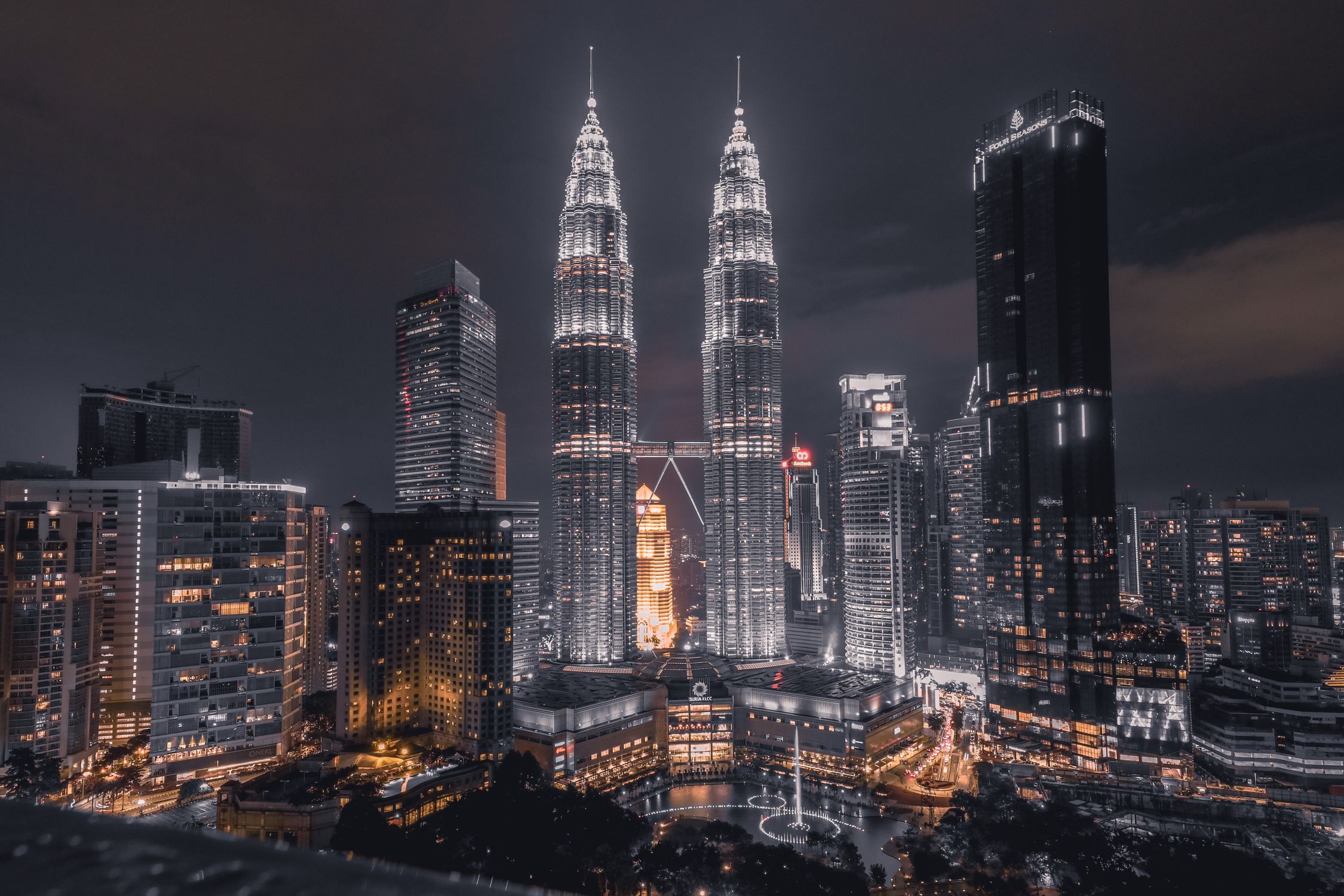

Kuala Lumpur is a cheap, efficient, food-obsessed city that most visitors underestimate. The city's genuine draw isn't the towers — it's a food culture built from Malay, Chinese, Tamil, and Nyonya traditions, all priced for locals. The Petronas Towers get the Instagram attention, but the real reason to spend three days here is to eat methodically: nasi lemak from a hawker stall at 6am, char kway teow from a shop you found by accident at lunch, bak kut teh at 11pm in a mamak filled with construction workers and off-shift nurses. The city works. The trains run. The food is exceptional. The only real gap is between what most guidebooks promise and what actually matters when you arrive.
Where to Stay in Kuala Lumpur
Bukit Bintang (city centre, tourist core): This is the commercial heartland — shopping malls, cinemas, street-level bars, and the entrance to Jalan Alor food strip. Hotels cluster around Pavilion mall and the surrounding sois. MRT Bukit Bintang station puts you two stops from KLCC, four stops from Chinatown. Mid-range hotels (3-star standard) run 180–350 MYR/night. It's congested, neon-bright, and exactly where a first-timer should be. You can walk to dinner. Transport connections are straightforward. The trade-off: it's loud until 1am and tourist-centric, which means restaurant and bar prices are inflated 20–30% versus elsewhere.
KLCC (Petronas area): A business district that quiets down after dark. Suria KLCC mall sits directly beneath the towers. Mid-range hotels 220–400 MYR/night. The Petronas observation deck is 10 minutes on foot. It's cleaner and less chaotic than Bukit Bintang, but there's less street-level energy and fewer independent food options. Suits travellers doing a fast, skyline-focused visit (24–48 hours). If you're spending three+ days, Bukit Bintang offers more texture.
Chinatown and Merdeka Square: Petaling Street and the surrounding area is the backpacker zone. Hotels run 60–150 MYR/night. It's the cheapest base, and walking distance to colonial-era sights (Merdeka Square itself, the Sultan Abdul Samad Building). The downside is real: Petaling Street is a counterfeit goods market pretending to be a street. It gets congested and loud from 5pm onward. The older hotels are noisier. Backpackers book here for the price and the traveller community, not the location. Good for 1–2 nights; becomes wearing after that.
Bangsar (south-central suburb): A 15-minute MRT ride from Bukit Bintang, Bangsar is where locals eat. Better-quality independent restaurants, markets, fewer tourists, actual resident energy. Hotels 150–300 MYR/night. The trade-off: less central, less convenient for iconic sights like Petronas or Batu Caves. Best for stays of five+ nights when you want to stop touring and start living like a resident.
Getting Around Kuala Lumpur
KL's public transport network is confusing because it was built by three competing companies that never fully integrated. It works, but the system map looks like spaghetti.
MRT and LRT: The Putrajaya Line (MRT2, opened 2016–2022) has expanded significantly and now covers areas that would otherwise require Grab. The Kelana Jaya Line (LRT1) runs north-south. The Ampang Line (LRT2) runs east. A single journey costs 1.50–4.50 MYR depending on distance. Get a Beep card (a rechargeable contactless card sold at any station for 10 MYR plus credit) rather than buying single tickets. The system is reliable but signs at smaller stations are minimal. Google Maps works for navigation and tells you which platform to use. From Bukit Bintang, the MRT network covers most tourist destinations: Batu Caves, KLCC, Chinatown, KL Sentral (main transport hub).
Grab (ride-hailing app): Essential for journeys not covered by rail or when carrying luggage. A ride from Bukit Bintang to KLCC costs 8–12 MYR. Grab is cheaper than metered taxis and drivers use GPS. Download it before arrival. Tipping is not expected, but rounding up is appreciated. Peak hours (7–10am, 5–8pm) add a surge charge — 20–40% premium. Walk or take the MRT during these windows if possible.
Airport transport: Kuala Lumpur International Airport (KLIA) is 75km south. The KLIA Express train is the clear winner: 33 minutes to KL Sentral, 55 MYR, trains every 15–20 minutes from 5:30am to midnight. KL Sentral is the hub from which all city transport branches. The airport bus (Skybus, Airport Coach) takes 1–1.5 hours and costs 15–18 MYR — only worth it if you're travelling in a group of three or more. Grab from the airport costs 35–55 MYR depending on traffic and time of day, so the train is faster and cheaper.
What to Actually Do in Two Days

A realistic first-timer itinerary doesn't try to see everything.
Day 1: Petronas Towers and Jalan Alor
- Morning: Take the MRT to KLCC. Observation deck tickets (Levels 41–42, the skybridge section) cost 80–170 MYR depending on time of purchase. Book online at least 2–3 days ahead via the official Petronas website; walk-up tickets sell out by 11am. The skybridge experience (walking between the two towers at the 41st floor) is more interesting than going higher. Queue time is typically 30–50 minutes. Plan for two hours total.
- Lunch: Suria KLCC mall has every restaurant chain in Malaysia. Boring. Take the MRT to Bukit Bintang instead. Eat at one of the proper lunch spots: the food court below Pavilion mall, or walk to Jalan Alor (the street food strip) for a late lunch of dim sum or roasted meat over rice.
- Evening: Jalan Alor is best from 6pm onward. It's a 400-metre alley with 30+ hawker stalls serving grilled meat, char kway teow, cold beer, fresh crab. Go with no plan. Order things you can't identify. Expect to spend 40–70 MYR for two people. It's touristy but genuinely good, and the walk-up nature means you're eating alongside locals and tourists equally.
Day 2: Batu Caves and Chinatown
- Morning: Commuter train (KTM) from KL Sentral to Batu Caves. Journey is 20 minutes, return ticket is 5 MYR. The station deposits you at the base of a staircase: 272 steps to the cave mouth. The temple inside is a working Hindu shrine with painted deities and monkeys that steal sunglasses. Dress conservatively (covered shoulders and knees) out of respect. Climb takes 45 minutes round trip. Arrive before 10am to avoid the hottest part of the day and peak coach tours. Monkeys are bold — keep bags zipped.
- Lunch: Return to KL Sentral. Eat at a hawker centre near the station or grab roti canai (flatbread, 1–3 MYR) from a mamak café. These are everywhere and you can order curry, dhal, or condensed-milk coffee to go with it.
- Afternoon: Walk through Chinatown (Petaling Street). It's a counterfeit goods market more than a cultural destination, but the energy is real. Spend 30–45 minutes. For better cultural context, walk to nearby Central Market (an old-style shopping hall that's been gentrified, 10 minutes on foot) or Merdeka Square (the colonial-era municipal heart).
- Evening: Either eat again on Jalan Alor, or venture to a proper restaurant in Bukit Bintang or Bangsar. By day two, you'll have sense of which neighbourhoods appeal.
One thing most itineraries get wrong: They treat Petronas as the main event and squeeze in food between sights. Reverse this. Food should be the main event. The towers are a 2-hour side trip.
The Kuala Lumpur Food Guide
This is the true point of the visit.
Nasi lemak: Malaysia's national dish is coconut rice with a fried egg, fried anchovies, peanuts, and sambal (chilli paste). Every hawker stall and mamak serves it. Cost: 4–8 MYR. The hawker version is superior to hotel breakfast versions — the rice is better, the sambal is hotter, the anchovies are crispier. Eat it for breakfast or as a quick lunch. The best versions come from stalls that specialize in it, not multipurpose hawker outlets. Look for a queue.
Roti canai: Flaky, fried flatbread folded by hand until paper-thin. Eaten with dhal (lentil curry), chicken curry, or fish curry. Cost: 1–3 MYR per piece. Mamaks (Indian-Muslim cafés) are open 24 hours and serve this. This is the food you'll eat at midnight or 6am without thinking about it. The best stalls have a line before opening.
Char kway teow: Flat rice noodles stir-fried in dark soy sauce with cockles, bean sprouts, and a fried egg. A dish that started in Penang and is now everywhere. Hawker centres in Chinatown have the best versions. Cost: 7–12 MYR. The wok heat and technique matter — you want the noodles slightly charred.
Hokkien mee: Thick egg noodles braised in dark soy and lard with pork. A Chinese-KL speciality, less common than char kway teow but worth seeking. Cost: 6–10 MYR. Petaling Street hawker market (on the street itself, not the counterfeit shops) has a row of Hokkien mee stalls.
Bak kut teh: Pork rib herbal soup, usually eaten as breakfast. A Fujian-Chinese dish. The best versions are in Klang, 30 minutes south by KTM from KL Sentral (ticket 3 MYR). Klang is a pilgrimage destination for this dish specifically. Cost: 10–20 MYR. If staying only in KL proper, Petaling Street and older hawker centres have versions, though they're second-tier.
Night markets (pasar malam): A different neighbourhood hosts a night market every evening. Bangsar hosts the Sunday market and has the best food selection (7–10pm). Various stalls sell satay, grilled fish, durian, tropical fruit. It's more social and less touristed than Jalan Alor.
Hawker centres worth seeking: Seem Guan Hawker Centre (Pudu, near Merdeka), Medan Selera Jalan Raja Laut (off Jalan Raja Laut), any unmarked stall row in Chinatown. Prices drop 20–30% versus Jalan Alor. Cleanliness standards vary. Look for busy stalls; fast turnover means fresh food.
Cost reality: You can eat exceptionally well for 30–50 MYR per day if you eat exclusively at hawker centres and mamaks. A dinner at a proper sit-down restaurant in Bukit Bintang runs 50–100 MYR per person.
Getting Around: The Transport Reality
The KL MRT/LRT system is extensive but requires a mental map. Here's what you need:
- Bukit Bintang MRT station: Central hub. Connects to Petronas/KLCC in two stops, Chinatown in four stops, Batu Caves via KL Sentral in five stops.
- KL Sentral: The main transport interchange. All long-distance buses depart from here. KTM commuter trains to Batu Caves, Klang (for bak kut teh), and the airport leave from here.
- Single journey card vs. Beep card: Buy a Beep card and load credit. It costs 10 MYR for the card itself plus whatever credit you add (minimum 10 MYR). Saves time versus buying single tickets each trip.
- Grab for everything else: If you're unsure whether public transport reaches somewhere, use Grab. It's not expensive enough to worry about.
Day Trips from Kuala Lumpur

Batu Caves (20 minutes from KL Sentral): Covered above. A half-day trip that's essential on any KL itinerary.
Cameron Highlands (2.5–3 hours by bus from KL): A highland station at 1,500m elevation with tea plantations, strawberry farms, cooler weather (18–22°C, a relief from the city's 28–35°C heat). Buses depart from KL Sentral at 7:30am, 8:30am, and 10am daily. Journey takes 2.5 hours. Cost: 25–35 MYR one way. Worth an overnight stay or a day trip if you want to escape the heat. Strawberry picking in Boh Plantation is touristy but pleasant. Stay at a colonial-era resort or guesthouse. Food is less exciting than KL but the break from humidity justifies the trip.
Penang (Georgetown): 45 minutes by flight (domestic airport), or 4–5 hours by bus. A UNESCO old town with food that rivals or exceeds KL's. Georgetown's street food scene is legendary: Penang laksa (a tamarind-based noodle soup), fried kway teow, fish cake soup. More backpacker-friendly than KL. Worth 2–3 days. Bus from KL Sentral costs 20–30 MYR. Flights run 80–150 MYR if booked in advance. The flight is worth paying for if you have limited time.
Langkawi (1 hour flight from KL): A duty-free island 100km northwest with white-sand beaches and less development than Bali or Phuket. Ferries also run from Penang (90 minutes). Flights cost 120–200 MYR if booked ahead. Good for 2–3 days of beach time between city visits. Less nightlife than Bali, less tourism infrastructure, fewer tourists.
Singapore (4 hours by bus): The cheapest way to reach Singapore from KL is the express coach from Larkin terminal (Johor Bahru, just north of the Malaysia-Singapore causeway). Cost: 25–30 MYR. The bus pulls up at the customs border and passengers clear immigration on foot. Journey takes 4–5 hours total (including the border crossing). Alternatively, fly from KL International Airport for 80–150 MYR, a 55-minute flight. The bus is the budget option; the flight is worth it if you value time.
Practical Information
Currency: Malaysian Ringgit (MYR). 1 EUR ≈ 5 MYR, 1 USD ≈ 4.7 MYR (as of 2026). ATMs are everywhere. Credit cards work at restaurants and shops; small hawker stalls and some guesthouses are cash-only.
Weather: Equatorial. Hot and humid year-round, 28–35°C. Rain can come any month; October–November and March–April see heavier rainfall, but it rarely lasts more than 30 minutes and doesn't disrupt plans. Bring light, breathable clothes, sunscreen, and a small umbrella.
SIM card: Buy at KLIA airport on arrival or any 7-Eleven. Tourist SIMs (Digi or Maxis) cost 30–50 MYR for 30 days with unlimited data. You'll need it for Google Maps, Grab, and contacting guesthouses. Setup takes 5 minutes. Bring your passport.
Safety: KL is generally safe. Standard city caution applies: don't flash expensive items on the street, avoid walking alone late at night in Chinatown, and use well-lit MRT stations. Petty theft and scams target tourists in crowded areas, but violent crime is rare. Neighbourhoods like Bukit Bintang and KLCC are well-patrolled.
Visa: Most nationalities (EU, US, Australia, Canada, UK) get 90 days visa-free on arrival as of 2026. Check your specific passport with Malaysian immigration before booking.
Internet: The 4G network is fast and reliable across the city. Your tourist SIM will work everywhere you'd want to be.
Is Kuala Lumpur Worth Visiting?
Yes, but not for the reasons most articles suggest. The Petronas Towers are fine — they're a competent observation deck with a view. The real point is that KL is a functional, cheap city where three things converge: the food is exceptional, the transport works, and a day here costs 50–80 MYR if you eat locally. Most visitors spend two days in KL treating it as a stopover between Penang and Singapore, or as a base for Batu Caves. That's fine, but three full days here (day 1 for the towers and Jalan Alor, day 2 for Batu Caves and Chinatown, day 3 for a neighborhood deep-dive or a day trip to Cameron Highlands) is where KL shows its value. The city is most useful as a gateway: the KL Sentral transport hub connects to Penang, Langkawi, Cameron Highlands, and Singapore with cheap buses and flights. But KL itself is underrated. Spend time there.
Frequently Asked Questions
Where should a first-timer stay in Kuala Lumpur?
Bukit Bintang. It's central, has good MRT connections, puts you within walking distance of Jalan Alor and multiple malls, and has hotels at every price point. KLCC works if you're visiting only for the towers and staying 24–48 hours. Chinatown is cheaper but noisier and less convenient. Bangsar is better if you're staying five+ nights and want a local feel.
What's the best month to visit Kuala Lumpur?
December through February: cooler, less rain, more comfortable for walking. June through August is secondary (dry, warm, busy). October through November and March through April see heavier rain, but it rarely stops you mid-day. Avoid Chinese New Year (late January or February) and Hari Raya (date varies with Islamic calendar) unless you specifically want festival energy, as many restaurants close.
How many days do you need in Kuala Lumpur?
Two days minimum: one for Petronas and Jalan Alor, one for Batu Caves. Three days is ideal because it gives you time to explore neighbourhoods and eat at proper sit-down restaurants, not just hawker stalls. More than four days requires leaving the city for day trips (Cameron Highlands, Penang) or adopting a slower pace.
What's the single best food experience in Kuala Lumpur?
Jalan Alor between 6–10pm. It's touristed, but it's touristed because the food is genuinely good. Spend 60–100 MYR and eat cantonese BBQ meat, char kway teow, fresh crab, and drink cold beer standing on the street. You'll eat alongside Malaysians, expats, and tourists. The best stalls are marked by queues. Don't overthink it.
How much does a trip to Kuala Lumpur actually cost?
Budget: 50–100 MYR per day (hawker food, cheap hotel, free walking, public transport). Mid-range: 150–250 MYR per day (decent hotel, mix of hawker and restaurant meals, paid attractions). Upper-range: 350+ MYR per day (better hotel, dining in proper restaurants). The food is the variable — luxury dining costs 100–200 MYR per person, hawker meals cost 8–15 MYR. Everything else is cheaper than Southeast Asian benchmarks.
Is the Petronas Towers viewing deck worth the cost?
For a first-timer, yes — it's a clear, iconic experience and the skybridge section (walking between the towers at floor 41) is interesting. Book online 2–3 days ahead to avoid queues. It's a two-hour trip including queue time. Merdeka 118 Tower (opened 2024) is taller and newer but 50% more expensive and lacks the iconic factor. Do Petronas, not both.
Kuala Lumpur suits travellers who want cheap, functional city infrastructure, excellent food, and a gateway to the rest of Malaysia. Spend three days: one touring (Petronas, Jalan Alor), one exploring (Batu Caves, Chinatown), one eating methodically and moving slowly through neighbourhoods. Most visitors regret not allocating a full day just to eating — hawker hopping from dawn to midnight reveals why Malaysians take their food so seriously. The city works, the prices are low, and the food is the reason to be here.
