Marrakech absorbs four million tourists annually while Fez — home to the largest intact medieval medina in the world, with 9,400 pedestrian streets largely unchanged since the 14th century — receives a fraction of that traffic. The imbalance has nothing to do with quality and everything to do with flight routes and Instagram algorithms. If you have more than four days in Morocco, Fez outperforms Marrakech for the kind of immersive urban disorientation most travellers actually seek. Adding Chefchaouen and the Sahara transforms a Morocco itinerary beyond Marrakech from pleasant to substantial.
Fez: The World's Most Complex Medina
The Fès el-Bali medina holds 300,000 people within medieval walls. Streets run two metres wide in places, many unmarked, connecting in patterns that defeat memory and GPS. The scale is instructive: this single medina is larger than many European city centres, yet almost no one outside Morocco knows how to navigate it.
A licensed guide is non-negotiable for a first visit. Hire one through your riad or the official guide office at Bab Boujloud (the blue gate on the medina's eastern edge) for €25–40 per half-day. This is not a luxury — it's how you reach the Chouara Tannery, the Bou Inania Madrasa, and the working souks without losing three hours to circular routing. Guides know which passages lead where and can interpret the logic of the layout: the medina is organized by function (leather district, spice quarter, metalwork zone) rather than geography, which feels arbitrary to outsiders.
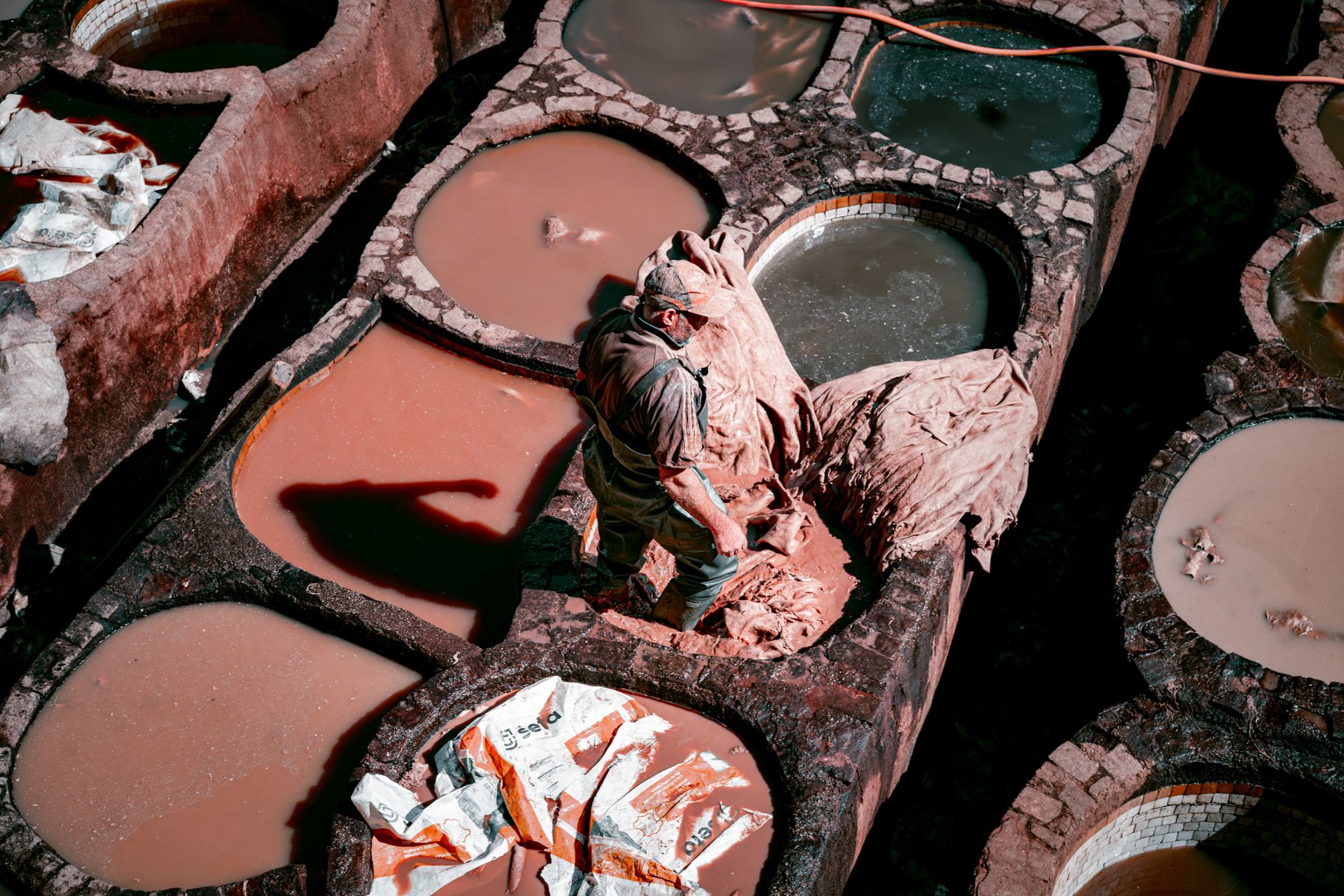
The Chouara Tannery is the world's best-preserved medieval tannery. Stone dyeing vats date to the 10th century; leather is still dyed there daily using traditional methods. View it from the leather-shop roofs above — entering a shop is free if you decline to buy, though salesmen will offer a mint sprig to mask the smell. The offer is practical, not theatrical. The vats release ammonia in concentrations that make staying in one spot for more than ten minutes unpleasant.
The Bou Inania Madrasa (1357) is the medina's most visually overwhelming Islamic building. The exterior courtyard is accessible free; the interior (€3) shows the carved cedar, zellige tilework, and narrow student cells. Most guide-recommended photos come from this spot.
Stay in a riad inside the medina — prices range €60–150 per night for mid-range properties. You will be given GPS coordinates for your riad because street numbers don't exist. Finding your accommodation on arrival becomes a solo navigation test, usually involving backtracking. This isn't a drawback; it's how you begin learning the medina's layout.
Fez versus Marrakech: Marrakech is easier to navigate alone and has denser tourist infrastructure (better restaurants, more accommodation variety, easier day trips). Fez feels rawer and less adjusted for tourism. The medina in Fez remains functional — people live, work, and trade there — whereas Marrakech's medina has shifted toward tourism. After Marrakech, Fez reads as more substantial.
Chefchaouen: How to Actually Arrive
The blue-painted Rif Mountain town sits at 600 metres elevation, roughly 200 kilometres north of Fez. Population: 45,000. The medina's blue buildings were painted by Jewish refugees in the 1930s (blue representing sky and heaven); the tradition has persisted and expanded, though not every street is blue — only the dense medina core.
Getting there from Fez requires a CTM bus (the national carrier). The journey takes four hours; tickets cost €10. Book the day before at a local ticket office or the CTM station (Gare Routière) in Fez. Buses depart morning and late afternoon.
From Marrakech, the routing is inefficient: eight hours by direct bus, or an overnight train to Casablanca (3.5 hours) followed by a bus to Chefchaouen (eight more hours). Chefchaouen is best visited from Fez or Tangier, not as a side trip from Marrakech.
The medina spans 30 minutes end-to-end on foot. The main sensory experience is walking uphill through narrow blue-walled streets. Ras el-Maa waterfall (a 15-minute walk north from the central plaza) is the standard destination; the walk is pleasant but the waterfall itself is modest.
A more rewarding hike: Spanish Mosque (Mezquita Alhambra) sits on the hill directly above town. Forty minutes up, mostly steps. The summit offers a panoramic view of the medina and the Rif Mountains. The mosque is closed to non-Muslims, but the grounds around it reward the climb.
What Chefchaouen actually is: a town where the aesthetic matches the Instagram image, which is rare in heavily photographed places. It's beautiful for photographs, genuinely pleasant for one to two nights, and limited in conventional activities beyond walking. Plan 1–2 nights, not three or more unless you are hiking routes in the Rif Mountains beyond the town itself.
The Sahara: Merzouga and the Dunes
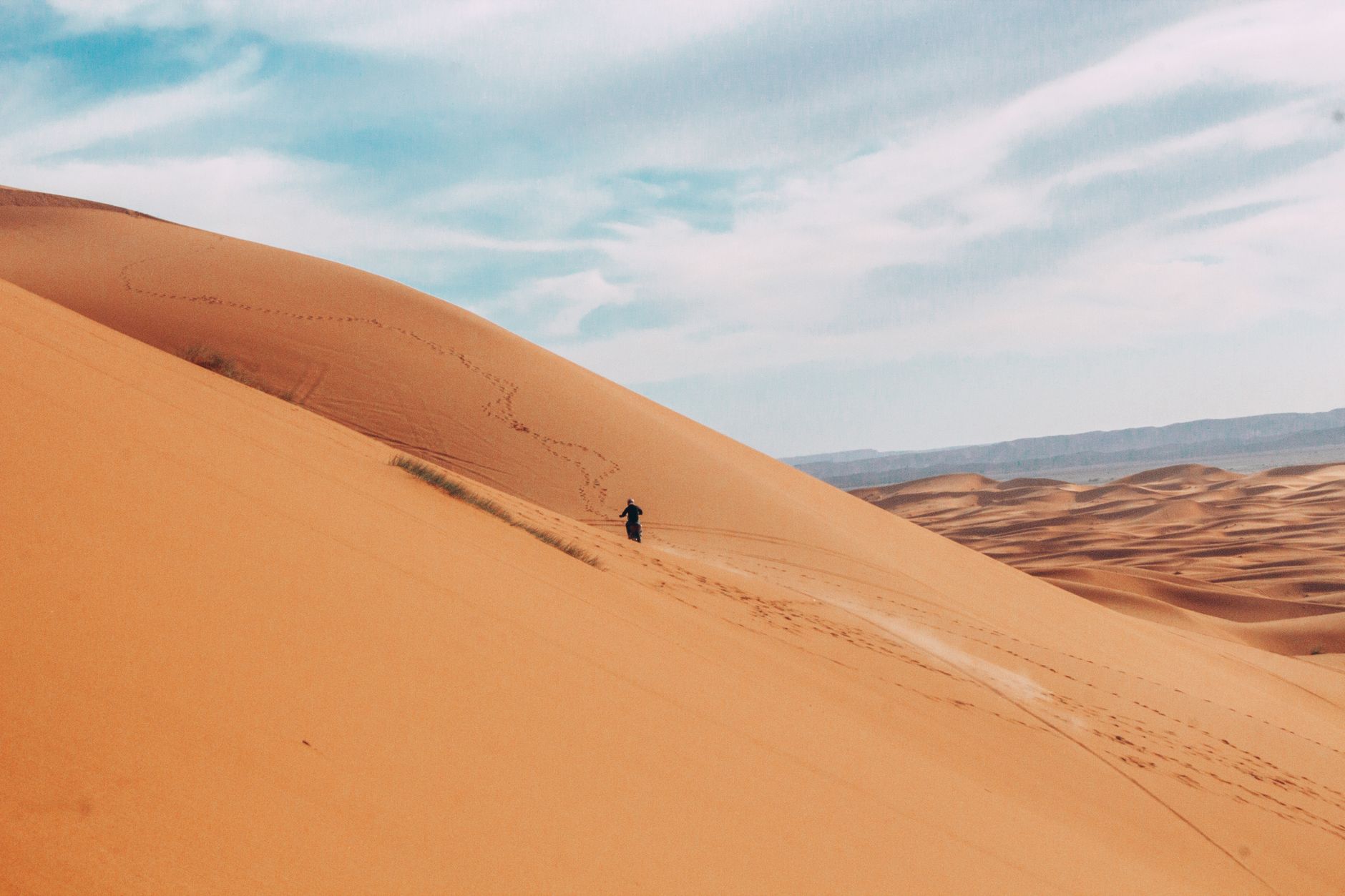
The Erg Chebbi sand dunes (up to 150 metres high) are located at Merzouga, 560 kilometres southeast of Marrakech. Reaching them requires eight to nine hours by hire car or ten to eleven hours by shared bus. Most travellers book a 2–3-night organised tour from Marrakech.
Tour operators saturate Marrakech's medina and every major hotel. A standard package costs €150–250 per person and includes transport, accommodation, and either a camel trek or quad-bike activity. The itinerary typically runs: Marrakech → Ait Ben Haddou (a UNESCO-listed kasbah and Game of Thrones filming location) → Tinerhir → Todra Gorge → Merzouga dunes → return. Most tours depart in the morning and reach Merzouga by evening of day two.
What the camel trek involves: 1.5 to two hours to a camp in the dunes, overnight in a Berber tent (beds, generator for phone charging, shared bathrooms), sunrise return to Merzouga town. The experience is genuine. The infrastructure is modest but functional.
Todra Gorge, in the Anti-Atlas Mountains, is often a tour stop. The gorge narrows to 15 metres wide; the walls rise 300 metres. Entry is free. The gorge is a destination for rock climbers; casual walkers can trek the canyon floor for 45 minutes. If self-driving, plan two to three hours here.
The counter-intuitive truth about Sahara tours: the dunes are the least time-intensive element. Most travellers find the overnight camp and camel trek memorable but brief. The substantial experience is the landscape between Marrakech and Merzouga — the kasbah, the gorge, the colour change as elevation and ecosystem shift. The Sahara itself is an endpoint, not the focus.
Self-driving is possible with a hire car (4WD recommended for dune access, though not mandatory). Self-driving lets you control timing and linger at Todra Gorge or the kasbah. However, solo driving a long distance on unfamiliar roads incurs navigation stress; tours include a driver and structured itinerary. The trade-off is autonomy versus simplicity.
Train Travel Between Cities
Morocco's ONCF rail network connects major cities with air-conditioned, reliable service. Tickets are bookable online at oncf.ma.
Key routes:
- Casablanca ↔ Fez: 3.5 hours, €18 second class, €23–26 first class
- Casablanca ↔ Marrakech: 3.5 hours, €15 second class, €20 first class
- Casablanca ↔ Tangier: 4.5 hours (Al Boraq high-speed service), €20–25
The reality: Marrakech to Fez has no direct train. Change in Casablanca (total journey seven hours, including connection time) or take a CTM bus direct (7.5 hours, €18). The bus is faster and simpler for this route.
Book first class on journeys longer than three hours — the seat width and air conditioning reliability justify the €5–8 premium. Second class is functional but cramped on longer routes. Book online two to three weeks ahead during peak season (October–April); a few days ahead is adequate for May–September.
A 10-Day Itinerary Without Marrakech Saturation
Days 1–3: Marrakech Medina, Bahia Palace (€5, worth the hour), Saadian Tombs (€3), Majorelle Garden (€8). A day trip to Ourika Valley or Essaouira (Atlantic coast, two hours west) provides variety.
Days 4–6: Fez ONCF train Casablanca–Fez, or CTM bus Marrakech–Fez (7.5 hours). Spend one full day with a guide in the medina (morning: tannery and souks; afternoon: madrasa and upper medina views). A second day unguided allows you to test navigation and find specific items or riads. A third day: optional day trip to Meknes (30 kilometres west, same train line as Fez) for the Imperial City walls and Moulay Ismail Mausoleum.
Days 7–8: Chefchaouen CTM bus Fez–Chefchaouen (four hours, €10). First afternoon: wander the medina. Second morning: Spanish Mosque hike. Second afternoon: depart.
Days 9–10: Tangier CTM bus Chefchaouen–Tangier (three hours, €8). Tangier's medina is smaller than Fez but walkable solo. The city is ferry-accessible from Tarifa, Spain (one hour), if continuing north. Alternatively, loop back to Fez or Marrakech for departure.
Alternative days 7–10: The Sahara Route Skip Chefchaouen. From Fez, take a bus or organise a tour to Merzouga (two nights). This trades one city experience for desert immersion.
When to Go and Practical Constraints
October through November is optimal: post-summer heat (temperatures 25–30°C instead of 35°C+), pre-winter rainfall, clear desert skies. April and May are also excellent but crowds increase markedly. Avoid July–August (40°C+ in the south) and December–February (cold, occasional rain disrupts travel).
A full circuit—Marrakech, Fez, Chefchaouen, and the Sahara—requires ten to fourteen days. Ten days is tight; fourteen is comfortable. If you can only extend a two-day Marrakech stay, Fez is the single addition that justifies the effort. It is denser, more architecturally significant, and the contrast to Marrakech is instructive. Chefchaouen and the Sahara are rewards for a week or longer.
Travellers with eight or more days, those interested in Islamic architecture and functioning medina culture, and independent travellers comfortable with non-English navigation infrastructure benefit most from this routing. October to November is the ideal window. If pressed for time, Fez alone transforms a Morocco itinerary beyond Marrakech.