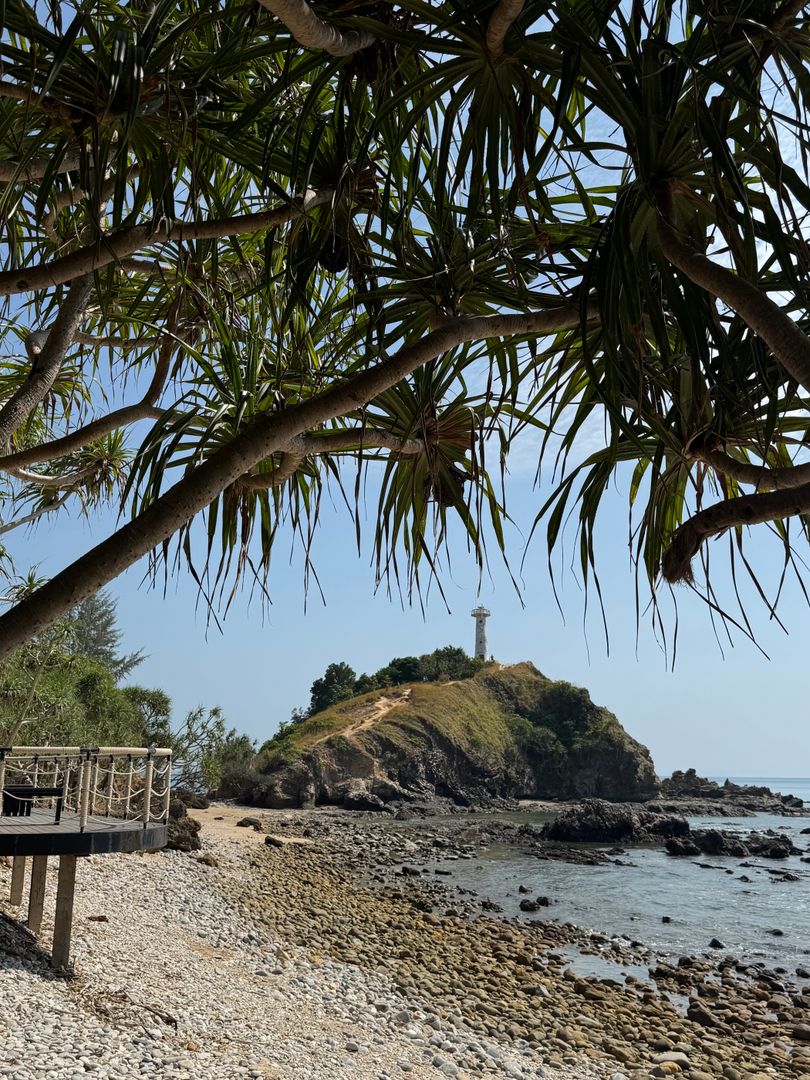

Pai has a reputation as a hippie retreat three hours north of Chiang Mai—and that reputation is half-right. The town is small (population under 5,000), heavily visited relative to its size, and extremely oriented toward cafés, massage shops, and slow travel. That's either exactly what you want or entirely not. The real draw isn't the town itself. It's the surrounding countryside: the canyon ridges, the hot springs, the waterfall circuits. Know what you're signing up for before the minivan leaves Chiang Mai.
How to get to Pai from Chiang Mai
The road itself is the first decision. There are three options, each with real trade-offs.
Shared minivan from Chiang Mai Arcade Bus Station is the standard route: 150–200 THB, three hours, leaving roughly every two hours from 7 a.m. to 4 p.m. The minivan takes Route 1095 north, which has 762 curves—a specific engineering fact worth knowing. If you're susceptible to motion sickness, take ginger or dramamine before boarding. The road is narrow, buses move fast around bends, and the driver won't adjust speed for passenger comfort. The upside: no navigation required, no fuel cost, and you arrive without fatigue.
Motorbike from Chiang Mai is viable if you've ridden a manual transmission bike on mountain roads before. The three-hour trip on Route 1095 is manageable for competent riders but not for beginners. Sharp curves, occasional trucks in your lane, limited guardrails on downhill sections, and narrow shoulders mean mistakes carry real consequences. Rent from a shop on Thanon Nimmanhaemin in Chiang Mai (200–300 THB/day for a 110cc automatic is sufficient; manual bikes are cheaper but require skill). Fuel is cheap—expect 100–150 THB for the round trip. The advantage is flexibility: stop for lunch, explore side roads, linger at a viewpoint. The disadvantage is three hours of concentration without the option to sleep.
Kan Air operates a 25-minute flight between Chiang Mai and Pai roughly three times weekly (around 2,000 THB one-way), but schedules change seasonally and flights are cancelled if demand is low. Don't plan an itinerary around the flight; verify it's running within a week of travel. The flight eliminates the road entirely and is worth considering if you have limited time and the road genuinely makes you sick.
What Pai actually is
The town itself is a single main street (Thanon Chaisongkhram) roughly one kilometer long: restaurants, bars, craft shops, a walking street with food stalls Thursday to Sunday evenings. There's no temple of architectural note, no museum, no cultural sight that would justify the journey on its own. Most visitors spend one to three hours here, eat pad thai, buy a sarong, and leave.
The actual point is the valley. Pai sits in a mountain basin with rice paddies, tea plantations, waterfalls, natural hot springs, and hill tribe villages within 30 to 50 kilometers. The outdoor activities are why you're here. The town is where you sleep and refuel.
Accommodation ranges from fan-only bamboo bungalows at 300–500 THB per night to mid-range hotels at 1,000–1,500 THB and boutique resorts at 2,500+ THB. Most budget places lack air-conditioning and hot water—if you're booking a 300 THB room, accept that. The valley locations (around Pai Canyon or south of the hot springs) are quieter and more scenically positioned than town-center options, but they require a motorbike or songthaew (shared pickup truck) ride to reach restaurants and shops. Pai River Corner, Pai Treehouse, and Zenmaya are the most frequently recommended mid-range options; all fill by 5 p.m. in peak season (November–February), so book two to three weeks ahead if you're visiting then.
Things to do around Pai
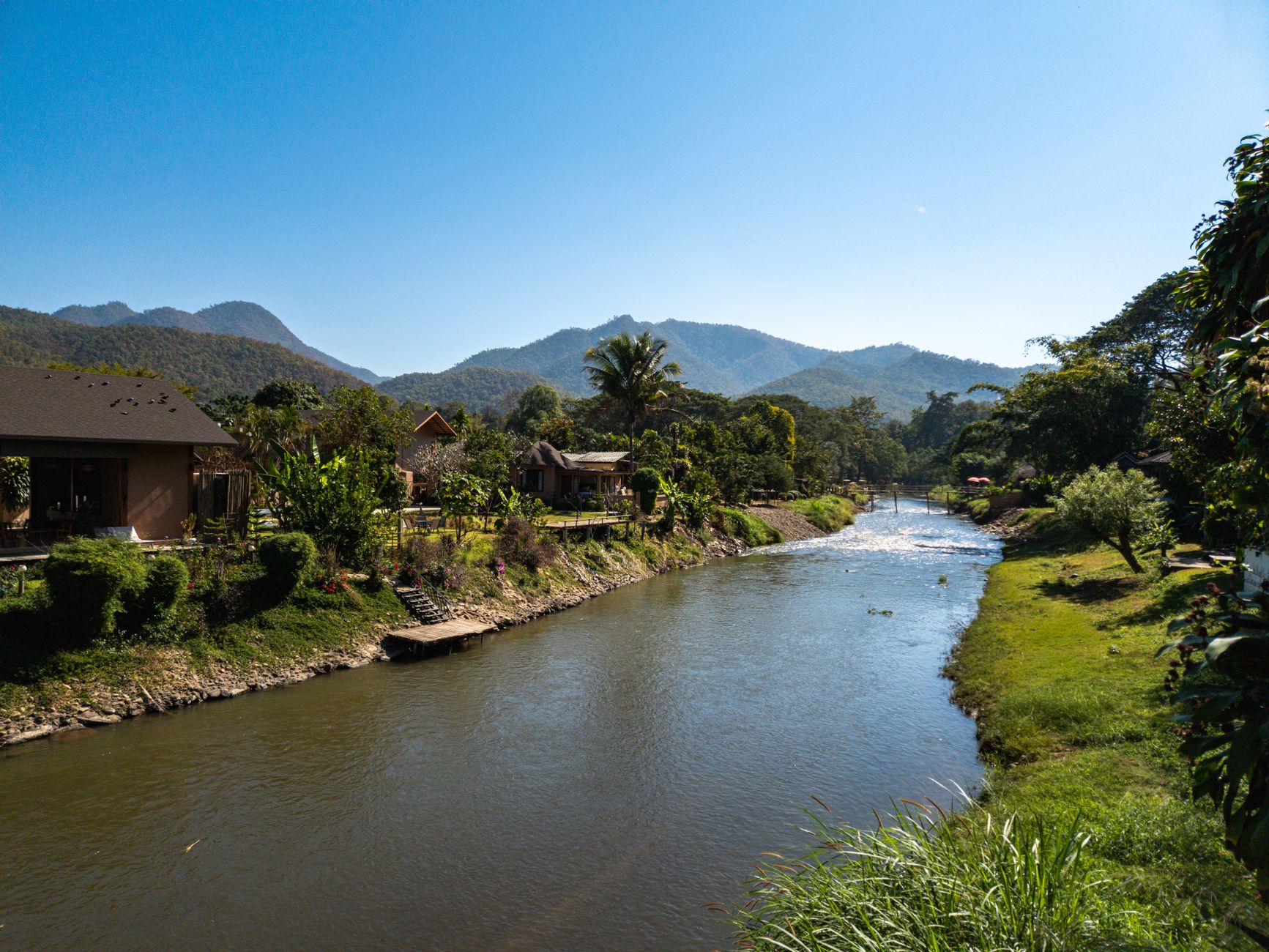
Pai Canyon (Kong Lan) sits eight kilometers south of town. The walk takes 20 minutes: a narrow ridge with 30-meter drops on both sides, eroded earthen walls, and views across the valley. It's not dangerous if you're attentive, but it requires a basic head for heights. Sunset is the standard time to visit—arrive by 4:30 p.m. to avoid climbing in darkness. Entrance is free. Most visitors spend one hour here.
Pam Bok Waterfall is a series of rocky pools rather than a dramatic cascade, 30 minutes from town. It's best visited November through February when water volume from preceding rains is high; in the dry season (March–May), it's underwhelming. Entry is 200 THB. Bring a bathing suit if you want to wade in the pools; the water temperature is cold year-round.
Tha Pai Hot Springs is a collection of proper geothermal pools in a bamboo forest setting, eight kilometers from town. The water is sulfurous and hot enough that it's genuinely relaxing for an hour, especially in the morning before crowds arrive. Entry is 300 THB. This is the only thermal experience you'll find in northern Thailand that doesn't require travel to Mae Hong Son Province.
Santichon Village (also spelled Santikhiri) is a Chinese Kuomintang settlement established in 1949 by remnants of the Chinese Nationalist Army. It's 45 minutes from town and includes a watchtower with valley views, tea plantations, and a small museum. The context is historically interesting—it's one of the few places in Thailand where you can see evidence of mid-20th-century geopolitics. It's become heavily touristed in the last five years, with organized group visits and souvenir stalls, but the location and the history remain worth a few hours.
Long-neck Karen village visits are offered by most tour operators in town (500–700 THB). The women pictured in guidebooks wear brass coils that elongate their necks. These visits are operated as tourism, and the ethics are contested—critics argue they function as human zoos. Research your operator carefully; some villages benefit economically from visits, while others do not. This is not a must-do activity.
The motorbike loop is the most popular single activity: rent a scooter (200–300 THB/day) and visit the canyon, waterfalls, and hot springs in a single day. The loop is roughly 60 kilometers, manageable on an automatic bike for riders with basic experience. Start early (8 a.m.) to avoid afternoon heat and to ensure the hot springs aren't crowded. Most visitors complete the loop in four to five hours of riding time plus stops.
The Mae Hong Son Loop: the bigger circuit
If Pai is interesting but feels too small, the Mae Hong Son Loop is the natural extension. This is a 600-kilometer round trip from Chiang Mai that most Westerners rate as the best road trip in northern Thailand.
The standard routing is: Chiang Mai → Pai (day one or two) → Mae Hong Son town (day three) → Ban Rak Thai tea village on the Burma border (day four) → return to Chiang Mai via Khun Yuam or direct. Three to five days on a motorbike, depending on stops.
Mae Hong Son town itself is cooler and quieter than Pai—it sits at 650 meters elevation and has a genuine Shan minority population. The main temple (Wat Phra Non) is worth an hour. The surrounding routes (to Soppong, to Ban Rak Thai) have better scenery and fewer tourists than Pai.
Ban Rak Thai is a Thai village on the Burma border where residents grow tea. The town has a reservoir, a teashop, and views into Myanmar. It's frequently promoted as a "hidden" destination, which is half-true—it's not unknown, but it's distant enough that it feels less touristy than Pai.
This loop requires competent riding skills. Mountain passes have steep grades, some sections are unpaved, and there's no room for error on narrow switchbacks. Most visitors who complete it cite it as a high point of their Thailand trip—the landscape is genuinely dramatic, and the roads are engineered well enough that the ride itself is rewarding rather than just functional.
If you're an experienced rider and have four to five days, the full loop is worth the time investment. If you're a beginner or nervous rider, stick to Pai and the local motorbike loop.
When to visit Pai
November–February (dry season) is the best window. Temperatures drop to 10–15°C at night, daytime highs are around 25–28°C, and the sky is clear. Waterfalls run full from the preceding monsoon rains. This is peak tourist season: expect crowds in Pai town, higher prices, and booked accommodation. If you're flexible on timing, travel mid-week (Tuesday–Thursday) rather than weekends.
March–May (dry and hazy season) should be avoided if possible. Agricultural burning in northern Thailand creates smoke that reduces visibility to 2–5 kilometers on many days. Air quality registers as "unhealthy" on most air quality indices. The haze is worst in March and April. Waterfalls are nearly dry.
May–October (rainy season) brings daily afternoon rains, lush green scenery, and full waterfalls. The problem is road flooding—Route 1095 occasionally becomes impassable for a few hours after heavy downpours. It's not common, but it's a real risk if you're on a strict schedule. Crowds are lowest during this period, and prices drop 20–30%. If you're flexible and tolerate weather uncertainty, this is good value.
Where and how long to stay
For a first visit from Chiang Mai, plan two nights, three days. Day one is the drive (three hours), leaving you the afternoon to explore the canyon and hot springs. Day two is the full motorbike loop or a longer hike. Day three is a morning activity (waterfall, tea village visit, or a second canyon visit at a different time of day) before returning to Chiang Mai by minivan or motorbike.
Three to four nights is ideal if you want a slower pace or plan to do the Mae Hong Son loop. A single overnight visit is possible but feels rushed; you'll spend a quarter of your time traveling.
Town-center accommodations (Pai River Corner, Ban Pai Home) are noisy Friday and Saturday evenings from bar music. Valley locations (Pai Treehouse, Zenmaya, Pai Tarn Village) are quieter and more scenic but require a motorbike or songthaew ride to restaurants. Budget travelers who enjoy the social scene opt for town. Everyone else heads to the valley.
Is Pai worth it
The answer depends on what you're seeking.
Pai is worth the journey if you want mountain scenery, waterfalls in full volume (November–February), a change of pace from Chiang Mai, and outdoor activities that don't require guides. The canyon and hot springs are genuinely good. The road trip itself—if you're riding a motorbike—is the best part of the experience.
Pai is not worth it if you expect a cultural experience comparable to Chiang Mai. There's no temple of architectural note, the "local" life you see is largely aimed at tourists, and the town itself has been reshaped by backpacker economics. If you're interested in Shan culture, hill tribe communities, or Thai rural life, Mae Hong Son Province is more authentic—but Pai is the entry point.
The 762-curve road is a genuine barrier for some people. If the minivan made you nauseous on the way out, you'll need to return the same way or fly (if Kan Air is operating). Factor this into your decision.
For most travelers with three to four spare days and a basic tolerance for mountain roads, Pai is worth a single visit. It's not a place you'll return to repeatedly unless you're specifically seeking the slow-travel café culture. The Mae Hong Son loop, by contrast, is worth a return trip.
If you have two days and uncertain about your tolerance for winding roads, visit Chiang Mai's Old City temples and the hot springs at San Kamphaeng instead—they're 30 minutes from the city, require no travel risk, and show you what you need to know about northern Thailand.
If you have four days, the Mae Hong Son loop is more rewarding than Pai alone.
Frequently Asked Questions
How bad is the 762-curve road to Pai?
The road is narrow, steep, and fast-moving by design. It's not inherently dangerous—the curves are banked appropriately and the surface is well-maintained—but it triggers severe motion sickness in roughly 20–30% of passengers. Dramamine or ginger taken an hour before the journey reduces symptoms significantly. If you're a chronic car-sick traveler, consider flying instead.
Can I do Pai as a day trip from Chiang Mai?
Technically yes: take the 7 a.m. minivan, see the canyon at sunset (4 p.m.), and return the same evening. You'll spend six hours traveling and roughly five hours in Pai. It's more exhausting than rewarding. A single overnight stay is the minimum to enjoy the valley.
Is Pai or Chiang Mai better?
Chiang Mai is the cultural center: temples, night markets, cooking classes, Shan/Lanna history, and urban amenities. Pai is a small mountain town with scenery and outdoor activities. They serve different purposes. Chiang Mai is the destination; Pai is the extension if you want to slow down and hike.
Which month has the fewest crowds in Pai?
June through August (rainy season) and September are quietest. June and July are wet but lush; air quality is excellent. September has occasional flooding on the road into Pai, so check conditions before traveling. November through February are busiest—avoid weekends if possible.
Can I visit Pai without a motorbike?
Yes. Songthaew (shared trucks) operate fixed routes between Pai town and the main attractions (canyon, hot springs, waterfall) for 50–100 THB per trip. They run roughly every two hours in the morning and less frequently in the afternoon. You'll need to wait for a full truck to depart, so plan longer than you would with a motorbike. Alternatively, hire a private driver through your accommodation (500–800 THB for a full-day loop).
What's the difference between Pai and Mae Hong Son town?
Pai is touristy and small; Mae Hong Son is larger, cooler (higher altitude), less developed for Western travelers, and has a more authentic Shan population. Mae Hong Son is the proper town; Pai is the backpacker version. If you prefer less tourism and are comfortable with fewer English speakers, Mae Hong Son is the better choice for a longer stay.

