

Most first-time visitors to Thailand waste days deciding between north and south, then spend half their time in transit. Two weeks is enough to do both well if you make one strategic choice upfront: fly between Bangkok and Chiang Mai rather than taking the overnight train, and skip the second return to Bangkok. This saves a full day and removes the logistical knot that derails most two-week itineraries.
The recommended 14-day route
Days 1–3: Bangkok → Days 4–6: Chiang Mai → Days 7–11: South (Krabi/Koh Lanta) → Days 12–13: Bangkok return → Day 14: Depart
The sequence matters. Start in Bangkok because that's where you land and adjust to the 12-hour time difference. Hit the key temples and markets while jet-lagged (they're dense enough that confusion doesn't matter). Fly north to Chiang Mai while you still have energy for temple hiking and cooking classes. Then descend to the islands when heat and activity overload sets in — beaches require less navigation. Return to Bangkok only for the flight out, using the final 36 hours as a buffer in case of delays, not as a second tourism block.
Days 1–3: Bangkok — temples, markets, one day trip
Day 1: Grand Palace and street food foundation
Arrive, collect a SIM card at Suvarnabhumi Airport (AIS desk, ~600 THB for 30 days unlimited data). Take the Airport Rail Link to Bangkok city centre (45 minutes, 45 THB) — faster and cheaper than a taxi and avoids the highway gridlock that eats an hour off every car journey.
The Grand Palace opens at 08:30. Book entry online through the official website 5–7 days ahead (500 THB), which fast-tracks the queue. Wear trousers or a full-length skirt and closed shoes — enforcement is strict. Allocate three hours. The palace itself is compact; the time goes to the Emerald Buddha hall, the intricate details of the cloister walls, and the simple fact that nothing in your home country looks like this. It's crowded by 10:00 regardless of season.
Walk 400 metres south to Wat Pho immediately after (100 THB entry). The reclining Buddha is 46 metres long, gold-plated, and the first temple many visitors remember clearly because the scale is absurd. Wander the compound at 11:30 when other groups are eating lunch. The massage school there is legitimate (2.5-hour traditional Thai massage, ~400 THB) but skip it on day one — your body needs rest more than treatment.
Lunch in Chinatown (walk west from Wat Pho, 15 minutes, or take a tuk-tuk for 50 THB). Yaowarat Road is the main artery. Eat at a shophouse restaurant without English signage — Nai Mong Hoi Tod (crab omelette), Kuaitiao Rad Na (gravy noodles), any vendor with a 30-year reputation and a one-metre queue. Budget 60–150 THB per dish.
Evening: rest at your hotel or take the BTS Skytrain (buy a Rabbit Card, refundable, 50 THB + top up 100–500 THB) to a rooftop bar. Vertigo at Banyan Tree (92nd floor) is free entry if you order two drinks (250 THB each, overpriced but the view is the city entire). The alternative is Octave Rooftop Lounge or Lebua State Tower — all charge similar drinks prices. Go for the angle, not the venue.
Day 2: Markets or museums, depending on the day of the week
If it's Saturday or Sunday: Chatuchak Weekend Market. Get there by 09:00 (BTS to Mo Chit station). It's 17,000 stalls across 27 acres. Wander the food section (north side), the vintage clothing sections, and the antique furniture warren. Leave by 13:00 — the afternoon heat and the crowds compound each other unbearably. Lunch at one of the internal food courts (Khao Man Gai, boat noodles, grilled fish) for 50–100 THB.
If it's a weekday: skip the market. Go to Jim Thompson House (BTS to National Stadium, walk 5 minutes, 200 THB entry, 1.5-hour guided tour). Thompson was an American silk merchant who bought a row of six teak houses and connected them. The tour is genuinely informative about how Bangkok lived in the 1950s, and the woodwork is detailed enough to occupy your attention. Tours run every 20 minutes; no advance booking needed.
Afternoon: MBK Center or Siam Paragon for air-conditioned wandering and cheap meals. MBK is a proper shopping mall for locals, not tourists — the energy is different. Siam has a food court on level 6 that serves excellent Isaan (northeast Thai) food.
Evening: Thonglor or Ekkamai soi (side street) — these are residential neighbourhoods with independent restaurants, cafés, and bars. No tourist infrastructure, no hawking, no Instagrammable angles. Eat som tam (papaya salad) and sticky rice. Drink beer at a local bar (Chang or Singha, ~100 THB). This is the Bangkok most visitors miss because it's not in guidebooks.
Day 3: Ayutthaya day trip by train
Take the state railway (SRT) to Ayutthaya from Hualamphong Station. Trains leave roughly hourly, ~06:00–16:00. Second class, 15 THB, 90 minutes. This is not a tourist train; it's how locals commute. Buy a ticket at the window 30 minutes before departure (or at the machine, which has English).
Arrive Ayutthaya around 10:00. Hire a tuk-tuk at the station for the day — negotiate 500 THB for four hours, driver-included, hitting Wat Mahathat (the temple with the Buddha head caught in tree roots), Wat Yai Chai Mongkol, and Wat Phra Si Sanphet. The driver knows the circuit and will eat lunch nearby while you're in the temples. A rented scooter (150–200 THB) is faster but requires nerve and an international driving permit.
The temples are UNESCO-listed ruins, mostly brick and laterite. They're 400+ years old and partly destroyed (by the Burmese, in 1767). The historical weight is real but requires reading plaques or having a guide. Budget three hours for temple-wandering; the rest of the day is eating and sitting in shade.
Lunch: grilled fish at a riverside restaurant on the east bank (fish from the local canal, 100–200 THB). Return to Bangkok by 17:00 (5-hour window to catch a train back).
Where to stay in Bangkok (nights 1–3):
- Silom or Sukhumvit: Near the BTS Skytrain, walkable to restaurants and bars. Mid-range hotels (two-star, private room) run 600–1,200 THB. Better for repeat visitors who want autonomy.
- Banglamphu (Khao San Road area): Backpacker hub, chaotic, cheaper (400–700 THB dorms, 700–1,200 THB privates), full of 19-year-olds on their gap year. The temples are walkable. If you're solo or want free social structure, it works.
- Riverside (Thonburi side): Quieter, slower access to the BTS, but Iconsiam mall is here and some of the best riverside restaurants. Best if you value calm over convenience.
Avoid staying in Patpong or the tourist strips of Sukhumvit unless you specifically want that scene — it's louder, pricier, and less useful for the itinerary's goals.
Days 4–6: Chiang Mai — temples, cooking, ethical wildlife
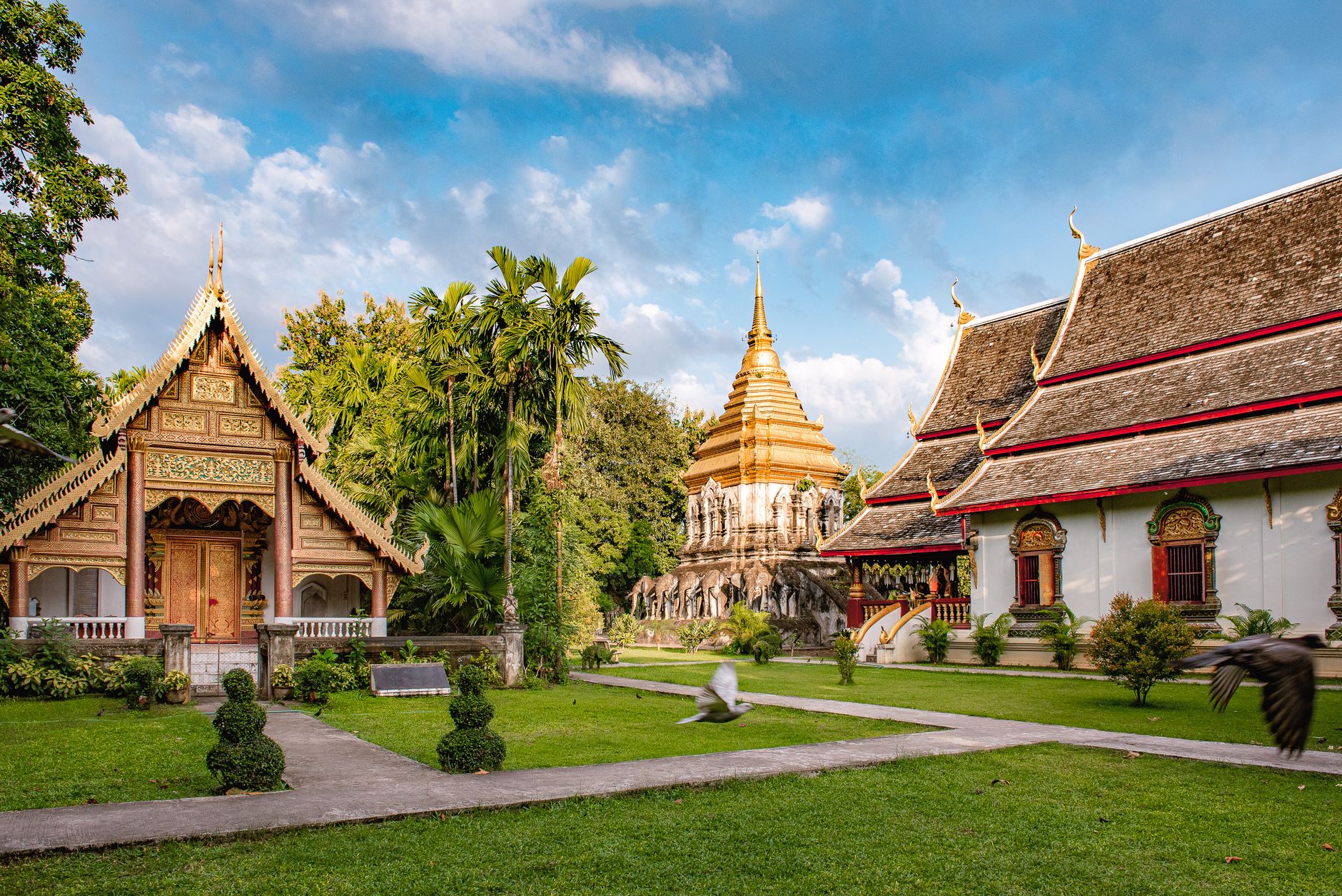
Getting there: Bangkok to Chiang Mai
Fly (AirAsia or Thai AirAsia, 1–2 hours, 1,000–2,500 THB booked 3–4 weeks ahead, or 3,000–5,000 THB last-minute). Depart Bangkok 09:00–12:00, arrive Chiang Mai by 11:30–13:30. This is the right choice — the overnight train saves one hotel night (~1,000–1,500 THB) but costs a day of travel and is uncomfortable if you don't sleep on trains.
From Chiang Mai Airport, take a shared minibus to the old city (200 THB, 30 minutes) or a private taxi (400 THB). Arrive around 14:00.
Day 4: Mountain temple and old city temples
Morning (10:00 start): Take a songthaew (red truck minibus) from the old city to Doi Suthep (30-minute drive, 60 THB per person, depart every 15 minutes from Chiang Mai Gate). Entry to the temple is 30 THB. Climb 306 steps through incense smoke to the main sanctuary. The view down into the valley is the clearest perspective on how Chiang Mai sits among mountains — worth the sweat.
Lunch at a shophouse near the base (Khao Soi, Chiang Mai's signature curry noodle, 50 THB).
Afternoon: walk or take a songthaew back to the old city. Wander Wat Chedi Luang (free, no entry fee, open dawn–dusk). The stupa is massive, brick, 600 years old, and damaged by an 1545 earthquake. Monks are often in the compound; it feels like a living place, not a museum.
Evening: Nimman Road (north of the old city, 10 minutes by tuk-tuk, 50 THB). This neighbourhood has independent cafés, design shops, and restaurants. Eat at a small family-run place (Khao Soi Khun Prem, legendary status, ~60 THB, no English menu but point at what locals are eating). The street has a different energy from Bangkok — young professionals, artists, students, not tourists.
Day 5: Cooking class and ethical sanctuary
Half-day Thai cooking class (08:30–12:30, book one week ahead, ~1,200 THB). Chiang Mai has dozens; Pantawan Cooking School or similar local operators are better than the tourist-facing chains. The class includes a market visit in the morning (you choose ingredients), then you cook four dishes in someone's home kitchen. You learn technique — how to balance a curry, how to control heat with palm sugar — not just follow recipes.
Afternoon (14:00–17:00): Elephant Nature Park or similar ethical sanctuary (~2,800 THB, book one week ahead). This is the one high-value animal interaction in Thailand that doesn't exploit elephants. The experience is observation, not riding — you walk behind rescued elephants, watch them bathe and eat. The sanctuary rescues animals from logging and tourism camps. It's the only version of this activity worth money.
The alternative is an elephant camp that offers "work with trainers" or feeding — avoid these. They use chains and negative reinforcement.
Evening: rest. Your feet hurt from the market walk and temple steps.
Day 6: Markets or flight south
If you're in Chiang Mai on a Sunday: Sunday Walking Street (Warorot Market area, 17:00–23:00). Hundreds of food and craft stalls, local crowd, live music, no tourist infrastructure. Eat mango sticky rice, drink fresh lime juice, browse the handmade textiles. This is the best night market in Thailand because it's run by and for locals.
If you're visiting on another day of the week: take a scooter (150 THB, day rental) and ride 20 minutes north to Nimman Road's northern extension, or explore Ban Kang Wat neighbourhood for cafés and artist studios.
Afternoon or evening: fly to the south. Flight times vary, but a 17:00–18:00 departure gives you the morning in Chiang Mai. AirAsia or Thai AirAsia to Krabi (1.5 hours, 1,000–2,000 THB, book 3 weeks ahead).
Where to stay in Chiang Mai (nights 4–6):
- Old City: walkable to temples, central, 500–1,200 THB for a private room. Slightly louder in the evening.
- Nimman Road: quieter, younger crowd, 600–1,500 THB. A 10-minute walk or tuk-tuk ride to the old city.
Days 7–11: South — Krabi and Koh Lanta
Why these islands, not Phi Phi or Phuket?
Phi Phi is overcrowded (boat queues of 100+ people to snorkel the same reef spot), destroyed by overtourism, and expensive. Phuket is developed into a mid-range beach resort clone — fine if you want that, not fine if you want Thailand. Koh Samui has full resort infrastructure but lacks the calm that makes island days restorative.
Koh Lanta is less developed than Phi Phi, has genuinely good beaches, and the snorkeling (Hin Daeng, an offshore pinnacle) is serious without the circus. Krabi (Ao Nang) is the base for Railay Beach and limestone rock climbing, with ferry access to Koh Lanta. Two nights in Krabi, three nights in Koh Lanta, one recovery night back in Krabi — this gives you variety without fragmentation.
Day 7: Arrive Krabi, Ao Nang
Arrive Krabi airport mid-afternoon (18:00–20:00). Take a shared minibus to Ao Nang (45 minutes, 150 THB) or a private taxi (400 THB). Ao Nang is a beach town, low-rise, functional, no nightlife to speak of. This is fine.
Check in to a beachfront or beach-adjacent hotel (800–1,500 THB for a room with a fan or basic A/C, cleanliness guaranteed). Eat dinner at a beach restaurant (grilled fish, pad thai, 100–150 THB).
Day 8: Railay Beach and rock climbing
Railay Beach is on a peninsula, inaccessible by road, only by long-tail boat (20 minutes from Ao Nang, 100–150 THB per person). It's touristed but contained — the beach is small, the cliffs are limestone, the water is clear. Arrive by 09:00.
Spend the morning swimming and reading. Lunch at one of the beachfront restaurants (overpriced relative to Ao Nang, 150–200 THB for a curry).
Half-day rock climbing (13:00–17:00, 1,500–2,000 THB including gear and an instructor) if you have climbing experience or want to start. Otherwise, a guided hike to the Four Emerald Pools (a series of freshwater pools in the forest above Railay, accessible by trail from the south end of the beach, free, 90 minutes round trip). The pools are cold and clear and empty by 15:00 when the boat tours disperse.
Return to Ao Nang by 17:00.
Day 9: Four Islands longtail tour
Book the evening before (any hotel can arrange, 1,200–1,500 THB, or direct at a tour desk). A longtail boat takes 4–6 tourists to four different islands for snorkeling — typically Phra Nang Cave (overrated, crowded), Bamboo Island (better reef, fewer boats), Monkey Beach (proboscis monkeys, chaotic), and another depending on the operator.
Depart 08:30, return 17:00. Bring sunscreen (SPF 50, you will sunburn), water, and a rash guard or wetsuit top (the sun reflects off water and catches your shoulders). The snorkeling is moderate — you'll see grouper, parrotfish, some coral, but not an aquarium. It's a boat day, a break from walking, a reset.
Evening in Ao Nang: stretch the legs, eat early, sleep.
Day 10: Ferry to Koh Lanta
Minibus from Ao Nang to Krabi Town (30 minutes, 100 THB), then from Krabi Town to the ferry pier at Leam Hin (30 minutes, 80 THB, depart 09:00–16:00 roughly hourly). Ferry to Koh Lanta (1.5 hours, 300–400 THB depending on the operator). The boat is slow, direct, full of locals and their scooters. Arrive Koh Lanta around 11:00–12:00.
Koh Lanta is 30 km long, mostly undeveloped. Stay in Ao Phra-Ae or Khlong Dao (the main beaches, north side). Hotels run 600–1,500 THB for a private room, 800–2,000 THB if you want air-con and hot water.
Rent a scooter (150–200 THB, day) and ride the west coast — Ao Kantiang, Ao Khlong Jark, Hua Hin Beach (small, quiet, fishermen). Stop for lunch at a beachside restaurant (80–150 THB). The island is easy to navigate, the people move slower, the beaches have room.
Evening: eat at a beachfront shack (grilled squid, 100 THB), swim at sunset if you want, sleep.
Day 11: Snorkel trip to Hin Daeng, or beach day
Hin Daeng is an offshore pinnacle reef, 20 km south. Boats depart 08:00–09:00 from Ao Phra-Ae, return 15:00–16:00. Cost 1,200–1,500 THB. It's a 30-minute boat ride each way, so you get three hours in the water. The reef has depth — you drop to 15–20 metres and see grouper, jacks, trevally, soft coral. The snorkeling is legitimate, not a boat-tour gimmick.
If diving is your primary goal, Koh Lanta has dive shops and one-off dives cost 1,500–2,000 THB (two dives, half-day). Book the evening before.
Alternatively: rest on the beach. Walk Ao Khlong Dao, read, swim slowly, reset your nervous system. This is the only part of the itinerary where nothing is scheduled — use it.
Where to stay in Krabi and Koh Lanta (nights 7–11):
Ao Nang, Krabi: 800–1,500 THB for a basic room with private bath and fan. "Ao Nang Villa" and similar names are fine.
Koh Lanta: 600–1,500 THB depending on beach and finish. Ao Phra-Ae has the most restaurants; Khlong Dao is slightly quieter. Both are walkable beach strips with no traffic.
Days 12–13: Return to Bangkok
Day 12: Fly Krabi to Bangkok
Ferry back to Leam Hin (1.5 hours, 300–400 THB) and minibus to Krabi airport (1 hour, 200 THB). Flight times are flexible — choose mid-morning (10:00–11:00 departure) to avoid the ferry timing stress. Arrive Bangkok 13:00–14:00.
Take the Airport Rail Link to the city (45 THB, 45 minutes). Check into a hotel near the BTS Skytrain in Silom or Sukhumvit (600–1,200 THB) for a final night.
Evening: walk the Pak Khlong Talaat flower market (best dawn–08:00, but the atmosphere persists into morning, closest BTS is Saphan Taksin, then a 5-minute walk). Thousands of marigolds, roses, chrysanthemums stacked on the sidewalk, sold by weight. It's fragrant and low-key.
Dinner: sit-down restaurant in Silom Soi 4 (Thai, international, wine bar options, 200–500 THB per person). Silom has the most visible restaurant density of any Bangkok neighbourhood.
Day 13: Buffer day, then depart
If you have a day flight out (afternoon or evening): morning visit to Iconsiam (BTS to Iconsiam station, the mall itself is worth 90 minutes for the architecture and the rooftop garden). Lunch at the food hall. Or simply rest at your hotel, pack, nap.
If you depart late evening: spend the day as you would on day 2, hitting anything missed (a specific temple, a museum, a market). Or don't — two weeks of temples, boats, markets, and stairs will have tired you out. Resting is a valid choice.
Practical essentials for the entire itinerary

Flights and booking lead time
Book domestic flights (Bangkok–Chiang Mai, Chiang Mai–Krabi, Krabi–Bangkok) 3–4 weeks ahead for mid-range pricing. AirAsia is the backbone carrier (cheap, reliably on-time). Thai AirAsia and Nok Air are alternatives. Last-minute flights (booked within a week) are often cheaper if a route isn't full, but you're gambling.
Money and costs
Budget 2,500–4,000 THB per day for mid-range travel (private room, sit-down meals, 1–2 activities). This excludes international flights and the three domestic flights within Thailand (~3,000–6,000 THB total depending on booking timing). Costs break down as:
- Hotel: 600–1,500 THB (Bangkok), 500–1,200 THB (north), 600–1,500 THB (islands)
- Food: 200–500 THB per day (street food and shophouse restaurants)
- Activities: 500–2,000 THB per day (temples, cooking classes, boat tours)
- Transport: 300–500 THB per day (local taxis, songthaews, ferries)
ATMs are everywhere. Withdraw cash in Bangkok, Chiang Mai, and Krabi — no fees at Thai ATMs if your bank reimburses international ATM charges. Krabi ATMs sometimes run out of cash mid-afternoon, so withdraw early.
SIM card and internet
Buy a SIM card at Bangkok airport on arrival. AIS or True Move offer 30-day unlimited data + local calls for ~600 THB. Top up at any 7-Eleven. Don't bother with international roaming — it's expensive and slow.
Entry and visas
Most Western nationalities receive 60 days visa-on-arrival for Thailand (this was extended from 30 days in 2024). No pre-arranged visa is required. On entry, the immigration officer will ask for a departure flight booking and accommodation details for the first night — you'll have both. Keep your arrival card (the white slip of paper stamped into your passport) — you need it when you leave.
Scooters and transport
Rent a scooter (150–200 THB/day) if you're comfortable with one. Thailand drives on the left; roads are chaotic but not lawless. Accidents happen. An international driving permit (get this before you leave home) is theoretically required but rarely checked. Don't drink and ride.
Tuk-tuks are iconic but expensive if used for every journey. Songthaews are cheaper and faster for medium distances. BTS Skytrain in Bangkok is the fastest way to move. Grab (Thailand's Uber) works but charges dynamic pricing — songthaews are cheaper for equivalent distances.
What to pack
Lightweight, loose clothes (cotton, linen). Closed shoes for temples (sandals for your feet). Sunscreen (SPF 50). A small backpack and a larger rolling suitcase — you won't need both if you pack correctly. Rain jacket (even in the dry season, occasional storms). Medications you take regularly (pharmacies exist but brands differ). Earplugs if you're sensitive to noise. A good book or e-reader for downtime.
Don't pack much — one set of clothes repeating is enough. Laundry costs 30–50 THB per kilogram and turnaround is 24 hours.
Food and water
Tap water is not potable; drink bottled water (15 THB per 1.5L bottle). Ice in restaurants is safe. Street food is safe — the high turnover and open cooking are actually hygiene assurances. Avoid raw vegetables in street food; cooked food and fruit you peel yourself are fine.
Fish sauce, curry, rice, noodles, and grilled meat dominate the diet. If you have dietary restrictions (vegetarian, allergies), learn to say this in Thai or use Google Translate to show locals. Restaurants will accommodate.
One thing most itineraries get wrong
Most guides suggest adding a second night train (Bangkok–Chiang Mai southbound or similar) or trying to hit 5+ destinations in two weeks. Both are mistakes. The overnight train is uncomfortable if you don't sleep well, and routing through multiple islands means you arrive as a crowd is leaving and don't integrate. This itinerary prioritizes depth (three days in one city, overnight stays rather than day trips) over breadth. You'll miss Sukhothai, the islands east of Koh Samui, hill-tribe treks, and the Isaan plateau — that's the trade-off. Two weeks later, you'll return for those.
Frequently Asked Questions
How many days should I spend in Bangkok?
Three days. Fewer and you'll skip the Ayutthaya day trip (crucial for understanding Thai history). More and you'll repeat yourself — Bangkok has density but limited novelty after two full days. Use the third day for Ayutthaya, not more temples in the city.
Is it better to do north first or south first on a two-week trip?
North first (Bangkok → Chiang Mai → South). You adjust to the time difference in Bangkok (already done), then move north while you have energy for temple hiking and cooking classes. By day 7, you're tired — islands are restorative by design, requiring less active navigation.
Should I take the overnight train from Bangkok to Chiang Mai?
No. Fly instead if you can afford it. The overnight train saves one hotel night (~1,000 THB) but costs a day of travel and is genuinely uncomfortable if you don't sleep on trains. The flight (1–2 hours, 1,500–2,500 THB booked in advance) is cheaper when you factor in the time saved and the hotel night you'll be awake for.
Which islands are best for a two-week itinerary?
Koh Lanta and Krabi (Ao Nang/Railay) are optimal. Phi Phi is overcrowded and expensive. Koh Samui has full resort infrastructure but lacks the calm of a smaller island. Phuket is overbuilt. Koh Lanta offers good snorkeling (Hin Daeng), quiet beaches, and accessibility via Krabi without the circus of more famous islands.
Can I do this itinerary slower, like one island instead of two?
Yes. Stay four nights in Koh Lanta, remove the Krabi side, and return to Bangkok from Koh Lanta (no direct flight; ferry back to Leam Hin, minibus to Krabi airport). You'll have deeper island time. The trade-off is losing Railay Beach and rock climbing. Both are valid choices — this itinerary assumes you want variety over depth.
What's the best visa strategy for a two-week Thailand trip?
Arrive with your passport and return flight booking. Most Western nationalities receive 60 days visa-on-arrival at immigration (no pre-arranged visa needed). Keep the arrival card they stamp in your passport — you need it for exit. Two weeks fits easily within 60 days, so no extensions or visas are required.
