
Valencia is the city where paella was invented—not as cuisine tourism, but as the daily lunch of farmers and fishermen in the Turia region. It's also where a catastrophic 1957 flood prompted the diversion of an entire river, transforming the old riverbed into a nine-kilometre park that now hosts Santiago Calatrava's €1.3 billion futuristic cultural complex. It has one of Europe's better urban beaches accessible by tram, and a Mediterranean pace that feels distinctly removed from the competitive intensity of Barcelona or the bureaucratic formality of Madrid. Valencia is underrated because it doesn't market itself as aggressively, but the architecture is bolder, the food is less performative, and the crowds are half the size.
How many days in Valencia?
Three days is the standard. Two works if you're disciplined—hit the City of Arts and Sciences, the Old Town and market, the beach, and one proper paella lunch. Four days lets you absorb the riverbed park properly, visit El Palmar for paella at the source, and eat without rushing.
The paella question: what to eat and where
Valencian paella is rice, rabbit, chicken, green beans, large white beans (garrafones), saffron, and a good sofregit (the slow-cooked base of tomato, onion, and garlic). No seafood. No chorizo. No cream. Those are other dishes—arroz a banda, paella mixta—and Valencians will correct you if you mistake them for paella proper.
The rule is simple: paella is a lunch dish. Valencians eat it on Sundays, as a family, around 2pm. It is not dinner food. If you order it at night in a tourist restaurant, you're eating something pre-made and reheated.
For the real version, travel south of the city to the Albufera—the freshwater lagoon where this dish originated. El Palmar is the village in the middle, accessible by car (15 minutes from the centre) or by Línea 4 bus from Plaça de la Porta de la Mar (25 minutes). The restaurants here—La Matandeta, Nou Racó—cook paella in outdoor wood-fired pans over azulejo (tile) stoves, using water from the lagoon. A proper paella for two costs €35–50. The wait is 45 minutes, which is necessary: paella is not fast food.
In the city centre, Casa Roberto (Carrer de l'Hospital 9, in the Old Town) uses traditional technique with correct ratios; the rice is neither mushy nor crunchy. The bill for two runs €45–55. Book ahead. La Pepica (Paseo Marítimo in Malvarossa) is a 1950s beachside institution where Hemingway reportedly ate; the paella is solid, the views are free, and it fills with Spanish families on Sunday lunch. €40–50 for two.
The single most counter-intuitive fact: the best paella restaurants in Valencia don't have English menus. They don't need them. If a restaurant advertises "authentic paella" in five languages and offers a €12 version, it's made with chicken stock concentrate and pre-cooked rice, finished in a microwave. The price floor for a genuine two-person paella is €30.
The City of Arts and Sciences: what it actually is

The Ciutat de les Arts i les Ciències is a 54-hectare cultural complex built on the old riverbed of the Turia, which was diverted after the 1957 flood that killed over 800 people and razed entire neighbourhoods. Rather than bury or concrete over the channel, Valencia's planners in the 1980s proposed a park; the cultural complex came later, designed by Santiago Calatrava between 1994 and 2009.
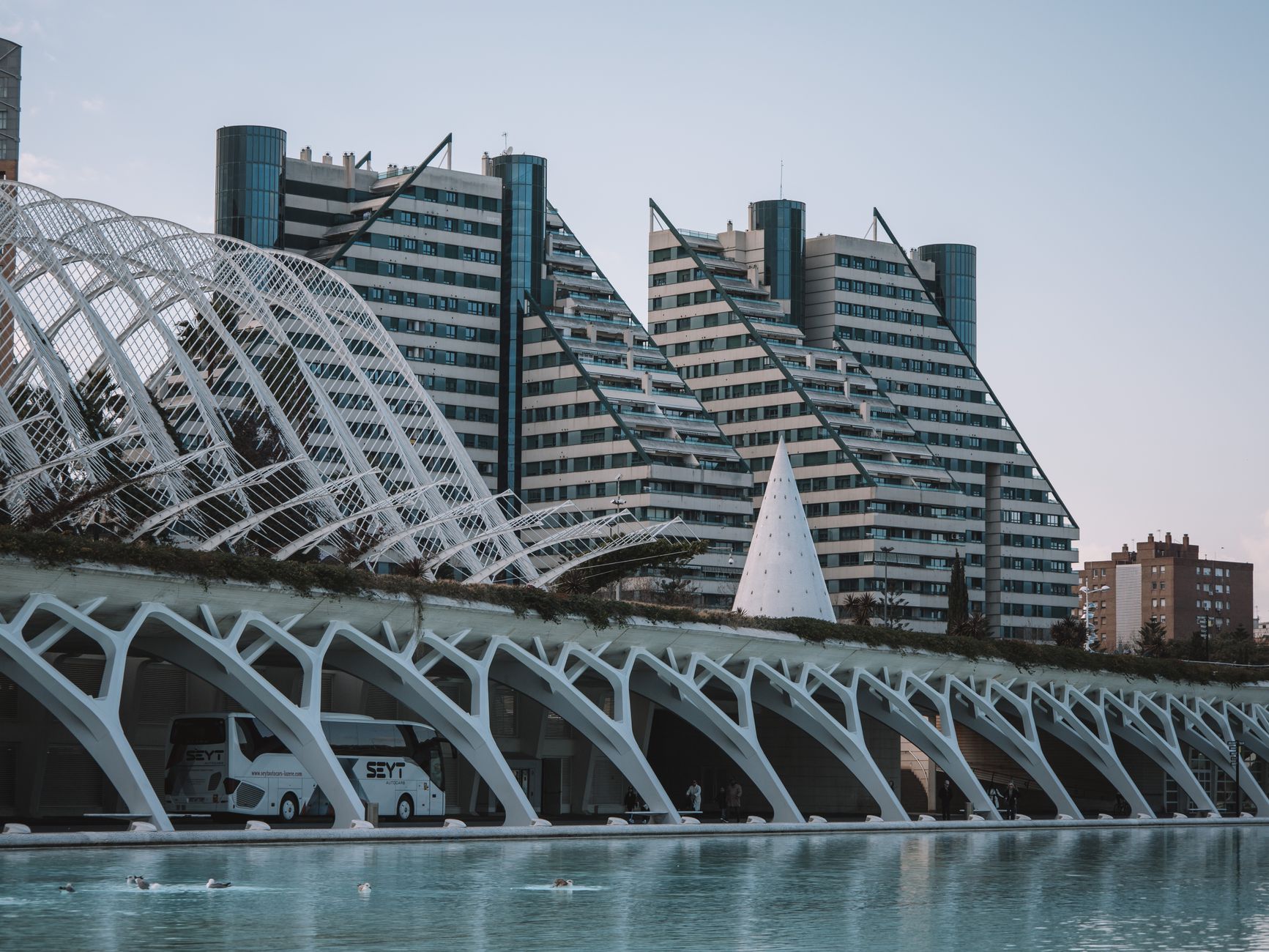
It's not a single building—it's five major structures arranged in sequence, connected by walkways and reflecting pools. Walking through it takes three to four hours at a moderate pace; photography takes considerably longer because the architecture is designed to be read from different angles and times of day. Blue hour (the 30 minutes after sunset) produces the best reflections.
The Oceanogràfic is Europe's largest aquarium, with 42 million litres of water housed in a building shaped like a whale's skeleton. It holds species from the Mediterranean and the deep sea. Entry is €32; allow three to four hours. Most of it is self-guided, though a few tanks have staff interpreters speaking Spanish and Valencian.
The Hemisfèric is an IMAX cinema in a building that looks like a giant eye. Unless you speak Spanish, skip it—subtitled films are rare, and the soundtrack is essential. €10–15.
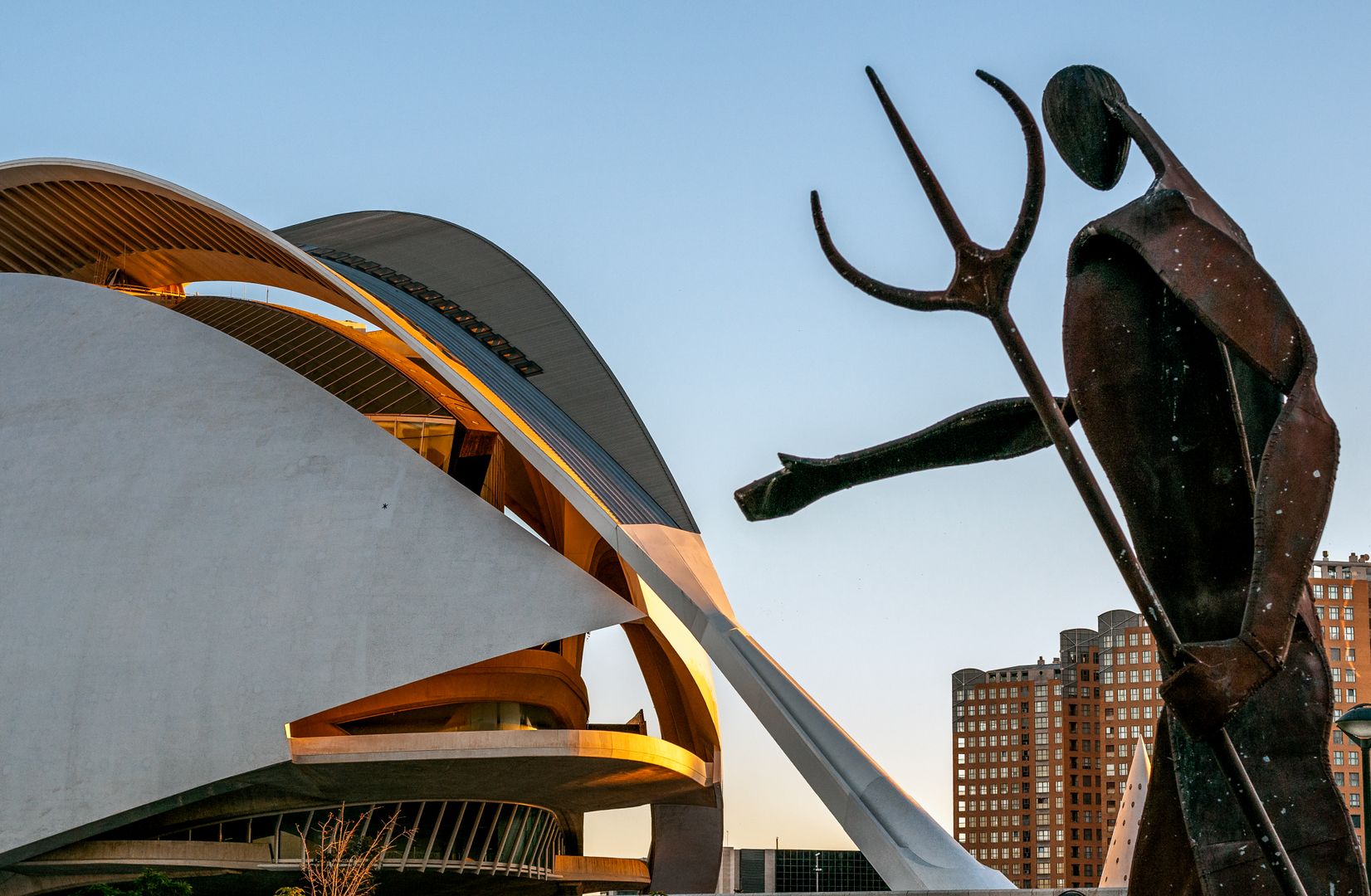
The Palau de les Arts Reina Sofía is the opera house—an architectural centerpiece with a titanium shell and a 1,600-seat auditorium. Unless you're attending a performance (book at palaudelasarts.es), the exterior is the draw. Entry to the courtyard is free.
L'Umbracle is a semi-covered promenade lined with 40-year-old olive trees and contemporary sculptures, free to walk through. It's where Valencians actually spend time—exercising, eating in the cafés, sitting on benches.
The Old Town and the Barrio del Carmen
Medieval Valencia sits north of the Central Market, a warren of narrow streets, alleys, and plazas that was largely neglected in the 1980s and 1990s before artists and young entrepreneurs began renting cheap ground-floor spaces. Now it's covered in street art, packed with bars and restaurants in converted Gothic buildings, and significantly less polished than Barcelona's El Born—but also more lived-in, with actual residents rather than a pure retail experience.
Mercado Central is the starting point. The iron-and-glass market opened in 1928 and occupies 8,000 square metres across two levels. About 400 fruit, vegetable, and fish stalls operate under a skylight; prices are 30–40% below supermarket. Go early (before 9am) when the morning vendors are still unloading. This is not a tourist attraction—it's where Valencians shop. The fruit (especially strawberries, citrus, stone fruit) from the surrounding region is phenomenal and cheap. A kilogram of strawberries in March costs €3–4.
La Miguelete, the octagonal bell tower adjoining the Cathedral, is 207 steps and 69 metres high. The climb takes five minutes; the city views justify it. €4. Open daily except Mondays.
The Cathedral itself (the Catedral Metropolitana de Valencia) is Gothic, begun in 1262, and houses the Santo Cáliz—a 1st-century agate cup that many believe (or claim to believe for marketing purposes) is the Holy Grail. The cup is housed in a gold-and-gem reliquary behind glass. Entry is €8; if you only care about the building, not the relic, the courtyard is free to access.
The barrio itself is best navigated on foot; there's no real "must-see" sequence, but the narrow streets converge on several plazas—Plaça de la Virgen, Plaça de la Catedral, Plaça del Tossal—where restaurants cluster. Evening is the right time to eat here (8:30pm onwards); lunch spots fill with office workers and empty out by 3pm.
The beach district: Malvarossa and Las Arenas
Valencia's beach is five kilometres of organised, urban sand accessed by Línea 4 tram from the city centre (15 minutes, €1.50). The beach itself is concrete-backed, with parasol rentals, lifeguards, and a promenade (the Paseo Marítimo) lined with restaurants and chiringuitos (casual beach bars).
The water is the Mediterranean, rarely above 18°C outside July and August. Waves are inconsistent—the beach faces east, so swell is wind-dependent—but several surf schools operate in summer and early autumn. La Gavina Surf School (on the sand) rents boards and runs lessons; water temperature in September is around 22°C.
Las Arenas, the southern section of the beach, is lined with paella restaurants directly on the sand. This is where Valencians eat paella on Sundays; the tables are plastic, the rice is good, and the whole experience is genuinely the local version—not a restaurant pretending to be local for tourists. El Pepica (the beachfront version of La Pepica) is one of the oldest and most reliable. €40–50 for two. Arrive after 1:30pm on a Sunday and expect a 30-minute wait and a full terrace.
Getting to Valencia: connections from the main hubs
From Madrid: The AVE high-speed train is the obvious choice. Journey time is one hour 40 minutes. Services run hourly from Atocha station. Tickets cost €25–60 depending on how far in advance you book (book three weeks ahead for the best fares). The Valencia terminus (Estació de Nord) is north-central, a 15-minute walk to the Old Town or a €1.55 metro ride.
From Barcelona: Direct AVE trains run the 3.5–4-hour route multiple times daily. Alvia (slower, regional) trains are cheaper (€20–30 versus €40–70 for AVE) but add an hour. Book AVE tickets three weeks ahead. The journey crosses inland, so there's no coastal scenery.
From Alicante: 90 minutes by Renfe train, €15–25. Useful if you're visiting the Costa Blanca.
By air: Valencia Airport (Aeropuerto de Valencia, VLC) is eight kilometres south. Metro Línea 5 connects to the city centre in 25 minutes (€4.90). Ryanair, Iberia, and Lufthansa operate regular connections from most European capitals. Expect €40–100 return from Northern Europe.
Driving to Valencia from Barcelona or Madrid is possible but unnecessary—the AVE is faster and cheaper than parking.
When to go: the calendar
March (Las Fallas): The Fiestas de San José, running March 15–19, is one of Spain's best festivals. For five days, enormous papier-mâché ninots (satirical figures) are installed across the city, paraded, and burnt in a mass bonfire (the Cremà) on the final night. The streets fill with families, music, paella, and fireworks. Hotels book six months ahead. The city is loud, crowded, and thrilling. Go if noise doesn't bother you.
April–May: Warm (20–26°C), dry, manageable crowds. Cherry blossoms bloom in the Turia park in early April. This is the best time to visit if you're not there for Las Fallas.
June–August: Hot (28–34°C), beach season, Spanish holidays crowd the sand. July and August are peak—restaurants stay open late, the beach is full, the city is warm but sluggish in the midday heat. Not the worst time, but plan around the heat.
September–October: Warm (22–28°C), the summer crowds have left, the water is still swimmable (around 22°C in September, 20°C in October). October is excellent if you can go.
November–February: Cool (10–16°C), rainy, few tourists. The city is quieter, restaurants are less crowded, and paella season (the farmers eat it year-round, but tourists don't order it in winter) continues uninterrupted. February can be grey; March is brighter.
Frequently Asked Questions
Is paella from Valencia actually a big deal?
Yes. Paella was not invented by chefs—it evolved from 15th-century farmhand lunches using rice, rabbit, and whatever green vegetables were in the field. Eating a proper paella in Valencia is eating the regional dish in the place where it became formalized. If you want to understand why Valencians are particular about the recipe, order it wrong once and watch the correction happen.
How much does Valencia cost compared to Barcelona?
A mid-range meal costs €12–16 in Valencia versus €16–22 in Barcelona. A metro pass is the same (€15.40 for a 10-journey T-Casual card). Museum entry is 20–30% cheaper. A central hotel room runs €80–120 versus €100–150 in Barcelona. The savings are real but not dramatic—Valencia is a major city, not a budget destination.
Can you visit the City of Arts and Sciences without paying for museums?
Yes. You can walk through the exterior plazas, the L'Umbracle, and the courtyards free. Photography is unrestricted. Only the Oceanogràfic and Hemisfèric require tickets. Most visitors spend an hour in the complex without spending money, photographing the Calatrava buildings at different times of day.
Is the Old Town safe at night?
Yes. The Barrio del Carmen has a nightlife scene and the streets are busy until 11pm. Standard city sense applies—don't walk alone with a phone out at 2am in an empty street. The neighbourhood has a casual, lived-in vibe, not a dangerous one. Police presence is normal.
Can you skip the beach and just stay in the Old Town?
Yes. If beaches don't appeal to you, Valencia is a perfectly good 2–3 day city-break without leaving the centre. The Turia park offers green space and jogging paths; the market and Cathedral are the main draws. The beach is pleasant if you have time, but not essential.
How long does the City of Arts and Sciences take if you don't go inside museums?
Two to three hours to walk through, photograph, and sit in the cafés. The complex is designed to be visited without paying for entry; the architecture is the point. Go early (before 10am) or at blue hour (6pm–7pm) to avoid crowds and get decent photographs.
Valencia is best for travellers who like Spanish food and architecture more than nightlife, who don't need to be the first person to tell their friends about a destination, and who can time a long weekend around a proper paella lunch. It's not a replacement for Barcelona—it's smaller, less touristically organized, and culinarily unapologetic. Eat paella by 2pm on a Sunday in El Palmar, spend an afternoon in the Turia park, and walk the medieval streets at dusk. That's Valencia.