
Málaga Airport is Spain's third busiest, but most travellers treat it as a car rental depot—a stepping stone to somewhere else. That mistake costs them. Málaga is Picasso's birthplace and a functioning Mediterranean port city with a restored 16th-century centre, 200+ works in a museum that fits nowhere else, and reliable 17°C January weather. The Costa del Sol extends 150km east and west: Nerja has actual charm; Marbella has money and boats; Tarifa has kitesurfing and Africa visible across the strait. Skip the airport transfer and stay three days.
Málaga city: beyond the transit lounge
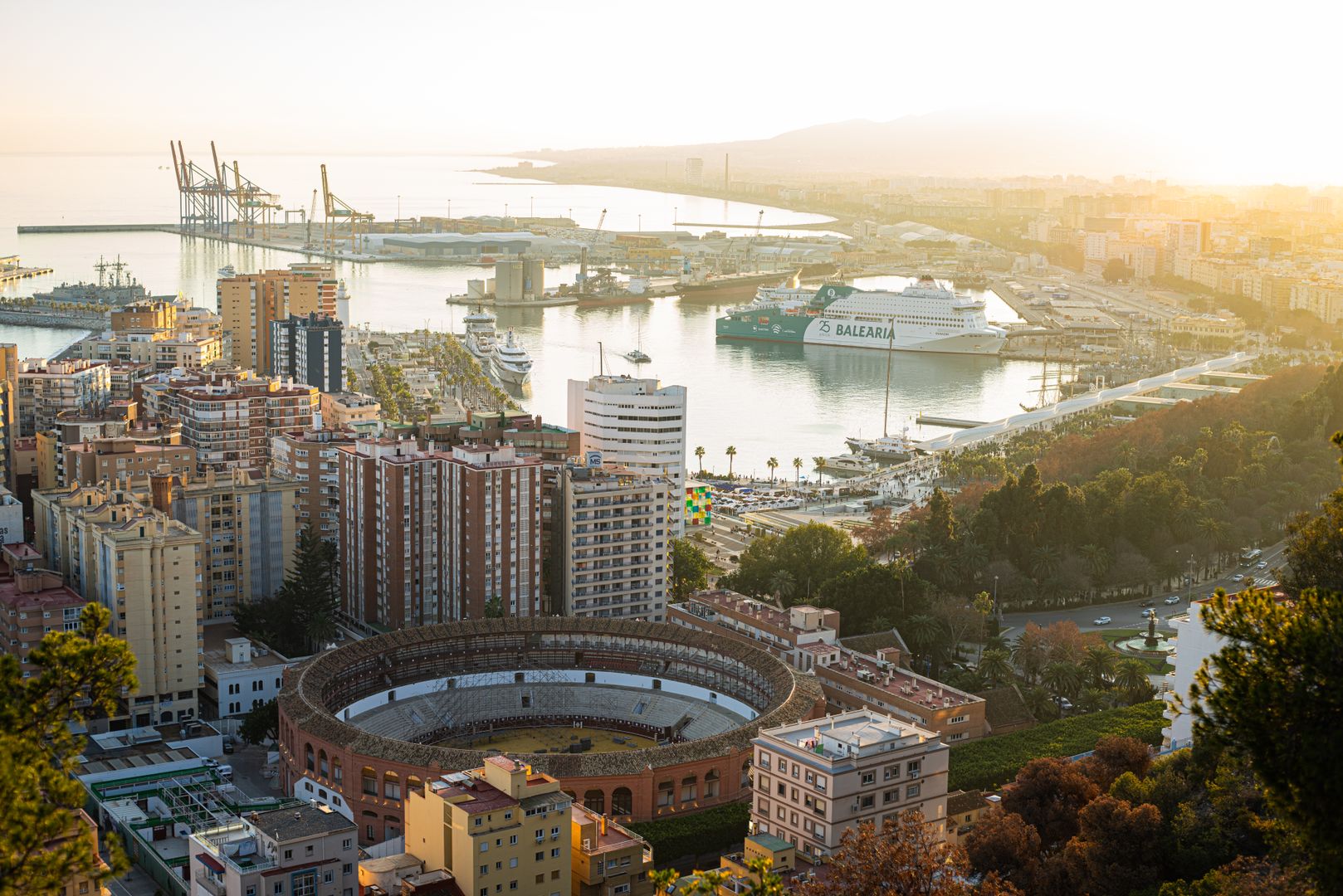
Most visitors see the airport and the motorway. The city itself occupies a promontory between two sandy beaches (Playa de la Malagueta and El Palo) and sits on an east-west grid that works on foot. The centre is compressed enough to cover in a day—the cathedral to the Alcazaba to the market—but revealing enough to reward two.
Museo Picasso Málaga: 200+ works from the source
Picasso was born at Calle Larios 15 in 1881 (the building has a plaque; view the exterior, it's free). The museum holds over 200 works—paintings, sculptures, prints—spanning seven decades. €12 entry. Crucially, it avoids the Louvre problem: you're not seeing Picasso's greatest hits (those stay in Paris or New York) but his range. Early blue period work, ceramics, late abstracts. The collection lives in the Palacio Buenaventura, a Renaissance palace with courtyards and decent spacing. Book online to skip the queue, or arrive before 11:00. Allow 90 minutes minimum. The audio guide (€4, or free app) adds context but isn't mandatory.
Alcazaba and Castillo de Gibralfaro: Moorish fortress above the port
The Alcazaba is an 11th-century palace-fortress built on the site of Phoenician settlement. Entry €3.50. Walk through the Nasrid gardens, past the remnants of the harem, up the fortified walls. The sea view from the rampart is unobstructed to Africa on clear days. The castle (Castillo de Gibralfaro) sits another 100m uphill—the same entry or €5.50 for both. The hike between them is steep, 20 minutes, fully exposed in summer. The castle reward is panoramic: the coast west to Marbella, the mountains inland, the port. Go early or late. Most tourists don't make the climb, so you'll have the walls to yourself. Allow two hours combined.
Cathedral ("La Manquita") and the city's unfinished identity
The Cathedral is a 16th–18th century Renaissance building missing its south tower. Funds collapsed in the 1780s and were never resumed. The truncated façade is now a symbol. €6 entry. The interior is cavernous and restrained—no gold, no baroque excess. The missing tower is visible from the Plaza de la Catedral, where locals drink coffee. This matters: Málaga's identity isn't "the perfectly preserved medieval city" (there are 50 of those in Andalusia). It's a working city that didn't finish what it started and moved on.
Centre Pompidou Málaga and the port redevelopment
The Pompidou Centre opened a satellite here in 2015—contemporary art, rotating exhibitions, a permanent collection of post-1960 work. €9. It sits on the redeveloped Muelle Uno waterfront in a deliberately ugly industrial building (metal cube). Spend 90 minutes. Worth the entry mainly if you're in the area; not worth a dedicated trip. The waterfront itself—the boardwalk from the port east to the beaches—is the evening social spine. Restaurants, drinks, families, couples. Walk it at sunset, 18:30–19:30.
Mercado Central de Atarazanas: the market, literally where food is
This is where locals buy daily produce, not tourists. The 19th-century iron structure has a Moorish arched gate salvaged from the original 14th-century arsenal. Fish stalls at the north side. Fruit and vegetable vendors occupy the nave. Breakfast bars serve espresso and churros or bocadillos at seven in the morning. Come before 14:00, when it empties. The market closes 13:30–17:00, then reopens for evening shopping. A meal here—fresh fish sandwich, orange juice, coffee—costs €8–12. The stalls sell produce you won't see in supermarkets: setas (wild mushrooms) in autumn, espárragos trigueros (wild asparagus) in spring.
How many days in Málaga?
Two days minimum: one for the city (Picasso, cathedral, Alcazaba, market), one for a day trip (Ronda or Nerja, depending on your tolerance for driving). Three days allows Málaga plus two separate excursions, or Málaga plus Nerja overnight. More than four days in the city proper becomes filler unless you're working or renting a villa. Most visitors use Málaga as a base for the coast and inland towns, not as a destination itself.
The Costa del Sol: which towns, where they differ
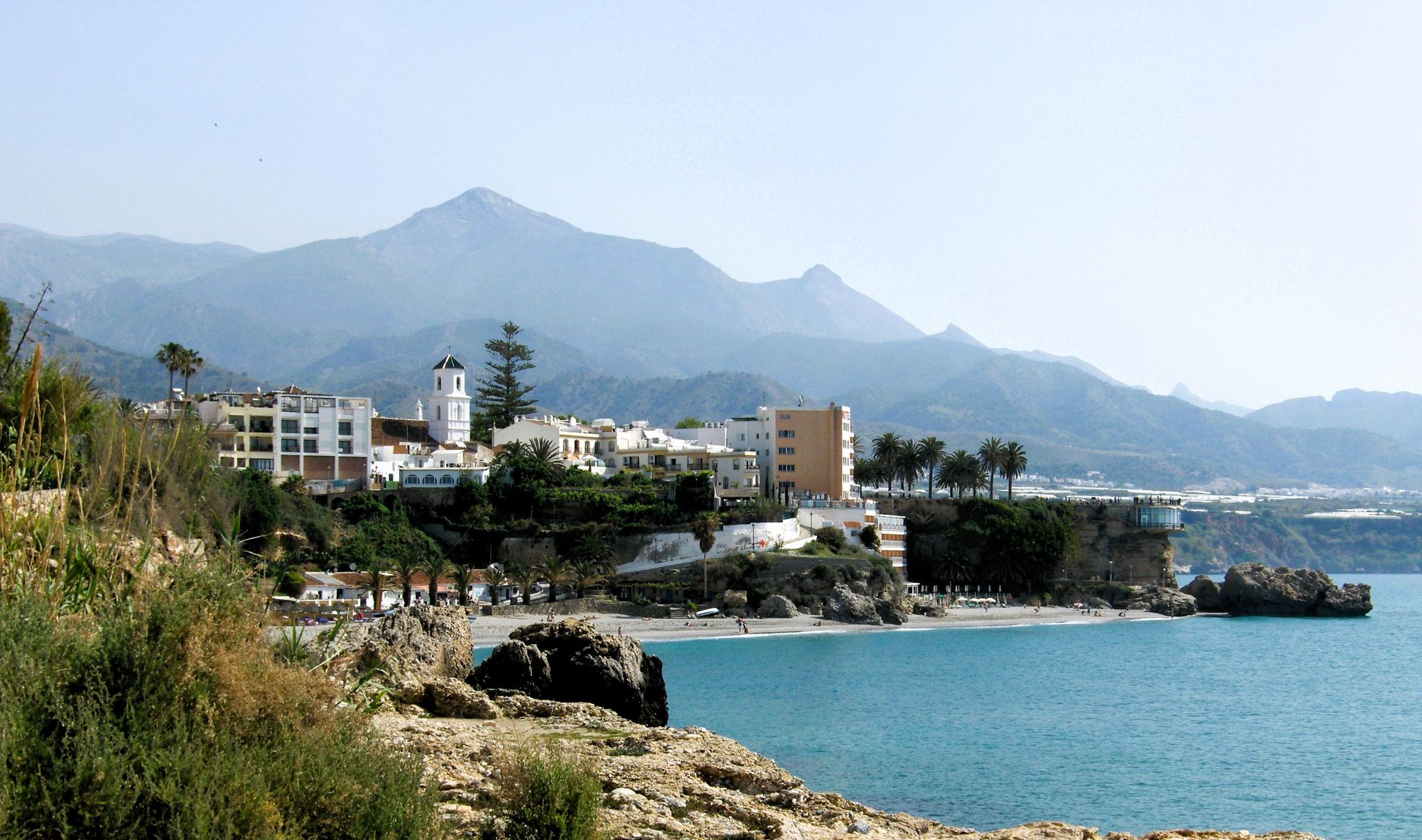
The coast divides: east of Málaga (to Motril) is quieter and less built-up; west (to Tarifa) is progressively more upmarket then increasingly alternative.
Nerja: the best small town on the eastern coast
Nerja sits 65km east of Málaga, on a promontory. Population 1,600 year-round, maybe 10,000 in August. It has a legitimate sense of place—narrow white streets, a central balcony overlooking the sea (Balcón de Europa), decent beaches east and west. The Playa Burriana, 2km east, is sandy and backed by chiringuitos (beach bars). The town is less manicured than Marbella, less built over than Fuengirola, less ignored than Motril. Go for a day trip (1 hour by bus, €5 return; or 50 minutes by car) or overnight. Restaurants on the Balcón serve fish and paella; prices are 20% lower than Málaga tourist zones. The Nerja Caves (below) are 3km north.
Frigiliana: a white village above Nerja, inland
8km north of Nerja, uphill, is this pueblo blanco (white village) squeezed into a hillside. Very narrow streets, ceramic shops, bars with views back toward the sea. It photographs well but is 90% tourism now—tour groups from 10:00–14:00. Worth visiting at 08:30 or after 17:00. Combine with Nerja on the same day: bus to Nerja, local bus or taxi (€10) up to Frigiliana, walk the old streets, return before lunch. Allow three hours total for Frigiliana.
Marbella: the old town, and the marina you'll either enjoy or resent
Marbella is 60km west of Málaga, the upmarket resort. The casco antiguo (old town) is genuinely pretty: narrow white-washed streets, flower pots, a central plaza (Plaza de los Naranjos) with orange trees and local bars. €12 lunch is realistic. The marina (Puerto Banús) is 7km south—rows of superyachts, nightclubs, designer shops. It's either your scene or pure theatre depending on your tolerance for leisure wealth on display. The town itself is functional and pleasant; the beach suburbs are concrete. Stay in the old town if overnight, not the beach zone.
Estepona: less varnish, more Spain, better value
85km west of Málaga, past Marbella. Less polished than Marbella, more Spanish (actual residents, actual fishermen, not expats and investment). Similar layout: old town on a hill, beaches south, marina development. The paseo marítimo (seafront promenade) is longer and less crowded than Marbella's. Fish restaurants on the beach cost €10–14. The beaches (Playa Poniente, Playa Levante) are decent. Hotels and apartments cost 30% less than Marbella equivalents. Worth a day trip or overnight if you're heading west. Skip if you're not.
Tarifa: the windy edge, Africa visible, kitesurfing hub
155km west of Málaga, at the southern tip of Spain. Africa (Morocco) is 14km south across the Strait of Gibraltar. This is the windiest spot in Spain—the Levanter wind pushes through the strait. The beaches are packed with kitesurfers from May to September. The town has a fortress, a bohemian vibe, several good restaurants, and a ferry to Tangier (90 minutes). Tarifa is a day trip only if you're prepared to drive 90 minutes one way; better as an overnight. The town itself is interesting—African influence, Portuguese-style pastel buildings, a mix of kitesurfers and Moroccan traders. Food and accommodation are cheaper than Marbella or Nerja.
Day trips inland: Ronda and Antequera
Ronda: a white town split by a 98-metre gorge
Ronda sits 100km northwest of Málaga, perched above a chasm cleaved by the Río Guadalevín. The city is split in two by the gorge: the old Moorish town (La Ciudad) on one side, the Spanish quarters (El Mercadillo) on the other, connected by the 18th-century Puente Nuevo (New Bridge). The gorge is 98 metres deep. This is one of Europe's most dramatic geographical situations—the gorge is wide enough that you look down and across, not just down. The town is genuinely beautiful and crushingly touristy (buses arrive 11:00–13:00 daily). Go early (08:00 arrival) or overnight. The old town has a Moorish palace (Palacio de Mondragón), a bullring (Real Maestranza, €7), and good restaurants in quiet corners. Stay at a casa rural (country house accommodation) nearby if overnight; many charge €60–90 per room.
Transport: ALSA buses leave Málaga (Estación de Autobuses) at 08:00, 10:00, 16:30, arriving Ronda 10:00, 12:15, 18:45. €12 return, 2 hours each way. Alternatively, rent a car (€35 for the day) and drive the winding road yourself (more flexibility, more risk if you're not confident in mountain driving). By car, take the A-397 northwest—scenic and well-maintained.
Antequera: a baroque town with dolmens and rock formations
50km north of Málaga, inland from the coast. Antequera is a baroque town built on a ridge, centred on the Collegiate Church. Three megalithic dolmens (Dolmen de Menga, Dolmen de Viera, Dolmen del Romeral) cluster on the outskirts—3,000+ years old, UNESCO-listed. The landscape around Antequera is dramatic: El Torcal de Antequera is a limestone formation of jagged pinnacles and deep ravines. It's the most photographed rock formation in Spain and barely visited compared to similar landscapes elsewhere. The town is undervisited—most tours skip it for Ronda—which makes it preferable if you want atmosphere without crowds. A day trip by car (1 hour each way) works; by bus (1.5 hours, €6) is slower but workable.
Nerja Caves (Cuevas de Nerja)
Three kilometres north of Nerja, these are among Europe's largest cave systems. The stalactites and stalagmites are pristine (no artificial lighting beyond minimal spotlights; you walk in near-darkness). The main chamber has a column of stalactite and stalagmite fused together—claimed to be the world's largest known such formation. Summer concerts are held inside in July and August; acoustics are excellent and eerie. €15 entry, payable on arrival or online. Allow 60–90 minutes to walk the main galleries. The caves stay at 18°C year-round.
Getting there: By bus from Málaga (1 hour) to Nerja, then a local minibus (€2) or taxi (€10) to the caves. By car (50 minutes direct). Many tour operators in Málaga run group trips; these cost €35–45 and are unnecessary unless you have no transport.
Getting around: car, bus, train
Car rental
€30–50 per day from Málaga Airport for a small car (Renault Clio or Peugeot 208). Book in advance through Rentalcars.com or similar; walk-up prices are 40% higher. Petrol is €1.60–1.80 per litre. Motorways (autopistas) charge tolls: Málaga to Ronda via the coast route is toll-free but slower (winding roads); the inland route (A-357) has tolls (€12–15). Mountain roads to Ronda and Antequera are free but require mountain driving skills (hairpins, narrow, no guardrails in places). Most travellers should use the bus for Ronda and Antequera, car for Nerja and the coast.
Bus
ALSA operates the main routes. Málaga to Nerja (1 hour, €5 one-way, €8 return). Málaga to Marbella (1.5 hours, €6). Málaga to Ronda (2 hours, €12). Málaga to Antequera (1.5 hours, €6). Buses leave the main station (Estación de Autobuses) on the western edge of the city. Book online (alsa.es) or at the station. Buses are comfortable, punctual, and cheaper than car rental if you're doing one or two trips.
Train (Cercanías)
The local train (Renfe Cercanías) connects Málaga to Fuengirola (45 minutes, €5) along the coast. This is the main train service; longer routes inland are limited. The Fuengirola line follows the coast and is scenic but slow. Useful for beach days or to visit the towns between Málaga and Fuengirola without driving.
Best seasons: when the coast makes sense
October to May is the ideal window. October, November, April, and May are warm (22–26°C), dry, and uncrowded. July and August are 32–36°C, beaches are packed, accommodation doubles in price, and the towns feel airless by 15:00. January and February are mild (15–18°C daytime, 8–10°C evening) and perfectly fine for walking and exploring. March and September are shoulder months: warm enough for beaches but quieter than July–August. June is warm, less crowded than July–August, and still affordable. December and early January are mild but wetter and sometimes gloomy.
December to February is the real off-season advantage: Málaga city is functional and pleasant, cafés have outdoor seating in the sun, and you can eat a three-course lunch for €12–15 in quiet restaurants. Beach swimming is not viable (water is 13–14°C), but this isn't why you'd be in Málaga in winter anyway.
Frequently Asked Questions
Can you visit the Picasso Museum without a reservation?
Reservations aren't required, but they cut the queue by 30–40 minutes, especially October–May when weather is best. Book online (museopicassomalaga.org) 24 hours ahead for €12 entry. Walk-ups are fine outside peak hours (09:00–10:30 and 14:00–16:00 are busiest); arrive at 11:00 or 16:30 and you'll spend more time in the museum than waiting.
Which is the best day trip from Málaga: Ronda or Nerja?
Ronda is more dramatic and rewarding for first-timers; Nerja is easier logistically and better if you want to relax rather than sight-see. Ronda requires an early start (08:00 bus) and concentration for the 2-hour journey each way. Nerja is 1 hour by bus and lets you combine town, beach, and caves on the same day without rushing. If you have two days for day trips, do both. If one, choose Ronda for the gorge and architecture; choose Nerja if you prefer walking and water.
Is the Alcazaba worth the entry fee?
Yes. €3.50 is negligible, the Moorish palace is genuinely interesting (intact gardens, fortress logic visible in the layout), and the sea views are legitimate. The Castle (Castillo de Gibralfaro) above it is hike-dependent; if stairs and heat bother you, skip the castle and spend the €3.50 on the Alcazaba only. Most visitors do the Alcazaba in 45 minutes and combine it with the Cathedral (10-minute walk away) on the same hour.
Is Puerto Banús in Marbella worth visiting?
Only if you find billionaire aesthetics entertaining. The marina is rows of identical superyachts, designer storefronts, nightclubs, and restaurants charging €35 for a main course because they have water views. The architecture is intentionally showy. If that appeals, spend an hour. If not, spend your time in Marbella's old town or another beach town. Puerto Banús isn't bad; it's just merchandising.
How many days should I spend based on interests?
Beach-focused: 3–4 days (Málaga for transport, Nerja or Marbella for beach bases). Culture and hiking: 3 days (Málaga city, Ronda overnight, day trip to Nerja or Antequera). Mixed: 4–5 days (2 in Málaga city, 1 Ronda overnight, 1–2 beach town). Winter or shoulder season: 5 days allows slower pacing without filler. July–August: 3 days is optimal; longer feels repetitive because heat constrains daytime activity.
What's the best meal value on the Costa del Sol?
Fish restaurants in Nerja and Estepona offer three courses (soup or salad, grilled fish, dessert, bread, wine or beer) for €13–18. Mercado Central in Málaga offers breakfast and lunch for €8–12. Beachfront chiringuitos (casual beach bars) in Marbella and Estepona serve paella and grilled fish for two at €25–35. Avoid restaurants within 200 metres of tourist focal points (Cathedral plaza in Málaga, Balcón in Nerja, Puerto Banús); move one street back and prices drop 30%.
Use Málaga as a base if you're splitting time between the city itself and the surrounding coast and mountains. Most travellers should spend two days in Málaga (Picasso Museum, Alcazaba, cathedral, market, seafront evening), one full day on a Ronda day trip, and one or two beach days (Nerja, or Estepona if heading west). Skip the airport hotels and generic resort towns. The city rewards actual time—not the three hours between plane and rental car.