
San Sebastián has more Michelin stars per capita than any city in the world — three restaurants with three stars (Arzak, Akelarre, Martín Berasategui) serving a population of 190,000. It also has pintxos bars where €15 buys a sequence of small plates and drinks that outrank most European fine-dining experiences. Both claims are true. This is not a destination for one or the other; it's a city where the food culture splits cleanly between haute cuisine restaurants booked eight weeks ahead and a street-level pintxos circuit that operates every evening in the Parte Vieja (Old Town), where locals and travellers stand at the bar, order rounds of txakoli, point at skewers and croquetas, and move to the next bar. Understanding the distinction — and how to navigate each — is the core of a San Sebastián visit.
What are pintxos, and how do you eat them correctly?
Pintxos are the Basque version of tapas: small portions balanced on bread, displayed on the bar counter, ordered individually with a drink. The ritual is called txikiteo — essentially, bar-hopping in disciplined rounds. You stand at the bar (never sit; sitting changes the price and the experience), order a glass of txakoli (the local fizzy white wine, poured from height for aeration, €3–4) or a beer, point at what you want from the display, eat standing, then move to the next bar. The circuit typically runs for two to three hours in the early evening (6pm–9pm) or late night (9pm onwards).
The original pintxo is the gilda: an olive, a piece of anchovy, and a pickled pepper speared on a cocktail stick, €1.50–2. It is the architectural template — simple, salty, built for a drink. From there, the variation is immense: croquetas de jamón (ham croquettes, €2.50), txalupa (spider crab in its shell, €3), tortilla pintxo (a thin slice of Spanish omelette on bread, €1.50), champiñones al ajillo (mushrooms in garlic), smoked fish, montaditos with cured meats.
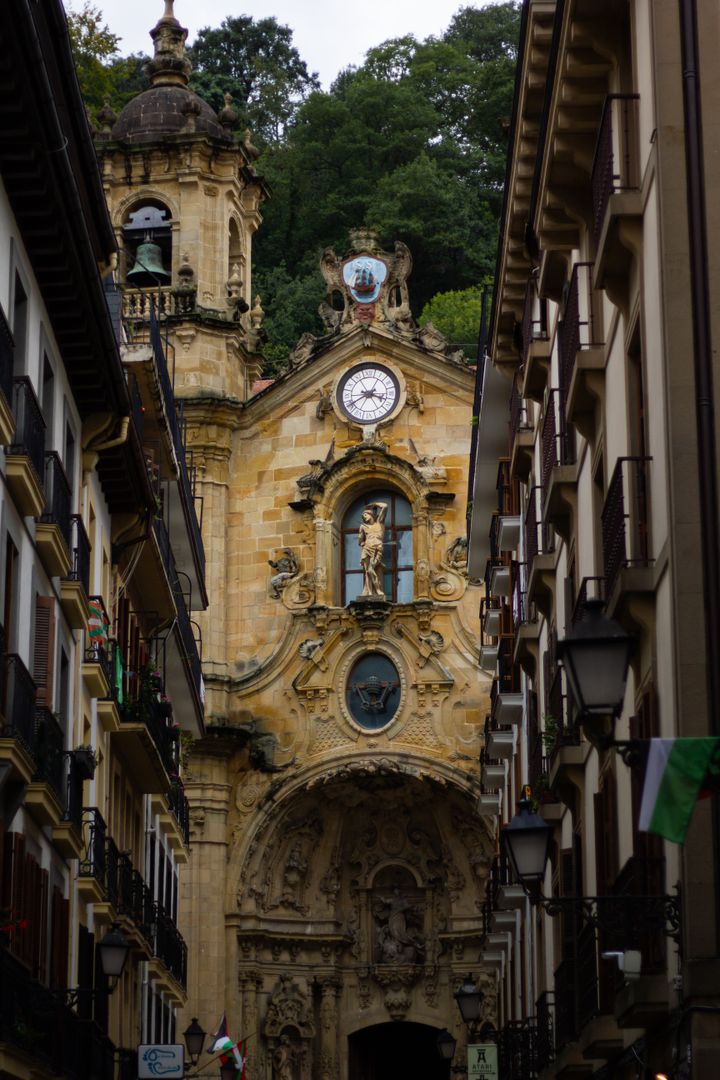
The best streets for the circuit are Calle 31 de Agosto, Calle Fermín Calbetón, and the web of lanes around Plaza de la Constitución (the central square, originally a bullring — the numbered balconies around its perimeter were the spectator boxes). The Parte Vieja is compact; you can walk from one end to the other in eight minutes.
One critical detail most guides omit: the pintxos sitting on the bar counter are often made hours ahead, softening under the lights. Ask the bartender "¿qué tenéis caliente?" — what do you have hot? — and they will steer you to the kitchen's fresh plates. The kitchen pintxos are always superior. Bars including Ganbara, La Cuchara de San Telmo, and Borda Berri maintain this distinction religiously.
Pricing is transparent. You eat, note what you've taken, and tell the bartender when you're done. Average spend for a proper txikiteo (6–8 pintxos, 3–4 drinks) is €18–25 per person. No reservation required. Walk in any evening after 6pm.
The three-star restaurants: context and access
San Sebastián's three Michelin three-star restaurants — Arzak, Akelarre, and Martín Berasategui — defined modern Basque cuisine from the 1970s onwards. Each pioneered a distinct regional school. Each requires booking eight to twelve weeks in advance; cancellations are rare, and walk-ins are not accommodated.
A meal at any of the three costs €180–220 per person (excluding drinks). The experience is ceremonial and lengthy — plan five hours. Arzak and Martín Berasategui in particular draw serious gastronomy pilgrims; the tables are often filled with international culinary professionals, not tourists.
The honest assessment: you do not need a Michelin restaurant to eat extraordinarily in San Sebastián. The street-level pintxos circuit delivers better value and a more authentic picture of the city's food culture. If Michelin is a priority, book immediately; if not, skip it entirely.
For Michelin with lower friction, consider Mimo San Sebastián or Kokotxa — Michelin-starred restaurants offering tasting menus for €60–90 per person. Both are bookable weeks in advance (not months) and deliver high technique without the pilgrimage atmosphere. Mimo specializes in tasting menus of smaller plates; Kokotxa focuses on Basque seafood.
The mid-market alternative: seek out restaurants in the Parte Vieja — Martín Berasategui's casual outpost (Cote), Casa Urola, or El Grave — where you order à la carte, spend €30–50, and eat Basque cuisine executed without ceremony.
La Concha and the beaches

La Concha is the main city beach: a perfect crescent of fine sand enclosed by two limestone headlands, roughly 1.3km long. It is one of the most geometrically beautiful urban beaches in Europe — the kind of beach that makes the skyline. The sand is pale, clean, and regularly raked. The water warms to 18–20°C in August; 14–15°C in June and September.
The beach is social. Families occupy the central stretches; swimmers and sunbathers spread across the margins. In July and August, it is crowded from 10am onwards; go early (before 9am) or late (after 6pm) if you prefer space. There are paid parking lots above the beach, but cheaper street parking exists 200m inland.
Zurriola, on the eastern side of the Parte Vieja, is the second beach. It faces the Atlantic directly, so it has persistent swell; local surfers paddle out year-round. The crowd skews younger, and the atmosphere is less resort-like. The beach is exposed, so the weather can shift quickly.
Ondarreta, at the western end of La Concha (beyond the Peine del Viento — "Comb of the Wind" sculpture), is quieter and slightly warmer. Popular with families.
None of the beaches require a tourist permit or have restricted access. Swimming is free.
The Parte Vieja (Old Town): streets and essentials
The Old Town is a grid of narrow streets crammed with pintxos bars, restaurants, grocery shops, and tourist-facing souvenir stalls. It is animated and packed, especially in the evening. Parking is extremely limited; enter by foot from La Concha or descend from the parking areas above Calle Fermín Calbetón.
The key landmark is Plaza de la Constitución, the 17th-century square at the center. Originally a bullring, it retains the tiered balconies (numbered 1–64) where spectators watched. Today, restaurants occupy the ground floor; the balconies are private apartments, and the square is a gathering point for the evening circuit.
San Telmo Museum (Museo de San Telmo) sits at the southern edge of the Old Town. Housed in a 16th-century Dominican convent with a modern extension, it covers Basque history, art, and ethnography with thoroughness. Entry is €6 (or free 2–8pm Monday–Friday). Spend two hours minimum if Basque culture interests you.
The fishing harbour (the small port immediately below the old town, accessible via a short staircase) retains working fishing vessels. Early mornings (5–7am) show the catch being unloaded; it is one of the few remaining urban fishing ports in Spain where the work is still commercial, not performative.
Getting to San Sebastián
From Madrid: The direct AVE (high-speed train) takes 4 hours 45 minutes and departs three times daily. Tickets cost €50–90. The journey is flat and unremarkable. Book online via Renfe.es; trains depart from Madrid-Atocha or Puerta de Atocha stations.
Alternatively, take the AVE to Burgos (2 hours 30 minutes), then a regional train to San Sebastián (2 hours). This is cheaper (€35–50 combined) but slower and involves a change.
A 50-minute flight from Madrid is competitive if booked ahead (€30–60 return on budget carriers). San Sebastián Airport (EAS, 20km west) has bus connections to the city center (€2.50, 25 minutes).
From Bilbao: This is the most common entry point for visitors combining two Basque cities. Buses depart every 30 minutes from Bilbao's main station (Termibus) and take 1 hour 15 minutes. Cost is €7–10. The route is flat agricultural land; no views. Buy tickets on board or via Autobuses Urbanos de Bilbao (DBUS).
The Bilbao-San Sebastián train is slower (2 hours, €5–8) and less frequent (six to eight daily). Buses are faster and more predictable.
From Biarritz, France: The Basque coastal towns of Biarritz and Bayonne are 20–30km from the Spanish border. Buses depart from Biarritz town centre (Bayona) every 30 minutes, take 35 minutes, and cost €5–7. This is ideal if you're moving along the French Basque coast. No passport control between Spain and France (Schengen zone).
All intercity buses arrive at San Sebastián's main station (Estacion de Autobuses, Avenida Sancho el Sabio, adjacent to the train station).
How many days to spend in San Sebastián

Two days is sufficient to complete the pintxos circuit (evening one), visit La Concha beach, and explore the Parte Vieja and San Telmo Museum. This covers the essential San Sebastián experience.
Three days allows a slower pace: more pintxos bars on the first evening, a full beach day on day two, and a day trip to Bilbao (1.5 hours by bus) on day three to see the Guggenheim Museum and the Casco Viejo (old quarter). This is the standard long-weekend structure.
Four or more days enables side trips to the Basque interior — small villages like Getaria (22km south, famous for grilled fish) or Hondarribia (30km east, the medieval port town at the French border, where pintxos bars line a narrow waterfront). Most visitors do not stay longer than three days; four or more shifts from "visit San Sebastián" to "base yourself in the region."
When to visit
June–September is peak summer. Water temperatures peak in August (19–20°C). The weather is warmest and most reliable (though rain is still possible). The pintxos circuit is in full swing. Beaches are busy; arrive before 9am or after 5pm for space. Hotel availability is tight; book 6–8 weeks ahead.
October is excellent: still warm enough for beach swimming (17°C), crowds thin, and the autumn light is superior. Pintxos bars are warm and welcoming after the summer rush.
November–May brings heavy rain. The Basque Country receives 1,500mm of annual rainfall — roughly twice London's average. Expect two to four rainy days per week. The beaches are grey and often empty. Locals embrace this; the pintxos bars warm up, and the culture becomes more authentic. San Sebastián in winter is for people interested in food and urban walking, not beach holidays.
Tamborrada (January 20) is the city's major festival. Drum corps march through the streets for 24 consecutive hours, beginning at midnight. The sound is relentless and extraordinary. Hotels book months ahead, and the narrow streets are impassable to traffic.
Peak to avoid: mid-July to mid-August (summer holidays in Spain and France push crowds to maximum).
Practical essentials
Language: Spanish (Castellano) and Basque (Euskera) are both official. Most bartenders, restaurant staff, and hotel workers speak English. Pintxos bars are more Basque-language-dominant; learning the names of a few pintxos helps (see the bar counter and ask by name: "una gilda", "croquetas"). Basque menu terms appear on many restaurant fronts; English menus are standard in the Parte Vieja.
Currency and costs: San Sebastián operates in euros. Pintxos circuit: €15–25 per person for an evening. Mid-range restaurants: €25–50 per person. Michelin-starred dining: €180–250 per person. Budget hotels: €60–90 per night. Mid-range: €110–160. High-end: €200+. All prices accurate for 2026.
Getting around: The city is small enough to walk entirely. A bus pass is unnecessary for a short visit. Taxis are reliable and metered; fares from the airport to the center are approximately €25–30. Bike rentals exist (€15–20 per day) but the hills and rain make them less appealing than walking.
Internet and mobile: Mobile coverage is excellent. Buy a local SIM at the airport (€20 for 10GB) or use roaming from your home provider (EU roaming is at domestic rates as of 2026).
Accommodation: Book in or near the Parte Vieja if you're doing the pintxos circuit (you'll return late and walk frequently). Hotels in the Old Town fill first. Properties near La Concha (beachfront) are quieter but less central. Airbnb is common but prices are higher than hotels for equivalent space.
Frequently Asked Questions
What's the best time to do the pintxos circuit?
Early evening (6pm–9pm) and late night (10pm onwards) are prime. The bars fill gradually; 7–8pm is full but still navigable. Go too early (before 6pm) and many bars are slow; go past midnight and most have closed. Weekends are busier than weekdays.
Can you get a table for dinner in the Parte Vieja without a reservation?
Yes, but not in the popular pintxos bars themselves (they operate bar-only). Restaurants with table service — Casa Urola, El Grave, Martín Berasategui's casual wing — accept walk-ins if you arrive by 7pm (before the rush). After 8pm, expect a wait of 30+ minutes or a full restaurant. Booking even a few hours ahead (by phone or email) improves odds.
Is San Sebastián worth visiting just for the Michelin stars?
No. The three-star restaurants are exceptional but account for maybe 5% of the city's appeal. Most visitors eat better value in pintxos bars and mid-range restaurants. Visit San Sebastián for the food culture and beaches; if you book a Michelin restaurant, treat it as a bonus, not the anchor.
How do you know which pintxos are fresh?
Ask the bartender "¿qué tenéis caliente?" or point at the counter and ask "¿cuándo lo hicisteis?" (when did you make this?). If a bar says "hace una hora" (an hour ago), skip it in favor of the kitchen's current batch. Counter displays are for reference; the best pintxos come from the kitchen.
Can you visit San Sebastián from Bilbao as a day trip?
Yes. The bus journey is 1 hour 15 minutes each way. A day trip works if you focus on the pintxos circuit and La Concha. You'll miss the Parte Vieja's evening atmosphere. Better to overnight and spend two days.
What's the difference between txakoli and regular white wine in the pintxos bars?
Txakoli is a local Basque white wine (from the nearby Getaria region) that's lightly fizzy, low alcohol (11%), and poured from height to aerate it. It's drier and more mineral than standard Spanish whites and is the traditional drink for txikiteo. You can order regular wine, but txakoli is the cultural choice and the better match for salty pintxos.
San Sebastián suits two kinds of travellers: serious food enthusiasts (who will spend time in Michelin restaurants and mid-range restaurants alongside the pintxos circuit), and culturally curious eaters (who treat the Parte Vieja as their real dining room and the beaches as recovery space). Avoid the city in July if you dislike crowds. Arrive in June, October, or even November if you can tolerate rain. On your first evening, go straight to a bar on Calle 31 de Agosto, order txakoli and a gilda, and repeat the ritual for two hours. That single experience — the salt, the acidity, the standing crowd, the shouted Basque — is the core of what makes the city distinctive. The Michelin stars are for return visits.