
The Yangtze and the Three Gorges
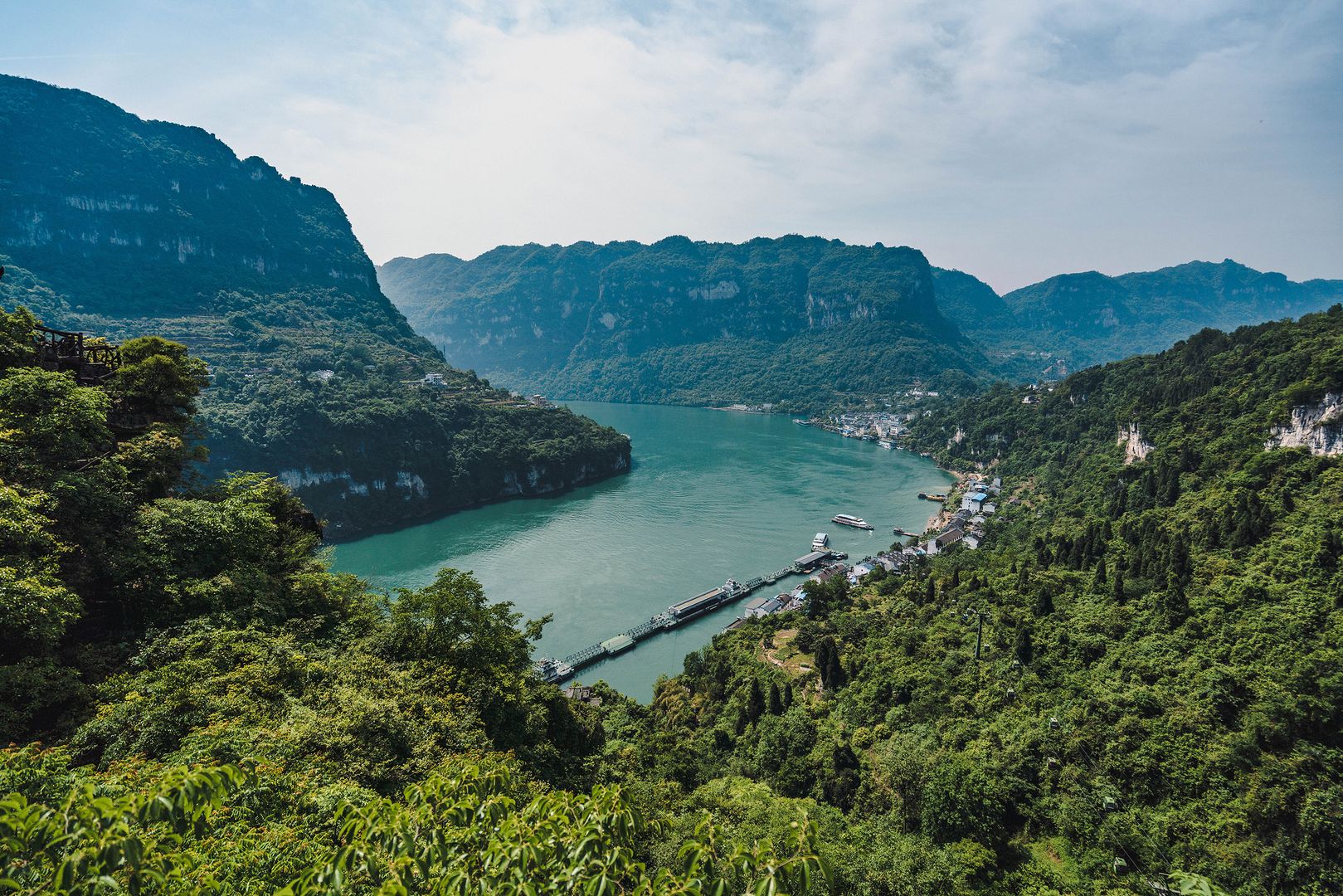
The Yangtze River (Chang Jiang) is the longest river in Asia at 6,300 km, draining the Tibetan Plateau east to the Pacific at Shanghai. The Three Gorges — Qutang, Wu, and Xiling — are a 192 km stretch through Chongqing and Hubei provinces where the river cuts through the Qinling–Daba mountain range in a series of limestone gorges that narrow the river to a few hundred metres and raise cliffs on both sides to over 1,000 metres.
The Three Gorges Dam, completed in 2006, is the world's largest hydroelectric power station. Its reservoir raised the water level throughout the gorges by up to 110 metres, permanently submerging towns, temples, and archaeological sites, and requiring the relocation of 1.3 million people. The dam changed the character of the cruise — the gorge walls are still there, but the scale of the vertical cliffs above the waterline is reduced from what 20th-century travellers described, and some of the smaller lateral gorges and rapids that defined the pre-dam experience are gone.
What remains is still impressive. The scale of the main gorges — kilometre after kilometre of sheer limestone — is not undermined by the water level. The boat journey itself, passing through locks at the dam and drifting through landscape that has defined Chinese poetry and painting for two millennia, is worth the commitment.
Understanding the Cruise
The standard cruise runs downstream from Chongqing to Yichang (the city nearest the dam, 4–5 days) or the reverse upstream (5–6 days). Downstream is faster and slightly more scenic — the gorge walls pass at a better pace and the morning light works better in that direction.
Cruise boats range from large Chinese river vessels carrying 200–400 passengers to smaller foreign-operated luxury ships. The large Chinese ships are significantly cheaper (1,500–4,000 RMB per person for a standard cabin) and are how most Chinese domestic travellers do the route. The smaller luxury vessels (Viking River Cruises, AmaWaterways, and similar) charge 2,000–4,000 USD per person for considerably more comfort and English-speaking guides.
For independent travellers, a middle option is to book a standard Chinese ship through a booking agent and arrange your own shore excursions. The food on large Chinese vessels is basic; bring snacks. The cabins on standard boats are functional; window rooms at the front or sides are worth the supplement for watching the gorges at water level.
The Three Gorges
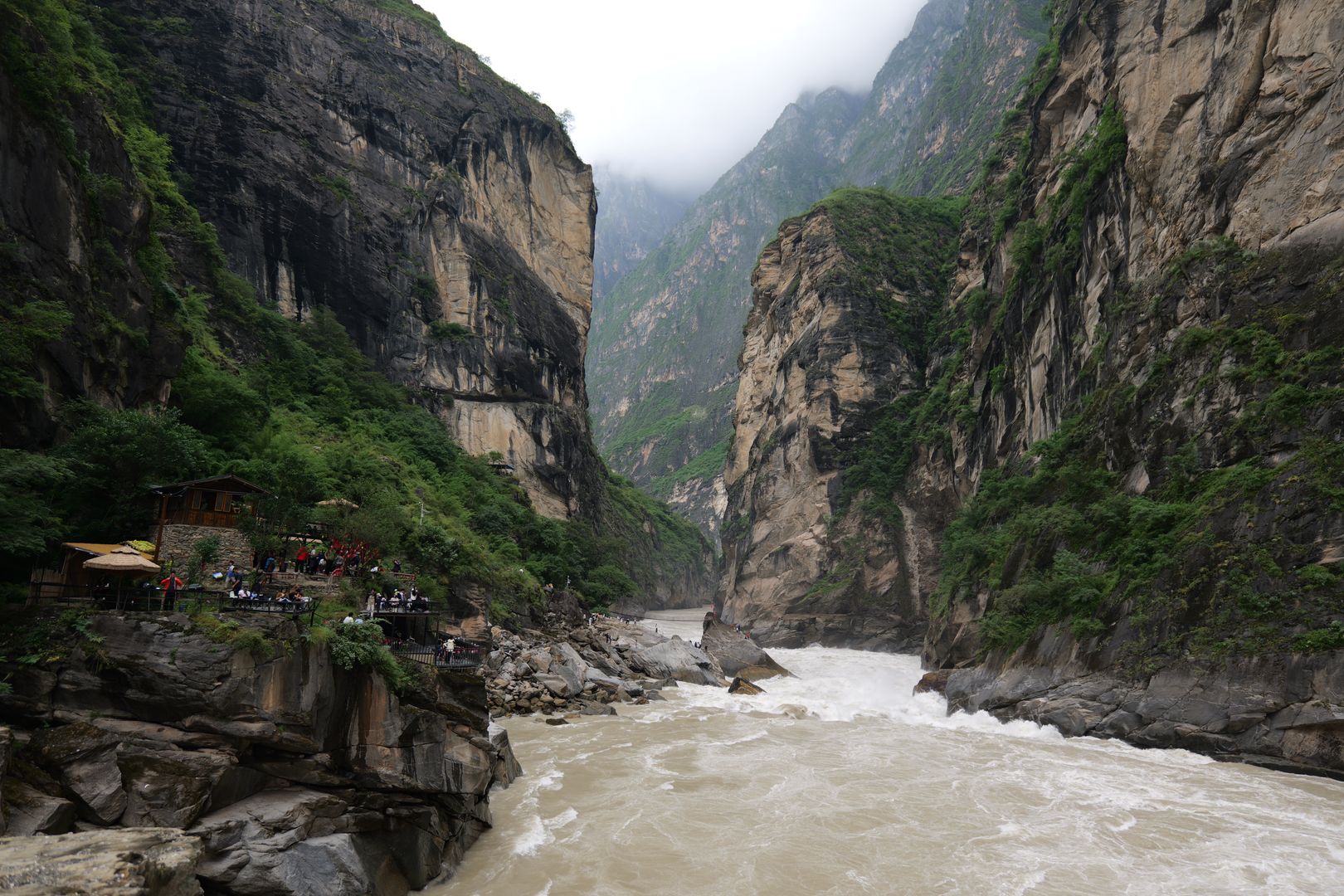
Qutang Gorge (8 km) is the shortest and most dramatic — vertical white limestone walls rising 1,200 metres above the narrow channel, compressed enough that the narrowest section is called Kui Gate. In high water, the current is strong here. The gorge passes quickly.
Wu Gorge (45 km) is the longest and most atmospheric. Twelve peaks of the Wu Shan mountains line both sides, their upper portions often in cloud. The gorge has more varied colour — green vegetation on lower slopes, grey limestone above, mist moving across the ridgeline. The Three Gorges cruise operates boats into the Shennong Stream tributary off Wu Gorge, a smaller canyon where boats are towed upstream by trackers along the bank — one of the more unusual shore excursion experiences on the river.
Xiling Gorge (76 km) is the longest and was historically the most dangerous due to its rapids, most of which are now submerged. The upper section is visually the most varied; the lower section approaches the dam.
Shore Excursions
Standard shore excursions include: Fengdu Ghost City (a Taoist complex of temples and sculptures representing Chinese underworld mythology on a hilltop above the relocated town of Fengdu), the ancient town of Shibaozhai (a 56-metre wooden pagoda built against a natural rock pillar — the surrounding town is now on an island surrounded by reservoir), and the Lesser Three Gorges off Wushan — a series of narrow secondary gorges accessible by small boat, considered by many the scenic highlight of the cruise.
The Three Gorges Dam site itself is a scheduled stop on most itineraries. The engineering statistics are staggering (2.3 km wide, 185 metres high, 22,500 MW generating capacity), and the five-step ship lock that boats pass through to descend from the reservoir to the lower river is a functional wonder. The visitor centre above the dam has viewing platforms that give a sense of the scale.
Booking and Practical Details
Bookings through Chinese travel agencies (Ctrip/Trip.com is the main platform) give the widest selection of boats and prices. International operators offer more English-language support and better on-board services at higher cost. The departure city for most cruises is Chongqing; most end in Yichang, from which high-speed trains to Wuhan (1.5 hours) and onward to other cities are frequent.
Best season: April–June and September–November for the most reliable weather. July and August bring heavy rain and occasional flooding. Winter (December–February) has the clearest air and thinnest crowds, but mist in the gorges can limit visibility.
Frequently Asked Questions
How long does a Yangtze River Three Gorges cruise take?
4–5 days downstream (Chongqing to Yichang), 5–6 days upstream. Most visitors choose downstream for pace and light.
Is the cruise still worth doing after the dam raised the water levels?
Yes — the main gorges are still impressive. Some specific features described by earlier travellers are gone, and the scale has changed, but the 192 km of gorge scenery and the experience of passing through the dam locks is unlike anything else on the river.
Can you do the cruise independently without a tour?
Yes. Book a cabin on a standard Chinese river boat through Trip.com, research the shore excursion options in advance, and organise transfers yourself. It requires more planning but costs 30–60% less than a package tour.
What city do most Yangtze River cruises depart from?
Chongqing is the standard departure point for downstream cruises. Some itineraries depart from Yichang heading upstream. Chongqing is well-connected by high-speed rail and flights from all major Chinese cities.