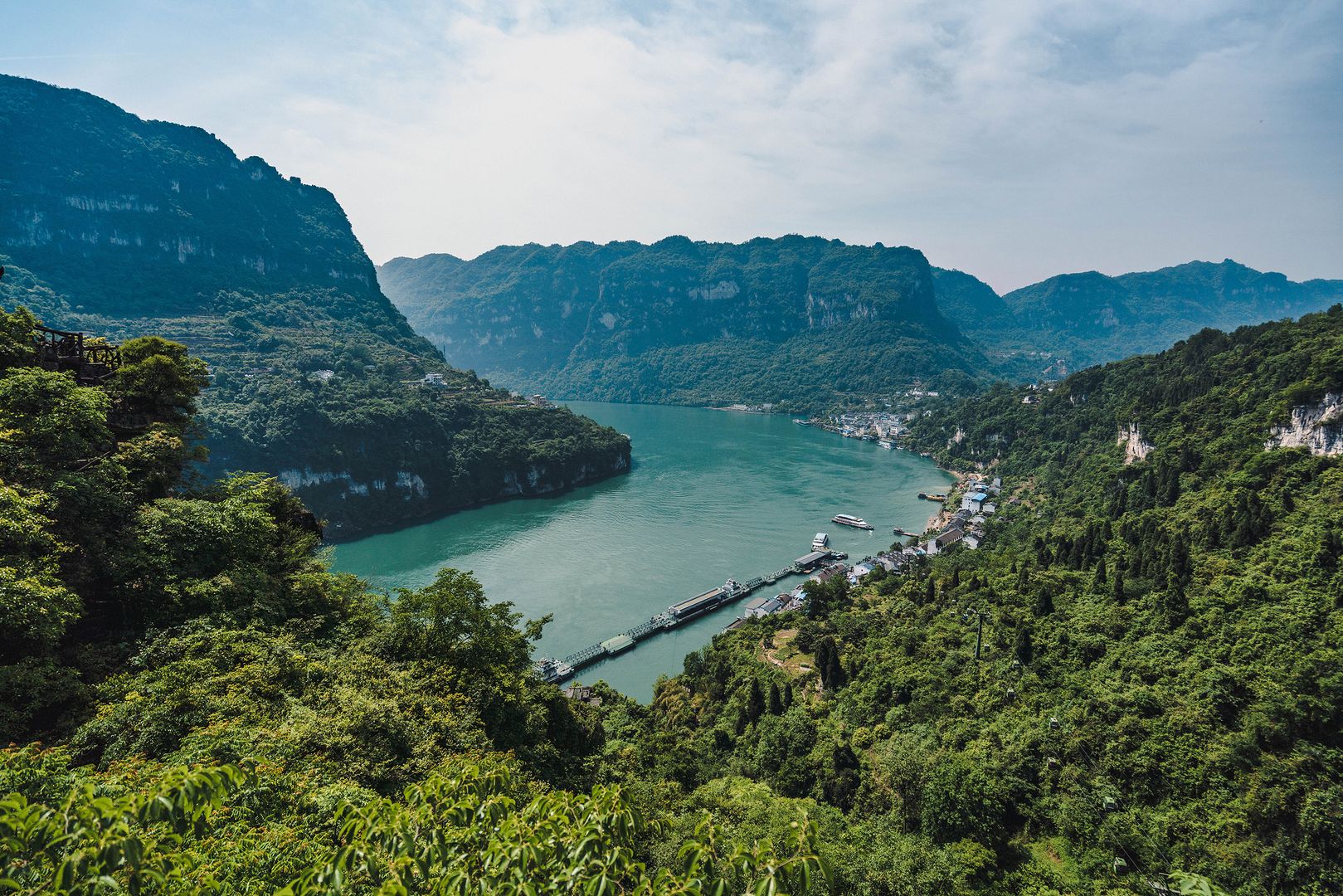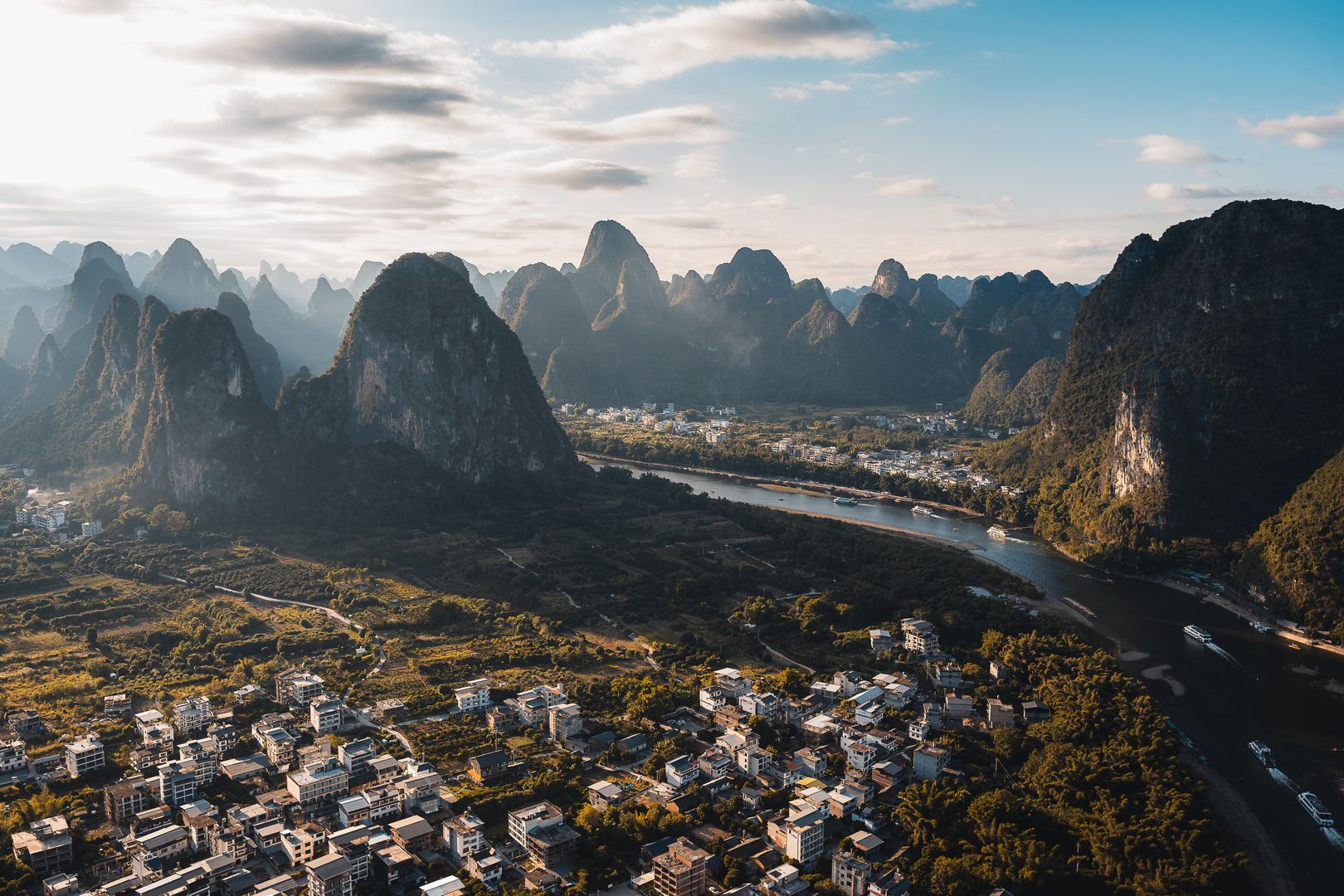

What Is Zhangjiajie
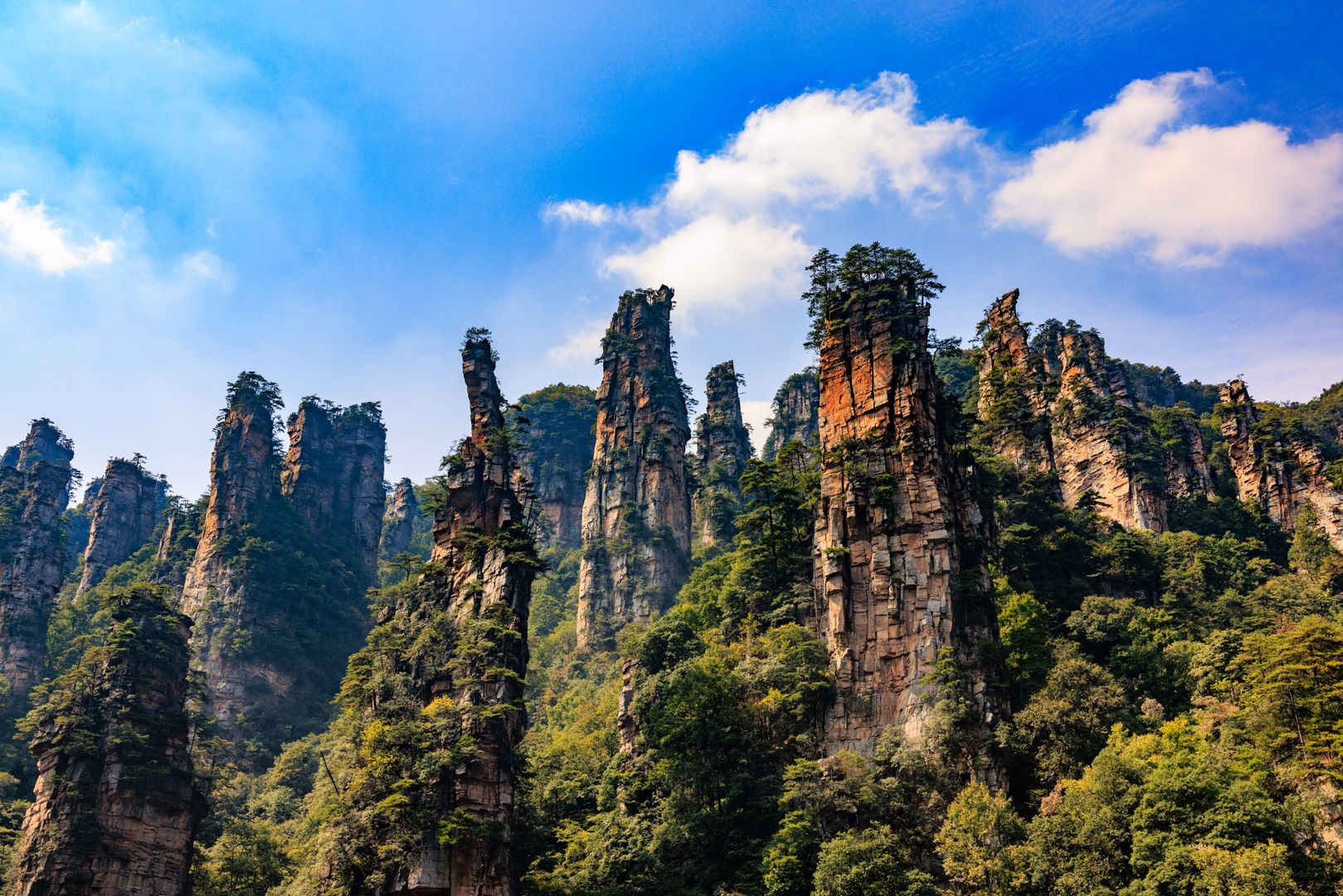
Zhangjiajie National Forest Park in Hunan Province is the reason James Cameron's art director used its landscape as reference material for Pandora. The quartzite sandstone pillars here — some over 300 metres tall, so slender they seem structurally impossible — are genuinely unlike anything else on earth. They were formed by water erosion over 300 million years, and there are around 3,000 of them within the park boundaries.
The park was designated China's first National Forest Park in 1982 and is part of the larger Wulingyuan Scenic Area, which holds UNESCO World Heritage status. The broader area includes Tianmen Mountain (a separate attraction south of the city) and the Zhangjiajie Grand Canyon with its glass-bottomed bridge.
Zhangjiajie National Forest Park
The park covers 48 square kilometres and contains three main scenic zones accessible from different entrances. The Yuanjiajie area at the top of the plateau has the most iconic views — this is where the "Avatar Hallelujah Mountain" (formally named Southern Sky Column) stands and where the top of the Bailong Elevator brings visitors arriving by cable car or lift.
The Bailong Elevator (Hundred Dragons Elevator) is a glass-walled lift built into the cliff face, rising 326 metres in less than two minutes. It's the world's tallest outdoor elevator and the most efficient way to reach the plateau from the valley floor. Queue times can be significant at peak times — arrive early or use the cable car from the Tianzi Mountain entrance as an alternative.
The Tianzi Mountain area to the northwest is less visited and has some of the more dramatic formations seen from ridge viewpoints. The formations here include "Shentang Bay" — a deep valley ringed by towers that produces cloud inversions on misty mornings. The cloud inversions are the single most sought-after weather condition in the park, turning the pillars into islands floating above white cloud. They're unpredictable but more common from November to March.
A three-day park pass costs 248 RMB and includes unlimited shuttle buses between zones (but not the Bailong Elevator or cable cars, which charge separately at 72–258 RMB depending on route). The park is genuinely large — even with the shuttle network, covering all three zones requires careful planning and significant walking.
Tianmen Mountain
Tianmen Mountain is 8 km south of Zhangjiajie city, separate from the National Forest Park. The central feature is Tianmen Cave — a naturally formed arch 131 metres tall and 57 metres wide, through which the sky is visible. It formed when part of the mountain face collapsed in 263 CE, an event recorded in contemporary Chinese texts as an omen of dynastic change.
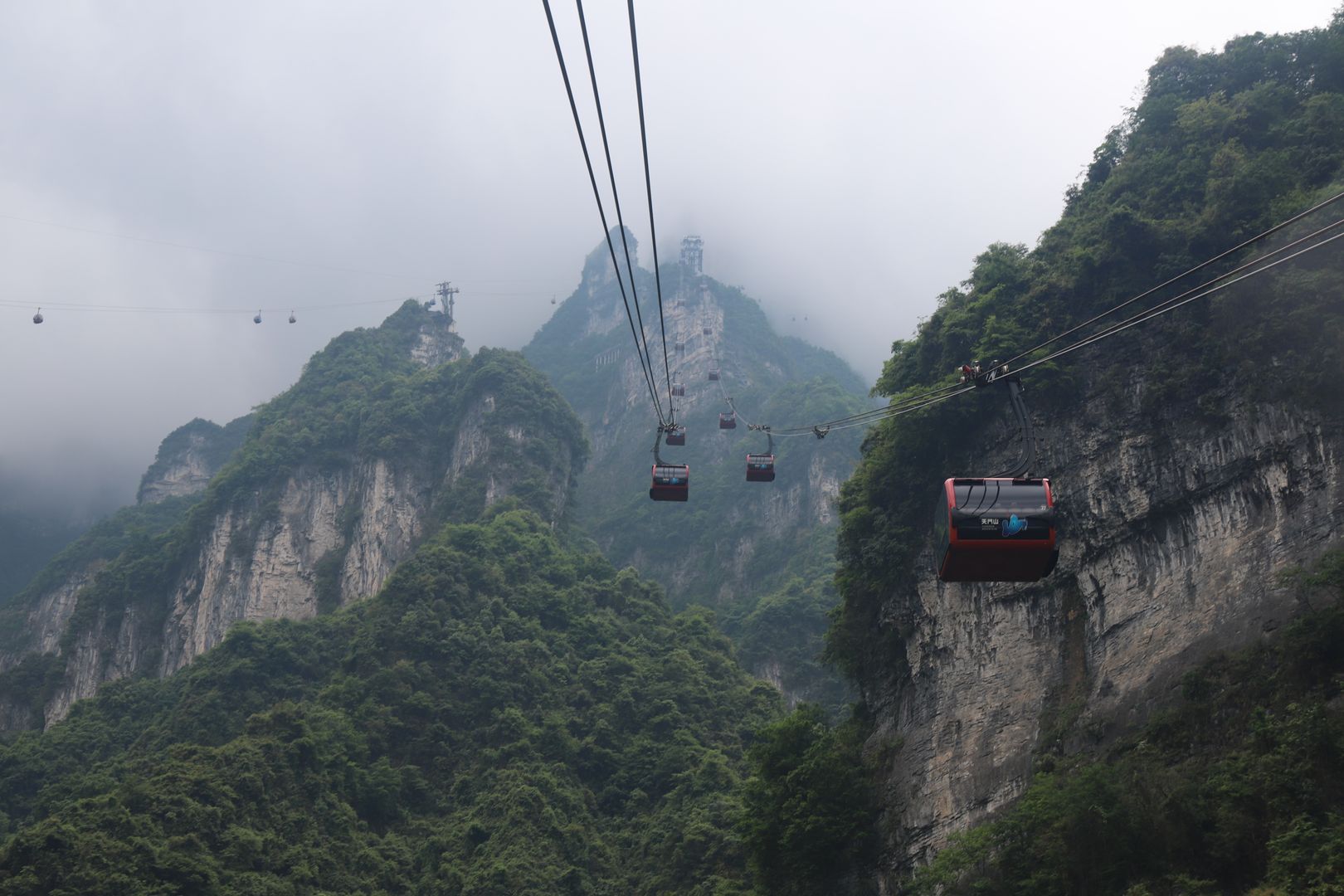
The cable car from the base station in the city to the summit is the longest passenger cable car in the world at 7.5 km, taking 30 minutes and rising over 1,000 metres. The cable car crosses the ridge above the city with views of the Zhangjiajie skyline below. At the summit, a switchback road with 99 bends (Tongtian Avenue, "Road to Heaven") descends from the cave back to the city — it's an attraction in itself, often driven by tourist coaches as a one-way descent.
The Coiling Dragon Cliff skywalk is a glass-floored walkway built into the cliff face near the summit, extending 60 metres horizontally with a 1,430-metre drop beneath your feet. It is not for anyone uncomfortable with heights. Entry to the Tianmen Mountain scenic area: 258 RMB including cable car.
Zhangjiajie Grand Canyon and Glass Bridge
The Zhangjiajie Grand Canyon, 30 km from the city centre, has a glass suspension bridge spanning 430 metres across the canyon at 300 metres above the canyon floor. When it opened in 2016, it was the longest and highest glass bridge in the world. It has been temporarily closed several times due to demand management; check current status before planning around it.
The canyon itself has a valley trail following a river through gorges with good scenery independent of the bridge. A full canyon visit takes 3–4 hours.
Getting There and Practical Information
Zhangjiajie has its own airport (DYG) with connections to Beijing (2 hours), Shanghai (2.5 hours), Guangzhou (1.5 hours), and other major cities. High-speed rail from Changsha (Hunan's provincial capital) takes 2 hours.
The National Forest Park entrance is 35 km from the city; shuttle buses run from the city's South Bus Station. Hotels and guesthouses within or adjacent to the park are available at Wulingyuan village, which cuts travel time to the park gates to minutes.
Comfortable walking shoes are essential — the terrain inside the park is extensive and involves significant elevation change even with the cable cars and lifts. The park closes at different times depending on season (6pm in summer, 5pm in winter).
Frequently Asked Questions
Is Zhangjiajie what inspired Avatar?
The floating mountains of Pandora were inspired partly by the Huangshan pine trees growing from vertical rock faces in Chinese painting traditions and partly by photographs of the Zhangjiajie pillars, which were used as reference material during production. The park renamed the Southern Sky Column "Avatar Hallelujah Mountain" in 2010 following the film's success.
How many days do you need in Zhangjiajie?
Three days: one for the National Forest Park with the Bailong Elevator, one for Tianmen Mountain, and one for the Grand Canyon or a second circuit of the park. Two days is possible but tight.
When is the best time to visit for the cloud inversions?
November through March sees the most cloud inversions in the park — mornings when mist fills the valleys and the pillars appear to float above white cloud. The effect is unpredictable and beautiful. Summer and autumn have clearer views but no inversions.
Is the glass bridge at Zhangjiajie worth it?
For those comfortable with heights, yes — the canyon views and the physical experience of walking on glass above a 300-metre drop are significant. The bridge occasionally closes for maintenance or demand management; verify before making it a fixed part of the itinerary.