The Scale of the Place
Beijing is enormous — 21 million people, a metropolitan area larger than Belgium, and three concentric ring roads expanding outward from the Forbidden City at its centre. Most of what visitors come to see is concentrated within the Second and Third Ring Roads, but the sheer scale of the distances between sites means planning matters here more than in smaller Chinese cities. A day without a plan is a day mostly spent on the subway.
The city sits on the North China Plain at an elevation of about 50 metres, with mountains to the north and west. Those mountains are why the Great Wall was built where it was, and several sections are less than two hours from the city centre.
Getting There and Getting Around
Beijing Capital International Airport (PEK) and the newer Daxing International Airport (PKX) serve the city. Capital handles most international arrivals. The Airport Express train from Terminal 3 reaches Sanlitun/Dongzhimen in 30 minutes for 25 RMB; from Daxing, the dedicated airport line takes about 40 minutes to central stations. Taxis from Capital Airport to the central hotel areas cost 80–120 RMB depending on traffic; Daxing taxis run higher.
The Beijing subway is the most practical way to get around. It's extensive, cheap (3–7 RMB per journey), clean, and almost always faster than road traffic. Line 1 runs east-west through the city centre past Tiananmen and the Forbidden City. Line 2 circles the old city walls. Signs and announcements are bilingual. Buy a transit card (Yikatong) from station machines — it works on the subway, buses, and some bike-sharing systems.
DiDi (China's Uber equivalent) works throughout Beijing and accepts foreign payment cards linked through the app. Taxis are metered, reliable, and cheap. Neither requires Mandarin if you have the destination written in Chinese characters — keep a list.
The Forbidden City and Tiananmen Square
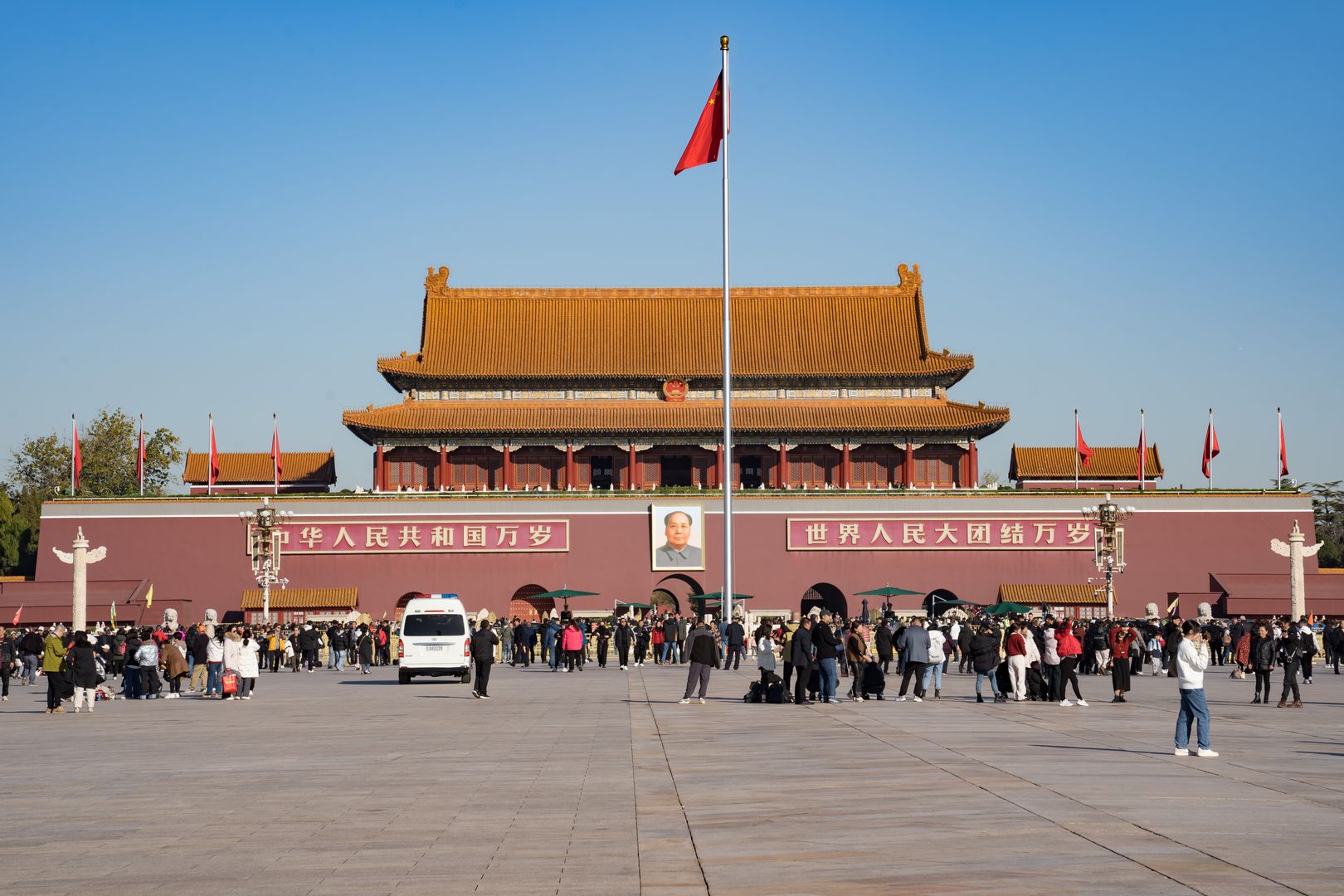
The Forbidden City — officially the Palace Museum — served as the imperial palace for the Ming and Qing dynasties from 1420 to 1912. It covers 72 hectares, contains 980 buildings, and houses the world's largest collection of preserved ancient wooden structures. The scale of it is the first thing that strikes visitors: the courtyards are so large that the buildings across them appear small, until you get close.
Entry requires a timed ticket, booked online in advance through the Palace Museum official website. Peak season (April–October) means booking 1–2 weeks ahead; the museum caps daily visitors at 80,000. Entrance: 60 RMB in peak season, 40 RMB in off-season. Allow a full morning (3–4 hours) for the central axis and the main halls; a full day to include the outer courtyards, clock museum, and treasure gallery.
Tiananmen Square is immediately south of the Forbidden City, across Chang'an Avenue. It holds 440,000 people and is the symbolic centre of the People's Republic. The square itself is open 24 hours; the Tiananmen gate (with the portrait of Mao) is crossed to enter the Forbidden City. Security checks are required to enter both.
The best approach: visit Tiananmen at sunrise for the flag-raising ceremony (time varies by season), then continue directly north into the Forbidden City when it opens at 8:30am.
Hutongs: Old Beijing
Hutongs are the narrow alleyways and courtyard compounds that formed the traditional residential fabric of Beijing for 700 years. Most were demolished during the 20th century; the surviving clusters are in the areas around the Drum and Bell Towers, Nanluoguxiang, and around Houhai Lake.
Nanluoguxiang is the most tourist-facing hutong street — cafés, shops, and street food in a well-preserved alley. It gives you the architecture but not the atmosphere. For a less curated experience, walk the smaller alleys branching off it or explore the Baitasi (White Pagoda Temple) area to the west.
Hutong tours by rickshaw are marketed heavily near the main tourist areas. Walking is better — the scale is small enough and the sightlines are more interesting on foot. Look for courtyard entrances left ajar, residents playing cards outside, and the remnants of old pharmacy and food businesses that survived the development decades.
The Drum Tower (Gulou) and Bell Tower (Zhonglou) mark the northern end of the old imperial axis that runs through the Forbidden City. The Drum Tower has a regular percussion performance; the view from the top over the hutong rooftops is one of the better perspectives on old Beijing.
The Temple of Heaven and the Summer Palace
The Temple of Heaven (Tiantan) sits in a large park 4 km south of the Forbidden City. The Hall of Prayer for Good Harvests — a three-tiered circular wooden structure on a white marble terrace — is one of the most recognisable buildings in China. Emperors came here annually to pray for a good harvest; the complex was off-limits to ordinary citizens for its entire imperial history.
The park around the temple is worth as much time as the temple itself. In the early mornings, it fills with Beijing residents doing tai chi, playing traditional instruments, ballroom dancing, and playing cards in the covered walkways. Come before 9am for the full effect.
The Summer Palace (Yiheyuan), 15 km northwest of the city centre, is the most elaborate surviving imperial garden complex. Half of its 290 hectares is Kunming Lake, with pavilions, covered walkways, and the Marble Boat. Allow half a day. It's farther than most first-time itineraries can comfortably accommodate, but it rewards those who make the effort.
Food
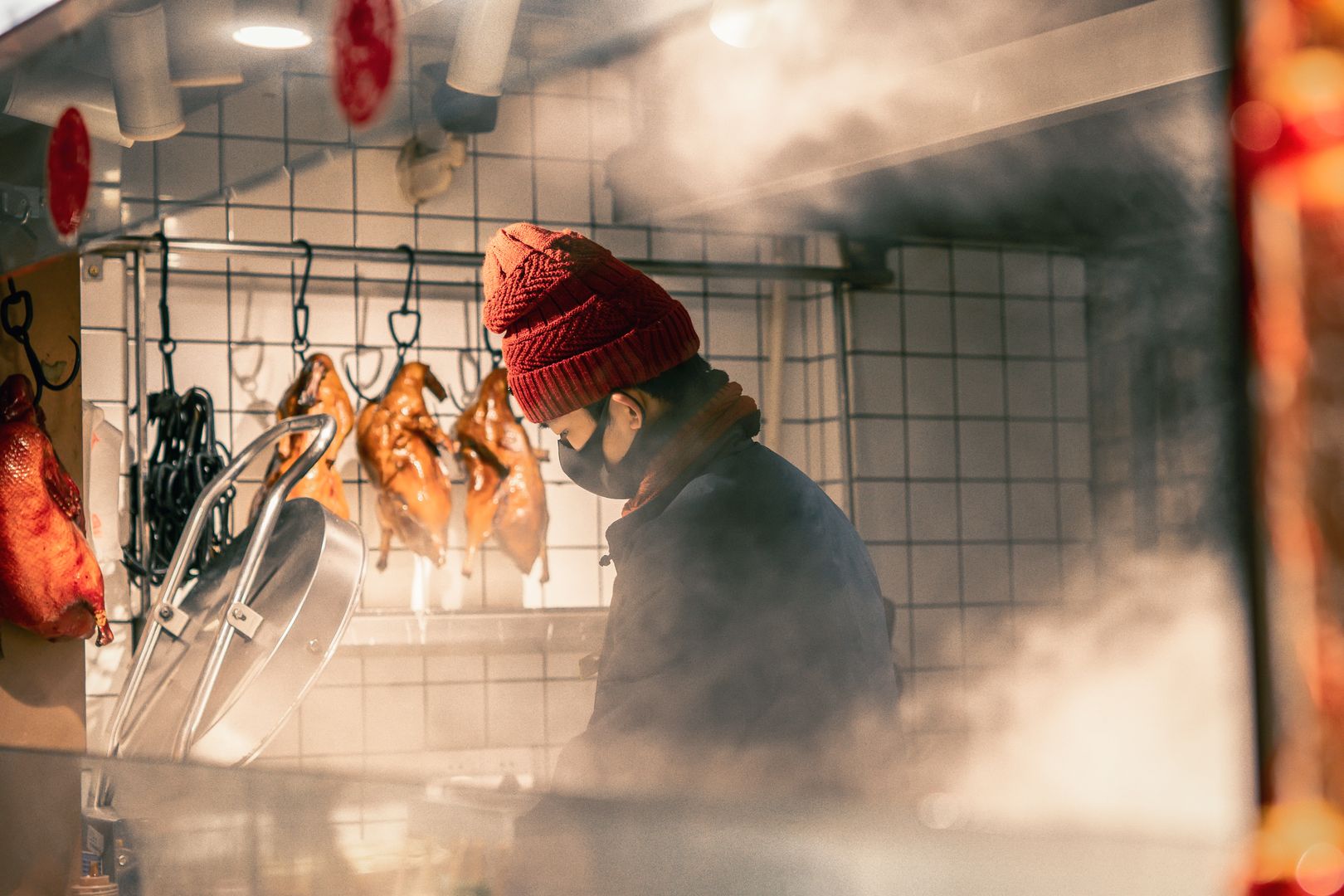
Beijing duck (Peking duck) is the obvious starting point — the original preparation method, with skin blistered and lacquered over fruit wood, has been refined here for 600 years. Quanjude and Da Dong are the most famous restaurants; queues at dinner time run long. A full duck at Da Dong costs 300–400 RMB for two people. Cheaper variations exist throughout the city, but the quality difference is real.
Beyond duck: zhajiangmian (noodles with fermented soybean paste and minced pork), lamb skewers from the outdoor stalls near Wangfujing and Donghuamen Night Market, jianbing (savoury crepe with egg, crispy wafer, and sauce, sold from carts throughout the city for 8–12 RMB), and baozi (steamed buns) from any good breakfast spot.
Sanlitun and the area around Gulou have the highest concentration of restaurants for non-Chinese food. The Chaoyang district covers most international chains and mid-range hotel dining.
Frequently Asked Questions
Do you need a visa to visit China?
Most nationalities require a visa. China has introduced 144-hour and 72-hour transit visa exemptions at Beijing Capital Airport for certain nationalities; check the current exemption list before applying for a full visa. The standard tourist visa (L visa) allows 30–90 days and is applied for through Chinese embassies or authorised visa centres.
Is it safe to drink tap water in Beijing?
No — Beijing tap water is technically treated but not reliably safe to drink without boiling. Bottled water is cheap and universally available. Most hotels provide free bottled water daily.
How many days do you need in Beijing?
Four days covers the Forbidden City, hutongs, Temple of Heaven, a Great Wall day trip, and an evening in Sanlitun. Five or six days allows a more relaxed pace and the Summer Palace.
What app do you need for China?
WeChat (messaging, payments, mini-programs), DiDi (transport), and a VPN installed before entering China (Google Maps, Gmail, and most Western apps are blocked). Download everything before you arrive.