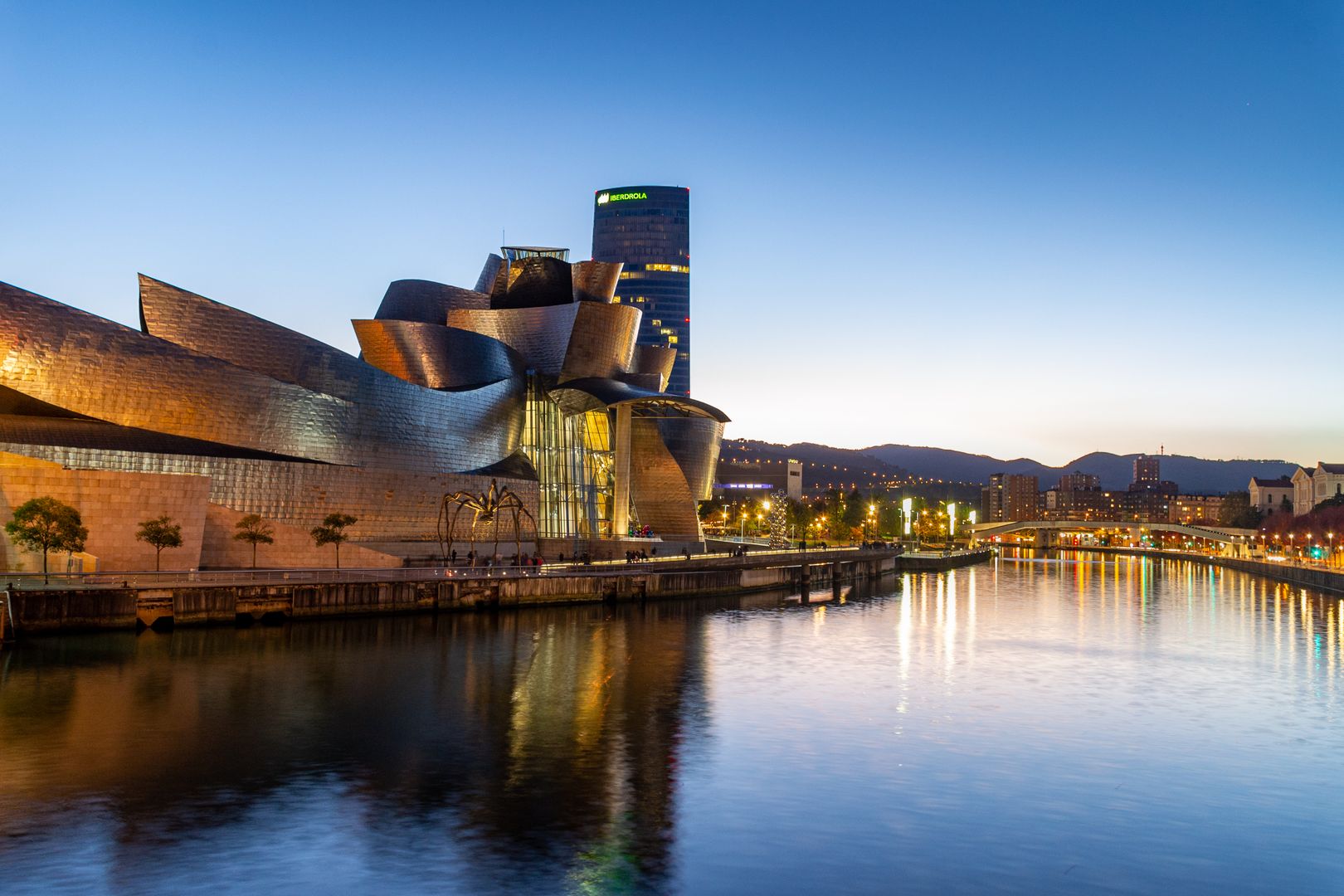

In 1990, Bilbao was dying. The Basque industrial heartland had contracted into unemployment, contaminated rivers, and urban decay. When Frank Gehry's Guggenheim Museum opened in 1997, the building didn't just attract visitors — it forced the city to ask what came next. Twenty-seven years on, the "Bilbao Effect" theory (the belief that iconic architecture alone regenerates cities) remains debated by planners. What's not debatable: Bilbao is now a genuinely good destination. The Guggenheim is essential. The food is serious. The coast is within reach.
Guggenheim Bilbao: The building that changed the city
The museum is the reason most people come, so understand what you're paying for. Frank Gehry designed 24,000 tonnes of titanium cladding that catches light differently depending on the sky's mood — rain makes it grey, afternoon sun turns it bronze. It opened in October 1997 and remains one of the most significant buildings of the late 20th century by any serious architectural assessment.
The permanent collection is smaller and stronger than most expect. Jeff Koons's 13-metre floral sculpture Puppy sits outside the main entrance — it's been attacked, restored, and become entirely permanent. Inside, Richard Serra's The Matter of Time is the revelation: eight massive Cor-Ten steel spirals filling a 130-metre gallery. You walk between them. The scale is physically immersive in a way most modern art isn't. Rotating temporary exhibitions fill the rest.
Entry costs €17. Wednesday and Thursday evenings 6–8pm are free, which means queues of 60+ minutes. Plan 2–3 hours inside. The river walk around the exterior takes 30 minutes and is worth doing before entry — the building's relationship to water and its surrounding plaza is the point. The red Salve Bridge (45 metres high) connects the old town and was explicitly designed to interact with the museum's profile.
Casco Viejo: Medieval streets and the largest covered market in Europe
The Old Town predates the Guggenheim by five centuries. The Siete Calles (Seven Streets) form the medieval nucleus — narrow, tight, filled with bars stacked back-to-back on ground floors. This is where pintxos culture is most visible and least self-conscious.
Walk Calle del Ledesma and Calle Jardines. These streets exist almost entirely as pintxos bars with standing room and counter-served food. Pick a bar by what's in front of you, not reputation. Café Bar Bilbao (Plaza Nueva, the main square of the Old Town) is the institution — counter piled high with traditional options, excellent txakoli (a light Basque white wine), and the real thing (people actually from Bilbao eating there at lunch, not tourists eating at dinner).
The Mercado de la Ribera sits at the river end of the Old Town. It's the largest covered market in Europe — 10,000 square metres of produce, fish, and meat stalls on the ground floor, and the upper level opens onto river views. Go mid-morning for the active market, not the evening. Buy nothing; just look at how seriously the Basque Country treats food infrastructure.
Basque Country Food: where Bilbao eats and why it matters
Bilbao and San Sebastián are locked in a rivalry about pintxos that outsiders often mistake for friendly competition. It's not. San Sebastián's pintxos are more creative, more internationally known, and cost €3–5 each. Bilbao's are cheaper (€1.50–2.50), more traditional, and less designed for Instagram.
For a real meal, book tables days ahead at serious restaurants. Abuelo Etxea is in the Old Town and serves classic txuleta (grilled txuleta beef) and kokotxa (salt cod cheek, the most prized fish part on this coast). El Globo is newer and does modern pintxos if you're eating standing — good consistency, popular for good reason, not exceptional.
The thing most food writers get wrong about Bilbao: it's not the destination for food tourism. San Sebastián is. Bilbao is where you eat exceptionally well without the ceremony. The difference matters for trip planning.
The Basque Coast: fishing villages and waves
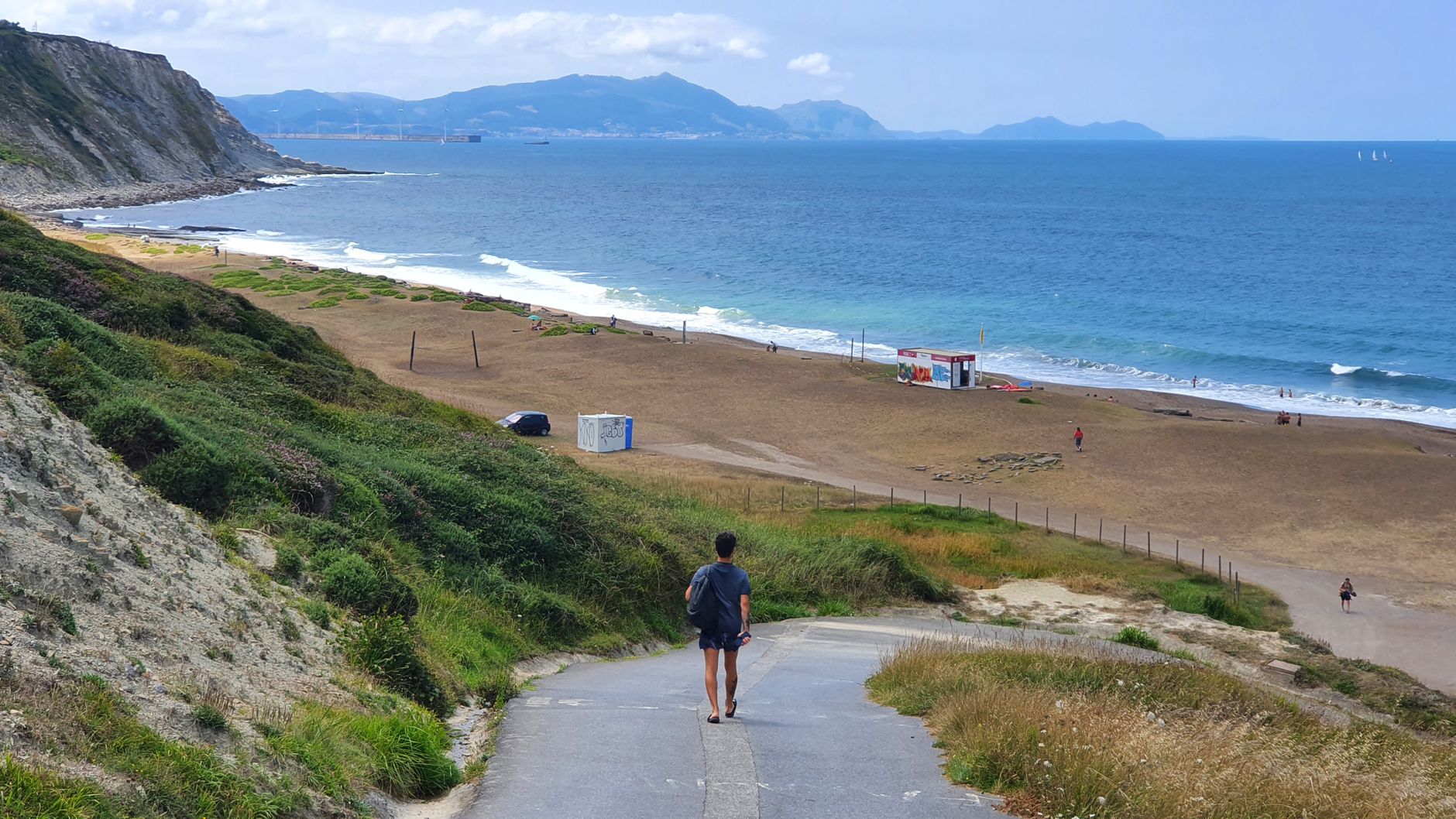
Three towns are worth a day trip from Bilbao, each different enough to choose by what you want.
Getaria (30km east, 45 minutes by bus) is a fishing village where Juan Sebastián Elcano was born — the navigator who completed Magellan's circumnavigation after Magellan died in the Philippines. The town sits on a small peninsula. The beach is mediocre, but the restaurants lining the waterfront serve kokotxa better than anywhere else on the coast. Iribar is the standard recommendation and deserves it. The bus runs hourly from Bilbao's main station.
Lekeitio (50km east, 1 hour by bus) is a working fishing port that hasn't yet become precious. A decent beach, a Gothic church on the promontory, and a functioning harbour with boats actually unloading fish. The pintxos bars are cheaper than the Old Town and serious about quality. Good for a half-day if you're heading toward San Sebastián anyway.
Mundaka (35km west, 45 minutes by bus) matters only if you surf. It has one of the longest left-hand barrel waves in Europe — a river mouth break that works on swell and tide. The town has accommodation and pintxos bars; it's small and functional, not a resort. If you don't surf, the effort isn't worth it.
The bus network is reliable and cheap. Bilbobus and Dbus cover urban routes; Bizkaibus covers regional connections. Download the Moovit app for real-time updates and route planning — it's better than official websites.
Getting to Bilbao and onward
From the airport: Bilbao Airport (BIO) sits 12km north of the city. The Bizkaibus A3247 runs every 20–30 minutes to central Bilbao (40 minutes, €3). The taxi rank is to the left of arrivals; a ride costs €30 flat, longer at peak hours due to congestion. No train to the airport.
From Madrid: Two options, both weak. The bus takes 4.5–5 hours (ALSA or Flixbus, ~€25–35) and runs three times daily from Madrid's main station. The train takes 4.5 hours (Renfe, €30–60) but uses the slower intercity service through Vitoria-Gasteiz — Bilbao isn't on the AVE high-speed network. Bus is faster. From Barcelona, fly or accept six hours by bus.
From San Sebastián: The bus takes 1 hour 20 minutes and costs €7. Direct buses run every 1–2 hours from San Sebastián's main station. This is the standard connector between the two cities.
Within Bilbao, walk the Old Town and Guggenheim area — they're 20 minutes apart. The metro is clean and efficient if you need it; a single ticket costs €1.70.
How many days in Bilbao?

Two days is the realistic minimum for the standalone city. Day one: Guggenheim in the morning (2–3 hours), Old Town and Ribera Market in the afternoon (2 hours), pintxos evening in the Siete Calles. Day two: Fine Arts Museum (1.5 hours — genuinely good for Spanish painting, particularly Goya and El Greco), afternoon coastal day trip to Getaria or Lekeitio (90 minutes away, 3–4 hours on the ground).
Three days lets you add the Fine Arts Museum without rushing the coast, or spend a full day on Mundaka if you surf.
Combining Bilbao and San Sebastián
The standard circuit is Bilbao (2 nights) → bus to San Sebastián (1.5 hours, €7) → San Sebastián (2 nights). This works as a 5-night trip from the UK or 3–4 nights as an add-on to a larger Spain itinerary.
Fly into Bilbao, exit San Sebastián: this avoids backtracking. San Sebastián Airport (Hondarribia, EAS) is 20km from the city and handles fewer routes than Bilbao (mostly Iberia to Madrid, some budget carriers). Checking flight availability before booking accommodation is essential.
Alternative: spend 3 nights in Bilbao and take a day trip to San Sebastián by bus instead of staying overnight. This works if you want to experience both cities' food scenes but not repeat accommodation bookings. Most people prefer the two-city loop.
Frequently Asked Questions
Is the Guggenheim Museum worth the €17 entry fee?
Yes, but manage expectations. The building itself is the masterpiece. The permanent collection (Serra and Koons notably) justifies entry, but you're not getting the Vatican or the Prado. The architectural experience is the primary reason people pay. Budget 2–3 hours and book tickets online 24 hours ahead to avoid peak queues.
How does Bilbao compare to San Sebastián for food?
San Sebastián has more acclaimed pintxos bars and fine dining restaurants. Bilbao has better-value traditional food and more authentic local eating. If food tourism is your priority, San Sebastián is the destination. If you want to eat excellently without performance, choose Bilbao. Most visitors spend time in both.
What's the best time of year to visit Bilbao?
May–June and September–October are optimal: 15–20°C, lower crowds than summer, and reliable spring/autumn weather. July–August bring 25°C and tourist crowds. November–March are rainy and grey (6–10°C), which sounds grim but suits the Guggenheim's titanium cladding photogenically and keeps coastal towns quiet.
Can you visit Bilbao as a day trip from Madrid?
Technically yes, practically no. The bus (4.5–5 hours each way) eats 10 hours. You'd have 4–5 hours in the city, enough for the Guggenheim exterior and Old Town but nothing coherent. Stay overnight or skip Bilbao on a Madrid-based trip.
Is renting a car necessary to explore the Basque coast?
No. The bus network is cheap, frequent, and reliable. Getaria, Lekeitio, and Mundaka are all accessible by direct bus from Bilbao's main station in 45–60 minutes. A car is useful only if you want to make multiple unplanned stops or reach more remote villages. For standard itineraries, buses suffice.
Do you need to speak Spanish in Bilbao?
English works in the Guggenheim, major hotels, and tourist restaurants. Pintxos bars and local restaurants often have minimal English. Learning 10 phrases (hello, thank you, one of those, the bill) is useful and appreciated. Google Translate works for menus. Basque is the local language but not expected from visitors.
Who should go, and when
Bilbao suits architecture enthusiasts, food-curious travellers, and anyone combining it with San Sebastián. It's not a beach destination, not a hiking base, and not essential if you've already seen major Spanish cities. Go in May or September for weather and crowd balance. Fly in, spend 2 nights, bus to San Sebastián, and fly out. That's the trip that works.